

.avif)


Download the App & Start Learning
- Expert Faculty Guidance
- Updated Study Material
- Mock Tests & Practice Quiz
- Live Doubt Solving Sessions
- Exam-Oriented Preparation
- Motivation & Success Strategy
Katara Academy

23/10/2026
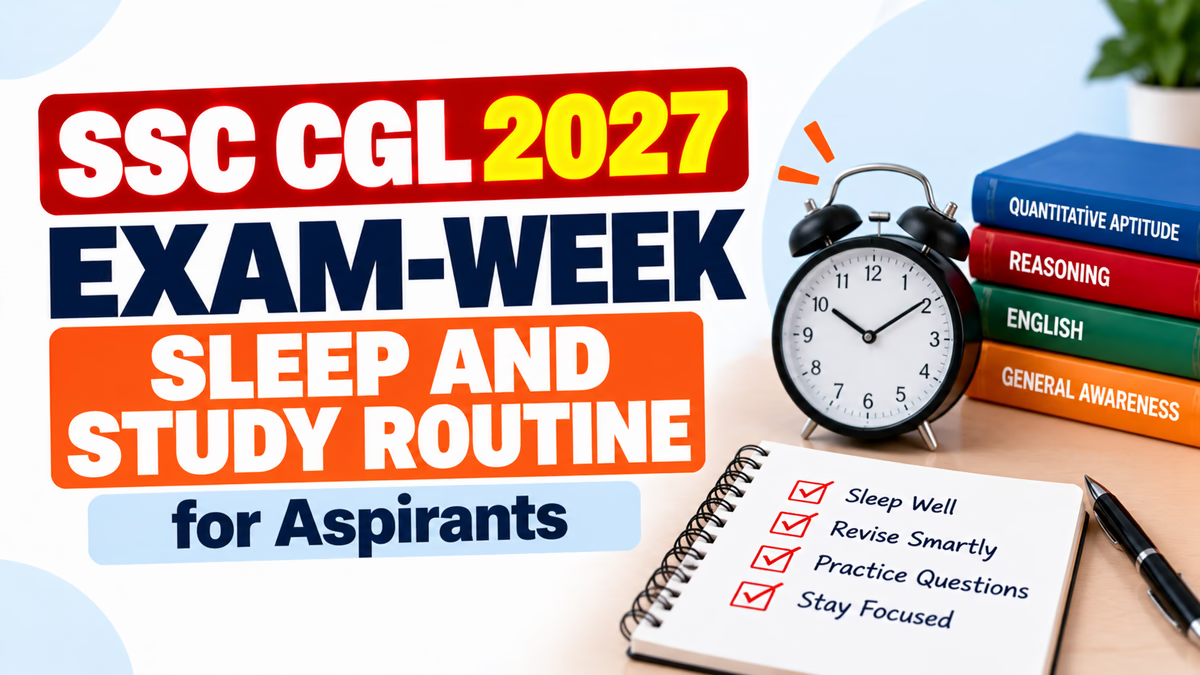
The final week before a competitive examination can feel stressful, especially when candidates worry about unfinished revision and their mock-test performance. However, studying for longer hours does not always lead to better preparation. A balanced routine that combines focused revision, adequate sleep, regular meals and realistic study targets can help candidates approach the examination with greater confidence.
For SSC CGL 2027 aspirants, the exam-week routine should focus on revising familiar concepts, correcting recurring mistakes and preparing for the examination process. The goal is to maintain readiness without creating unnecessary pressure through last-minute changes.
A consistent routine helps you organise the remaining preparation time and avoid spending the final days studying without a clear plan.
Your routine should reflect your current preparation level. Candidates who have already completed most of the syllabus may benefit more from revision and practice than from beginning several new topics.
Sleep is an important part of a sustainable preparation routine. Adequate rest supports attention, learning and general well-being, while irregular sleep can leave you feeling tired during study sessions.
During the final week, consider the following habits:
If your examination is scheduled in the morning, gradually align your daily routine with the reporting time and travel arrangements. Avoid making an abrupt change to your sleep schedule on the night before the examination.
A useful exam-week timetable should include revision, question practice, error analysis and breaks. The schedule below is an example, not a compulsory routine.
| Study Period | Suggested Activity |
|---|---|
| Morning | Revise formulas, important concepts or short notes. |
| Late morning | Solve a selected set of questions from a priority topic. |
| Afternoon | Revise English, General Awareness or another area needing attention. |
| Early evening | Review mistakes from previous tests or attempt a suitable sectional practice set. |
| Night | Complete light revision, prepare the next day's tasks and wind down before bed. |
Take breaks between sessions and adjust the duration according to your concentration and energy. A shorter, focused session may be more useful than forcing yourself to study when you are exhausted.
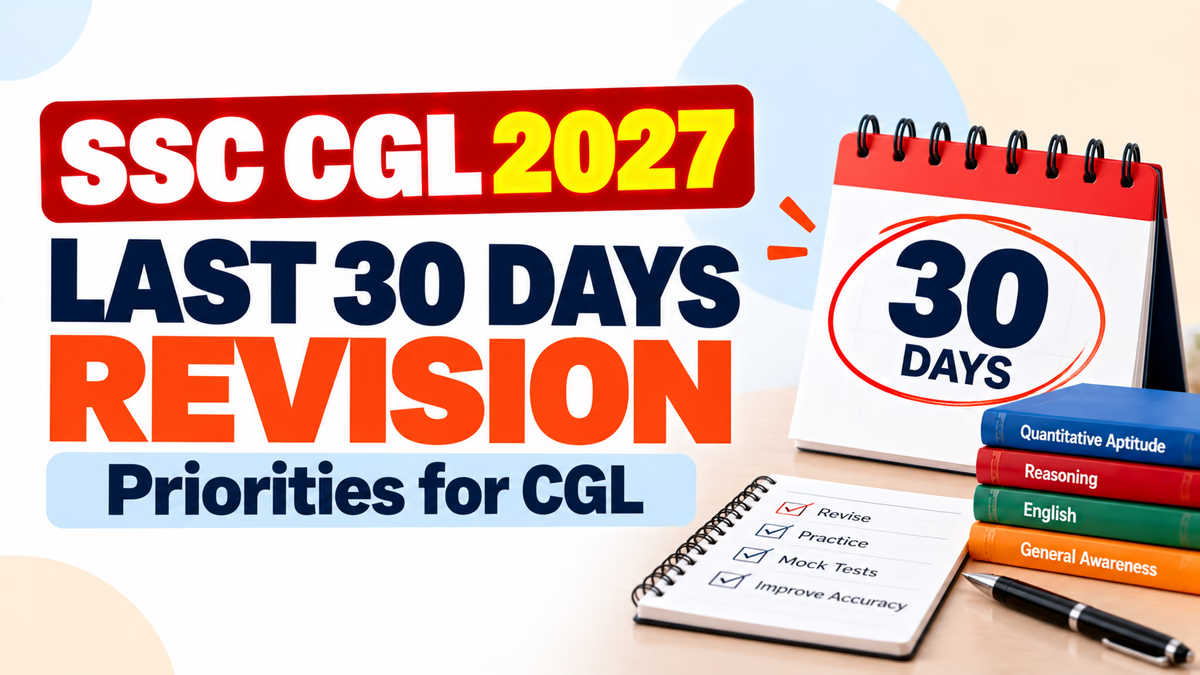
During the final week, use your existing notes, formula sheets and error logs to revise important material. Repeatedly switching between books and online resources can make it harder to complete a planned revision session.
If you discover an important knowledge gap, address it proportionately. Avoid allowing one unfamiliar topic to consume the entire day at the expense of other preparation tasks.
Mock tests can help you assess your readiness, but the final week is not necessarily the time to maximise the number of tests you attempt. Choose practice according to your needs and leave enough time to analyse the results.
After a mock test, review:
If full-length tests leave you exhausted or interfere with revision and sleep, consider using sectional tests or shorter practice sets where appropriate. Your final practice should support preparation rather than create unnecessary fatigue.
Revise important formulas and methods from the topics included in the applicable syllabus. Solve selected questions and check whether mistakes come from forgotten formulas, calculation errors or inefficient methods.
Practise familiar question types and review reasoning methods that you tend to forget. Focus on reading conditions carefully and avoiding unnecessary time on a single difficult question.
Review important grammar rules, vocabulary notes and comprehension mistakes. Use short practice sets to check your understanding instead of trying to memorise large amounts of material at once.
Revise concise notes and important facts from reliable sources. Focus on material you have already studied and revisit recurring errors. Verify uncertain information instead of memorising unconfirmed claims.
The exact subject structure and applicable syllabus should be checked against the latest official SSC CGL notification.
Exam preparation can become irregular when candidates spend long hours studying. Regular meals and adequate hydration can support general well-being and help maintain a comfortable study routine.
There is no need to adopt an extreme diet or purchase special products to prepare for an examination. Consistent, familiar habits are generally easier to maintain.
Some nervousness before an important examination is common. A practical plan can help you focus on tasks you can control instead of repeatedly worrying about the result.
If stress is seriously affecting your sleep or daily functioning, consider seeking appropriate professional support rather than trying to manage everything through additional study hours.
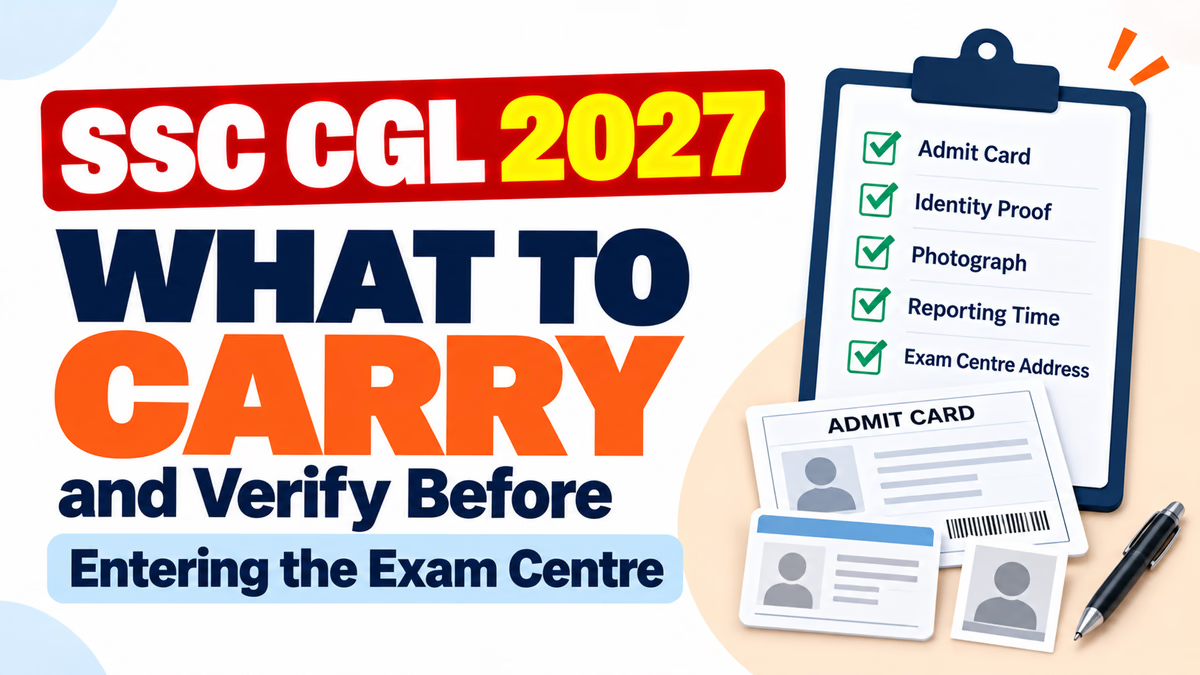
Administrative preparation is an important part of exam-week planning. Complete these tasks in advance so that you do not need to interrupt your final revision to search for information.
Do not rely on assumptions or advice from unofficial sources when preparing for entry requirements. The current official instructions for your examination should take priority.
The day before the examination should be organised and relatively calm. Focus on essential revision and practical preparation rather than trying to cover the entire syllabus again.
If a topic remains unfamiliar, make a sensible decision about whether it deserves a brief review. Do not sacrifice essential rest in an attempt to master everything at the last moment.
Use this checklist to review your preparation and practical arrangements.
Q1. What should be a major priority during the final week?
A. Starting several unrelated courses
B. Revising familiar concepts and correcting recurring mistakes
C. Ignoring mock-test results
D. Studying without breaks
Answer: B. Focused revision and error correction help candidates use the remaining preparation time effectively.
Q2. Why should candidates maintain a consistent sleep schedule?
A. It guarantees a particular examination score
B. It removes the need for revision
C. It supports rest and readiness for study and examination tasks
D. It replaces mock tests
Answer: C. Adequate, regular sleep supports general well-being and attention.
Q3. What is a useful approach after a mock test?
A. Check only the total score
B. Review mistakes, time management and weak topics
C. Ignore incorrect answers
D. Immediately change the entire study plan
Answer: B. Reviewing performance helps identify practical areas for improvement.
Q4. When should candidates check their examination documents?
A. Only after reaching the centre
B. In advance, using the official instructions
C. After the examination has started
D. Only if another candidate reminds them
Answer: B. Early preparation helps avoid preventable last-minute problems.
Q5. What should candidates do if they feel tired after prolonged revision?
A. Ignore the fatigue and continue indefinitely
B. Take an appropriate break and follow a sustainable routine
C. Stop sleeping until the examination
D. Replace all meals with caffeine
Answer: B. Breaks and adequate rest are important parts of a sustainable study routine.
Q6. Which approach is useful for General Awareness revision?
A. Memorising unverified information
B. Revising concise notes and checking uncertain facts against reliable sources
C. Avoiding all previous mistakes
D. Collecting new resources without a plan
Answer: B. Reliable material and focused revision help reduce confusion.
Q7. What should candidates do on the day before the examination?
A. Attempt exhausting tests late into the night
B. Ignore examination instructions
C. Complete light revision and confirm practical arrangements
D. Begin the entire syllabus from the beginning
Answer: C. A calm final review and advance preparation can help reduce avoidable stress.
Q8. Where should candidates verify permitted examination items?
A. Only in social media comments
B. Through the latest official examination instructions
C. By guessing based on previous exams
D. Through unrelated study notes
Answer: B. Official instructions provide the relevant requirements for the examination.
A balanced exam-week routine combines focused revision, careful mock-test analysis, adequate sleep, regular meals and advance preparation for examination day. SSC CGL 2027 aspirants should concentrate on strengthening familiar concepts and correcting recurring mistakes instead of creating unnecessary pressure through last-minute cramming.
Follow a realistic timetable, take suitable breaks and prepare your documents and travel arrangements early. Most importantly, adjust your routine to your own needs and follow the latest official SSC instructions for the examination.