


Download the App & Start Learning
- Expert Faculty Guidance
- Updated Study Material
- Mock Tests & Practice Quiz
- Live Doubt Solving Sessions
- Exam-Oriented Preparation
- Motivation & Success Strategy
Katara Academy

7/18/2026
RAILWAY GROUP D 2026
Check the expected Railway Group D Cut Off 2026, category-wise qualifying marks, previous year cut-off trends, factors affecting cut-off and expert preparation tips.
| Exam Railway Group D Recruitment 2026 | Article Type Expected Cut Off & Analysis |
| Includes Expected Cut Off, Previous Year Cut Off, Qualifying Marks and Selection Insights. | Suitable For Candidates preparing for Railway Group D 2026. |
The Railway Group D Cut Off is one of the most important factors candidates monitor after the examination. It helps estimate the minimum score required to qualify for the next stage of the recruitment process. Although the official cut-off is released by the Railway Recruitment Boards (RRBs) after the examination, understanding previous trends and expected cut-off marks can help candidates set realistic preparation targets.
In this article, you'll find the expected Railway Group D Cut Off 2026, previous year analysis, category-wise trends, factors affecting cut-off marks and preparation strategies to maximize your chances of selection.
The official Railway Group D Cut Off 2026 will be released after the Computer Based Test (CBT) and subsequent stages of the recruitment process. Until then, the expected cut-off can be estimated by analysing previous year trends, exam difficulty level, number of vacancies and candidate performance.
Candidates should use the expected cut-off only as a preparation benchmark. The actual cut-off may vary depending on the Railway Recruitment Board (RRB), category, zone and the overall competition in the examination.
The table below presents an estimated cut-off range for different categories. These figures are indicative and should not be considered as the official Railway Group D Cut Off.
| Category | Expected Cut Off (Approx.) |
|---|---|
| General (UR) | 70–78 Marks |
| OBC | 68–75 Marks |
| EWS | 67–74 Marks |
| SC | 60–68 Marks |
| ST | 55–64 Marks |
Note: These expected marks are based on previous recruitment trends and are intended for reference only. The official cut-off may differ across RRB zones and categories.
Reviewing previous year cut-off trends helps candidates understand the level of competition and set realistic score targets. While the cut-off changes every recruitment cycle, it generally reflects the exam's difficulty level, number of vacancies and candidate performance.
Candidates aiming for a score above the expected cut-off improve their chances of qualifying for the next stage and securing a place in the final merit list.
The Railway Recruitment Boards (RRBs) determine the cut-off after evaluating several important factors. Every recruitment cycle is unique, which means the qualifying marks may increase or decrease depending on the overall examination scenario.
Achieving a score comfortably above the expected cut-off significantly improves your chances of qualifying for the next stage of the Railway Group D recruitment process. A disciplined preparation strategy, regular practice and effective revision are key to success.
| Preparation Strategy | Benefit |
|---|---|
| Complete the syllabus early. | Allows sufficient time for revision. |
| Attempt full-length mock tests regularly. | Improves speed and accuracy. |
| Solve previous year question papers. | Understand exam trends and important topics. |
| Revise formulas and short notes daily. | Improves long-term retention. |
| Analyse mistakes after every mock test. | Reduces repeated errors. |
Many candidates confuse qualifying marks with the final cut-off. Qualifying marks represent the minimum score required to remain eligible in the recruitment process, whereas the cut-off is the score of the last selected candidate in a specific category and RRB zone.
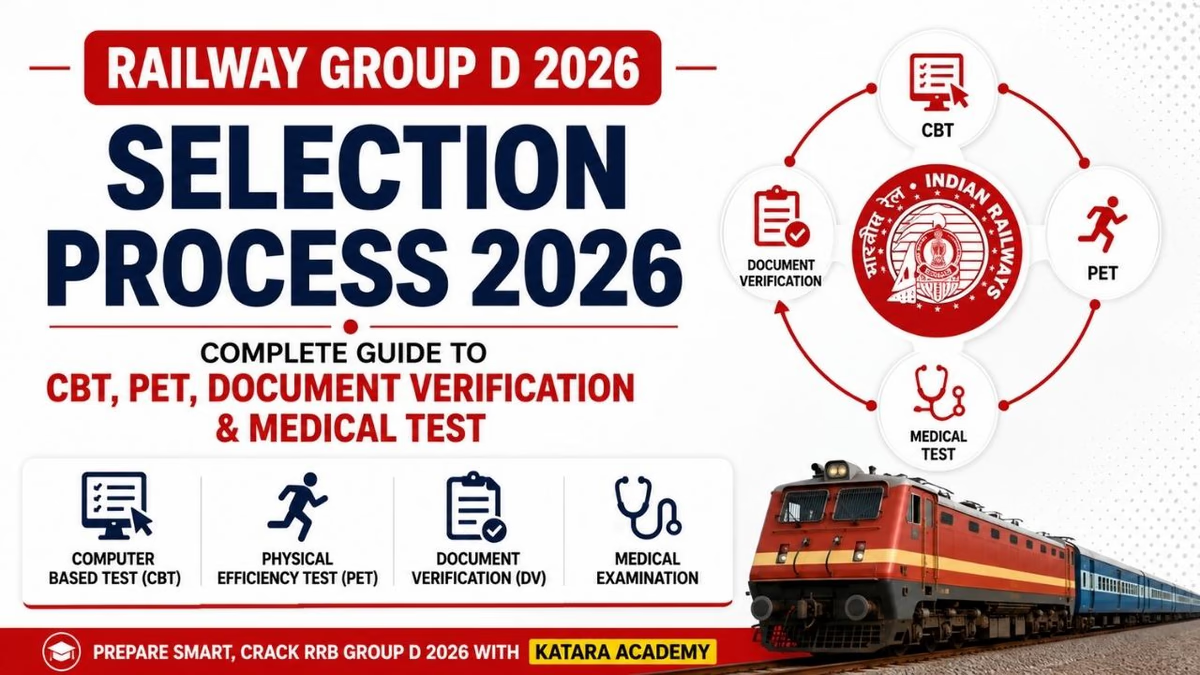
The official Railway Group D Cut Off 2026 will be published by the Railway Recruitment Boards (RRBs) after the CBT, Physical Efficiency Test (PET) and document verification process.
No. The cut-off varies from one RRB zone to another based on vacancies, competition and candidate performance.
No. Expected cut-off marks are estimates based on previous recruitment trends. Candidates should refer to the official RRB notification for the final cut-off.
A score comfortably above the expected cut-off generally improves your chances of selection. The exact safe score depends on your category, RRB zone and the overall competition.
The CBT cut-off determines eligibility for the PET. The PET is qualifying in nature, but candidates must clear it to proceed to the final stages of recruitment.
The Railway Group D Cut Off 2026 will play a crucial role in determining candidates eligible for the next stages of the recruitment process. While the official cut-off will be released after the examination, analysing previous year trends and expected cut-off ranges can help aspirants set realistic preparation goals.
To maximize your chances of selection, aim to score well above the expected cut-off by completing the syllabus on time, practising mock tests regularly, solving previous year papers and revising consistently. A disciplined preparation strategy is the key to securing a place in the final merit list.
At Katara Academy, students receive expert classroom coaching, structured study material, regular mock tests and personalized guidance to prepare confidently for Railway Group D 2026.
Prepare with experienced faculty, comprehensive study material, regular mock tests and personalized mentoring to improve your score and secure success in Railway Group D 2026.