Download the App & Start Learning
- Expert Faculty Guidance
- Updated Study Material
- Mock Tests & Practice Quiz
- Live Doubt Solving Sessions
- Exam-Oriented Preparation
- Motivation & Success Strategy
Katara Academy

Loading blogs…



The Staff Selection Commission Combined Graduate Level (SSC CGL) examination offers graduates opportunities to work in various central government departments. Among the specialised posts available through SSC CGL, Junior Statistical Officer (JSO) is an important option for candidates interested in statistics, mathematics, data analysis, and government research.
The Junior Statistical Officer post differs from many general administrative roles because it involves statistical information, data compilation, analysis, and reporting. Candidates considering this post for SSC CGL 2027 should understand its responsibilities, educational eligibility, required skills, career prospects, and examination preparation requirements.
A Junior Statistical Officer is a statistical post recruited through SSC CGL when vacancies are notified. The post has been associated with the Ministry of Statistics and Programme Implementation (MoSPI), including its statistical work and related offices, subject to the vacancies and allocation rules of the relevant recruitment cycle.
JSOs may assist with collecting, compiling, processing, analysing, and presenting statistical information. Such information can support surveys, statistical reports, government planning, and evidence-based decision-making.
The exact responsibilities depend on the office, assigned project, departmental procedures, and the work allocated by senior officers.
The responsibilities of a JSO can involve several stages of statistical work. Common areas may include the following:
Statistical work often begins with gathering information from approved sources, surveys, administrative records, or other authorised datasets. A JSO may help compile this information into structured formats and check whether the required data fields are complete.
Before data can be used, it may need to be checked for missing values, inconsistent entries, duplication, or unusual observations. A JSO may assist with these checks and report issues that require further verification.
Depending on the assignment and required technical skills, a JSO may support calculations, tabulation, comparisons, statistical summaries, and other analytical tasks. The methods used depend on the nature of the dataset and the objectives of the project.
Statistical findings often need to be presented clearly. A JSO may assist in preparing tables, charts, summaries, and supporting documentation for review by senior officers.
Some assignments may involve supporting survey-related activities, maintaining data documentation, reviewing collected information, or assisting with statistical research and reporting processes.
Computer tools are important in modern statistical work. Depending on the office and assignment, a JSO may use spreadsheets, statistical software, databases, or other authorised applications to organise and analyse information.
Educational eligibility is especially important for candidates applying for the Junior Statistical Officer post. The applicable requirements must be checked carefully because they are more specialised than the general eligibility requirements for many other SSC CGL posts.
Under the eligibility criteria commonly specified in recent SSC CGL notifications, candidates generally need to meet one of the following conditions:
Important: These are the commonly notified criteria from previous recruitment cycles, not a substitute for the SSC CGL 2027 notification. Candidates must verify the exact wording, subject requirements, marks criteria, and other conditions in the official notification applicable to their recruitment year.
The age limit for JSO can differ from the limits applicable to other SSC CGL posts. Recent SSC CGL recruitment notices have commonly specified an age range of 18–32 years for the Junior Statistical Officer post, subject to the relevant cut-off date and applicable rules.
Age relaxation may be available to eligible candidates belonging to specified categories under government rules. The applicable age calculation date, category-based relaxation, and other conditions must be confirmed from the SSC CGL 2027 notification.
Candidates should not calculate eligibility using their age on the examination date alone. The official notification specifies the date and rules that determine whether a candidate meets the age requirement.
A JSO role can require a combination of quantitative ability, technical knowledge, careful data handling, and communication skills. Candidates interested in this post can begin developing these abilities during their preparation.
| Skill | Why It Is Useful |
|---|---|
| Mathematics | Supports numerical calculations, quantitative reasoning, and interpretation of mathematical information. |
| Statistics | Helps with data summaries, statistical concepts, distributions, and analytical methods. |
| Logical Reasoning | Supports structured problem-solving and identifying relationships in information. |
| Data Interpretation | Helps analyse tables, charts, graphs, percentages, and numerical comparisons. |
| Computer Literacy | Supports data organisation, spreadsheet work, documentation, and computer-based analysis. |
| Attention to Detail | Helps identify inconsistencies and minimise errors in statistical records. |
| Report Writing | Helps communicate findings through clear tables, summaries, and supporting documents. |
Much of the work associated with statistical analysis, data processing, and report preparation can be office-based and computer-oriented. Candidates who enjoy mathematics, structured analysis, and working with numerical information may find the role appealing.
However, it is not appropriate to assume that every JSO assignment has an identical routine. Depending on the office and project, responsibilities may also include coordination, survey-related work, data verification, or other duties assigned by the department.
The actual work environment, posting, and responsibilities should be assessed using the applicable departmental information rather than assumptions based only on the post title.
In recent SSC CGL recruitment notifications, the Junior Statistical Officer post has generally been associated with Pay Level 6 under the Seventh Central Pay Commission, with a basic pay matrix range of ₹35,400 to ₹1,12,400.
The salary applicable to a particular recruitment cycle must be verified in the official notification. Basic pay is only one component of compensation; the actual monthly salary depends on admissible allowances, posting location, applicable deductions, and service conditions.
When evaluating the salary, candidates should consider:
Do not compare posts using unverified take-home salary figures from social media. Use the notified pay level and applicable government rules as the starting point.
Career progression for a Junior Statistical Officer depends on the relevant cadre and service rules, vacancies, seniority, eligibility, departmental requirements, and other prescribed conditions.
Statistical work can provide experience in data management, survey support, analytical reporting, and government statistical processes. These skills can also be useful for further professional development in statistics, analytics, research, and data-oriented work.
However, promotion to a particular higher post or within a fixed period is not guaranteed. Candidates should refer to the applicable service rules for confirmed promotion pathways and eligibility conditions.
JSO is a specialised statistical post, while many other SSC CGL posts focus more heavily on general administration, accounts, audit, inspection, or office support.
| Factor | Junior Statistical Officer | General Administrative or Accounts Posts |
|---|---|---|
| Primary Focus | Statistical information, data analysis, and reporting support | Administrative, accounting, audit, or other department-specific duties |
| Relevant Academic Interest | Mathematics, Statistics, quantitative analysis | Depends on the post and assigned department |
| Typical Work Tools | Data tables, spreadsheets, statistical tools, and reports, as applicable | Office software, departmental systems, records, and documents, as applicable |
| Special Eligibility | Specific educational criteria may apply | Requirements vary by post; some posts also have special criteria |
| Best Preference Approach | Check subject eligibility and interest in statistical work | Compare the actual duties, eligibility, pay level, and service conditions |
Neither option is automatically better for every candidate. The right preference depends on eligibility, skills, career interests, and the official conditions of the available posts.
Candidates targeting JSO should prepare for the common SSC CGL examination requirements while paying special attention to the additional subject knowledge and eligibility conditions relevant to the post.
Before investing time in post-specific preparation, check your degree subjects, Class 12 Mathematics marks where relevant, age, and other requirements against the official SSC CGL 2027 notification.
Practise the mathematics topics included in the official syllabus. Focus on understanding concepts, solving questions accurately, and improving speed through regular practice.
Review the statistical concepts relevant to the applicable examination requirements. Build a strong foundation before moving to more complex questions, and use the official syllabus to identify the topics that need attention.
Work with tables, bar graphs, pie charts, line graphs, percentages, averages, and numerical comparisons. Carefully read units and labels before calculating answers.
Do not neglect Reasoning, English, and General Awareness. Follow the latest official examination structure and allocate preparation time according to your strengths and weaknesses.
Attempt practice tests under timed conditions. Review incorrect answers, identify repeated mistakes, and revise concepts that cause difficulty. Regular analysis is more useful than simply counting the number of tests completed.
A JSO may support statistical data compilation, verification, analysis, tabulation, reporting, and related departmental work. Exact responsibilities depend on the office and assignment.
Recent notifications have commonly specified a bachelor's degree with at least 60% marks in Mathematics at the Class 12 level, or a bachelor's degree in any subject with Statistics studied as a subject. Confirm the precise criteria in the SSC CGL 2027 notification.
Recent recruitment notices have commonly listed an age range of 18–32 years for JSO, subject to the applicable cut-off date and relaxation rules. Check the latest notification for confirmation.
The post has generally been associated with Pay Level 6 in recent SSC CGL notifications, with basic pay ranging from ₹35,400 to ₹1,12,400. Verify the applicable pay level for the relevant recruitment cycle.
Yes. Statistics is relevant to the role, and candidates should check the official educational eligibility and examination requirements before applying.
Candidates interested in numerical information, statistical concepts, data quality, and analytical reporting may find the post worth considering, provided they meet the eligibility requirements.
No. Promotion depends on the applicable service rules, vacancies, eligibility, seniority, and other departmental conditions.
Q1. Which subject is particularly relevant to the Junior Statistical Officer role?
A. Statistics
B. Music theory
C. Theatre studies
D. Fine arts only
Answer: A. Statistics is central to the specialised nature of the JSO role.
Q2. What is the purpose of data verification?
A. To identify missing or inconsistent information
B. To make every value identical
C. To remove all documentation
D. To avoid checking records
Answer: A. Verification helps identify data-quality issues that may affect analysis.
Q3. Which tool is commonly useful for organising numerical information?
A. Spreadsheet software
B. Music player only
C. Video game controller
D. Photo filter application only
Answer: A. Spreadsheets can help organise, calculate, and summarise data.
Q4. What should candidates check before applying for JSO?
A. Only the post's popularity
B. Educational eligibility and the official notification
C. Unverified online comments
D. Only the salary mentioned in an advertisement
Answer: B. Candidates must meet the notified eligibility criteria.
Q5. Which organisation is associated with the Junior Statistical Officer post in recent SSC CGL recruitment?
A. Ministry of Statistics and Programme Implementation
B. Board of Control for Cricket in India
C. A private advertising agency
D. A state sports association
Answer: A. The post has been associated with statistical work under MoSPI, subject to the relevant recruitment details.
Q6. Which activity can form part of statistical reporting?
A. Preparing tables and summaries
B. Ignoring numerical results
C. Deleting all source data without authority
D. Replacing analysis with guesses
Answer: A. Tables and summaries help communicate statistical findings clearly.
Q7. Why is attention to detail important in data work?
A. It helps reduce errors and inconsistencies
B. It removes the need for verification
C. It guarantees promotion
D. It replaces subject knowledge
Answer: A. Careful checking supports data quality and reliable analysis.
Q8. What is a sensible approach to mock tests?
A. Attempt tests without reviewing mistakes
B. Review incorrect answers and revise weak areas
C. Avoid timed practice
D. Memorise only answer options
Answer: B. Error analysis helps candidates identify and address weaknesses.
Q9. Does every JSO assignment necessarily have identical duties?
A. Yes, in all circumstances
B. No, responsibilities can vary by office and assignment
C. All assignments involve only typing
D. No official duties are assigned
Answer: B. Actual responsibilities depend on departmental requirements and work allocation.
Q10. Which source should be used to confirm SSC CGL 2027 eligibility?
A. The applicable official SSC notification
B. An unrelated blog comment
C. An old social media message only
D. A random online discussion
Answer: A. The official notification is the authoritative source for the relevant recruitment requirements.
The Junior Statistical Officer post is a specialised option for SSC CGL aspirants interested in mathematics, statistics, data handling, and analytical reporting. Its work may involve data compilation, verification, statistical summaries, and support for surveys or reports, depending on the assigned office.
Before selecting JSO as a post preference for SSC CGL 2027, verify the educational qualifications, age criteria, pay level, and other conditions in the official notification. Build a consistent preparation routine, practise quantitative questions, and strengthen your understanding of statistics to prepare effectively.

The Staff Selection Commission Combined Graduate Level (SSC CGL) examination offers graduates an opportunity to apply for various posts in central government departments and offices. One post that attracts candidates interested in taxation, financial documentation, and administrative work is Tax Assistant.
For SSC CGL 2027 aspirants, understanding the Tax Assistant work profile is important before preparing their post preferences. The role generally involves supporting departmental work related to tax administration, data processing, record maintenance, and office documentation. However, exact responsibilities depend on the department, office, and assignment.
A Tax Assistant is a Group C post that may be notified through SSC CGL recruitment for eligible vacancies in departments such as the Central Board of Direct Taxes (CBDT) and the Central Board of Indirect Taxes and Customs (CBIC). The availability of the post, pay level, eligibility, and other conditions must be confirmed through the relevant recruitment notification.
Tax Assistants generally provide clerical, data-processing, and administrative support to departmental officers. Their work may include handling records, entering information into computer systems, maintaining files, preparing routine documents, and assisting with the processing of tax-related information.
The duties of a Tax Assistant can vary according to the department and the office in which the employee is posted. Common responsibilities may include the following:
Tax departments handle substantial amounts of information. A Tax Assistant may enter, update, organise, or verify data in authorised departmental systems. Accuracy is essential because incorrect entries can create difficulties during later processing or verification.
Maintaining records is an important part of many administrative roles. Duties may include arranging files, organising documents, maintaining registers, retrieving records when required, and following the office's document-handling procedures.
Depending on the assigned office, a Tax Assistant may help process tax-related information and support routine administrative work. This can include preparing documents for review, updating records, and assisting senior staff with prescribed procedures.
Computer applications are commonly used for official documentation and data management. A Tax Assistant may work with spreadsheets, word-processing software, email, databases, and authorised departmental applications.
Tax Assistants may support senior staff by preparing routine documents, arranging information, maintaining records, and completing assigned administrative tasks. The nature of this support depends on the office's requirements.
SSC CGL notifications may include Tax Assistant vacancies in different departments. Two important organisations associated with this post are CBDT and CBIC. Their broad areas of work differ, so the office environment and assigned responsibilities may also differ.
| Comparison Factor | CBDT | CBIC |
|---|---|---|
| Full Form | Central Board of Direct Taxes | Central Board of Indirect Taxes and Customs |
| Broad Area | Direct tax administration, including income tax | Indirect tax administration, including GST and customs |
| Possible Support Work | Record management, data processing, documentation, and administrative support related to assigned work | Record management, data processing, documentation, and administrative support related to assigned work |
| Work Environment | Depends on the office, posting, and duties assigned | Depends on the office, posting, and duties assigned |
| Important Consideration | Verify the notified post details and applicable service conditions | Verify the notified post details and applicable service conditions |
Note: This comparison describes the broad functions of the two organisations, not a guaranteed daily task list for every Tax Assistant. Actual duties should be confirmed from official service information and departmental instructions.
A Tax Assistant's day may involve a combination of computer work, document handling, data verification, and coordination with other staff. The exact schedule varies by office and workload.
| Work Stage | Possible Activity |
|---|---|
| Beginning of the Day | Reviewing assigned tasks, checking official communications, and organising pending work. |
| Data Processing | Entering or updating information in authorised systems and checking entries for accuracy. |
| Documentation | Organising files, preparing routine documents, and maintaining records. |
| Coordination | Providing information or documents requested by authorised colleagues and officers. |
| Task Completion | Updating records, completing assigned work, and organising pending tasks for follow-up. |
This is an illustrative routine rather than an official fixed timetable. Work priorities and daily activities may change according to departmental requirements.
Tax Assistant work is generally associated with office administration, documentation, and computer-based tasks. Candidates who prefer structured office work may find the role worth considering.
However, candidates should not assume that every posting has identical duties or working conditions. Work allocation, location, office requirements, and occasional additional responsibilities can differ. Review the relevant departmental rules and official recruitment information before making a final decision.
Several practical skills can help candidates prepare for the responsibilities associated with this post.
Developing these skills can support both examination preparation and future office responsibilities.
The salary for a Tax Assistant depends on the pay level and service conditions applicable to the specific vacancy. Tax Assistant posts have commonly been associated with Pay Level 4 under the Seventh Central Pay Commission, with a pay matrix basic pay range of ₹25,500 to ₹81,100. Candidates must verify whether this applies to the particular SSC CGL 2027 vacancy through the official notification.
Basic pay is not the same as take-home salary. The actual monthly amount can vary because of admissible allowances, the posting location, government accommodation arrangements where applicable, and deductions.
Before comparing salary with other SSC CGL posts, check:
Career progression depends on the department's service rules, vacancies, seniority, eligibility requirements, departmental examinations where applicable, and other prescribed conditions.
Tax Assistants may have opportunities to progress to higher posts or responsibilities under the applicable departmental rules. However, promotion pathways and timelines are not necessarily identical across all offices or cadres.
Candidates should avoid relying on unverified claims about guaranteed promotions or fixed promotion periods. The relevant department's official recruitment rules provide the most reliable information about career progression.
Tax Assistant may be worth considering for candidates who:
Post preference should not be decided by job title alone. Candidates should compare the department, pay level, posting conditions, promotion rules, and other relevant details in the official notification.
Understanding the Tax Assistant role is useful, but selection depends on meeting the examination requirements and performing well in the recruitment process. Candidates should follow the latest official SSC CGL syllabus and notification.
Do not assume that the examination pattern or post-specific requirements will remain unchanged. Always verify the latest official notification before finalising your preparation plan.
A Tax Assistant generally supports departmental work through data processing, document management, record maintenance, and routine administrative tasks. Specific duties depend on the office and assignment.
Tax Assistant vacancies have been notified in connection with both CBDT and CBIC in SSC CGL recruitment. Candidates must check the SSC CGL 2027 notification to confirm the posts and vacancies available for that cycle.
The salary depends on the applicable pay level, allowances, posting, and deductions. Tax Assistant posts have commonly been associated with Pay Level 4, but candidates should verify the notified details for SSC CGL 2027.
The role is generally associated with office administration, computer work, and documentation. Actual duties and working conditions depend on the department and posting.
Office software, spreadsheet handling, word processing, email, accurate data entry, and responsible digital record management are useful skills.
No fixed timeline should be assumed. Promotion depends on applicable service rules, vacancies, eligibility, seniority, and other departmental conditions.
Prepare according to the latest official SSC CGL syllabus, practise mock tests, revise all prescribed subjects, and check any post-specific skill-test requirements in the official notification.
Q1. Which organisation is associated with direct tax administration in India?
A. CBDT
B. ISRO
C. BCCI
D. NHAI
Answer: A. The Central Board of Direct Taxes is associated with direct tax administration.
Q2. Which organisation is associated with GST and customs administration?
A. CBIC
B. UPSC
C. RBI alone
D. Election Commission of India
Answer: A. The Central Board of Indirect Taxes and Customs is associated with indirect tax administration, including GST and customs.
Q3. Which skill is especially useful when entering financial data?
A. Accuracy and attention to detail
B. Guessing values
C. Ignoring errors
D. Skipping verification
Answer: A. Accurate data entry helps reduce errors in official records.
Q4. What is one common administrative responsibility of a Tax Assistant?
A. Maintaining records and documents
B. Conducting court trials independently
C. Making all tax laws
D. Issuing all government policies
Answer: A. Record and document management can form part of the assigned administrative work.
Q5. What should a candidate use to confirm SSC CGL 2027 vacancies?
A. An old social media post
B. The official SSC notification
C. An unrelated advertisement
D. A random online comment
Answer: B. The official notification provides the authoritative recruitment details.
Q6. Why is confidentiality important in tax-related office work?
A. It protects sensitive official information
B. It removes the need for records
C. It allows unauthorised disclosure
D. It replaces all office procedures
Answer: A. Official and taxpayer-related information must be handled responsibly.
Q7. What does basic pay represent?
A. The pay-matrix amount before adding applicable allowances and accounting for deductions
B. The exact take-home salary in every city
C. Only travel expenses
D. A one-time examination fee
Answer: A. Basic pay is a component of salary, not the same as take-home pay.
Q8. Which of the following may affect take-home salary?
A. Applicable allowances and deductions
B. Favourite subject only
C. Mock-test score after appointment
D. The title of a preparation book
Answer: A. Allowances, deductions, and service conditions influence the amount received.
Q9. Are daily duties identical for every Tax Assistant?
A. Yes, in every office
B. No, duties can vary by department and assignment
C. Every employee performs only one task forever
D. Duties never depend on office requirements
Answer: B. Actual work depends on the assigned office, department, and responsibilities.
Q10. What is a sensible way to prepare for SSC CGL 2027?
A. Follow an old syllabus without checking updates
B. Avoid mock tests
C. Follow the latest official syllabus and practise consistently
D. Study only the preferred post's name
Answer: C. Preparation should be based on the latest official requirements and regular practice.
The Tax Assistant post through SSC CGL can be an option for graduates interested in government administration, taxation-related records, computer-based work, and documentation. The role may involve data processing, record maintenance, and administrative support, with duties varying by department and posting.
For SSC CGL 2027, focus on consistent exam preparation and verify the official notification for vacancies, pay level, eligibility, and any post-specific requirements. Understanding the work profile will help you make a more informed post-preference decision.

SSC CGL is a popular recruitment examination for graduates who want to work in various departments of the Central Government. Among the posts available through the examination, Auditor and Accountant are important options for candidates interested in finance, accounts, auditing, and government administration.
Although these posts are related to financial records, their responsibilities and working environments can differ. Understanding the difference between an Auditor and an Accountant can help SSC CGL 2027 aspirants choose posts according to their interests, skills, and career goals.
An Auditor generally works with government audit organisations and examines financial records, transactions, expenditure, and supporting documents. The purpose of auditing is to check whether financial activities follow the applicable rules, procedures, and regulations.
Depending on the department and assignment, an Auditor may assist in checking bills, verifying vouchers, reviewing records, identifying discrepancies, and preparing audit-related observations. Some assignments may involve office-based work, while others may require visits to offices or establishments being audited.
An Accountant generally handles accounting records and financial transactions in the department to which they are assigned. The work may include maintaining accounts, recording transactions, preparing statements, checking financial entries, and assisting with expenditure or payment-related documentation.
The exact duties depend on the department, office, and applicable financial procedures. Accountants may work with bills, receipts, expenditure records, reconciliations, and other accounting documents to ensure that financial information is properly recorded and maintained.
| Comparison Factor | Auditor | Accountant |
|---|---|---|
| Main Purpose | Examines financial records and checks compliance with applicable rules. | Maintains and processes accounting records and financial transactions. |
| Typical Work | Audit checks, verification, document examination, and reporting observations. | Accounting entries, records, statements, reconciliation, and financial documentation. |
| Work Environment | Office-based work and, depending on assignment, audit-related visits. | Usually office-based accounting and documentation work, depending on the department. |
| Skills Required | Analytical thinking, attention to detail, rule interpretation, and verification skills. | Numerical accuracy, organisation, accounting knowledge, and attention to detail. |
| Nature of Responsibility | Checks whether records and expenditure meet applicable requirements. | Helps ensure that financial records and transactions are correctly maintained. |
| Suitable Interest | Candidates who enjoy checking records and identifying discrepancies. | Candidates who prefer structured accounting and financial record management. |
Important: These are general distinctions. Actual duties can overlap and may vary according to the department, office, posting, and instructions issued by the competent authority.
SSC CGL vacancies can include Auditor and Accountant posts in different government organisations, depending on the recruitment notification and vacancies available for a particular year.
The organisations, post names, eligibility requirements, pay levels, and number of vacancies may change from one recruitment cycle to another. Candidates preparing for SSC CGL 2027 should consult the official notification for the final list of posts and departments.
The salary of an Auditor or Accountant recruited through SSC CGL depends on the specific post, department, applicable pay level, allowances, and place of posting. The basic pay is determined by the relevant pay matrix, while the actual monthly salary also depends on admissible allowances and deductions.
Do not assume that every Auditor or Accountant post has the same salary. Before selecting post preferences, verify the pay level and other service conditions mentioned in the official SSC CGL 2027 notification.
When comparing compensation, consider the following:
Career progression for both posts depends on the organisation's service rules, seniority, departmental examinations where applicable, vacancies, performance requirements, and other prescribed conditions.
Auditors may progress to higher responsibilities and supervisory positions according to the rules of their organisation. Their work experience can help them develop expertise in audit procedures, financial compliance, record verification, and government expenditure review.
Accountants may progress to higher accounting or supervisory roles under the applicable departmental promotion rules. Experience in financial documentation, accounting systems, reconciliation, and government financial procedures can support professional development.
Note: No particular promotion timeline or higher post is guaranteed. Candidates should review the service rules of the specific organisation before making a career decision.
Both posts require accuracy, responsibility, and the ability to handle financial information carefully. However, candidates can strengthen different skills according to the nature of their preferred work.
| Skill | Why It Matters |
|---|---|
| Numerical Accuracy | Helps prevent mistakes while checking amounts, calculations, and financial entries. |
| Attention to Detail | Supports careful examination of bills, vouchers, records, and supporting documents. |
| Basic Accounting Knowledge | Helps candidates understand financial statements, transactions, and accounting terminology. |
| Analytical Thinking | Useful for identifying inconsistencies and understanding financial information. |
| Computer Skills | Helps with spreadsheets, digital records, document preparation, and office software. |
| Communication and Writing | Supports clear documentation, reporting, and communication with colleagues. |
There is no single best choice for every candidate. Your preference should depend on the nature of work you enjoy, the department offering the post, the notified service conditions, and your long-term goals.
Before submitting your post preferences, compare the available options carefully rather than choosing a post based only on its title or assumptions about workload.
Understanding the posts is useful, but qualifying for SSC CGL requires a consistent preparation strategy. Candidates should focus on the subjects and examination pattern specified in the official notification.
Use the latest SSC CGL notification as the final reference for the exam pattern, syllabus, and any post-specific requirements. Do not rely exclusively on older examination patterns.
An Auditor generally examines financial records and checks compliance, while an Accountant generally maintains accounting records and processes financial transactions. Actual responsibilities depend on the department.
No. Auditor work can include office-based verification and documentation. Field visits may be required depending on the organisation and assignment.
No. Accounting responsibilities may include maintaining records, checking transactions, preparing statements, reconciliation, and other financial documentation.
Salary depends on the specific notified post, pay level, allowances, and service conditions. Compare the official details for the relevant recruitment cycle before deciding.
Basic accounting and numerical skills can be useful for both posts. The exact qualifications and requirements must be checked in the official notification.
Yes. Responsibilities, work environment, and reporting procedures can vary according to the organisation, posting, and assignment.
Compare job responsibilities, department, pay level, location-related conditions, promotion rules, and your personal interests. Use official recruitment information to make the final decision.
Test your understanding with these practice questions.
Q1. What is the general purpose of an audit?
A. To advertise products
B. To examine records and check compliance
C. To recruit employees
D. To design websites
Answer: B. Auditing involves examining financial records and checking compliance with applicable requirements.
Q2. Which activity is generally associated with an Accountant?
A. Maintaining accounting records
B. Conducting elections
C. Issuing driving licences
D. Preparing weather forecasts
Answer: A. Maintaining accounting records is a common accounting responsibility.
Q3. Which skill is useful for both Auditors and Accountants?
A. Numerical accuracy
B. Acting
C. Professional sports
D. Music composition
Answer: A. Both roles require care while handling financial information.
Q4. Which organisation is associated with the Comptroller and Auditor General of India?
A. C&AG
B. ISRO
C. BCCI
D. FSSAI
Answer: A. C&AG refers to the Comptroller and Auditor General of India.
Q5. What should candidates check for the final SSC CGL 2027 post list?
A. An unofficial social media post
B. An old coaching advertisement only
C. The official SSC notification
D. An unrelated website
Answer: C. The official notification is the authoritative source for notified vacancies and post details.
Q6. What is reconciliation in accounting?
A. Comparing records to identify differences
B. Deleting all financial records
C. Advertising a service
D. Conducting an interview
Answer: A. Reconciliation helps identify and resolve differences between related financial records.
Q7. Which is a useful computer skill for financial office work?
A. Spreadsheet handling
B. Video game streaming only
C. Photo filters only
D. Animation acting
Answer: A. Spreadsheets can support calculations, record management, and reporting.
Q8. Are promotion timelines identical in every government organisation?
A. Yes, always
B. No, they depend on applicable service rules and other conditions
C. Promotions never occur
D. Only salary determines promotion
Answer: B. Promotion opportunities depend on the relevant service rules and other conditions.
Q9. Which factor should be considered when choosing between Auditor and Accountant?
A. Only the post title
B. Only rumours about salary
C. Responsibilities, department, and official service conditions
D. An unrelated subject
Answer: C. Candidates should compare verified job details and personal preferences.
Q10. What is a good SSC CGL preparation practice?
A. Avoiding revision
B. Depending only on guesses
C. Regular practice and mock-test analysis
D. Studying without understanding the syllabus
Answer: C. Consistent practice and analysis help candidates identify weaknesses and improve performance.
Auditor and Accountant are distinct career options for SSC CGL aspirants interested in government financial work. Auditors generally focus on examining records and compliance, whereas Accountants generally focus on maintaining and processing accounting information. However, actual responsibilities and career conditions depend on the organisation and the notified post.
For SSC CGL 2027, prepare consistently, understand the latest examination requirements, and compare official post details before filling in your preferences. A well-informed choice can help you align your government career with your skills and interests.

Choosing the right post is an important decision for candidates preparing for the SSC Combined Graduate Level (CGL) examination. Inspector-level posts attract many aspirants because they can offer opportunities in tax administration, investigation, regulatory work, and government administration.
However, not every Inspector post involves the same duties. Some positions include field visits, inspections, verification, and interaction with the public, while others involve more office-based work, documentation, data analysis, and report preparation.
This guide explains the difference between field work and desk work in selected SSC CGL Inspector-level posts, helping candidates make informed post preferences for SSC CGL 2027.
Field work refers to duties performed outside the regular office environment, such as inspections, verification visits, surveys, and interactions with taxpayers or other stakeholders. Desk work mainly involves processing files, reviewing records, drafting reports, analysing information, and completing administrative tasks.
| Factor | Field Work | Desk Work |
|---|---|---|
| Work location | Office and external locations. | Primarily an office environment. |
| Main activities | Inspections, verification, visits, and evidence collection where authorised. | File processing, reports, documentation, and data review. |
| Public interaction | May be frequent, depending on the assignment. | May involve internal coordination and official correspondence. |
| Travel | May be required for official visits or inspections. | Usually less routine travel, depending on the department. |
| Key skills | Communication, observation, adaptability, and procedural knowledge. | Accuracy, drafting, analytical thinking, and organisation. |
| Work routine | May change according to field assignments. | Often follows a more office-oriented routine. |
Important: Field work and desk work are not mutually exclusive. Many Inspector posts combine both, and the actual balance depends on the department, posting, workload, and assignment.
The Inspector of Income Tax is associated with the Income Tax Department under the Central Board of Direct Taxes (CBDT). The work may involve supporting tax administration, examining records, assisting with verification, and performing other duties assigned by the department.
Field vs desk: The post may involve both types of work. Candidates should not assume that every Income Tax Inspector will have the same daily routine or level of field exposure.
Inspector posts in the Central Board of Indirect Taxes and Customs (CBIC) may involve indirect tax administration, compliance-related work, examination of records, and other duties assigned by the department.
Field vs desk: The balance varies by posting and assignment. Some roles may involve more inspection-oriented duties, while others may be more office-focused.
SSC CGL recruitment may include other Inspector-level or similarly titled posts, depending on the notification. Their duties can differ considerably because each department has a distinct mandate.
| Post / Department Type | Possible Work | Work Style |
|---|---|---|
| Inspector of Income Tax | Tax administration, record review, and assigned verification. | Combination of office and field duties. |
| Inspector (Central Excise) / eligible CBIC Inspector posts | Indirect tax administration, compliance work, and assigned inspections. | Varies by formation and assignment. |
| Preventive Officer, where notified | Customs-related preventive and enforcement duties. | May include substantial operational or field responsibilities. |
| Examiner, where notified | Examination of goods and customs-related documentation. | May combine operational and documentation work. |
| Other department-specific Inspector posts | Duties determined by the organisation's legal and administrative responsibilities. | Depends on the specific post. |
Post names, vacancies, eligibility, and duties should always be checked against the relevant SSC CGL notification. Not every post listed in previous recruitment cycles is guaranteed to appear in SSC CGL 2027.
However, field-oriented work may also involve travel, changing schedules, public interaction, and time-sensitive assignments. The nature of these demands varies by post.
Desk work is not necessarily stress-free. Large volumes of files, deadlines, complex documentation, and urgent instructions can create considerable pressure.
There is no universally better choice. The suitable post depends on your interests, working style, and preferences.
| Your Preference | What to Consider |
|---|---|
| You enjoy travelling and varied assignments. | Research posts that include field visits or operational duties. |
| You prefer documentation and structured office work. | Compare posts with more office-based responsibilities. |
| You enjoy public interaction. | Consider roles involving authorised inspections, verification, or stakeholder coordination. |
| You want a predictable daily routine. | Examine the specific department's working conditions; no post guarantees an identical schedule everywhere. |
| You are focused on salary and promotion. | Compare pay level, service rules, promotion channels, and posting conditions using official information. |
Field work versus desk work should not be the only factor in choosing a post. Candidates should also compare the applicable service conditions.
Avoid choosing a post only because of claims about a fixed salary, guaranteed promotion period, or guaranteed work-life balance. Verify these details using official sources.
If your goal is to secure an Inspector-level post, preparation should be based on the official SSC CGL 2027 notification and the applicable examination pattern.
Q1. Which of the following best describes field work?
A. Only preparing spreadsheets
B. Official visits, inspections, or verification as assigned
C. Only drafting letters
D. Only maintaining office attendance
Q2. Which activity is commonly associated with desk-oriented work?
A. Processing files and preparing reports
B. Conducting every inspection personally
C. Travelling every day
D. Performing only outdoor duties
Q3. Which organisation is associated with the administration of direct taxes in India?
A. CBDT
B. ISRO
C. UNESCO
D. RBI
Q4. CBIC is primarily associated with which area?
A. Space exploration
B. Indirect taxes and customs administration
C. School education
D. International sports
Q5. Which factor can influence the actual work profile of an Inspector?
A. Only the employee's preferred routine
B. Department, posting, and assignment
C. Only the post's name
D. None of the above
Q6. Which skill is particularly useful for desk-based administrative work?
A. Accurate documentation and drafting
B. Avoiding written communication
C. Ignoring deadlines
D. Avoiding record checks
Q7. Which statement about field and desk work is correct?
A. Every Inspector performs only field work.
B. Every Inspector performs only desk work.
C. Many posts combine both, depending on the assignment.
D. Work profiles never change.
Q8. What should candidates check before choosing an SSC CGL post?
A. Only social media opinions
B. Official notification, pay level, and service conditions
C. Unverified salary promises
D. Only the post's name
Q9. What determines promotion opportunities in a government post?
A. Guaranteed promotion after one year for everyone
B. Applicable service rules, eligibility, vacancies, and other conditions
C. Only personal preference
D. Only the city of posting
Q10. Which is a sensible strategy for SSC CGL 2027 preparation?
A. Ignore mock tests
B. Study without checking the syllabus
C. Follow the official pattern, revise regularly, and analyse mock tests
D. Depend only on unverified predictions
| Question | Correct Answer | Explanation |
|---|---|---|
| 1 | B | Field work can include authorised visits, inspections, and verification. |
| 2 | A | File processing, drafting, and reporting are common office activities. |
| 3 | A | The Central Board of Direct Taxes is associated with direct tax administration. |
| 4 | B | CBIC administers indirect taxes and customs within its remit. |
| 5 | B | Department, posting, and assignment influence the duties performed. |
| 6 | A | Accurate records and clear drafting are important administrative skills. |
| 7 | C | Many Inspector roles combine office work and field assignments. |
| 8 | B | Official documents provide the most reliable information about a post. |
| 9 | B | Promotion is governed by applicable service rules and eligibility conditions. |
| 10 | C | A syllabus-based plan, revision, and mock-test analysis support systematic preparation. |
Inspector-level posts through SSC CGL can involve a combination of field responsibilities and office-based work. Income Tax and CBIC-related Inspector posts may include verification, compliance, documentation, and other departmental duties, but the exact balance varies by assignment.
Before selecting a post, compare its actual job profile, pay level, posting conditions, workload, and promotion rules. For SSC CGL 2027, use the official notification and reliable departmental information to make an informed decision.
Disclaimer: This article is intended for educational and career-awareness purposes. Post availability, eligibility, responsibilities, and service conditions can change. Refer to the official SSC CGL notification and relevant departmental rules for authoritative details.

The Assistant Section Officer (ASO) is an important post offered through the Staff Selection Commission Combined Graduate Level (SSC CGL) examination. It is a popular choice among candidates who want to work in Central Government offices and build a career in administration, file management, policy support, and official correspondence.
If you are preparing for SSC CGL 2027, understanding the ASO work profile can help you decide whether this post matches your career goals. This article explains the daily duties, departments, salary structure, working environment, career progression, and preparation tips for aspiring candidates.
An Assistant Section Officer is a Group B administrative post in eligible Central Government departments and ministries. ASOs assist senior officers in processing official files, preparing reports, drafting communications, maintaining records, and supporting administrative or policy-related work.
The exact responsibilities depend on the department, cadre, office, and nature of the assignment. An ASO working in a central secretariat office may handle policy files and interdepartmental communication, while an officer posted in another organisation may have different administrative responsibilities.
SSC CGL notifications may include Assistant Section Officer vacancies in different ministries and government organisations. The posts and vacancy numbers can vary from one recruitment cycle to another.
| Department / Organisation | General Work Environment |
|---|---|
| Central Secretariat Service (CSS) | Secretariat administration, file processing, drafting, and coordination across government offices. |
| Ministry of External Affairs (MEA) | Administrative and coordination work connected with foreign affairs; duties depend on posting. |
| Armed Forces Headquarters (AFHQ) | Office administration, correspondence, records, and support for headquarters functions. |
| Other eligible ministries and government organisations | Department-specific administrative, establishment, reporting, and coordination responsibilities. |
Important: Do not assume that every department listed in an older recruitment cycle will necessarily have ASO vacancies in SSC CGL 2027. Check the official notification for the current list of posts, eligibility conditions, vacancies, and service-specific requirements.
The ASO role is primarily administrative and office-oriented in many postings. Common responsibilities may include the following:
The proportion of each activity varies by department. Some sections handle more policy-related work, while others focus on establishment matters, accounts coordination, administration, or routine correspondence.
The following is an illustrative example of an ASO's office routine. Actual working hours and daily tasks depend on the department and official schedule.
| Work Period | Possible Activities |
|---|---|
| Beginning of the day | Review pending files, emails, deadlines, and assigned work. |
| Morning work session | Examine documents, prepare notes, and draft official communications. |
| Midday | Coordinate with colleagues, gather information, and process assigned cases. |
| Afternoon | Update records, prepare reports, and send files for review or approval. |
| End of the day | Check pending work, record progress, and plan the next set of tasks. |
This schedule is only an example, not an official timetable. Urgent assignments, parliamentary work, deadlines, meetings, and department-specific responsibilities may change the routine.
The salary of an Assistant Section Officer depends on the post, department, applicable pay level, place of posting, and allowances in force.
Several ASO posts recruited through SSC CGL, including the Central Secretariat Service ASO post, have been associated with Pay Level 7 under the 7th Central Pay Commission, with a basic pay scale of ₹44,900 to ₹1,42,400. However, candidates must verify the pay level mentioned for the specific post in the applicable recruitment notification.
| Salary Component | Explanation |
|---|---|
| Basic Pay | Determined by the applicable pay level and pay stage. |
| Dearness Allowance (DA) | An allowance revised according to applicable government orders. |
| House Rent Allowance (HRA) | Depends on applicable rules, city classification, and accommodation conditions. |
| Transport Allowance | Payable subject to the applicable rules and eligibility. |
| Deductions | May include pension contributions, taxes, and other applicable deductions. |
Remember: Gross salary and in-hand salary are not the same. The actual take-home amount depends on allowances, deductions, location, and individual service conditions. Avoid relying on one fixed salary figure for every ASO post.
Many ASO positions involve office-based work and follow the working schedule prescribed by the department. However, work-life balance depends on the organisation, section, workload, deadlines, and place of posting.
It is better to evaluate the exact department and cadre instead of assuming that every ASO job has identical working hours or posting conditions.
An ASO can progress through departmental promotion channels, subject to the applicable service rules, eligibility requirements, vacancies, seniority, and other prescribed conditions.
In the Central Secretariat Service, a broad career progression may include the following positions:
This is an illustrative progression for the relevant service, not a guaranteed promotion timeline or a universal hierarchy for every ASO post. Career paths and promotion rules can differ across departments.
Successful performance in an ASO role requires accuracy, organisation, communication, and the ability to understand official procedures.
| Potential Advantages | Possible Challenges |
|---|---|
| Opportunity to work in Central Government administration. | A large volume of files and documentation in busy sections. |
| Exposure to government procedures and administrative systems. | Strict deadlines and time-sensitive official assignments. |
| Structured pay and service benefits under applicable rules. | Promotion speed may depend on cadre rules and vacancies. |
| Opportunities to develop drafting, coordination, and administrative skills. | Posting, transfers, and workload can vary by department. |
The suitability of the ASO post depends on your interests. Candidates who prefer structured office work, written communication, administration, and coordination may find the role attractive.
Candidates generally need to qualify through the SSC CGL recruitment process and meet the educational, age, and other conditions applicable to the specific post.
Important: Do not rely on previous-year examination patterns or post lists without checking the SSC CGL 2027 notification. Recruitment rules, vacancies, and examination procedures may change.
An ASO generally assists with official files, drafting, correspondence, records, reports, and administrative coordination. The precise duties depend on the department and assignment.
Yes, eligible ASO posts recruited through SSC CGL are Central Government positions in the departments or organisations specified in the relevant notification.
The salary depends on the post's pay level, allowances, location, and deductions. Several ASO posts, including CSS ASO, have been associated with Pay Level 7 under the 7th CPC, but the applicable notification should be checked.
Many ASO assignments are office-oriented and involve files, drafting, records, and coordination. The exact nature of work varies by department.
Yes, promotion opportunities may be available under the applicable service or cadre rules. Promotion timelines and eligibility differ by department.
Prepare the subjects and examination stages specified in the official SSC CGL 2027 notification. Core preparation commonly includes Quantitative Aptitude, Reasoning, English, and General Awareness.
The Assistant Section Officer is a significant administrative post for candidates aiming to build a career in Central Government service through SSC CGL. Its responsibilities may include file processing, drafting, documentation, research, and coordination with other sections.
Before selecting ASO as a preferred post, understand the department-specific duties, pay level, posting conditions, and promotion rules. Combine this research with a consistent SSC CGL 2027 preparation strategy to make an informed career decision.
Disclaimer: This article is for educational and career-awareness purposes. Job duties, vacancies, salary, eligibility, and promotion rules can vary by department and recruitment cycle. Refer to the official SSC notification and relevant government service rules for authoritative information.

International organisations and their headquarters are important topics for the General Awareness section of the SSC CGL examination. Questions may ask about the United Nations, World Health Organization, World Bank, International Monetary Fund, UNESCO, WTO, regional organisations, and international sports bodies.
This article provides an exam-oriented list of important international organisations, their headquarters, full forms, and major functions. It also includes revision tips and practice MCQs to help aspirants prepare for SSC CGL 2027.
The United Nations (UN) is an international organisation established on 24 October 1945. It works to promote international peace, security, cooperation, human rights, and sustainable development.
| Organisation | Headquarters | Major Function |
|---|---|---|
| United Nations (UN) | New York City, USA | International peace, security, and cooperation. |
| United Nations Educational, Scientific and Cultural Organization (UNESCO) | Paris, France | Education, science, culture, and heritage conservation. |
| World Health Organization (WHO) | Geneva, Switzerland | International public health and disease control. |
| International Labour Organization (ILO) | Geneva, Switzerland | Labour rights, employment standards, and social justice. |
| United Nations Children's Fund (UNICEF) | New York City, USA | Children's rights, health, education, and protection. |
| United Nations Development Programme (UNDP) | New York City, USA | Development, poverty reduction, and institutional capacity. |
| United Nations Environment Programme (UNEP) | Nairobi, Kenya | Environmental protection and global environmental cooperation. |
| Food and Agriculture Organization (FAO) | Rome, Italy | Food security, agriculture, and nutrition. |
| World Food Programme (WFP) | Rome, Italy | Emergency food assistance and hunger relief. |
| United Nations High Commissioner for Refugees (UNHCR) | Geneva, Switzerland | Protection and assistance for refugees and displaced people. |
| International Civil Aviation Organization (ICAO) | Montreal, Canada | International civil aviation standards. |
| International Maritime Organization (IMO) | London, United Kingdom | Maritime safety and prevention of marine pollution from ships. |
| International Telecommunication Union (ITU) | Geneva, Switzerland | Global telecommunications and radio-frequency coordination. |
| World Intellectual Property Organization (WIPO) | Geneva, Switzerland | Intellectual property protection and international cooperation. |
| World Meteorological Organization (WMO) | Geneva, Switzerland | Weather, climate, and atmospheric science cooperation. |
| United Nations Industrial Development Organization (UNIDO) | Vienna, Austria | Inclusive and sustainable industrial development. |
Exam tip: Remember these frequently tested pairs: WHO—Geneva, UNESCO—Paris, FAO—Rome, UNEP—Nairobi, and ICAO—Montreal.
Financial institutions support monetary cooperation, economic stability, development projects, and international trade. Their headquarters are frequently asked in competitive examinations.
| Organisation | Headquarters | Major Function |
|---|---|---|
| International Monetary Fund (IMF) | Washington, D.C., USA | Monetary cooperation and global financial stability. |
| World Bank Group | Washington, D.C., USA | Development finance and poverty reduction. |
| World Trade Organization (WTO) | Geneva, Switzerland | Rules and negotiations governing international trade. |
| Asian Development Bank (ADB) | Manila, Philippines | Development financing across Asia and the Pacific. |
| Asian Infrastructure Investment Bank (AIIB) | Beijing, China | Infrastructure and sustainable development financing. |
| New Development Bank (NDB) | Shanghai, China | Infrastructure and sustainable development projects. |
| Organisation for Economic Co-operation and Development (OECD) | Paris, France | Economic policy cooperation and comparative policy research. |
| OPEC | Vienna, Austria | Coordination of petroleum policies among member countries. |
Important distinction: The IMF and World Bank Group are headquartered in Washington, D.C., while the WTO is headquartered in Geneva.
Regional organisations promote cooperation in trade, security, development, diplomacy, and cultural exchange among their member countries.
| Organisation | Headquarters / Secretariat | Important Fact |
|---|---|---|
| South Asian Association for Regional Cooperation (SAARC) | Kathmandu, Nepal | Regional cooperation in South Asia. |
| Association of Southeast Asian Nations (ASEAN) | Jakarta, Indonesia | Regional cooperation in Southeast Asia. |
| Bay of Bengal Initiative for Multi-Sectoral Technical and Economic Cooperation (BIMSTEC) | Dhaka, Bangladesh | Cooperation among countries around the Bay of Bengal and nearby regions. |
| African Union (AU) | Addis Ababa, Ethiopia | Continental cooperation among African states. |
| League of Arab States (Arab League) | Cairo, Egypt | Cooperation among Arab states. |
| North Atlantic Treaty Organization (NATO) | Brussels, Belgium | Political and military alliance. |
| Commonwealth of Nations | London, United Kingdom | Voluntary association of independent member countries. |
| Shanghai Cooperation Organisation (SCO) | Beijing, China | Regional cooperation on security and other shared interests. |
| Asia-Pacific Economic Cooperation (APEC) | Secretariat: Singapore | Economic cooperation in the Asia-Pacific region. |
Sports organisations are also useful for General Awareness preparation. Questions may ask about their headquarters, the sport they govern, or their international role.
| Organisation | Headquarters | Area |
|---|---|---|
| International Olympic Committee (IOC) | Lausanne, Switzerland | Olympic Movement and Olympic Games. |
| Fédération Internationale de Football Association (FIFA) | Zurich, Switzerland | International association football. |
| International Cricket Council (ICC) | Dubai, United Arab Emirates | International cricket administration. |
| International Court of Arbitration for Sport (CAS) | Lausanne, Switzerland | Resolution of sports-related disputes. |
| World Anti-Doping Agency (WADA) | Montreal, Canada | Anti-doping rules and coordination in sport. |
| Organisation | Headquarters | Major Function |
|---|---|---|
| International Atomic Energy Agency (IAEA) | Vienna, Austria | Nuclear safeguards, safety, and peaceful uses of nuclear technology. |
| International Criminal Police Organization (INTERPOL) | Lyon, France | International police cooperation. |
| International Organization for Standardization (ISO) | Geneva, Switzerland | International standards across industries and services. |
| International Union for Conservation of Nature (IUCN) | Gland, Switzerland | Nature conservation and biodiversity assessment. |
| International Committee of the Red Cross (ICRC) | Geneva, Switzerland | Humanitarian assistance and protection in armed conflict. |
| European Union (EU) | No single headquarters; major institutions are based in Brussels, Luxembourg, Strasbourg, and Frankfurt | Political and economic cooperation among European member states. |
Exam caution: Some international organisations have several offices or institutions in different cities. For example, the European Union does not have one single headquarters. Learn the specific headquarters or secretariat asked in the question.
These organisation-location pairs are especially useful for last-minute revision.
| Organisation | Location to Remember |
|---|---|
| UN | New York City, USA |
| WHO | Geneva, Switzerland |
| UNESCO | Paris, France |
| FAO | Rome, Italy |
| UNEP | Nairobi, Kenya |
| IMF | Washington, D.C., USA |
| World Bank Group | Washington, D.C., USA |
| WTO | Geneva, Switzerland |
| SAARC | Kathmandu, Nepal |
| ASEAN | Jakarta, Indonesia |
| BIMSTEC | Dhaka, Bangladesh |
| NATO | Brussels, Belgium |
| IOC | Lausanne, Switzerland |
| FIFA | Zurich, Switzerland |
| INTERPOL | Lyon, France |
| IAEA | Vienna, Austria |
Q1. Where is the headquarters of the World Health Organization located?
A. Paris
B. Geneva
C. Rome
D. New York
Q2. UNESCO is headquartered in:
A. Vienna
B. London
C. Paris
D. Brussels
Q3. Which organisation has its headquarters in Nairobi, Kenya?
A. UNEP
B. WHO
C. IMF
D. WTO
Q4. The headquarters of the International Monetary Fund is located in:
A. Geneva
B. Washington, D.C.
C. Manila
D. Rome
Q5. Which organisation is headquartered in Kathmandu, Nepal?
A. ASEAN
B. SAARC
C. NATO
D. BIMSTEC
Q6. Where is the headquarters of the World Trade Organization?
A. Geneva
B. Paris
C. New York
D. Beijing
Q7. The International Olympic Committee is headquartered in:
A. Zurich
B. Lausanne
C. London
D. Montreal
Q8. Which organisation has its headquarters in Rome, Italy?
A. FAO
B. WHO
C. UNESCO
D. UNEP
Q9. The headquarters of INTERPOL is located in:
A. Lyon
B. Vienna
C. Brussels
D. Geneva
Q10. Which organisation is headquartered in Jakarta, Indonesia?
A. SAARC
B. ASEAN
C. NATO
D. African Union
| Question | Correct Answer | Explanation |
|---|---|---|
| 1 | B. Geneva | WHO's headquarters is in Geneva, Switzerland. |
| 2 | C. Paris | UNESCO is headquartered in Paris, France. |
| 3 | A. UNEP | The United Nations Environment Programme is headquartered in Nairobi, Kenya. |
| 4 | B. Washington, D.C. | The IMF is headquartered in Washington, D.C., USA. |
| 5 | B. SAARC | The SAARC Secretariat is located in Kathmandu, Nepal. |
| 6 | A. Geneva | The WTO is headquartered in Geneva, Switzerland. |
| 7 | B. Lausanne | The International Olympic Committee is headquartered in Lausanne, Switzerland. |
| 8 | A. FAO | The Food and Agriculture Organization is headquartered in Rome, Italy. |
| 9 | A. Lyon | INTERPOL's General Secretariat is located in Lyon, France. |
| 10 | B. ASEAN | The ASEAN Secretariat is located in Jakarta, Indonesia. |
Important international organisations and their headquarters form a useful part of SSC CGL 2027 General Awareness preparation. Focus on the UN system, international financial institutions, regional organisations, and sports bodies.
Regular revision of organisation-location pairs, full forms, and major functions can help you answer factual questions more confidently in the examination.
Disclaimer: This article is intended for educational and examination-preparation purposes. Some organisations have multiple offices or administrative centres. Always distinguish a headquarters from a regional office or the location of a separate institution.

Scientific institutions and their headquarters are important topics for the General Awareness section of the SSC CGL examination. Questions may ask about organisations involved in space research, defence research, atomic energy, agricultural research, medical research, and scientific education.
This article provides a revision-friendly list of major Indian scientific institutions, their headquarters, full forms, and key areas of work. It also includes practice MCQs to help aspirants prepare for SSC CGL 2027.
India's space programme is managed by specialised organisations working in satellite technology, launch vehicles, remote sensing, and space science.
| Institution | Headquarters | Major Function |
|---|---|---|
| Indian Space Research Organisation (ISRO) | Bengaluru, Karnataka | Space research, launch vehicles, and satellite missions. |
| Vikram Sarabhai Space Centre (VSSC) | Thiruvananthapuram, Kerala | Launch vehicle development. |
| Satish Dhawan Space Centre (SDSC SHAR) | Sriharikota, Andhra Pradesh | Major spaceport for launching Indian satellites and launch vehicles. |
| U. R. Rao Satellite Centre (URSC) | Bengaluru, Karnataka | Satellite design and development. |
| National Remote Sensing Centre (NRSC) | Hyderabad, Telangana | Remote sensing data, satellite imagery, and applications. |
| Physical Research Laboratory (PRL) | Ahmedabad, Gujarat | Space science, astronomy, and planetary research. |
| Indian Institute of Astrophysics (IIA) | Bengaluru, Karnataka | Astronomy and astrophysics research. |
Exam tip: Remember the three important pairs: ISRO—Bengaluru, VSSC—Thiruvananthapuram, and NRSC—Hyderabad.
Defence research institutions develop technologies for India's armed forces, including aircraft, missiles, electronics, combat systems, and military medicine.
| Institution | Headquarters / Main Location | Area of Work |
|---|---|---|
| Defence Research and Development Organisation (DRDO) | New Delhi | Defence technology and military research. |
| Aeronautical Development Agency (ADA) | Bengaluru, Karnataka | Design and development of combat aircraft. |
| Defence Bioengineering and Electromedical Laboratory (DEBEL) | Bengaluru, Karnataka | Bioengineering and medical support technologies for defence. |
| Armament Research and Development Establishment (ARDE) | Pune, Maharashtra | Armaments and weapon systems research. |
| Research Centre Imarat (RCI) | Hyderabad, Telangana | Avionics, guidance, and control technologies. |
| Institute of Nuclear Medicine and Allied Sciences (INMAS) | Delhi | Nuclear medicine and defence-related medical research. |
Important distinction: DRDO is the organisation's headquarters-level answer commonly associated with New Delhi. Its laboratories and establishments are located across different cities; their locations should not be confused with the organisation's headquarters.
India's atomic energy programme includes research in nuclear science, reactor technology, radiation applications, and nuclear power.
| Institution | Headquarters / Main Location | Important Function |
|---|---|---|
| Department of Atomic Energy (DAE) | Mumbai, Maharashtra | Administration and development of India's atomic energy programme. |
| Bhabha Atomic Research Centre (BARC) | Trombay, Mumbai, Maharashtra | Nuclear science, reactor research, and radiation applications. |
| Indira Gandhi Centre for Atomic Research (IGCAR) | Kalpakkam, Tamil Nadu | Advanced reactor research, particularly fast breeder technology. |
| Atomic Minerals Directorate for Exploration and Research (AMD) | Hyderabad, Telangana | Exploration of atomic minerals. |
| Variable Energy Cyclotron Centre (VECC) | Kolkata, West Bengal | Nuclear physics and accelerator-based research. |
SSC CGL revision: BARC is associated with Trombay in Mumbai, while IGCAR is located at Kalpakkam in Tamil Nadu.
Medical research institutions contribute to disease prevention, clinical research, public health, medical education, and the development of healthcare technologies.
| Institution | Headquarters / Main Location | Major Role |
|---|---|---|
| Indian Council of Medical Research (ICMR) | New Delhi | Coordination and promotion of biomedical and health research. |
| All India Institute of Medical Sciences (AIIMS), New Delhi | New Delhi | Medical education, patient care, and research. |
| National Institute of Nutrition (NIN) | Hyderabad, Telangana | Nutrition research and public health nutrition. |
| National Centre for Disease Control (NCDC) | Delhi | Disease surveillance and control programmes. |
| National Institute of Virology (NIV) | Pune, Maharashtra | Research on viruses and infectious diseases. |
| National Institute of Epidemiology (NIE) | Chennai, Tamil Nadu | Epidemiological research and public health training. |
Exam tip: National Institute of Virology is associated with Pune, while the National Institute of Nutrition is associated with Hyderabad.
India has several institutions dedicated to crop improvement, agricultural education, soil research, forestry, and environmental conservation.
| Institution | Headquarters / Main Location | Major Area |
|---|---|---|
| Indian Council of Agricultural Research (ICAR) | New Delhi | Agricultural research and education. |
| Indian Agricultural Research Institute (IARI) | New Delhi | Agricultural science and crop improvement. |
| National Dairy Research Institute (NDRI) | Karnal, Haryana | Dairy science, animal nutrition, and milk technology. |
| Central Marine Fisheries Research Institute (CMFRI) | Kochi, Kerala | Marine fisheries research. |
| Forest Research Institute (FRI) | Dehradun, Uttarakhand | Forestry and forest-product research. |
| Botanical Survey of India (BSI) | Kolkata, West Bengal | Plant taxonomy and documentation of India's flora. |
| Zoological Survey of India (ZSI) | Kolkata, West Bengal | Survey and documentation of animal diversity. |
The following institutions are important for questions on scientific research, technology, standards, and higher education.
| Institution | Headquarters / Main Location | Key Work |
|---|---|---|
| Council of Scientific and Industrial Research (CSIR) | New Delhi | Scientific and industrial research through a national laboratory network. |
| Indian Institute of Science (IISc) | Bengaluru, Karnataka | Advanced science, engineering, and interdisciplinary research. |
| National Physical Laboratory (NPL) | New Delhi | Measurement standards and physical science research. |
| National Chemical Laboratory (NCL) | Pune, Maharashtra | Chemical science and industrial research. |
| Indian Institute of Tropical Meteorology (IITM) | Pune, Maharashtra | Tropical meteorology, monsoon, and climate research. |
| India Meteorological Department (IMD) | New Delhi | Weather forecasting, meteorological observations, and climate services. |
| Bureau of Indian Standards (BIS) | New Delhi | National standards and product certification systems. |
Revise these high-value pairs before attempting the practice test.
Q1. Where is the headquarters of ISRO located?
A. New Delhi
B. Bengaluru
C. Hyderabad
D. Pune
Q2. The Defence Research and Development Organisation is headquartered in:
A. Chennai
B. Mumbai
C. New Delhi
D. Jaipur
Q3. Bhabha Atomic Research Centre is located at:
A. Trombay, Mumbai
B. Bengaluru
C. Kolkata
D. Dehradun
Q4. Which institution is associated with agricultural research and education in India?
A. ICAR
B. ICMR
C. DRDO
D. ISRO
Q5. The National Institute of Virology is located in:
A. Pune
B. Chennai
C. Lucknow
D. Guwahati
Q6. Which institution is responsible for surveying and documenting India's plant diversity?
A. Zoological Survey of India
B. Botanical Survey of India
C. National Physical Laboratory
D. Indian Council of Medical Research
Q7. The Forest Research Institute is located in:
A. Dehradun
B. Kochi
C. Bhopal
D. Patna
Q8. Which institution is associated with monsoon and tropical meteorology research in Pune?
A. IITM
B. NCL
C. BSI
D. NDRI
Q9. The National Institute of Nutrition is located in:
A. Hyderabad
B. New Delhi
C. Ahmedabad
D. Bengaluru
Q10. Which organisation promotes scientific and industrial research through a network of laboratories?
A. CSIR
B. ISRO
C. ICAR
D. BIS
| Question | Correct Answer | Explanation |
|---|---|---|
| 1 | B. Bengaluru | ISRO's headquarters is in Bengaluru, Karnataka. |
| 2 | C. New Delhi | DRDO's headquarters is in New Delhi. |
| 3 | A. Trombay, Mumbai | BARC is located at Trombay in Mumbai, Maharashtra. |
| 4 | A. ICAR | ICAR coordinates and supports agricultural research and education. |
| 5 | A. Pune | The National Institute of Virology is based in Pune, Maharashtra. |
| 6 | B. Botanical Survey of India | BSI documents and studies India's plant diversity. |
| 7 | A. Dehradun | The Forest Research Institute is located in Dehradun, Uttarakhand. |
| 8 | A. IITM | The Indian Institute of Tropical Meteorology is based in Pune. |
| 9 | A. Hyderabad | The National Institute of Nutrition is based in Hyderabad, Telangana. |
| 10 | A. CSIR | CSIR supports scientific and industrial research through multiple laboratories. |
Major scientific institutions and their headquarters are useful facts for SSC CGL 2027 General Awareness preparation. Focus on important organisations such as ISRO, DRDO, BARC, CSIR, ICAR, ICMR, and the national research institutes, along with their locations and areas of work.
Consistent revision, acronym practice, and institution-location MCQs can help you remember these facts and prepare more effectively for the examination.
Disclaimer: This article is intended for educational and examination-preparation purposes. For institutions with multiple campuses or laboratories, the location shown may refer to the headquarters or the principal site commonly associated with the institution. Verify details through official sources before the examination.

Indian classical dances are an important topic in the General Awareness section of SSC CGL and other competitive examinations. Questions may cover the eight recognised classical dance forms of India, their states of origin, famous performers, musical instruments, costumes, and cultural traditions.
This article provides an exam-oriented guide to Indian classical dances and their associated states, along with important facts, revision tips, and practice MCQs for SSC CGL 2027.
India has eight widely recognised classical dance forms. Memorising each dance form with its traditional region is essential for competitive examinations.
| Classical Dance | Associated State / Region | Important Feature |
|---|---|---|
| Bharatanatyam | Tamil Nadu | Precise footwork, expressive gestures, and geometric body movements. |
| Kathak | Northern India, especially Uttar Pradesh | Intricate footwork, spins, rhythmic patterns, and storytelling. |
| Kathakali | Kerala | Elaborate makeup, colourful costumes, and dramatic storytelling. |
| Kuchipudi | Andhra Pradesh | Expressive dance-drama tradition combining dance and acting. |
| Odissi | Odisha | Fluid movements, tribhangi posture, and sculptural poses. |
| Manipuri | Manipur | Graceful movements and themes associated with Krishna and Radha. |
| Mohiniyattam | Kerala | Gentle, flowing movements and graceful expressions. |
| Sattriya | Assam | Dance tradition developed in Vaishnavite monasteries called satras. |
Exam reminder: These are the eight classical dance forms commonly recognised in Indian cultural and competitive-exam study materials. Kathakali and Mohiniyattam are both associated with Kerala, while Sattriya is associated with Assam.
Bharatanatyam is one of India's oldest and most widely practised classical dance forms. It developed in Tamil Nadu and has a strong association with temple traditions and South Indian culture.
SSC CGL fact: If a question connects Rukmini Devi Arundale or the classical dance associated with Tamil Nadu, Bharatanatyam is an important answer to remember.
Kathak is a classical dance form that developed in northern India. Its name is associated with the word Katha, meaning a story, reflecting its historical connection with storytelling.
SSC CGL fact: Remember Kathak for its fast spins, rhythmic footwork, and strong association with northern India.
Kathakali is a classical dance-drama tradition of Kerala. It is famous for elaborate facial makeup, distinctive costumes, expressive eye movements, and dramatic presentation of stories.
SSC CGL fact: Elaborate makeup and dramatic costumes are major clues for identifying Kathakali.
Kuchipudi originated in Andhra Pradesh and combines expressive storytelling with rhythmic dance movements. It has a strong dance-drama tradition and is performed by both solo dancers and groups.
SSC CGL fact: Kuchipudi and Bharatanatyam are both associated with South India, but Kuchipudi is linked to Andhra Pradesh and Bharatanatyam to Tamil Nadu.
Odissi is a classical dance form of Odisha known for graceful movements, sculptural poses, and expressive body positions. Its visual style draws inspiration from the region's rich artistic and temple traditions.
SSC CGL fact: Tribhangi is an important keyword connected with Odissi.
Manipuri is a classical dance tradition of Manipur in northeastern India. It is particularly known for graceful movements, devotional themes, and performances related to Radha and Krishna.
SSC CGL fact: Remember Manipuri for Ras Leela, Vaishnavite devotional themes, and graceful movements.
Mohiniyattam is a classical dance form of Kerala traditionally associated with graceful, flowing movements. The name is linked to Mohini, a feminine form associated with Lord Vishnu in Hindu mythology.
SSC CGL fact: Kerala is associated with two of the eight major classical dance forms: Kathakali and Mohiniyattam.
Sattriya is a classical dance form from Assam that developed within the Vaishnavite monastic institutions known as satras. It is closely connected with the devotional and cultural movement associated with Srimanta Sankardev.
SSC CGL fact: The words Assam, satras, and Srimanta Sankardev are useful clues for identifying Sattriya.
| Dance Form | State / Region | Famous Exponent |
|---|---|---|
| Bharatanatyam | Tamil Nadu | Rukmini Devi Arundale |
| Kathak | Northern India | Birju Maharaj |
| Kathakali | Kerala | Kalamandalam Gopi |
| Kuchipudi | Andhra Pradesh | Vempati Chinna Satyam |
| Odissi | Odisha | Kelucharan Mohapatra |
| Manipuri | Manipur | Guru Bipin Singh |
| Mohiniyattam | Kerala | Kalamandalam Kalyanikutty Amma |
| Sattriya | Assam | Jatin Goswami |
Note: Famous exponent examples are provided for revision. Classical dance traditions have many notable performers, teachers, and gurus.
Q1. Bharatanatyam is primarily associated with which state?
A. Kerala
B. Tamil Nadu
C. Odisha
D. Assam
Q2. Which classical dance form is associated with Andhra Pradesh?
A. Kuchipudi
B. Sattriya
C. Manipuri
D. Kathakali
Q3. Which dance form is famous for elaborate makeup and dramatic costumes?
A. Odissi
B. Manipuri
C. Kathakali
D. Mohiniyattam
Q4. Sattriya developed in which state?
A. Assam
B. Manipur
C. Gujarat
D. Rajasthan
Q5. Tribhangi is an important feature of which classical dance?
A. Kathak
B. Odissi
C. Bharatanatyam
D. Sattriya
Q6. Birju Maharaj was a renowned exponent of:
A. Kathak
B. Kuchipudi
C. Kathakali
D. Manipuri
Q7. Which two classical dance forms are associated with Kerala?
A. Odissi and Sattriya
B. Kathak and Manipuri
C. Kathakali and Mohiniyattam
D. Bharatanatyam and Kuchipudi
Q8. Manipuri dance is especially associated with which devotional theme?
A. Ras Leela
B. Garba
C. Bihu
D. Ghoomar
Q9. Which classical dance form is associated with Odisha?
A. Odissi
B. Kathakali
C. Sattriya
D. Mohiniyattam
Q10. Srimanta Sankardev is closely associated with which classical dance tradition?
A. Bharatanatyam
B. Sattriya
C. Kathak
D. Kuchipudi
| Question | Correct Answer | Explanation |
|---|---|---|
| 1 | B. Tamil Nadu | Bharatanatyam developed in Tamil Nadu and is a major South Indian classical dance form. |
| 2 | A. Kuchipudi | Kuchipudi takes its name from a village in Andhra Pradesh. |
| 3 | C. Kathakali | Kathakali is known for elaborate makeup, expressive gestures, and theatrical costumes. |
| 4 | A. Assam | Sattriya developed within the Vaishnavite satra tradition of Assam. |
| 5 | B. Odissi | Tribhangi, or the three-bend posture, is a recognised feature of Odissi. |
| 6 | A. Kathak | Birju Maharaj was one of the most celebrated Kathak dancers and teachers. |
| 7 | C. Kathakali and Mohiniyattam | Both classical dance forms are associated with Kerala. |
| 8 | A. Ras Leela | Manipuri dance has a strong association with devotional performances of Radha and Krishna. |
| 9 | A. Odissi | Odissi is the classical dance form associated with Odisha. |
| 10 | B. Sattriya | Srimanta Sankardev helped shape the Vaishnavite cultural tradition from which Sattriya developed. |
Indian classical dances are an important part of Indian art and culture and can contribute to SSC CGL 2027 General Awareness preparation. Focus on the eight classical dance forms, their associated states, distinctive features, and famous exponents.
Regular revision of dance-state pairs and practice with multiple-choice questions can help you remember important facts and improve your confidence in the examination.
Disclaimer: This article is intended for educational and examination-preparation purposes. Dance traditions may span multiple regions, and the state associations listed here represent their commonly recognised historical or cultural connections.

National Parks, Wildlife Sanctuaries, and Tiger Reserves are important topics for the General Awareness section of the SSC CGL examination. Questions may focus on the location of national parks, famous wildlife species, tiger reserves, biosphere reserves, and the states associated with important protected areas.
This article provides an exam-oriented revision guide to important national parks and wildlife reserves in India, along with their states, key attractions, memory tips, and practice questions for SSC CGL 2027.
| Protected Area | Key Feature | Exam Point |
|---|---|---|
| National Park | Provides strong legal protection to wildlife and ecosystems. | Human activities and resource use are highly restricted. |
| Wildlife Sanctuary | Protects wild animals and their habitats. | Certain activities may be permitted under applicable laws. |
| Tiger Reserve | Focuses on tiger conservation and habitat protection. | Generally includes core and buffer areas. |
| Biosphere Reserve | Promotes biodiversity conservation alongside sustainable development. | May include national parks, sanctuaries, and other landscapes. |
Remember: A national park, wildlife sanctuary, tiger reserve, and biosphere reserve are different conservation designations. One protected area may fall under more than one designation.
The following national parks are especially useful for state-location and wildlife-based questions in competitive examinations.
| National Park | State / Union Territory | Important Fact |
|---|---|---|
| Jim Corbett National Park | Uttarakhand | Established in 1936 as Hailey National Park; known for tiger conservation. |
| Kaziranga National Park | Assam | Famous for the Indian one-horned rhinoceros. |
| Manas National Park | Assam | UNESCO World Heritage Site; important for rare wildlife. |
| Gir National Park | Gujarat | Famous for Asiatic lions. |
| Ranthambore National Park | Rajasthan | Known for tigers and Ranthambore Fort. |
| Keoladeo National Park | Rajasthan | Famous bird sanctuary and wetland; a UNESCO World Heritage Site. |
| Desert National Park | Rajasthan | Important habitat of the Great Indian Bustard. |
| Kanha National Park | Madhya Pradesh | Associated with the hard-ground barasingha conservation success. |
| Bandhavgarh National Park | Madhya Pradesh | Known for its tiger population and historic fort. |
| Pench National Park | Madhya Pradesh and Maharashtra | The Pench landscape extends across both states. |
| Sundarbans National Park | West Bengal | Mangrove ecosystem and Royal Bengal Tiger habitat. |
| Similipal National Park | Odisha | Known for forests, waterfalls, and tiger conservation. |
| Bhitarkanika National Park | Odisha | Known for mangroves and saltwater crocodiles. |
| Periyar National Park | Kerala | Known for elephants, forests, and the Periyar Lake area. |
| Eravikulam National Park | Kerala | Famous for the Nilgiri tahr. |
| Bandipur National Park | Karnataka | Important tiger and elephant habitat. |
| Nagarhole National Park | Karnataka | Known for rich forests, elephants, and tigers. |
| Silent Valley National Park | Kerala | Important tropical evergreen forest ecosystem. |
| Great Himalayan National Park | Himachal Pradesh | UNESCO World Heritage Site in the western Himalayas. |
| Hemis National Park | Ladakh | Famous for snow leopards and high-altitude landscapes. |
| Dachigam National Park | Jammu and Kashmir | Associated with the endangered Hangul deer. |
| Khangchendzonga National Park | Sikkim | UNESCO mixed World Heritage Site with natural and cultural significance. |
| Namdapha National Park | Arunachal Pradesh | Known for exceptional biodiversity and large forest landscapes. |
| Keibul Lamjao National Park | Manipur | A floating national park on Loktak Lake, associated with the Sangai deer. |
| Nokrek National Park | Meghalaya | Part of a biosphere reserve known for rich biodiversity. |
| Mukurthi National Park | Tamil Nadu | Protects high-altitude montane grasslands and Nilgiri tahr habitat. |
| Marine National Park, Gulf of Kutch | Gujarat | Known for marine biodiversity, coral reefs, and coastal ecosystems. |
| Mahatma Gandhi Marine National Park | Andaman and Nicobar Islands | Protects coral reefs and marine life. |
Wildlife sanctuaries are also important because questions often connect a sanctuary with a particular animal, bird, or geographical feature.
| Wildlife Sanctuary | State | Important Association |
|---|---|---|
| Indian Wild Ass Sanctuary | Gujarat | Indian wild ass; Little Rann of Kutch. |
| National Chambal Sanctuary | Rajasthan, Madhya Pradesh and Uttar Pradesh | Gharial, Gangetic river dolphin, and riverine wildlife. |
| Gahirmatha Marine Wildlife Sanctuary | Odisha | Olive ridley sea turtle nesting. |
| Ranganathittu Bird Sanctuary | Karnataka | Waterbirds and nesting colonies. |
| Vedanthangal Bird Sanctuary | Tamil Nadu | One of India's well-known bird sanctuaries. |
| National Zoological Park is not a wildlife sanctuary | Delhi | Exam reminder: a zoo and a legally designated wildlife sanctuary are different. |
| Bhadra Wildlife Sanctuary | Karnataka | Western Ghats biodiversity and tiger conservation. |
| Wayanad Wildlife Sanctuary | Kerala | Elephants and Western Ghats forests. |
Project Tiger was launched in 1973 to support tiger conservation in India. Tiger reserves are frequently tested in General Awareness questions, especially through state-based matching.
| Tiger Reserve | State |
|---|---|
| Corbett | Uttarakhand |
| Ranthambore | Rajasthan |
| Kanha | Madhya Pradesh |
| Bandhavgarh | Madhya Pradesh |
| Pench | Madhya Pradesh and Maharashtra |
| Sundarbans | West Bengal |
| Kaziranga | Assam |
| Bandipur | Karnataka |
| Periyar | Kerala |
| Tadoba-Andhari | Maharashtra |
| Nagarjunsagar-Srisailam | Andhra Pradesh and Telangana |
| Dudhwa | Uttar Pradesh |
Exam tip: Tiger reserve boundaries and administrative details may change. For the latest official list and reserve count, check the National Tiger Conservation Authority (NTCA) before the examination.
Learn these high-value animal associations for quick revision:
Test your knowledge with these multiple-choice questions before checking the answers.
Q1. Kaziranga National Park is located in which state?
A. Gujarat
B. Assam
C. Rajasthan
D. Kerala
Q2. Which national park is famous for Asiatic lions?
A. Gir National Park
B. Kanha National Park
C. Dachigam National Park
D. Periyar National Park
Q3. Keibul Lamjao National Park is located in:
A. Sikkim
B. Manipur
C. Meghalaya
D. Nagaland
Q4. Which national park is associated with the Hangul deer?
A. Hemis
B. Dachigam
C. Bandipur
D. Kaziranga
Q5. Project Tiger was launched in which year?
A. 1969
B. 1971
C. 1973
D. 1980
Q6. The Sundarbans are particularly famous for which ecosystem?
A. Alpine meadows
B. Mangrove forests
C. Desert grasslands
D. Coniferous forests
Q7. Which national park is associated with the Nilgiri tahr?
A. Eravikulam
B. Gir
C. Desert National Park
D. Keoladeo
Q8. Bhitarkanika National Park is located in:
A. Odisha
B. Punjab
C. Haryana
D. Goa
Q9. Which protected area is famous for the Indian wild ass?
A. Little Rann of Kutch protected landscape
B. Sundarbans
C. Hemis
D. Silent Valley
Q10. Which national park is located in Ladakh and is known for snow leopards?
A. Corbett
B. Hemis
C. Bandhavgarh
D. Similipal
| Question | Correct Answer | Explanation |
|---|---|---|
| 1 | B. Assam | Kaziranga is renowned for its Indian one-horned rhinoceros population. |
| 2 | A. Gir National Park | The Gir landscape in Gujarat is the principal natural habitat of Asiatic lions. |
| 3 | B. Manipur | Keibul Lamjao is located on the floating vegetation of Loktak Lake. |
| 4 | B. Dachigam | Dachigam is associated with the Hangul, or Kashmir stag. |
| 5 | C. 1973 | Project Tiger began in 1973 to strengthen tiger conservation. |
| 6 | B. Mangrove forests | The Sundarbans contain one of the world's major mangrove ecosystems. |
| 7 | A. Eravikulam | Eravikulam National Park in Kerala is well known for the Nilgiri tahr. |
| 8 | A. Odisha | Bhitarkanika protects mangrove habitats and saltwater crocodiles. |
| 9 | A. Little Rann of Kutch protected landscape | Gujarat's Indian Wild Ass Sanctuary protects the Indian wild ass. |
| 10 | B. Hemis | Hemis National Park in Ladakh is famous for snow leopard habitat. |
Important national parks and wildlife reserves are valuable topics for SSC CGL 2027 General Awareness preparation. Focus on the state associated with each protected area, its famous animal, and major conservation facts. Regular revision and topic-wise MCQ practice can help improve accuracy and confidence in the examination.
Keep revising these facts alongside Indian geography, environmental studies, and current affairs to strengthen your preparation for SSC CGL 2027.
Disclaimer: This article is intended for educational and examination-preparation purposes. Candidates should verify recent changes and official conservation statistics through relevant government sources.

Budget and taxation are important topics in Indian Economy for SSC CGL 2027 and other competitive examinations. Questions may cover the Union Budget, fiscal deficit, revenue receipts, capital expenditure, direct and indirect taxes, GST and basic government finance terminology.
Understanding these terms helps candidates solve General Awareness questions without confusing similar concepts. This guide explains important budget and taxation terms with examples, comparison tables and practice MCQs.
The Union Budget is the Central Government's annual financial statement of estimated receipts and expenditure for a financial year. Article 112 of the Constitution of India refers to this statement as the Annual Financial Statement.
India's financial year runs from 1 April to 31 March. The Union Budget presents the government's plans for revenue collection, expenditure, borrowing and resource allocation.
Revenue receipts are receipts that do not create a liability for the government or reduce its assets. They include tax revenue and non-tax revenue.
Examples: Income tax, GST, customs duties, fees, dividends and interest receipts.
Capital receipts are receipts that either create a liability for the government or reduce its assets.
Examples: Government borrowings, recovery of loans and proceeds from disinvestment.
Revenue expenditure is spending that generally does not create assets or directly reduce liabilities. It includes the routine expenses required for government operations and public services.
Examples: Salaries, pensions, subsidies, interest payments and many operational expenses.
Capital expenditure generally creates assets or reduces liabilities. It can support long-term infrastructure development and improve productive capacity.
Examples: Spending on roads, bridges, rail infrastructure and certain capital investments or loans.
The fiscal deficit represents the excess of total government expenditure over total receipts excluding debt receipts. It indicates how much the government needs to finance through borrowing and other liabilities.
Basic formula:
Fiscal Deficit = Total Expenditure − Total Receipts excluding Debt Receipts
The revenue deficit occurs when revenue expenditure exceeds revenue receipts.
Formula:
Revenue Deficit = Revenue Expenditure − Revenue Receipts
A revenue deficit indicates that revenue receipts are insufficient to meet revenue expenditure.
The primary deficit is the fiscal deficit after subtracting interest payments on past borrowings.
Formula:
Primary Deficit = Fiscal Deficit − Interest Payments
This measure helps assess the current year's fiscal imbalance without including interest costs arising from previous debt.
| Basis | Revenue Receipts | Capital Receipts |
|---|---|---|
| Liability or Assets | Do not create liabilities or reduce assets | Create liabilities or reduce assets |
| Examples | Taxes, fees, dividends | Borrowings, loan recoveries, disinvestment proceeds |
| Tax Revenue | Included | Not included |
| Government Borrowing | Not included | Included |
| Basis | Revenue Expenditure | Capital Expenditure |
|---|---|---|
| General Purpose | Routine operations and services | Asset creation or liability reduction |
| Examples | Salaries, pensions, interest payments | Infrastructure projects and certain capital investments |
| Long-Term Assets | Generally does not create assets directly | Often creates assets or improves productive capacity |
A tax is a compulsory payment imposed by a government under law to finance public expenditure and support public functions. Taxes are commonly classified into direct and indirect taxes.
Direct taxes are generally imposed directly on the income, profits or specified wealth-related bases of persons or entities. The person or entity legally liable for the tax generally bears its burden.
Examples:
Indirect taxes are generally imposed on the supply, sale, manufacture or import of goods and services. Depending on the tax and market conditions, the tax burden may be passed on to consumers through prices.
Examples:
| Basis | Direct Tax | Indirect Tax |
|---|---|---|
| Tax Base | Income or profits, among other specified bases | Supply, sale or import of goods and services, depending on the tax |
| Examples | Income tax, corporate income tax | GST, customs duties |
| Burden | Generally borne by the person or entity liable | May be passed on to consumers |
| Collection | Collected from the person or entity liable under law | Often collected by businesses and remitted to the government |
Goods and Services Tax (GST) is an indirect tax on the supply of goods and services under India's GST framework. It was introduced in India on 1 July 2017.
The constitutional framework for GST was established through the 101st Constitutional Amendment Act, 2016.
A Finance Bill contains legislative proposals relating to taxation and other financial matters announced through the budget process. Its provisions must be considered and enacted through the applicable parliamentary procedure before they become law.
For exam preparation, remember that budget announcements and proposals do not automatically become law merely because they are presented. The relevant legislative process must be completed where required.
The Economic Survey is a government publication that reviews the performance of the Indian economy and discusses major economic developments, challenges and policy issues. It is generally presented before the Union Budget.
For SSC CGL, distinguish the Economic Survey, which analyses economic trends and performance, from the Union Budget, which presents the government's estimated receipts and expenditure.
Tax revenue is income received by the government through taxes such as income tax, GST and customs duties.
Non-tax revenue includes receipts such as fees, fines, dividends from government investments and interest receipts.
Disinvestment refers to the sale of the government's stake in a public sector enterprise or other government-owned investment. Depending on the transaction, it may generate capital receipts.
A subsidy is financial support provided by the government to reduce the cost of certain goods, services or activities, or to support specific policy objectives.
Public debt refers to the government's outstanding borrowings. Interest payments on public debt are an important component of government expenditure.
Which Article of the Constitution refers to the Annual Financial Statement of the Union Government?
A) Article 110
B) Article 112
C) Article 123
D) Article 280
Which of the following is an example of a direct tax?
A) GST
B) Customs duty
C) Income tax
D) IGST
Which deficit is calculated by subtracting interest payments from the fiscal deficit?
A) Revenue deficit
B) Primary deficit
C) Trade deficit
D) Current account deficit
Which of the following is generally classified as capital expenditure?
A) Routine office expenses
B) Salaries
C) Construction of a government highway
D) Pension payments
When was GST introduced in India?
A) 1 April 2016
B) 1 July 2017
C) 1 January 2018
D) 1 April 2019
Which Constitutional Amendment Act established the constitutional framework for GST?
A) 73rd Amendment
B) 86th Amendment
C) 101st Amendment
D) 103rd Amendment
Which of the following is a non-tax revenue receipt?
A) Income tax
B) GST
C) Customs duty
D) Dividend received by the government
Which document reviews the performance and major developments of the Indian economy and is generally presented before the Union Budget?
A) Economic Survey
B) Finance Commission Report only
C) Census Report
D) Election Commission Report
Which tax is generally applicable to inter-state supplies under India's GST framework?
A) SGST only
B) CGST only
C) IGST
D) Property tax
Revenue deficit occurs when:
A) Capital receipts exceed capital expenditure
B) Revenue expenditure exceeds revenue receipts
C) Tax revenue equals non-tax revenue
D) Interest payments become zero
| Question | Correct Answer | Explanation |
|---|---|---|
| 1 | B) Article 112 | Article 112 refers to the Annual Financial Statement. |
| 2 | C) Income tax | Income tax is a direct tax. |
| 3 | B) Primary deficit | Primary deficit equals fiscal deficit minus interest payments. |
| 4 | C) Construction of a government highway | Infrastructure construction generally creates a long-term asset. |
| 5 | B) 1 July 2017 | GST was introduced in India on 1 July 2017. |
| 6 | C) 101st Amendment | The 101st Constitutional Amendment Act established the constitutional framework for GST. |
| 7 | D) Dividend received by the government | Government dividend receipts are classified as non-tax revenue. |
| 8 | A) Economic Survey | The Economic Survey reviews economic performance and developments. |
| 9 | C) IGST | IGST generally applies to inter-state supplies under the GST framework. |
| 10 | B) Revenue expenditure exceeds revenue receipts | This is the definition of revenue deficit. |
Budget and taxation terminology is an important part of Indian Economy for SSC CGL 2027. Candidates should understand government receipts and expenditure, fiscal deficit, taxation categories, GST and the role of the Union Budget and Economic Survey.
Regular revision of definitions, formulas and practice questions can improve accuracy in General Awareness. Stay connected with Katara Academy for more exam-focused Indian Economy notes and SSC CGL preparation resources.

The Reserve Bank of India (RBI) is India's central bank and plays a major role in maintaining monetary and financial stability. Its responsibilities include monetary policy, currency management, regulation of banks, foreign exchange management and oversight of important payment systems.
For SSC CGL 2027, RBI-related questions are important for General Awareness and Indian Economy. Candidates should understand the functions of the RBI, the meaning of monetary policy, key policy rates, the Monetary Policy Committee (MPC) and the difference between monetary and fiscal policy.
The Reserve Bank of India was established on 1 April 1935 under the Reserve Bank of India Act, 1934. It began as a privately owned institution and was nationalised in 1949.
The RBI's central office was initially established in Kolkata and was permanently moved to Mumbai in 1937. Today, the RBI operates as India's central bank and performs functions essential to the country's monetary and financial system.
| Fact | Answer |
|---|---|
| Full Form | Reserve Bank of India |
| Established | 1 April 1935 |
| Governing Law | Reserve Bank of India Act, 1934 |
| Nationalisation | 1949 |
| Headquarters | Mumbai, Maharashtra |
| Main Role | Central bank of India |
| Monetary Policy Committee | Six members |
| Primary Monetary Policy Objective | Price stability while keeping in mind the objective of growth |
The RBI formulates and implements monetary policy to influence interest rates, liquidity and credit conditions in the economy. Its policy decisions aim to maintain price stability while keeping the objective of economic growth in mind.
Changes in policy rates can affect borrowing costs, savings returns, investment decisions and demand for goods and services.
The RBI issues and manages banknotes in India, subject to the legal framework. The Government of India issues the one-rupee note and coins, while the RBI manages their circulation through the banking system.
For examination purposes, remember that the RBI does not issue the one-rupee note; it is issued by the Government of India.
The RBI acts as a banker, agent and adviser to the Central Government and, under the applicable arrangements, state governments. It manages government banking transactions, supports public debt management and provides financial services to governments.
The RBI maintains specified reserves of banks and provides facilities to eligible financial institutions. It supports the smooth functioning of the banking system and can provide liquidity assistance under applicable rules.
The RBI regulates and supervises banks and certain financial institutions under the relevant laws. It establishes regulatory requirements, monitors financial soundness and works to protect the stability of the banking system.
The RBI administers important provisions of the Foreign Exchange Management Act, 1999 (FEMA), and manages aspects of India's foreign exchange reserves and market operations. These responsibilities help support orderly foreign exchange transactions and external stability.
The RBI oversees payment and settlement systems within its legal authority. Reliable payment systems help individuals, businesses, banks and public institutions transfer money securely and efficiently.
The RBI also undertakes developmental initiatives that support financial inclusion, financial literacy, efficient credit delivery and the development of financial markets.
Monetary policy refers to the actions taken by a central bank to influence interest rates, money-market conditions and liquidity in the economy. In India, the RBI uses monetary policy instruments to pursue price stability while keeping economic growth in mind.
When inflationary pressures are high, tighter monetary policy may help moderate demand. When economic activity is weak and inflation conditions permit, an easing of policy may support borrowing and spending.
The Monetary Policy Committee is responsible for determining the policy interest rate required to achieve the inflation target under India's monetary policy framework.
The inflation-targeting framework uses the Consumer Price Index (CPI) as its measure of inflation. The target is notified by the Central Government in consultation with the RBI for the applicable period.
The repo rate is the policy rate associated with the RBI's lending of funds to banks against eligible collateral under the relevant liquidity operations. It is a key signal of the monetary policy stance.
When the repo rate rises, borrowing costs may increase across the economy. When it falls, lending rates may ease, depending on transmission through the financial system.
The Standing Deposit Facility allows the RBI to absorb liquidity from banks without providing collateral. It serves as the floor of the Liquidity Adjustment Facility corridor under the current framework.
The Marginal Standing Facility allows eligible scheduled commercial banks to obtain overnight funds from the RBI against eligible securities, subject to applicable conditions. It is generally positioned above the repo rate in the policy corridor.
The Cash Reserve Ratio is the prescribed percentage of a bank's Net Demand and Time Liabilities that must be maintained as cash balances with the RBI.
A higher CRR can reduce the funds available to banks for lending, while a lower CRR can increase the liquidity available to the banking system, all else being equal.
The Statutory Liquidity Ratio is the prescribed percentage of a bank's Net Demand and Time Liabilities that must be maintained in specified liquid assets, such as cash, gold and eligible unencumbered securities.
Unlike the CRR, which is maintained as cash balances with the RBI, the SLR is maintained by banks in eligible liquid assets under the applicable rules.
Open Market Operations involve the purchase or sale of government securities by the RBI to manage liquidity in the banking system.
The Bank Rate is a rate defined under the RBI framework and is associated with specified lending and rediscounting functions. It is also linked to certain penalty rates under RBI regulations. For exam preparation, distinguish it from the repo rate, which is the key policy rate used in the monetary policy corridor.
| Instrument | Main Purpose | Important Point |
|---|---|---|
| Repo Rate | Signals the monetary policy stance and influences short-term borrowing costs | Key policy rate |
| Standing Deposit Facility | Absorbs liquidity without collateral | Floor of the policy corridor |
| Marginal Standing Facility | Provides overnight funds to eligible banks | Generally above the repo rate |
| CRR | Controls liquidity through cash reserve requirements | Cash balances maintained with RBI |
| SLR | Requires banks to maintain specified liquid assets | Maintained by banks in eligible assets |
| Open Market Operations | Manages banking-system liquidity | Purchase injects; sale absorbs liquidity in general |
| Bank Rate | Rate defined under the RBI framework for specified purposes | Different from the repo rate |
These effects are not automatic. Their size and timing depend on inflation expectations, credit demand, bank funding costs, market conditions and the transmission of monetary policy through the financial system.
| Basis | Monetary Policy | Fiscal Policy |
|---|---|---|
| Primary Institution | Reserve Bank of India | Central Government, with Parliament's role in budgetary matters |
| Main Tools | Policy rates, reserve requirements, liquidity operations and other monetary instruments | Taxation, government expenditure and borrowing |
| Main Focus | Price stability, liquidity and monetary conditions | Public revenue, expenditure, borrowing and broader economic objectives |
| Examples | Changing the repo rate or conducting open market operations | Changing tax provisions or public spending through the budget |
When was the Reserve Bank of India established?
A) 1925
B) 1935
C) 1947
D) 1949
Under which Act was the RBI established?
A) Banking Regulation Act, 1949
B) Reserve Bank of India Act, 1934
C) Companies Act, 2013
D) Foreign Exchange Management Act, 1999
How many members are there in India's Monetary Policy Committee?
A) 4
B) 5
C) 6
D) 8
Which institution issues the one-rupee note in India?
A) Reserve Bank of India
B) State Bank of India
C) Government of India
D) Securities and Exchange Board of India
Which monetary policy instrument requires banks to maintain cash balances with the RBI as a prescribed proportion of their liabilities?
A) SLR
B) CRR
C) OMO
D) Bank Rate
Which instrument involves the purchase and sale of government securities by the RBI?
A) Open Market Operations
B) Fiscal deficit
C) Goods and Services Tax
D) Public expenditure
Which organisation is India's central bank?
A) SEBI
B) NABARD
C) Reserve Bank of India
D) National Stock Exchange
Which Act provides the framework for foreign exchange management in India?
A) RBI Act, 1934
B) FEMA, 1999
C) Indian Contract Act, 1872
D) Competition Act, 2002
Which policy is primarily concerned with taxation and government expenditure?
A) Monetary policy
B) Fiscal policy
C) Exchange-rate policy only
D) Credit rating policy
What is the general effect of an RBI purchase of government securities through open market operations?
A) It generally injects liquidity into the banking system.
B) It always increases the CRR.
C) It directly changes income tax rates.
D) It abolishes the repo rate.
| Question | Correct Answer | Explanation |
|---|---|---|
| 1 | B) 1935 | The RBI began operations on 1 April 1935. |
| 2 | B) Reserve Bank of India Act, 1934 | The Act provided the legal basis for establishing the RBI. |
| 3 | C) 6 | The MPC consists of three RBI representatives and three external members. |
| 4 | C) Government of India | The one-rupee note is issued by the Government of India. |
| 5 | B) CRR | The Cash Reserve Ratio requires banks to maintain specified cash balances with the RBI. |
| 6 | A) Open Market Operations | OMO involves the purchase and sale of government securities by the RBI. |
| 7 | C) Reserve Bank of India | The RBI is India's central bank. |
| 8 | B) FEMA, 1999 | The Foreign Exchange Management Act provides the framework for foreign exchange management. |
| 9 | B) Fiscal policy | Fiscal policy involves government revenue, taxation, expenditure and borrowing. |
| 10 | A) It generally injects liquidity into the banking system. | When the RBI purchases government securities, funds generally flow into the banking system. |
The Reserve Bank of India is central to India's monetary and financial system. For SSC CGL 2027, focus on its history, functions, Monetary Policy Committee, monetary policy instruments and the distinction between monetary and fiscal policy.
Build a strong foundation with these concepts, revise key facts regularly and practise topic-wise questions to improve your General Awareness preparation. Stay connected with Katara Academy for more SSC CGL study notes and competitive exam preparation resources.

The Constitution of India is a living document that can be amended to address changing social, political and administrative needs. Constitutional amendments are an important topic in Indian Polity for SSC CGL 2027, SSC CHSL and other competitive examinations.
Questions often focus on the year of an amendment, its major provisions, the articles affected and important changes relating to Fundamental Rights, Parliament, elections, local government and the judiciary. This guide covers key constitutional amendments, quick revision tables and practice questions to help aspirants prepare effectively.
A constitutional amendment is a formal change to the Constitution. Article 368 lays down the principal procedure for Parliament to amend the Constitution, although certain constitutional changes are made through other procedures prescribed by the Constitution.
Depending on the subject, an amendment may require a simple majority, a special majority in Parliament, or a special majority along with ratification by at least half of the state legislatures.
Certain provisions can be changed by a simple majority of members present and voting in Parliament. Such changes are generally not treated as amendments under Article 368.
Most amendments under Article 368 require a majority of the total membership of each House of Parliament and a two-thirds majority of members present and voting in each House.
Some amendments affecting federal provisions also require ratification by at least half of the state legislatures. These include specified changes concerning the election of the President, the distribution of legislative powers, representation of states in Parliament and Article 368 itself.
| Amendment | Year | Important Provision |
|---|---|---|
| 1st Amendment | 1951 | Added the Ninth Schedule and made changes concerning restrictions on certain rights and land reform laws. |
| 7th Amendment | 1956 | Implemented major changes to the organisation of states and the constitutional framework for states and Union Territories. |
| 24th Amendment | 1971 | Clarified Parliament's power to amend the Constitution, including Fundamental Rights, subject to constitutional limitations. |
| 42nd Amendment | 1976 | Known as the “Mini Constitution”; added Fundamental Duties and inserted the words Socialist, Secular and Integrity into the Preamble. |
| 44th Amendment | 1978 | Removed the Right to Property from Fundamental Rights and introduced safeguards relating to emergency provisions. |
| 52nd Amendment | 1985 | Added the Tenth Schedule concerning disqualification on grounds of defection. |
| 61st Amendment | 1988 | Reduced the voting age for Lok Sabha and state legislative assembly elections from 21 to 18 years. |
| 69th Amendment | 1991 | Provided a special constitutional framework for the National Capital Territory of Delhi, including Articles 239AA and 239AB. |
| 73rd Amendment | 1992 | Gave constitutional recognition to Panchayati Raj institutions through Part IX and the Eleventh Schedule. |
| 74th Amendment | 1992 | Provided constitutional recognition to municipalities through Part IXA and the Twelfth Schedule. |
| 86th Amendment | 2002 | Introduced Article 21A on education for children aged 6–14 and added a related Fundamental Duty. |
| 91st Amendment | 2003 | Restricted the size of the Council of Ministers and strengthened provisions relating to defection. |
| 97th Amendment | 2011 | Addressed cooperative societies; part of its provisions concerning state cooperative societies was later held invalid by the Supreme Court for lack of required state ratification. |
| 101st Amendment | 2016 | Introduced the constitutional framework for the Goods and Services Tax (GST). |
| 102nd Amendment | 2018 | Gave constitutional status to the National Commission for Backward Classes. |
| 103rd Amendment | 2019 | Enabled up to 10% reservation for Economically Weaker Sections (EWS), subject to constitutional provisions. |
| 104th Amendment | 2020 | Extended reservation of seats for Scheduled Castes and Scheduled Tribes in the Lok Sabha and state legislative assemblies for a further period, while ending the provision for nomination of Anglo-Indian members to these bodies. |
| 105th Amendment | 2021 | Restored the power of states and Union Territories to identify socially and educationally backward classes for their own purposes, subject to the constitutional framework. |
| 106th Amendment | 2023 | Provided for reservation of approximately one-third of seats for women in the Lok Sabha, state legislative assemblies and the Delhi Legislative Assembly, subject to the implementation provisions in the amendment. |
The 42nd Amendment is one of the most frequently discussed constitutional amendments in Indian Polity. It introduced several significant changes during the Emergency period and is popularly known as the “Mini Constitution.”
Important provisions include:
For SSC CGL, remember the connection between the 42nd Amendment, the Preamble and Fundamental Duties.
The 44th Amendment was enacted after the Emergency period and introduced important safeguards in the constitutional framework.
Remember: the Right to Property is now a constitutional right under Article 300A, not a Fundamental Right under Part III.
The 61st Amendment reduced the voting age for elections to the Lok Sabha and state legislative assemblies from 21 years to 18 years. It amended Article 326, which concerns elections based on adult suffrage.
This amendment is a common factual question in competitive examinations because the change is direct and easy to test.
The 73rd and 74th Amendments, both enacted in 1992, strengthened local self-government in rural and urban areas.
The 86th Amendment introduced Article 21A, providing for free and compulsory education for children aged six to fourteen years in the manner determined by law.
It also modified Article 45 and added a Fundamental Duty under Article 51A(k), requiring parents or guardians to provide opportunities for education to children or wards aged six to fourteen years.
The 101st Amendment established the constitutional framework for the Goods and Services Tax (GST). It introduced important changes to the division of taxation powers between the Union and states.
Article 279A provides for the GST Council, which makes recommendations on important GST-related matters. The GST framework brought many indirect taxes into a more integrated system, subject to constitutional provisions and the applicable laws.
The 103rd Amendment enabled reservation of up to 10% for Economically Weaker Sections in specified educational admissions and public employment, subject to constitutional provisions.
It introduced Articles 15(6) and 16(6). The Supreme Court upheld the amendment in 2022.
The 106th Amendment, also known as the Constitution (One Hundred and Sixth Amendment) Act, 2023, provides for reservation of approximately one-third of seats for women in the Lok Sabha, state legislative assemblies and the Delhi Legislative Assembly.
The amendment contains implementation provisions linked to a census and subsequent delimitation exercise. Therefore, the reservation is not automatically applied to the existing seats immediately upon enactment.
| Topic | Amendment to Remember |
|---|---|
| Fundamental Duties | 42nd Amendment, 1976 |
| Right to Property removed from Fundamental Rights | 44th Amendment, 1978 |
| Anti-Defection Law | 52nd Amendment, 1985 |
| Voting age reduced to 18 years | 61st Amendment, 1988 |
| Panchayati Raj | 73rd Amendment, 1992 |
| Municipalities | 74th Amendment, 1992 |
| Right to Education | 86th Amendment, 2002 |
| Goods and Services Tax | 101st Amendment, 2016 |
| EWS reservation | 103rd Amendment, 2019 |
| Women's reservation framework | 106th Amendment, 2023 |
Which Constitutional Amendment Act is popularly known as the “Mini Constitution”?
A) 24th Amendment
B) 42nd Amendment
C) 44th Amendment
D) 52nd Amendment
Which amendment reduced the voting age from 21 years to 18 years?
A) 52nd Amendment
B) 61st Amendment
C) 73rd Amendment
D) 86th Amendment
Which amendment introduced the Anti-Defection Law through the Tenth Schedule?
A) 42nd Amendment
B) 44th Amendment
C) 52nd Amendment
D) 61st Amendment
Which amendment introduced the constitutional framework for GST?
A) 91st Amendment
B) 97th Amendment
C) 101st Amendment
D) 103rd Amendment
Which amendment introduced Article 21A on the Right to Education?
A) 73rd Amendment
B) 74th Amendment
C) 86th Amendment
D) 91st Amendment
Which amendment added the Eleventh Schedule to the Constitution?
A) 42nd Amendment
B) 52nd Amendment
C) 73rd Amendment
D) 74th Amendment
Which amendment is associated with the constitutional framework for the EWS reservation?
A) 86th Amendment
B) 91st Amendment
C) 101st Amendment
D) 103rd Amendment
Which Article provides for the GST Council?
A) Article 263
B) Article 279A
C) Article 300A
D) Article 326
Which amendment removed the Right to Property from the list of Fundamental Rights?
A) 24th Amendment
B) 42nd Amendment
C) 44th Amendment
D) 52nd Amendment
The constitutional framework for reservation of seats for women in the Lok Sabha and state legislative assemblies was introduced by which amendment?
A) 101st Amendment
B) 103rd Amendment
C) 104th Amendment
D) 106th Amendment
| Question | Correct Answer | Explanation |
|---|---|---|
| 1 | B) 42nd Amendment | It made wide-ranging changes and added Fundamental Duties. |
| 2 | B) 61st Amendment | It reduced the voting age to 18 years for Lok Sabha and state assembly elections. |
| 3 | C) 52nd Amendment | It introduced the Tenth Schedule concerning defection. |
| 4 | C) 101st Amendment | It established the constitutional framework for GST. |
| 5 | C) 86th Amendment | It introduced Article 21A on education for children aged six to fourteen years. |
| 6 | C) 73rd Amendment | It added the Eleventh Schedule concerning Panchayats. |
| 7 | D) 103rd Amendment | It enabled the EWS reservation framework through Articles 15(6) and 16(6). |
| 8 | B) Article 279A | It provides for the GST Council. |
| 9 | C) 44th Amendment | It removed the Right to Property from Fundamental Rights; Article 300A now protects it as a constitutional right. |
| 10 | D) 106th Amendment | It introduced the women's reservation framework with implementation provisions. |
Constitutional amendments are an important part of Indian Polity for SSC CGL 2027. Candidates should prioritise the 42nd, 44th, 52nd, 61st, 73rd, 74th, 86th, 101st, 103rd and 106th Amendments, while also understanding the amendment procedure under Article 368.
Regular revision, accurate understanding of constitutional provisions and topic-wise MCQ practice can help improve General Awareness preparation. Stay connected with Katara Academy for more SSC CGL revision notes and competitive exam study resources.

Parliamentary Committees play an important role in the functioning of the Indian Parliament. They examine bills, review government expenditure, study departmental performance and help Parliament perform its legislative and oversight responsibilities effectively. For SSC CGL 2027, this topic is useful for General Awareness and Indian Polity revision.
Questions on parliamentary committees may cover their types, composition, functions, chairpersons, tenure and the differences between the Public Accounts Committee, Estimates Committee and Committee on Public Undertakings. Understanding these basic concepts can help candidates answer factual questions with greater confidence.
Parliamentary Committees are groups of Members of Parliament formed to examine specific subjects and report their findings to Parliament or the relevant House. Since Parliament has extensive legislative, financial and oversight responsibilities, committees allow detailed examination of matters that may not receive sufficient attention during full House proceedings.
Committees can examine government spending, proposed legislation, departmental policies, public undertakings and issues referred to them. Their reports support parliamentary scrutiny and informed decision-making.
Parliamentary Committees are broadly classified into two major categories:
Standing Committees are permanent or regularly constituted committees that continue to function under established parliamentary rules. Their membership may be reconstituted periodically.
Examples include:
Ad hoc Committees are established for a particular purpose or task. They generally cease to exist after submitting their report or completing the assigned work.
Examples include select committees and joint committees appointed to examine specific bills or investigate particular matters.
The three major financial committees are the Public Accounts Committee, Estimates Committee and Committee on Public Undertakings. These are especially important for competitive examinations.
The Public Accounts Committee examines government expenditure and reports of the Comptroller and Auditor-General of India (CAG) to determine whether public money has been spent in accordance with parliamentary authorisation and applicable rules.
The chairperson of the PAC is conventionally appointed from the opposition in recent parliamentary practice, although this is not a constitutional requirement.
The Estimates Committee examines budget estimates and suggests improvements in economy, efficiency and administrative organisation. It may recommend alternative policies to improve efficiency and reduce unnecessary expenditure.
For SSC CGL, remember that the Estimates Committee is the largest of the three major financial committees by membership, with 30 members.
The Committee on Public Undertakings examines reports and accounts of specified public sector undertakings and reviews aspects of their performance, management and accountability within its assigned scope.
Its work helps Parliament assess the performance and accountability of public sector undertakings.
| Feature | Public Accounts Committee | Estimates Committee | Committee on Public Undertakings |
|---|---|---|---|
| Total Members | 22 | 30 | 22 |
| Lok Sabha Members | 15 | 30 | 15 |
| Rajya Sabha Members | 7 | 0 | 7 |
| Main Focus | Government expenditure and CAG reports | Budget estimates and administrative efficiency | Public sector undertakings |
| Key Objective | Financial accountability | Economy and efficiency | Performance and accountability of specified undertakings |
Department-related Standing Committees examine the demands for grants of ministries and departments, bills referred to them, annual reports and policy documents within their assigned responsibilities.
There are 24 Department-related Standing Committees. Each committee has 31 members, comprising 21 members from the Lok Sabha nominated by the Speaker and 10 members from the Rajya Sabha nominated by the Chairman of the Rajya Sabha.
These committees help Parliament examine the work of ministries in greater detail. Their reports are generally recommendatory and do not replace the legislative authority of Parliament.
Committees can examine provisions of bills in detail, gather evidence where appropriate and make recommendations for improvements. This can help identify technical or implementation-related issues.
Financial committees examine public expenditure, budget estimates and reports relating to government accounts. Their work supports transparency and accountability in the use of public funds.
Committees scrutinise government departments and specified public undertakings. This helps Parliament review administrative performance and assess whether public policies are being implemented effectively.
Committee proceedings can provide opportunities for detailed discussion and the examination of information from relevant sources. This supports better-informed parliamentary decisions.
Which parliamentary committee examines reports of the Comptroller and Auditor-General of India relating to government expenditure?
A) Estimates Committee
B) Public Accounts Committee
C) Committee on Petitions
D) Committee of Privileges
How many members are there in the Estimates Committee?
A) 15
B) 22
C) 30
D) 31
Which of the following committees consists entirely of Lok Sabha members?
A) Public Accounts Committee
B) Committee on Public Undertakings
C) Estimates Committee
D) Department-related Standing Committees
What is the total membership of the Public Accounts Committee?
A) 20
B) 22
C) 25
D) 30
Which committee primarily examines the performance of specified public sector undertakings?
A) Estimates Committee
B) Committee on Public Undertakings
C) Committee on Petitions
D) Business Advisory Committee
How many Department-related Standing Committees are there in the Indian Parliament?
A) 16
B) 20
C) 24
D) 30
How many members are there in each Department-related Standing Committee?
A) 22
B) 24
C) 30
D) 31
Which committee is associated with recommending improvements in economy and efficiency in government administration?
A) Estimates Committee
B) Committee of Privileges
C) Committee on Petitions
D) Ethics Committee
How many members of the Public Accounts Committee come from the Rajya Sabha?
A) 5
B) 7
C) 10
D) 15
Which statement about parliamentary committee reports is generally correct?
A) Every recommendation automatically becomes law.
B) Committees replace Parliament's legislative authority.
C) Committee reports support scrutiny and are generally recommendatory.
D) Committees can independently amend the Constitution.
| Question | Correct Answer | Explanation |
|---|---|---|
| 1 | B) Public Accounts Committee | The PAC examines government accounts and relevant CAG reports. |
| 2 | C) 30 | The Estimates Committee consists of 30 Lok Sabha members. |
| 3 | C) Estimates Committee | All 30 members are from the Lok Sabha. |
| 4 | B) 22 | The PAC has 15 Lok Sabha members and 7 Rajya Sabha members. |
| 5 | B) Committee on Public Undertakings | It examines specified public sector undertakings and related reports and accounts. |
| 6 | C) 24 | There are 24 Department-related Standing Committees. |
| 7 | D) 31 | Each committee comprises 21 Lok Sabha members and 10 Rajya Sabha members. |
| 8 | A) Estimates Committee | It reviews estimates and recommends improvements in economy and efficiency. |
| 9 | B) 7 | Seven PAC members are drawn from the Rajya Sabha. |
| 10 | C) Committee reports support scrutiny and are generally recommendatory | Committees examine issues and make recommendations; they do not replace Parliament's authority. |
Parliamentary Committees are essential to the legislative, financial and oversight functions of the Indian Parliament. For SSC CGL 2027, focus on the Public Accounts Committee, Estimates Committee, Committee on Public Undertakings and Department-related Standing Committees. Learning their composition and responsibilities, followed by regular MCQ practice, can strengthen your Indian Polity preparation.
Stay connected with Katara Academy for more exam-focused General Awareness notes, Indian Polity revision guides and SSC CGL preparation resources.

Fundamental Rights and Fundamental Duties are important topics in Indian Polity for SSC CGL 2027 and other competitive examinations. Questions may focus on constitutional articles, amendments, the number of rights and duties, and the difference between enforceable rights and civic responsibilities.
In this article, we will cover the essential constitutional provisions, important facts, key amendments, and practice MCQs to help SSC aspirants revise this topic effectively.
Fundamental Rights are basic rights guaranteed by the Constitution of India. They protect individual liberty, promote equality, and limit arbitrary state action. Most Fundamental Rights are contained in Part III of the Constitution, from Articles 12 to 35.
Originally, the Constitution recognised seven categories of Fundamental Rights. The Right to Property was later removed from the list of Fundamental Rights by the 44th Constitutional Amendment Act, 1978. It is now a constitutional right under Article 300A.
| Fundamental Right | Articles | Key Points for SSC |
|---|---|---|
| Right to Equality | Articles 14–18 | Equality before law, prohibition of discrimination, equality of opportunity in public employment, abolition of untouchability and titles. |
| Right to Freedom | Articles 19–22 | Includes specified freedoms, protections in criminal cases, protection of life and personal liberty, and safeguards concerning arrest and detention. |
| Right Against Exploitation | Articles 23–24 | Prohibits trafficking, forced labour and employment of children below 14 in factories, mines and other hazardous employment as covered by Article 24. |
| Right to Freedom of Religion | Articles 25–28 | Protects freedom of conscience and specified rights relating to religion, subject to constitutional limitations. |
| Cultural and Educational Rights | Articles 29–30 | Protects specified cultural interests and the rights of religious and linguistic minorities to establish and administer educational institutions. |
| Right to Constitutional Remedies | Article 32 | Allows individuals to approach the Supreme Court for enforcement of Fundamental Rights. |
Article 14 guarantees equality before the law and equal protection of the laws to every person within the territory of India. It is an important provision for questions on equality and the rule of law.
Article 15 prohibits discrimination by the State on grounds only of religion, race, caste, sex or place of birth. The Constitution also permits specified special provisions in areas such as the advancement of socially and educationally backward classes, Scheduled Castes, Scheduled Tribes and other constitutionally covered categories.
Article 16 provides equality of opportunity in matters of public employment, subject to the provisions and exceptions contained in the Constitution.
Article 17 abolishes untouchability and forbids its practice in any form. Enforcement of a disability arising from untouchability is an offence punishable according to law.
Article 19 guarantees specified freedoms to citizens, subject to constitutionally permitted reasonable restrictions. These include:
Article 21 states that no person shall be deprived of life or personal liberty except according to procedure established by law. Judicial interpretation has given this provision broad significance in protecting dignity and liberty.
Article 21A provides for free and compulsory education for children aged six to fourteen years in the manner determined by law. It was introduced by the 86th Constitutional Amendment Act, 2002.
Article 23 prohibits trafficking in human beings, begar and other similar forms of forced labour. It is an important article under the Right Against Exploitation.
Article 24 prohibits the employment of children below fourteen years in factories, mines or other hazardous employment covered by the provision.
Article 25 protects freedom of conscience and the right to freely profess, practise and propagate religion, subject to public order, morality, health and the other provisions of Part III.
Article 32 allows individuals to approach the Supreme Court for the enforcement of Fundamental Rights. Dr. B. R. Ambedkar described Article 32 as the “heart and soul” of the Constitution.
Fundamental Duties are civic responsibilities expected of citizens of India. They are listed in Part IVA of the Constitution under Article 51A.
Originally, ten Fundamental Duties were introduced by the 42nd Constitutional Amendment Act, 1976, following the recommendations of the Swaran Singh Committee. The 86th Constitutional Amendment Act, 2002, added the eleventh duty relating to educational opportunities for children aged six to fourteen years.
Article 51A lists the following duties of every citizen of India:
| Basis | Fundamental Rights | Fundamental Duties |
|---|---|---|
| Constitutional Part | Part III | Part IVA |
| Main Articles | Articles 12–35 | Article 51A |
| Purpose | Protect rights and freedoms | Promote civic responsibility |
| Number | Six recognised categories | Eleven duties |
| Applicability | Depends on the specific right; some apply to citizens and others to all persons | Fundamental Duties apply to citizens of India |
| Enforcement | Fundamental Rights can be enforced through constitutional remedies, subject to their provisions | Not directly enforceable in the same manner; specific laws may support related obligations |
| Amendment | Year | Important Provision |
|---|---|---|
| 42nd Amendment | 1976 | Added Fundamental Duties through Part IVA and Article 51A. |
| 44th Amendment | 1978 | Removed the Right to Property from the list of Fundamental Rights; it is now protected under Article 300A. |
| 86th Amendment | 2002 | Introduced Article 21A on education and added the eleventh Fundamental Duty. |
The Supreme Court can issue writs for the enforcement of Fundamental Rights. Understanding the five traditional writs is useful for Indian Polity questions.
Remember that Article 32 concerns the Supreme Court's power to enforce Fundamental Rights, while Article 226 gives High Courts writ jurisdiction for Fundamental Rights and other legal purposes within its scope.
Fundamental Rights are primarily contained in which Part of the Indian Constitution?
A) Part II
B) Part III
C) Part IV
D) Part IVA
Which Article guarantees equality before the law and equal protection of the laws?
A) Article 12
B) Article 14
C) Article 19
D) Article 21
Which Constitutional Amendment Act introduced Fundamental Duties?
A) 24th Amendment Act
B) 42nd Amendment Act
C) 44th Amendment Act
D) 73rd Amendment Act
How many Fundamental Duties are currently listed under Article 51A?
A) 8
B) 10
C) 11
D) 12
Which Article is associated with the Right to Education for children aged six to fourteen years?
A) Article 19
B) Article 21A
C) Article 24
D) Article 32
The Right to Property is currently protected under which Article?
A) Article 14
B) Article 21
C) Article 300A
D) Article 368
Which Article prohibits trafficking in human beings and forced labour?
A) Article 17
B) Article 19
C) Article 23
D) Article 25
Which Article allows individuals to approach the Supreme Court for the enforcement of Fundamental Rights?
A) Article 21
B) Article 32
C) Article 44
D) Article 51A
Which Fundamental Duty concerns the protection and improvement of the natural environment?
A) Article 51A(a)
B) Article 51A(c)
C) Article 51A(g)
D) Article 51A(k)
Which writ is commonly associated with challenging unlawful detention?
A) Mandamus
B) Habeas Corpus
C) Quo Warranto
D) Prohibition
| Question | Correct Answer | Explanation |
|---|---|---|
| 1 | B) Part III | Part III contains the Fundamental Rights provisions. |
| 2 | B) Article 14 | Article 14 guarantees equality before the law and equal protection of the laws. |
| 3 | B) 42nd Amendment Act | The 42nd Amendment Act, 1976, introduced Fundamental Duties. |
| 4 | C) 11 | There are eleven Fundamental Duties under Article 51A. |
| 5 | B) Article 21A | Article 21A provides for free and compulsory education for children aged six to fourteen years. |
| 6 | C) Article 300A | The Right to Property is a constitutional right under Article 300A. |
| 7 | C) Article 23 | Article 23 prohibits trafficking and forced labour. |
| 8 | B) Article 32 | Article 32 provides a constitutional remedy before the Supreme Court for Fundamental Rights enforcement. |
| 9 | C) Article 51A(g) | It concerns protecting and improving the natural environment and showing compassion for living creatures. |
| 10 | B) Habeas Corpus | This writ can be used to challenge unlawful detention. |
Fundamental Rights and Fundamental Duties are essential topics for SSC CGL 2027 Indian Polity preparation. Focus on the constitutional articles, the six categories of Fundamental Rights, the eleven Fundamental Duties, important amendments and the five writs. Regular revision and topic-wise practice can help you answer direct factual questions more confidently.
Stay connected with Katara Academy for more exam-oriented Indian Polity notes, General Awareness revision material and SSC CGL preparation resources.

The Indian Constitution is one of the most important topics in General Awareness for SSC CGL and other competitive examinations. Questions may cover constitutional articles, amendments, fundamental rights, duties, and schedules. Understanding the schedules of the Indian Constitution helps candidates revise important facts and answer direct questions more confidently.
There are currently 12 Schedules in the Constitution of India. Each schedule deals with specific constitutional provisions, ranging from the names of states and Union Territories to the allocation of Rajya Sabha seats, recognised languages, anti-defection rules, and the responsibilities of local bodies.
Schedules are supplementary parts of the Constitution that provide detailed lists, classifications, and provisions related to its articles. They help organise constitutional information and explain how certain provisions are applied.
Originally, the Constitution of India had 8 Schedules when it came into force on 26 January 1950. Amendments subsequently added four more schedules, bringing the total to 12.
| Schedule | Subject | Important Facts for SSC |
|---|---|---|
| First Schedule | States and Union Territories | Lists the states and Union Territories of India and their territorial details. |
| Second Schedule | Salaries, allowances and privileges | Contains provisions concerning the emoluments and related matters of specified constitutional authorities. |
| Third Schedule | Oaths and affirmations | Provides forms of oaths and affirmations for specified constitutional offices. |
| Fourth Schedule | Allocation of Rajya Sabha seats | Deals with the allocation of seats in the Council of States among states and certain Union Territories. |
| Fifth Schedule | Scheduled Areas and Scheduled Tribes | Deals with the administration and control of Scheduled Areas and Scheduled Tribes in states other than the areas covered by the Sixth Schedule. |
| Sixth Schedule | Tribal areas in four northeastern states | Provides special arrangements for the administration of tribal areas in Assam, Meghalaya, Tripura and Mizoram. |
| Seventh Schedule | Division of legislative powers | Contains the Union List, State List and Concurrent List. |
| Eighth Schedule | Recognised languages | Lists 22 constitutionally recognised languages. |
| Ninth Schedule | Specified laws and regulations | Originally introduced to address challenges to certain land reform laws; its legal protection is subject to constitutional limitations and judicial review. |
| Tenth Schedule | Anti-defection provisions | Deals with disqualification of members of Parliament and state legislatures on grounds of defection, subject to its provisions. |
| Eleventh Schedule | Panchayats | Lists 29 subjects that may be devolved to Panchayats under the constitutional framework. |
| Twelfth Schedule | Municipalities | Lists 18 functional subjects associated with municipalities. |
The First Schedule contains the names of the states and Union Territories of India along with their territorial descriptions. It is associated with Article 1 and the constitutional description of the territory of India.
For SSC examinations, remember that the First Schedule is related to states and Union Territories, while Article 3 provides the constitutional procedure for forming new states and altering the areas, boundaries or names of existing states, subject to its requirements.
The Second Schedule covers specified provisions relating to salaries, allowances and other matters concerning certain constitutional officeholders. These include provisions concerning the President, Governors, presiding officers of legislatures, judges of the Supreme Court and High Courts, and the Comptroller and Auditor-General of India.
The Third Schedule contains prescribed forms of oaths and affirmations for specified constitutional offices and responsibilities. It is useful to distinguish the Second Schedule, which concerns emoluments and related matters, from the Third Schedule, which concerns oaths and affirmations.
The Fourth Schedule deals with the allocation of seats in the Rajya Sabha, also known as the Council of States. The allocation among states and certain Union Territories is governed by the constitutional framework.
Exam tip: If a question asks which schedule concerns the allocation of seats in the Rajya Sabha, the correct answer is the Fourth Schedule.
The Fifth Schedule deals with the administration and control of Scheduled Areas and Scheduled Tribes in states other than the tribal areas covered by the Sixth Schedule.
The Sixth Schedule provides special arrangements for the administration of specified tribal areas in Assam, Meghalaya, Tripura and Mizoram. These arrangements include autonomous district and regional councils under the constitutional provisions.
Quick revision: Fifth Schedule relates to Scheduled Areas and Scheduled Tribes under its framework, while the Sixth Schedule specifically covers designated tribal areas in four northeastern states.
The Seventh Schedule is one of the most frequently tested schedules in Indian Polity. It divides legislative subjects into three lists that help define the distribution of legislative powers between Parliament and state legislatures.
Article 246 is particularly relevant to the distribution of legislative powers in relation to these lists. Candidates should also remember that constitutional provisions, including Article 254, address conflicts between certain central and state laws concerning Concurrent List subjects.
The Eighth Schedule lists 22 languages recognised under the Constitution. It is an important area for static General Awareness questions.
The 22 languages are:
Assamese, Bengali, Bodo, Dogri, Gujarati, Hindi, Kannada, Kashmiri, Konkani, Maithili, Malayalam, Manipuri, Marathi, Nepali, Odia, Punjabi, Sanskrit, Santali, Sindhi, Tamil, Telugu and Urdu.
Four languages—Bodo, Dogri, Maithili and Santali—were added through the 92nd Constitutional Amendment Act, 2003, which came into effect in 2004. The spelling of Oriya in the constitutional schedule was changed to Odia by the 96th Constitutional Amendment Act, 2011.
The Ninth Schedule was added by the First Constitutional Amendment Act, 1951. It was initially associated with protecting certain laws, particularly land reform measures, from challenges based on specified constitutional rights.
However, inclusion in the Ninth Schedule does not provide absolute immunity from judicial review. In the landmark I.R. Coelho judgment delivered in 2007, the Supreme Court clarified that laws placed in the Ninth Schedule after 24 April 1973 may be reviewed if they damage the basic structure of the Constitution through violations of protected fundamental rights.
For examination preparation, remember the First Amendment Act, 1951, and the connection between the Ninth Schedule and specified laws and regulations.
The Tenth Schedule deals with disqualification on grounds of defection. It was added by the 52nd Constitutional Amendment Act, 1985, commonly associated with the Anti-Defection Law.
Its provisions apply to members of Parliament and state legislatures. They address circumstances in which a member may be disqualified for voluntarily giving up membership of a political party or voting or abstaining contrary to a party direction, subject to the conditions and exceptions in the Schedule.
The 91st Constitutional Amendment Act, 2003, made significant changes to the anti-defection framework, including removing the earlier provision that protected splits by one-third of a legislative party.
The Eleventh Schedule was added by the 73rd Constitutional Amendment Act, 1992. It contains 29 subjects that may be devolved to Panchayats under the constitutional framework.
These subjects include agriculture, minor irrigation, animal husbandry, rural housing, drinking water, roads, rural electrification, poverty alleviation programmes and education-related matters.
The Eleventh Schedule is associated with Part IX of the Constitution and Article 243G, which concerns the powers, authority and responsibilities of Panchayats.
The Twelfth Schedule was added by the 74th Constitutional Amendment Act, 1992. It lists 18 functional subjects associated with municipalities and urban local governance.
Important subjects include urban planning, regulation of land use, roads and bridges, water supply, public health, sanitation, fire services, urban forestry, slum improvement and urban poverty alleviation.
The Twelfth Schedule is associated with Part IXA and Article 243W of the Constitution.
| Amendment Act | Year | Key Fact |
|---|---|---|
| First Amendment | 1951 | Added the Ninth Schedule. |
| 52nd Amendment | 1985 | Added the Tenth Schedule concerning anti-defection. |
| 73rd Amendment | 1992 | Added the Eleventh Schedule concerning Panchayats. |
| 74th Amendment | 1992 | Added the Twelfth Schedule concerning Municipalities. |
| 92nd Amendment | 2003 | Added Bodo, Dogri, Maithili and Santali to the Eighth Schedule. |
| 96th Amendment | 2011 | Changed the name of the language listed as Oriya to Odia in the Eighth Schedule. |
Test your understanding of the constitutional schedules with the following multiple-choice questions.
How many Schedules are currently included in the Constitution of India?
A) 8
B) 10
C) 12
D) 14
Which Schedule contains the Union List, State List and Concurrent List?
A) Fifth Schedule
B) Seventh Schedule
C) Eighth Schedule
D) Tenth Schedule
Which Schedule deals with the allocation of seats in the Rajya Sabha?
A) First Schedule
B) Second Schedule
C) Fourth Schedule
D) Sixth Schedule
Which Schedule contains the 22 languages recognised under the Constitution?
A) Sixth Schedule
B) Seventh Schedule
C) Eighth Schedule
D) Ninth Schedule
The Anti-Defection Law is contained in which Schedule?
A) Ninth Schedule
B) Tenth Schedule
C) Eleventh Schedule
D) Twelfth Schedule
Which Schedule is associated with Panchayats and lists 29 subjects?
A) Fourth Schedule
B) Eighth Schedule
C) Eleventh Schedule
D) Twelfth Schedule
Which Schedule lists 18 functional subjects associated with Municipalities?
A) Fifth Schedule
B) Ninth Schedule
C) Tenth Schedule
D) Twelfth Schedule
Which Constitutional Amendment Act added the Ninth Schedule?
A) First Amendment Act, 1951
B) 42nd Amendment Act, 1976
C) 52nd Amendment Act, 1985
D) 73rd Amendment Act, 1992
The Sixth Schedule provides special administrative arrangements for specified tribal areas in which group of states?
A) Maharashtra, Gujarat, Rajasthan and Goa
B) Assam, Meghalaya, Tripura and Mizoram
C) Punjab, Haryana, Himachal Pradesh and Uttarakhand
D) Bihar, Jharkhand, Odisha and Chhattisgarh
Which Constitutional Amendment Act added the Tenth Schedule?
A) 44th Amendment Act, 1978
B) 52nd Amendment Act, 1985
C) 61st Amendment Act, 1988
D) 86th Amendment Act, 2002
| Question | Correct Answer | Explanation |
|---|---|---|
| 1 | C) 12 | The Constitution currently contains 12 Schedules. |
| 2 | B) Seventh Schedule | It contains the Union, State and Concurrent Lists. |
| 3 | C) Fourth Schedule | It deals with the allocation of Rajya Sabha seats. |
| 4 | C) Eighth Schedule | It lists 22 constitutionally recognised languages. |
| 5 | B) Tenth Schedule | It contains the Anti-Defection Law provisions. |
| 6 | C) Eleventh Schedule | It lists 29 subjects associated with Panchayats. |
| 7 | D) Twelfth Schedule | It lists 18 functional subjects associated with Municipalities. |
| 8 | A) First Amendment Act, 1951 | The Ninth Schedule was introduced by the First Amendment. |
| 9 | B) Assam, Meghalaya, Tripura and Mizoram | These four states have specified tribal areas covered by the Sixth Schedule. |
| 10 | B) 52nd Amendment Act, 1985 | The 52nd Amendment added the Tenth Schedule. |
Use short revision sessions and practise MCQs regularly. Creating a one-page chart of all 12 schedules and their associated constitutional amendments can make last-minute revision easier.
The Schedules of the Indian Constitution are an important part of Indian Polity for SSC CGL 2027. Candidates should learn the subject of each schedule, its key provisions and the major constitutional amendments associated with it. Special attention should be given to the Seventh, Eighth, Ninth, Tenth, Eleventh and Twelfth Schedules because they cover frequently studied topics such as legislative powers, languages, specified laws, anti-defection and local governance.
Revise these facts consistently, attempt topic-wise questions and review mistakes to strengthen your General Awareness preparation. Stay connected with Katara Academy for more exam-focused study material and SSC CGL preparation resources.

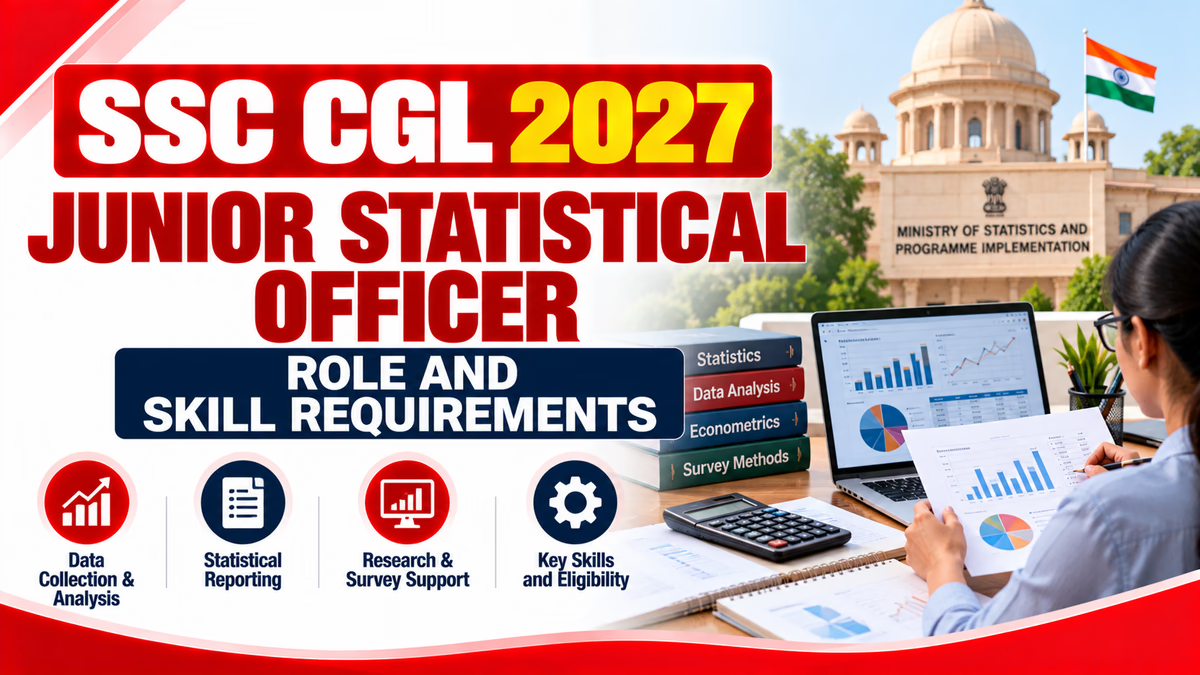
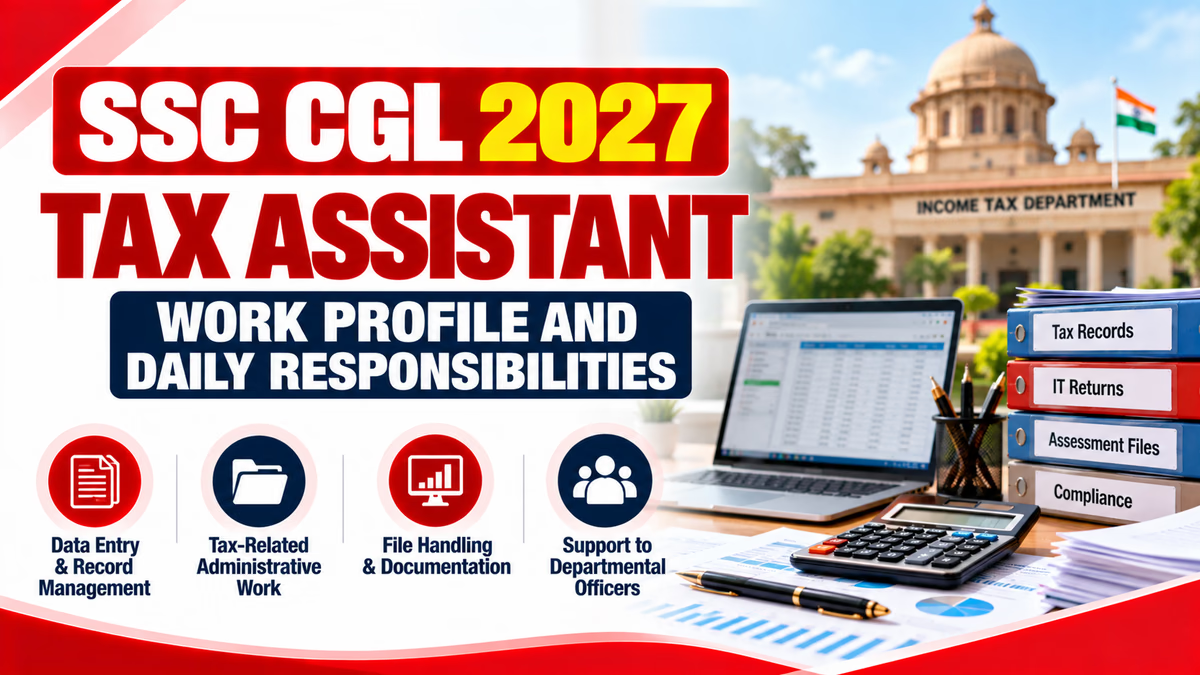
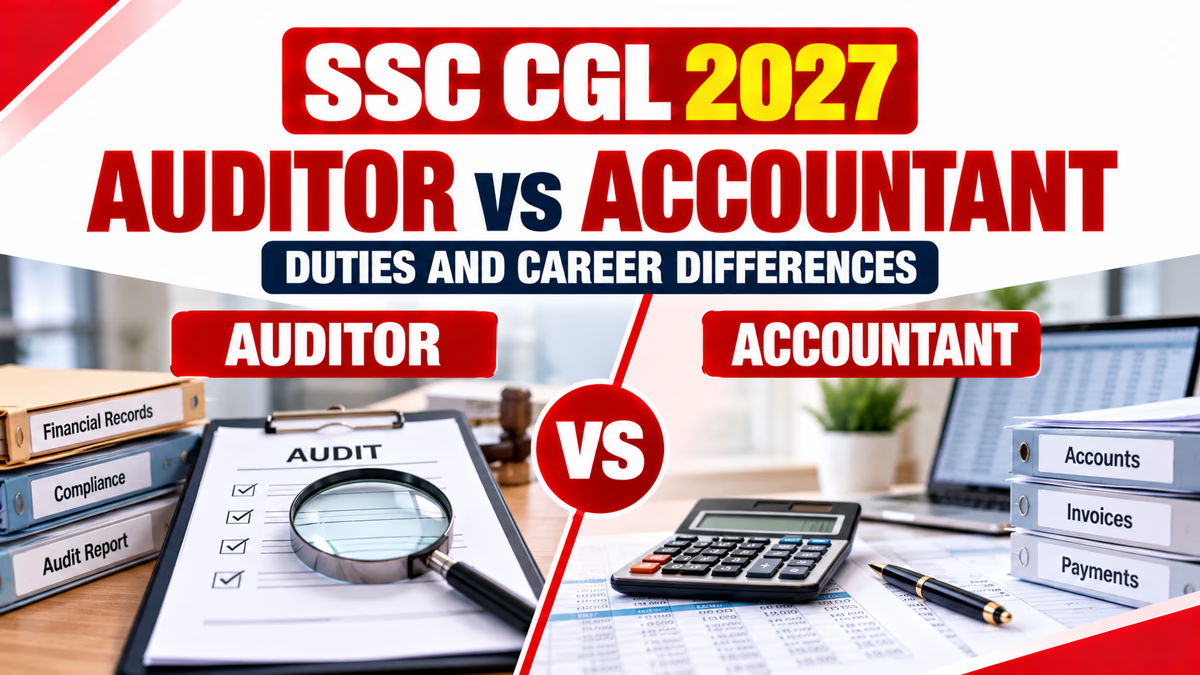
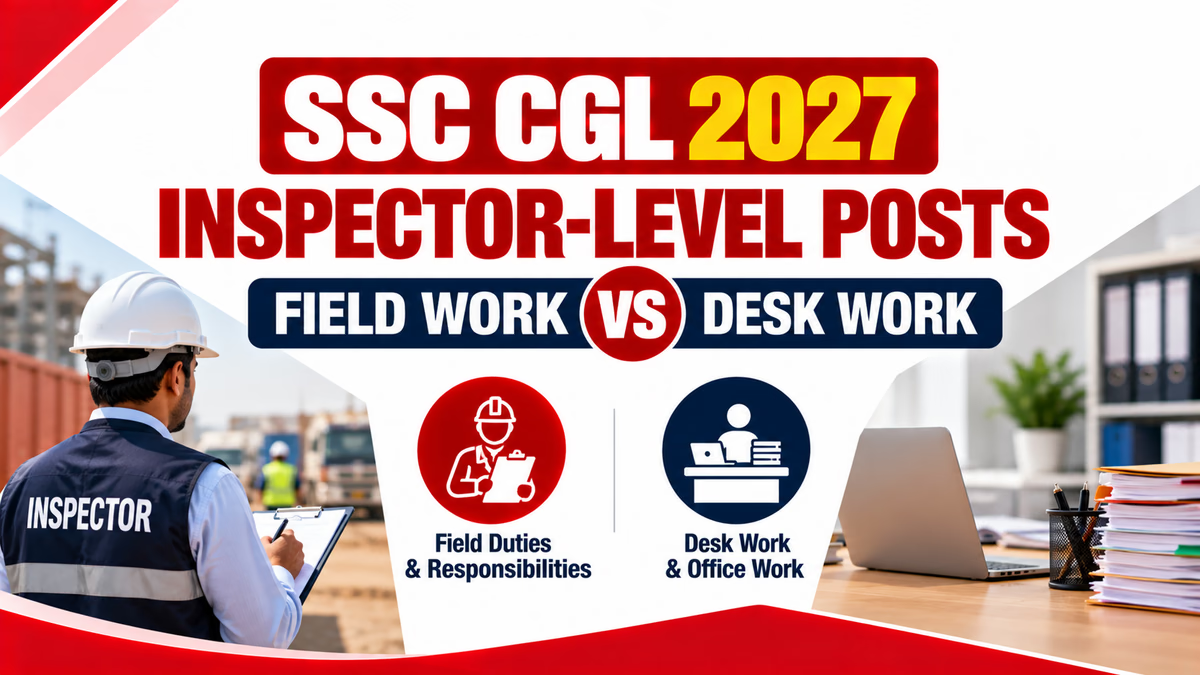

 Defence
 SSC
SSC Govt Job