





Download the App & Start Learning
- Expert Faculty Guidance
- Updated Study Material
- Mock Tests & Practice Quiz
- Live Doubt Solving Sessions
- Exam-Oriented Preparation
- Motivation & Success Strategy
Katara Academy

10/17/2026
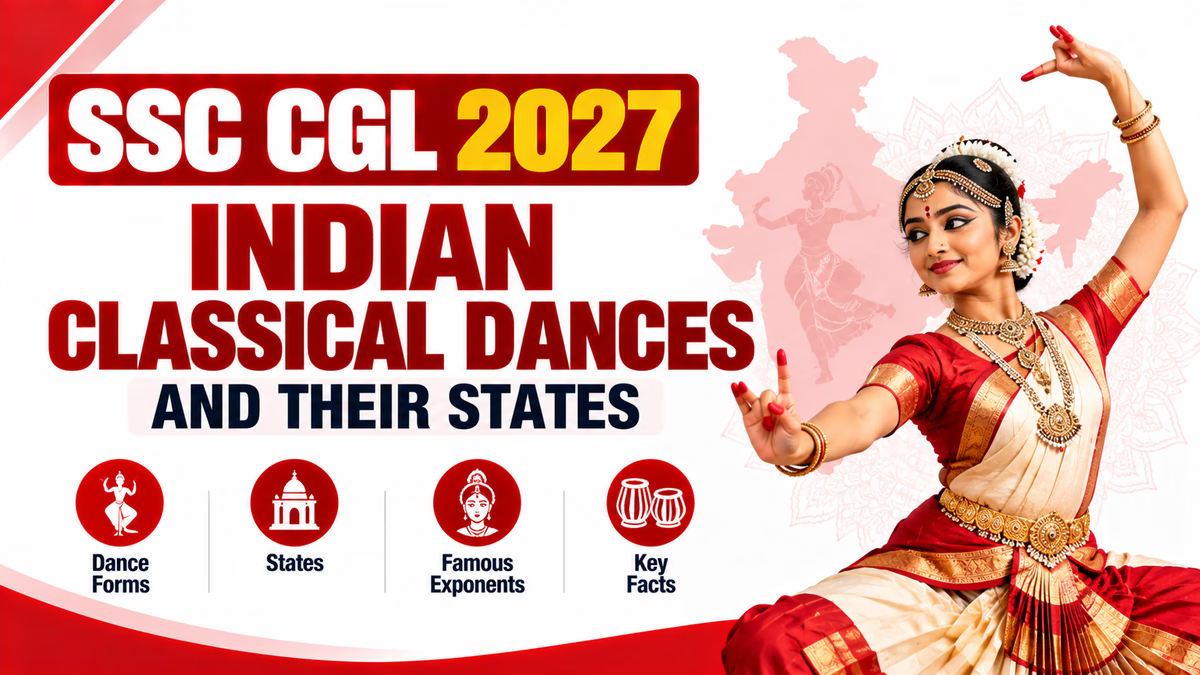
Indian classical dances are an important topic in the General Awareness section of SSC CGL and other competitive examinations. Questions may cover the eight recognised classical dance forms of India, their states of origin, famous performers, musical instruments, costumes, and cultural traditions.
This article provides an exam-oriented guide to Indian classical dances and their associated states, along with important facts, revision tips, and practice MCQs for SSC CGL 2027.
India has eight widely recognised classical dance forms. Memorising each dance form with its traditional region is essential for competitive examinations.
| Classical Dance | Associated State / Region | Important Feature |
|---|---|---|
| Bharatanatyam | Tamil Nadu | Precise footwork, expressive gestures, and geometric body movements. |
| Kathak | Northern India, especially Uttar Pradesh | Intricate footwork, spins, rhythmic patterns, and storytelling. |
| Kathakali | Kerala | Elaborate makeup, colourful costumes, and dramatic storytelling. |
| Kuchipudi | Andhra Pradesh | Expressive dance-drama tradition combining dance and acting. |
| Odissi | Odisha | Fluid movements, tribhangi posture, and sculptural poses. |
| Manipuri | Manipur | Graceful movements and themes associated with Krishna and Radha. |
| Mohiniyattam | Kerala | Gentle, flowing movements and graceful expressions. |
| Sattriya | Assam | Dance tradition developed in Vaishnavite monasteries called satras. |
Exam reminder: These are the eight classical dance forms commonly recognised in Indian cultural and competitive-exam study materials. Kathakali and Mohiniyattam are both associated with Kerala, while Sattriya is associated with Assam.
Bharatanatyam is one of India's oldest and most widely practised classical dance forms. It developed in Tamil Nadu and has a strong association with temple traditions and South Indian culture.
SSC CGL fact: If a question connects Rukmini Devi Arundale or the classical dance associated with Tamil Nadu, Bharatanatyam is an important answer to remember.
Kathak is a classical dance form that developed in northern India. Its name is associated with the word Katha, meaning a story, reflecting its historical connection with storytelling.
SSC CGL fact: Remember Kathak for its fast spins, rhythmic footwork, and strong association with northern India.
Kathakali is a classical dance-drama tradition of Kerala. It is famous for elaborate facial makeup, distinctive costumes, expressive eye movements, and dramatic presentation of stories.
SSC CGL fact: Elaborate makeup and dramatic costumes are major clues for identifying Kathakali.
Kuchipudi originated in Andhra Pradesh and combines expressive storytelling with rhythmic dance movements. It has a strong dance-drama tradition and is performed by both solo dancers and groups.
SSC CGL fact: Kuchipudi and Bharatanatyam are both associated with South India, but Kuchipudi is linked to Andhra Pradesh and Bharatanatyam to Tamil Nadu.
Odissi is a classical dance form of Odisha known for graceful movements, sculptural poses, and expressive body positions. Its visual style draws inspiration from the region's rich artistic and temple traditions.
SSC CGL fact: Tribhangi is an important keyword connected with Odissi.
Manipuri is a classical dance tradition of Manipur in northeastern India. It is particularly known for graceful movements, devotional themes, and performances related to Radha and Krishna.
SSC CGL fact: Remember Manipuri for Ras Leela, Vaishnavite devotional themes, and graceful movements.
Mohiniyattam is a classical dance form of Kerala traditionally associated with graceful, flowing movements. The name is linked to Mohini, a feminine form associated with Lord Vishnu in Hindu mythology.
SSC CGL fact: Kerala is associated with two of the eight major classical dance forms: Kathakali and Mohiniyattam.
Sattriya is a classical dance form from Assam that developed within the Vaishnavite monastic institutions known as satras. It is closely connected with the devotional and cultural movement associated with Srimanta Sankardev.
SSC CGL fact: The words Assam, satras, and Srimanta Sankardev are useful clues for identifying Sattriya.
| Dance Form | State / Region | Famous Exponent |
|---|---|---|
| Bharatanatyam | Tamil Nadu | Rukmini Devi Arundale |
| Kathak | Northern India | Birju Maharaj |
| Kathakali | Kerala | Kalamandalam Gopi |
| Kuchipudi | Andhra Pradesh | Vempati Chinna Satyam |
| Odissi | Odisha | Kelucharan Mohapatra |
| Manipuri | Manipur | Guru Bipin Singh |
| Mohiniyattam | Kerala | Kalamandalam Kalyanikutty Amma |
| Sattriya | Assam | Jatin Goswami |
Note: Famous exponent examples are provided for revision. Classical dance traditions have many notable performers, teachers, and gurus.
Q1. Bharatanatyam is primarily associated with which state?
A. Kerala
B. Tamil Nadu
C. Odisha
D. Assam
Q2. Which classical dance form is associated with Andhra Pradesh?
A. Kuchipudi
B. Sattriya
C. Manipuri
D. Kathakali
Q3. Which dance form is famous for elaborate makeup and dramatic costumes?
A. Odissi
B. Manipuri
C. Kathakali
D. Mohiniyattam
Q4. Sattriya developed in which state?
A. Assam
B. Manipur
C. Gujarat
D. Rajasthan
Q5. Tribhangi is an important feature of which classical dance?
A. Kathak
B. Odissi
C. Bharatanatyam
D. Sattriya
Q6. Birju Maharaj was a renowned exponent of:
A. Kathak
B. Kuchipudi
C. Kathakali
D. Manipuri
Q7. Which two classical dance forms are associated with Kerala?
A. Odissi and Sattriya
B. Kathak and Manipuri
C. Kathakali and Mohiniyattam
D. Bharatanatyam and Kuchipudi
Q8. Manipuri dance is especially associated with which devotional theme?
A. Ras Leela
B. Garba
C. Bihu
D. Ghoomar
Q9. Which classical dance form is associated with Odisha?
A. Odissi
B. Kathakali
C. Sattriya
D. Mohiniyattam
Q10. Srimanta Sankardev is closely associated with which classical dance tradition?
A. Bharatanatyam
B. Sattriya
C. Kathak
D. Kuchipudi
| Question | Correct Answer | Explanation |
|---|---|---|
| 1 | B. Tamil Nadu | Bharatanatyam developed in Tamil Nadu and is a major South Indian classical dance form. |
| 2 | A. Kuchipudi | Kuchipudi takes its name from a village in Andhra Pradesh. |
| 3 | C. Kathakali | Kathakali is known for elaborate makeup, expressive gestures, and theatrical costumes. |
| 4 | A. Assam | Sattriya developed within the Vaishnavite satra tradition of Assam. |
| 5 | B. Odissi | Tribhangi, or the three-bend posture, is a recognised feature of Odissi. |
| 6 | A. Kathak | Birju Maharaj was one of the most celebrated Kathak dancers and teachers. |
| 7 | C. Kathakali and Mohiniyattam | Both classical dance forms are associated with Kerala. |
| 8 | A. Ras Leela | Manipuri dance has a strong association with devotional performances of Radha and Krishna. |
| 9 | A. Odissi | Odissi is the classical dance form associated with Odisha. |
| 10 | B. Sattriya | Srimanta Sankardev helped shape the Vaishnavite cultural tradition from which Sattriya developed. |
Indian classical dances are an important part of Indian art and culture and can contribute to SSC CGL 2027 General Awareness preparation. Focus on the eight classical dance forms, their associated states, distinctive features, and famous exponents.
Regular revision of dance-state pairs and practice with multiple-choice questions can help you remember important facts and improve your confidence in the examination.
Disclaimer: This article is intended for educational and examination-preparation purposes. Dance traditions may span multiple regions, and the state associations listed here represent their commonly recognised historical or cultural connections.