Download the App & Start Learning
- Expert Faculty Guidance
- Updated Study Material
- Mock Tests & Practice Quiz
- Live Doubt Solving Sessions
- Exam-Oriented Preparation
- Motivation & Success Strategy
Katara Academy

10/21/2026
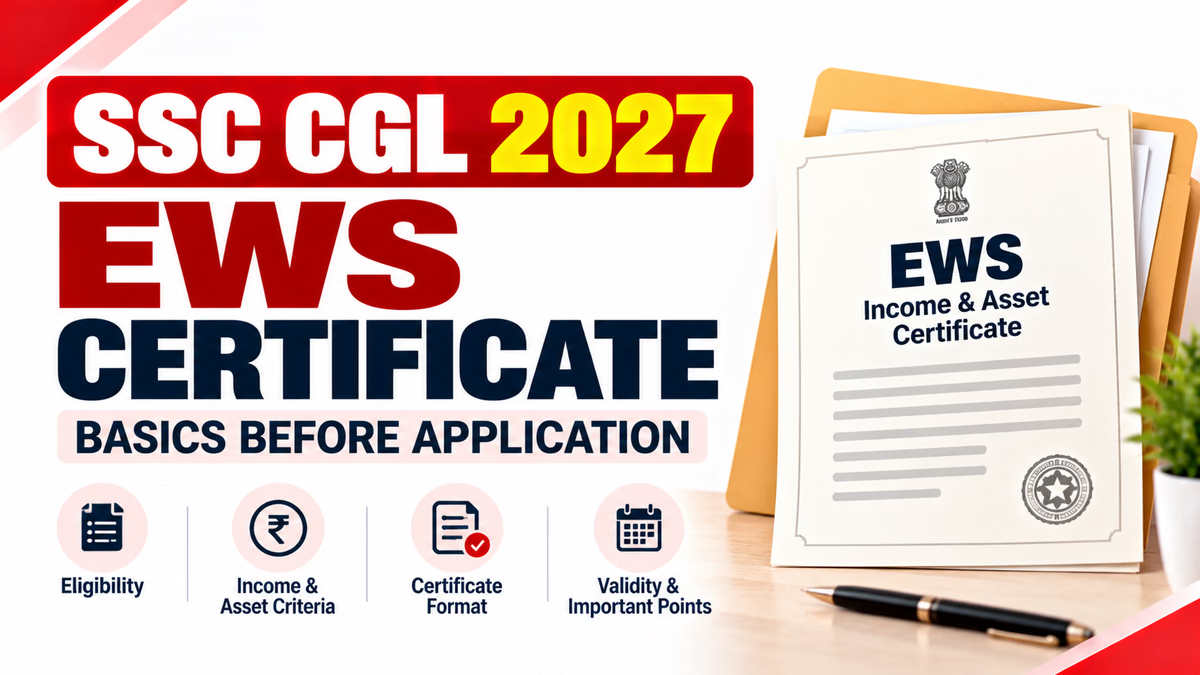
Candidates preparing for SSC CGL 2027 should understand the eligibility and document requirements before claiming any reservation benefit. For applicants considering the Economically Weaker Sections (EWS) category, the Income and Asset Certificate is an important document that must satisfy the applicable government rules and recruitment instructions.
Understanding EWS eligibility, the prescribed certificate format, the issuing authority, and the relevant dates can help candidates prepare their applications more carefully. This guide explains the basics candidates should know before applying for SSC CGL 2027.
EWS stands for Economically Weaker Sections. It is a category for eligible individuals who are not covered by the applicable reservation provisions for Scheduled Castes (SC), Scheduled Tribes (ST), and Other Backward Classes (OBC), subject to the governing rules.
For central government recruitment, EWS eligibility is assessed under the applicable central government criteria. A candidate should not claim EWS benefits solely because their income is low; the relevant eligibility conditions must also be satisfied.
An EWS Income and Asset Certificate is an official document used to support an eligible candidate's EWS claim. It is issued by a competent authority under the applicable rules.
The certificate generally relates to the prescribed income and asset eligibility conditions. Candidates should use the format required by the relevant recruitment and verify that their certificate meets the instructions applicable to SSC CGL.
Before applying under EWS, candidates should review the applicable income and asset criteria carefully. Under the central government's EWS framework, eligibility is not based on income alone; specified asset-related conditions also apply.
The commonly referenced central framework includes an annual family income threshold and restrictions relating to certain assets. However, candidates must verify the exact criteria, definitions, and applicable rules through current official government guidance and the relevant SSC notification before making a claim.
Before using an existing certificate, review the details carefully to identify errors or missing information.
If you identify a mistake, contact the issuing authority and follow its official correction procedure. Do not edit an official certificate yourself.
One common source of confusion is whether a certificate obtained earlier can be used for a new recruitment cycle. The answer depends on the applicable rules and the instructions published for the recruitment.
Before relying on an existing certificate, check:
Do not assume that all EWS certificates have an identical validity period or that an old certificate will automatically be accepted. Confirm the requirements in the latest official SSC CGL notification and relevant government instructions.
An EWS certificate must be issued by a competent authority recognised under the applicable rules. The accepted authorities and procedures should be confirmed through official instructions.
If you need a new certificate or a correction, contact the relevant local or district-level authority and ask for its current document checklist. Processing times can vary, so it is sensible to begin the process early.
The documents required to obtain an EWS certificate can vary according to the issuing authority and the applicant's circumstances. Ask the competent authority for the exact checklist before applying.
Depending on the applicable procedure, supporting documents may include:
This is a general preparation list, not a universal list of mandatory documents. Follow the instructions of the authority responsible for issuing the certificate.
| Common Mistake | How to Avoid It |
|---|---|
| Checking income but ignoring asset criteria | Review all applicable eligibility conditions. |
| Using an outdated or unsuitable certificate | Verify the relevant dates and format required for the recruitment. |
| Submitting a certificate in the wrong format | Compare it with the prescribed official format. |
| Using a certificate from an unauthorised issuer | Confirm that the issuing authority is competent under the applicable rules. |
| Incorrect personal details | Request correction through the issuing authority. |
| Assuming low income guarantees eligibility | Check the complete EWS criteria before making a claim. |
| Waiting until the application deadline | Start the certificate process early and monitor deadlines. |
| Relying on outdated online advice | Use the current official notification and government instructions. |
Q1. What does EWS stand for?
A. Eligible Working Students
B. Economically Weaker Sections
C. Examination Welfare Scheme
D. Educational Weightage System
Answer: B. EWS stands for Economically Weaker Sections.
Q2. Is low income alone sufficient to establish EWS eligibility?
A. Yes, in every case
B. No, all applicable eligibility conditions must be met
C. Only for graduates
D. Only for candidates from rural areas
Answer: B. The applicable framework includes conditions beyond income alone.
Q3. What should a candidate check before using an existing EWS certificate?
A. Only its colour
B. The applicable format, dates, and eligibility requirements
C. Only the file name
D. The number of pages in a notebook
Answer: B. Acceptance depends on the applicable recruitment requirements and rules.
Q4. Who should issue an EWS certificate?
A. Any private individual
B. A coaching institute
C. A competent authority under the applicable rules
D. Another candidate
Answer: C. The certificate must be issued by an authorised, competent authority.
Q5. What should a candidate do if the certificate contains incorrect details?
A. Edit the official document independently
B. Ignore the mistake
C. Follow the issuing authority's correction procedure
D. Submit another person's certificate
Answer: C. Corrections should be handled through the appropriate official process.
Q6. Can every old EWS certificate automatically be used for a new recruitment cycle?
A. Yes, always
B. No, the current requirements must be checked
C. Only if laminated
D. Only if printed in colour
Answer: B. Certificate dates and formats may be subject to recruitment-specific instructions.
Q7. What is the best source for current SSC CGL EWS requirements?
A. Unverified online comments
B. An unrelated examination notice
C. The latest official SSC notification and applicable government rules
D. A random social media post
Answer: C. Official instructions should guide eligibility and document preparation.
Q8. Why should candidates apply for a required certificate early?
A. To guarantee selection
B. To allow time for processing or correction
C. To avoid eligibility checks
D. To skip registration
Answer: B. Early preparation can reduce last-minute difficulties.
Q9. What should a candidate do if unsure about EWS eligibility?
A. Guess the answer
B. Claim the category automatically
C. Review the official criteria and seek clarification from the competent authority
D. Ignore the eligibility conditions
Answer: C. Eligibility should be assessed using the applicable official criteria.
Q10. What is the safest approach to EWS documentation?
A. Use any available certificate without checking
B. Follow current rules and verify the certificate before submission
C. Ignore asset conditions
D. Wait until the last day
Answer: B. Accurate documentation and current official guidance help reduce avoidable problems.
Understanding EWS certificate requirements is an important part of SSC CGL 2027 application preparation. Candidates should verify their eligibility, review income and asset conditions, confirm the prescribed format, and check the relevant dates before claiming the benefit.
Always rely on the latest official SSC CGL notification and applicable government instructions. Preparing the required documents early and ensuring that all information is accurate can help make the application and verification process more organised.