




Download the App & Start Learning
- Expert Faculty Guidance
- Updated Study Material
- Mock Tests & Practice Quiz
- Live Doubt Solving Sessions
- Exam-Oriented Preparation
- Motivation & Success Strategy
Katara Academy

29/10/2026
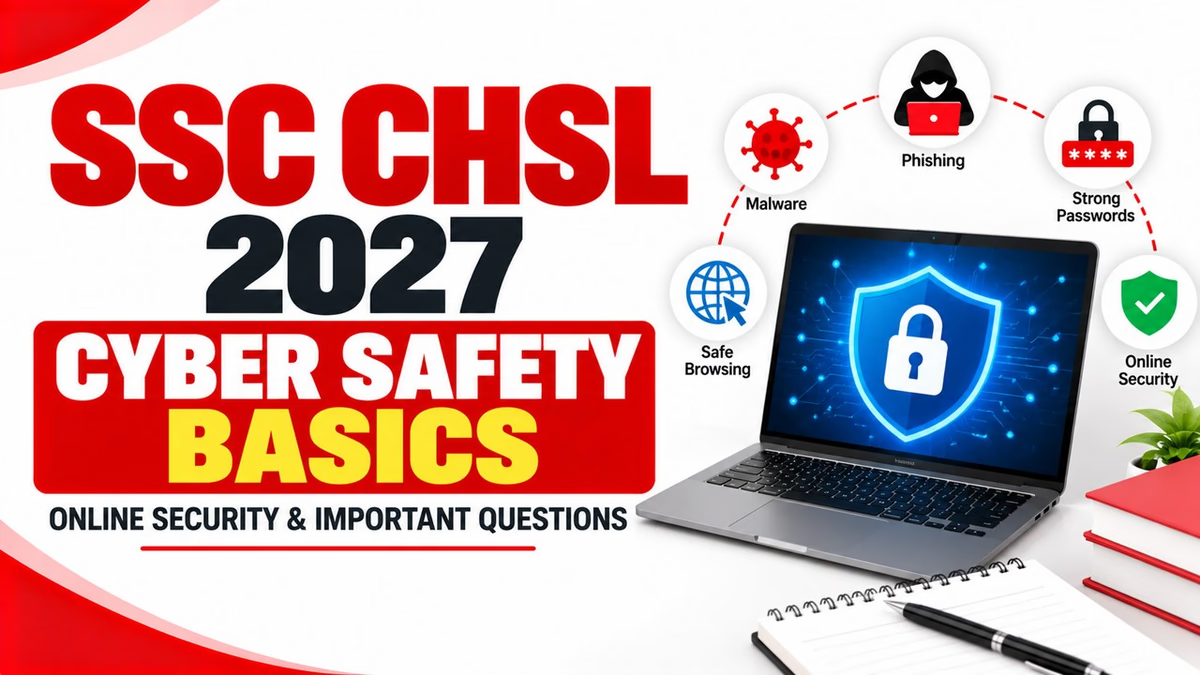
Cyber safety is an important computer-awareness topic for competitive exam preparation. For SSC CHSL 2027, candidates should understand common online threats, safe browsing practices, password security and basic cybersecurity terminology. Use this quick revision guide to review key concepts and practise MCQs.
Cyber safety means protecting your devices, personal information and online accounts from digital threats, scams and unauthorised access. It includes using secure passwords, recognising suspicious messages and browsing trusted websites.
| Term | Meaning |
|---|---|
| Phishing | Fraudulent messages or websites designed to steal sensitive information. |
| Malware | Malicious software created to harm systems, disrupt operations or steal data. |
| Virus | A type of malware that attaches to a file or program and spreads when it is executed. |
| Ransomware | Malware that locks or encrypts data and demands payment. |
| Firewall | A security system that filters network traffic according to defined rules. |
| Antivirus | Software that detects, blocks or removes many types of malicious software. |
| OTP | One-Time Password, a temporary code used for verification. |
| Two-Factor Authentication | An extra verification step in addition to a password. |
| Point | Phishing | Malware |
|---|---|---|
| Nature | A deceptive technique or attack | Malicious software |
| Common example | Fake bank login page | Ransomware or spyware |
| Main risk | Stolen credentials or personal information | Data theft, damage or unauthorised activity |
Quick revision: Phishing can be used to trick someone into downloading malware, but the two terms do not mean the same thing.
1. What is phishing?
A. A method of printing documents
B. A technique used to trick people into revealing sensitive information
C. A type of computer monitor
D. A file compression method
Answer: B. A technique used to trick people into revealing sensitive information
2. What does OTP stand for?
A. Online Transfer Protocol
B. One-Time Password
C. Open Text Program
D. Online Tracking Process
Answer: B. One-Time Password
3. Which system filters network traffic according to security rules?
A. Firewall
B. Scanner
C. Keyboard
D. Word processor
Answer: A. Firewall
4. Which of the following is a type of malware?
A. Ransomware
B. Spreadsheet
C. Browser bookmark
D. Presentation slide
Answer: A. Ransomware
5. What is the safest response to a suspicious message requesting your OTP?
A. Share the OTP immediately
B. Forward it to friends
C. Do not share the OTP and verify the request through an official channel
D. Click every link in the message
Answer: C. Do not share the OTP and verify the request through an official channel
Cyber safety involves protecting devices, accounts and personal information from online threats, scams and unauthorised access.
Malware is the general term for malicious software. A virus is one specific type of malware.
No. These are practice questions covering basic computer-awareness concepts. Actual examination questions may differ, so consult the official SSC notification and syllabus for current exam requirements.
For SSC CHSL 2027 computer-awareness preparation, revise phishing, malware, ransomware, firewalls, OTPs and safe browsing practices. Remember the definitions and practise MCQs regularly to strengthen your understanding of cyber safety basics.
Explore available courses and learning resources to support your competitive exam preparation.
