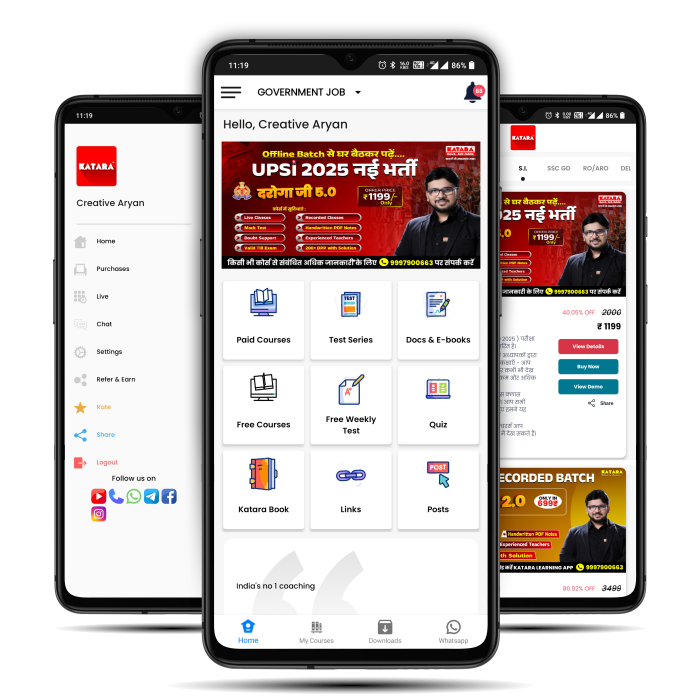



Download the App & Start Learning
- Expert Faculty Guidance
- Updated Study Material
- Mock Tests & Practice Quiz
- Live Doubt Solving Sessions
- Exam-Oriented Preparation
- Motivation & Success Strategy
Katara Academy

8/31/2026
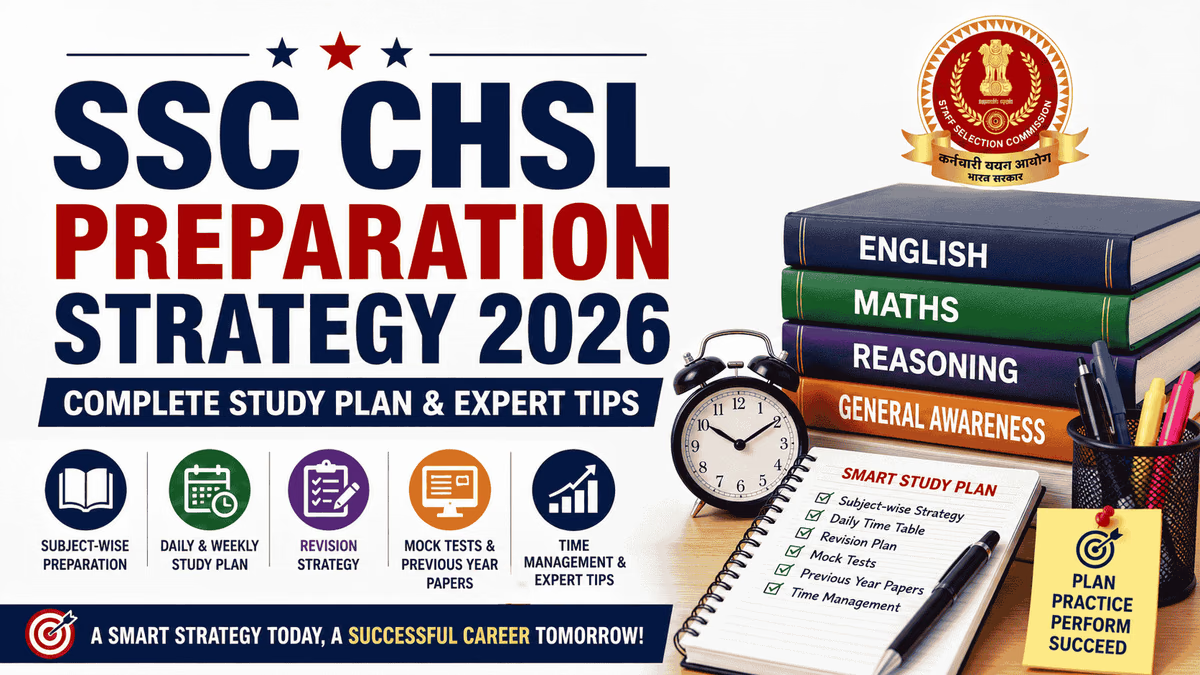
SSC CHSL Recruitment 2026
A well-structured SSC CHSL Study Plan 2026 is essential for candidates aiming to crack the Staff Selection Commission Combined Higher Secondary Level (SSC CHSL) examination. Every year, lakhs of aspirants compete for limited vacancies, making smart planning and consistent preparation more important than simply studying for long hours. A proper study plan helps candidates complete the syllabus on time, revise regularly, and improve their overall exam performance.
The SSC CHSL examination recruits candidates for various government posts, including Lower Division Clerk (LDC), Junior Secretariat Assistant (JSA), Postal Assistant (PA), Sorting Assistant (SA), and Data Entry Operator (DEO). Since the exam covers multiple subjects such as English Language, Quantitative Aptitude, General Intelligence & Reasoning, and General Awareness, candidates need a balanced study schedule that gives equal attention to every section.
This complete guide provides the SSC CHSL Study Plan 2026, including subject-wise preparation, daily and weekly schedules, monthly targets, revision strategy, mock test planning, and expert tips to help you prepare effectively for both Tier 1 and Tier 2 examinations.
Quick Overview
An ideal SSC CHSL study plan combines quality study material, regular revision, mock tests, previous year paper practice, and proper time management. Following a consistent routine significantly increases your chances of clearing the examination.
| Particular | Details |
|---|---|
| Exam Name | SSC Combined Higher Secondary Level (CHSL) |
| Conducting Body | Staff Selection Commission (SSC) |
| Recommended Preparation Duration | 4–8 Months |
| Selection Process | Tier 1 & Tier 2 |
| Daily Study Time | 5–8 Hours |
| Essential Resources | Books, Mock Tests, Previous Year Papers & Notes |
| Suitable For | Beginners & Repeat Aspirants |
A proper study plan ensures systematic preparation and prevents last-minute stress. It helps candidates divide the syllabus into manageable sections, maintain consistency, and allocate sufficient time for revision and practice. Following a structured schedule also improves confidence and keeps preparation on track throughout the journey.
An effective SSC CHSL study plan should focus on concept building, question practice, regular revision, and performance analysis. Candidates should prepare subject-wise schedules and continuously evaluate their progress through mock tests and previous year papers.
A balanced SSC CHSL study plan should allocate sufficient time to every subject based on its difficulty level and your personal strengths and weaknesses. Instead of studying only your favorite subjects, prepare all four sections consistently to maximize your overall score in Tier 1.
| Subject | Daily Study Time | Primary Focus |
|---|---|---|
| English Language | 1 Hour | Grammar, Vocabulary & Comprehension |
| Quantitative Aptitude | 2 Hours | Concepts, Formulas & Practice |
| General Intelligence & Reasoning | 1.5 Hours | Logical Thinking & Puzzle Practice |
| General Awareness | 45–60 Minutes | Current Affairs & Static GK |
English is one of the easiest scoring sections if practiced regularly. Focus on improving grammar, vocabulary, comprehension, and sentence correction through daily practice and revision.
Mathematics requires continuous practice and conceptual clarity. Begin with Arithmetic topics, gradually move to Advanced Mathematics, and practice calculations daily to improve speed and accuracy.
Reasoning develops with continuous problem-solving, while General Awareness improves through daily reading and revision. Both subjects require consistency rather than memorizing everything at once.
| Subject | Recommended Book |
|---|---|
| English Language | Objective General English – S.P. Bakshi |
| Quantitative Aptitude | Fast Track Objective Arithmetic – Rajesh Verma |
| Reasoning | Modern Approach to Verbal & Non-Verbal Reasoning – R.S. Aggarwal |
| General Awareness | Lucent's General Knowledge |
| Practice | SSC CHSL Previous Year Papers & Mock Tests |
A consistent daily routine is one of the most important factors in SSC CHSL preparation. Instead of studying continuously for long hours, divide your study time into multiple sessions with short breaks. This approach improves concentration, enhances retention, and prevents mental fatigue.
| Time | Study Activity |
|---|---|
| 7:00 AM – 8:00 AM | English Language (Grammar & Vocabulary) |
| 8:15 AM – 10:15 AM | Quantitative Aptitude Practice |
| 11:00 AM – 12:30 PM | Reasoning Practice |
| 2:00 PM – 3:00 PM | General Awareness & Current Affairs |
| 4:00 PM – 5:00 PM | Previous Year Questions |
| 7:00 PM – 8:00 PM | Revision & Short Notes |
| Alternate Days | Mock Test & Performance Analysis |
A weekly study plan ensures balanced preparation across all subjects while providing sufficient time for revision and practice. Reserve weekends for mock tests and reviewing your progress to identify weak areas.
| Day | Main Focus |
|---|---|
| Monday | English + Mathematics |
| Tuesday | Reasoning + General Awareness |
| Wednesday | English + Previous Year Questions |
| Thursday | Mathematics + Current Affairs Revision |
| Friday | Reasoning + Mixed Practice Sets |
| Saturday | Full-Length Mock Test |
| Sunday | Complete Revision & Mock Test Analysis |
Breaking your preparation into monthly milestones makes the syllabus easier to manage and helps you stay on track. Complete the fundamentals first, then gradually increase your focus on practice, mock tests, and revision.
Every candidate has a different schedule and preparation level. Beginners generally have more time to build concepts, whereas working professionals need a flexible plan that fits around their job. The table below provides a recommended approach for both groups.
| Candidate Type | Recommended Study Time | Primary Focus |
|---|---|---|
| Beginners | 6–8 Hours Daily | Concept Building, Practice & Revision |
| Working Professionals | 3–5 Hours Daily | Smart Study, Mock Tests & Weekend Revision |
| College Students | 4–6 Hours Daily | Balanced Study Schedule with Regular Practice |
Revision is one of the most important components of an effective SSC CHSL study plan. No matter how well you complete the syllabus, you are likely to forget important concepts if you do not revise them regularly. Candidates should make revision a daily habit and gradually increase its frequency as the examination approaches.
Mock tests simulate the real examination environment and help candidates improve speed, accuracy, confidence, and time management. They also allow you to identify weak areas before the actual exam. Every serious aspirant should include regular mock tests in their study plan.
| Preparation Stage | Mock Test Plan |
|---|---|
| Month 1 | 1 Sectional Mock Test per Week |
| Month 2 | 2 Sectional Mock Tests per Week |
| Month 3 | 1 Full-Length Mock Test Every Week |
| Final Month | 3–4 Full-Length Mock Tests Every Week |
Managing time effectively during both preparation and the actual examination is essential for success. Candidates should practice solving questions within fixed time limits and learn to avoid spending excessive time on difficult questions.
A study plan is effective only when followed consistently. Successful SSC CHSL candidates maintain discipline, regularly evaluate their progress, and make improvements whenever necessary. Small daily efforts often produce better results than irregular long study sessions.
A well-structured SSC CHSL Study Plan 2026 is the key to systematic preparation and success in the examination. Rather than studying randomly, candidates should follow a planned schedule that covers all subjects, allows sufficient time for revision, and includes regular practice through previous year papers and mock tests. A disciplined routine helps improve both accuracy and confidence before the examination.
Whether you are a beginner or a working professional, the most important factor is consistency. Completing daily study targets, revising regularly, analyzing mock test performance, and improving weak areas will gradually strengthen your preparation. Avoid relying on multiple study materials; instead, focus on mastering one standard resource for each subject.
Stay committed to your study plan, maintain a positive mindset, and continue practicing every day. With proper planning, smart time management, and continuous revision, you can confidently clear both Tier 1 and Tier 2 examinations and secure your desired government job through SSC CHSL.
Beginners should start by understanding the syllabus and exam pattern, studying basic concepts, practicing chapter-wise questions, and gradually adding previous year papers and mock tests to their routine.
Most aspirants should aim to study 5–8 hours daily. Working professionals can prepare effectively with 3–5 focused hours by following a well-organized study schedule.
On average, candidates can complete the syllabus in 4–6 months with consistent study, regular practice, and weekly revision.
Yes. Previous year papers help candidates understand the exam pattern, improve question-solving speed, identify important topics, and build confidence before the examination.
You should begin sectional mock tests after learning the basic concepts. Once the syllabus is mostly completed, start attempting full-length mock tests regularly under exam conditions.
Yes. Many candidates successfully clear SSC CHSL through self-study by following a proper study plan, using quality books, practicing mock tests, and revising consistently.
The final month should be dedicated to complete revision, full-length mock tests, previous year papers, current affairs revision, formula practice, and improving weak areas identified through mock test analysis.
Join Katara Academy and prepare for SSC CHSL, SSC CGL, MTS, CPO, Railway, Banking, Defence, and other government examinations with expert faculty, live and recorded classes, comprehensive study material, subject-wise notes, previous year papers, full-length mock tests, doubt-solving sessions, performance analysis, and personalized mentorship designed to help you succeed.