

Download the App & Start Learning
- Expert Faculty Guidance
- Updated Study Material
- Mock Tests & Practice Quiz
- Live Doubt Solving Sessions
- Exam-Oriented Preparation
- Motivation & Success Strategy
Katara Academy

7/17/2026
RAILWAY GROUP D 2026
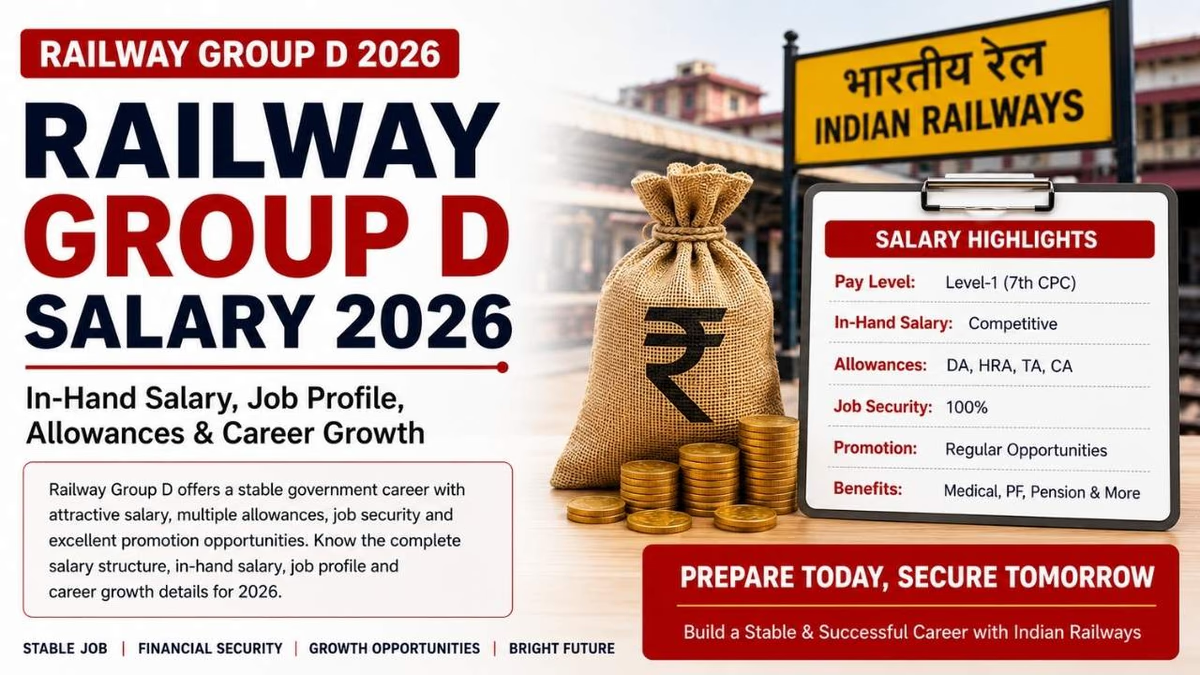
Know the latest Railway Group D Salary 2026, including in-hand salary, pay level, allowances, job profile, promotion opportunities and long-term career growth in Indian Railways.
| Recruitment Authority Railway Recruitment Boards (RRBs) | Pay Level Level-1 (7th Central Pay Commission) |
| Salary Includes Basic Pay, Dearness Allowance, HRA, Transport Allowance and other admissible benefits. | Career Scope Stable Government Job with promotion opportunities and long-term career growth. |
One of the biggest reasons behind the popularity of Railway Group D recruitment is the attractive salary package and long-term job security offered by Indian Railways. Every year, lakhs of aspirants apply for these posts because they provide a stable government career along with multiple financial benefits, allowances and promotion opportunities.
Apart from the monthly salary, Railway Group D employees receive several additional benefits such as Dearness Allowance (DA), House Rent Allowance (HRA), Transport Allowance (TA), medical facilities, pension-related benefits and leave entitlements according to government rules. These benefits significantly increase the overall value of the compensation package.
In this detailed guide, you will learn about the Railway Group D Salary 2026, expected in-hand salary, salary structure, allowances, job responsibilities, promotion opportunities and career growth prospects to help you understand why Railway Group D remains one of India's most preferred government jobs.
Railway Group D employees are placed under Pay Level-1 of the 7th Central Pay Commission. Along with the basic pay, employees receive several government-approved allowances that improve their total monthly earnings. The exact in-hand salary may vary depending on the posting location, applicable allowances and deductions.
| Component | Description |
|---|---|
| Pay Level | Level-1 under the 7th Central Pay Commission. |
| Basic Pay | Basic salary as prescribed by the Railway Recruitment Board. |
| Additional Benefits | DA, HRA, TA and other admissible government allowances. |
The in-hand salary of a Railway Group D employee is calculated after adding eligible allowances to the basic pay and deducting contributions such as Provident Fund (PF), National Pension System (NPS) and other applicable deductions. The final monthly salary may vary depending on the city of posting, Railway zone and government revisions in allowances.
Employees posted in metro cities generally receive a higher House Rent Allowance (HRA), while those posted in other cities receive HRA according to government norms. Along with financial security, Railway Group D employees enjoy several non-monetary benefits that make these jobs highly desirable among government job aspirants.
| Salary Component | Details |
|---|---|
| Basic Pay | As per Level-1 of the 7th Central Pay Commission. |
| Dearness Allowance (DA) | Applicable according to Central Government revisions. |
| House Rent Allowance (HRA) | Depends on the employee's place of posting. |
| Transport Allowance (TA) | Paid according to government rules and posting location. |
| Deductions | PF, NPS and other statutory deductions. |
Apart from the monthly salary, Railway Group D employees receive several allowances and government benefits that improve their financial stability and overall quality of life. These benefits are one of the major reasons why Railway jobs remain among the most preferred government careers in India.
These allowances and benefits make the overall compensation package much more attractive than the basic salary alone. As government policies are revised periodically, employees may receive additional financial advantages over time.
Railway Group D employees play an essential role in the day-to-day functioning of Indian Railways. Their responsibilities vary depending on the department and post allotted after recruitment. These employees contribute to railway operations, passenger safety, maintenance and smooth functioning of railway infrastructure across the country.
Although the nature of work differs from one department to another, every employee receives proper training before assuming regular duties. With experience and departmental examinations, employees can progress to higher positions over time.
| Department | Primary Responsibilities |
|---|---|
| Engineering | Track maintenance, inspection and infrastructure support. |
| Mechanical | Maintenance of coaches, wagons and railway equipment. |
| Electrical | Maintenance of electrical systems and railway installations. |
| Traffic | Operational support for safe and efficient railway movement. |
| Medical & Other Units | Support services according to departmental requirements. |
One of the biggest advantages of joining Railway Group D is the opportunity for long-term career growth. Employees receive regular annual increments and can earn promotions through departmental examinations, seniority and performance-based evaluations conducted by Indian Railways.
With continuous service and skill development, many employees move to higher technical and supervisory positions. This structured promotion system provides career stability and encourages employees to improve their knowledge throughout their service.
Preparing for Railway Group D requires consistent guidance, disciplined practice and a well-structured study plan. Katara Academy helps aspirants build strong concepts through experienced faculty, updated study material and regular assessments aligned with the latest Railway recruitment pattern.
| Feature | Benefit |
|---|---|
| Expert Faculty | Comprehensive classroom learning with experienced mentors. |
| Updated Study Material | Prepared according to the latest Railway Group D syllabus. |
| Regular Mock Tests | Improve speed, accuracy and confidence before the examination. |
| Performance Analysis | Track progress and identify improvement areas effectively. |
Railway Group D employees are recruited under Pay Level-1 of the 7th Central Pay Commission. Along with the basic pay, they receive various government-approved allowances and benefits.
Employees receive benefits such as Dearness Allowance (DA), House Rent Allowance (HRA), Transport Allowance (TA), medical facilities, leave benefits, Provident Fund and pension-related benefits as per applicable government rules.
No. The in-hand salary varies depending on the posting location, applicable allowances, deductions and periodic revisions made by the Central Government.
Yes. Employees can receive promotions through departmental examinations, seniority and performance. Indian Railways also provides training programs that support long-term career advancement.
Railway Group D offers a stable Central Government job with competitive salary, multiple allowances, job security, promotion opportunities and retirement benefits, making it a popular career choice among aspirants.
The Railway Group D Salary 2026 offers much more than a monthly paycheck. Along with Pay Level-1 under the 7th Central Pay Commission, employees receive attractive allowances, government benefits, job security and excellent career growth opportunities. These advantages make Railway Group D one of the most sought-after entry-level government jobs in India.
Candidates preparing for Railway Group D should focus on understanding the complete recruitment process while building strong subject knowledge through regular practice, mock tests and revision. A structured preparation strategy significantly improves the chances of success in the examination.
If you are planning to build a successful career in Indian Railways, Katara Academy provides expert classroom coaching, updated study material, regular mock tests and continuous mentorship to help you prepare confidently for Railway Group D 2026.
Learn from experienced faculty, access updated study material, take regular mock tests and receive expert guidance to prepare effectively for Railway Group D 2026.