





Download the App & Start Learning
- Expert Faculty Guidance
- Updated Study Material
- Mock Tests & Practice Quiz
- Live Doubt Solving Sessions
- Exam-Oriented Preparation
- Motivation & Success Strategy
Katara Academy

8/6/2026
SSC GD Recruitment 2026
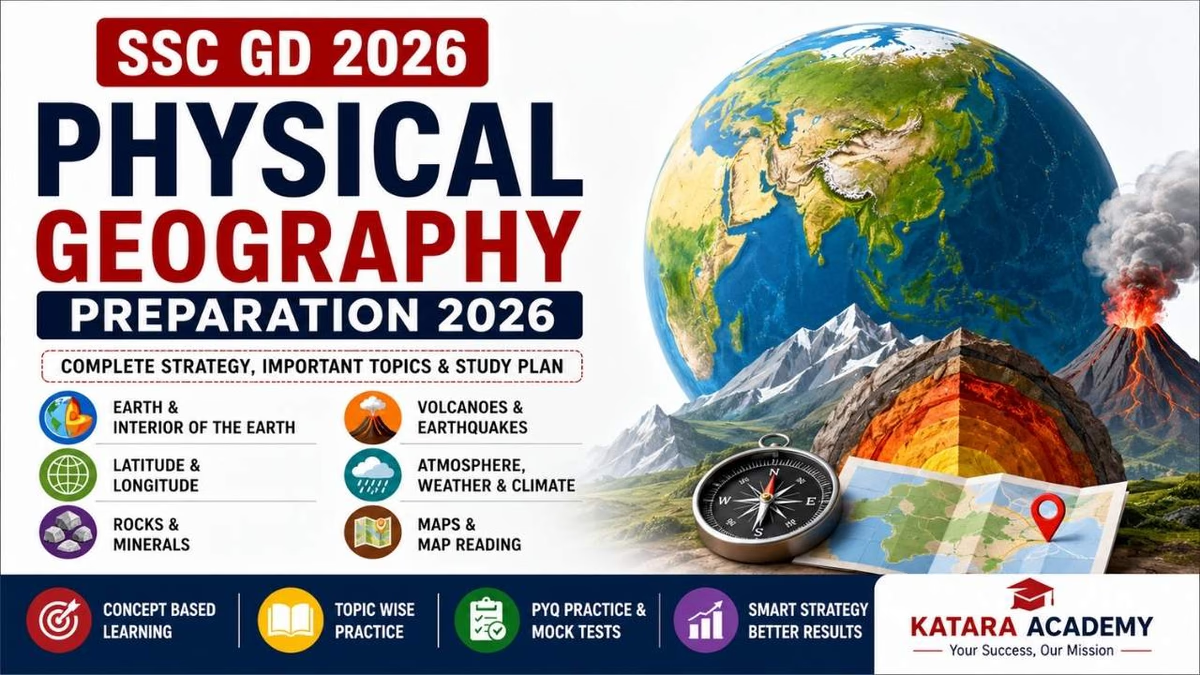
The SSC GD Physical Geography Preparation 2026 guide helps candidates build a strong understanding of the Earth, Interior of the Earth, Latitude & Longitude, Motions of the Earth, Rocks, Minerals, Volcanoes, Earthquakes, Atmosphere, Weather, Climate and Maps. A structured study plan, regular revision and consistent MCQ practice can significantly improve your General Knowledge score in the SSC GD Constable Examination.
Latest Update:
Candidates preparing for SSC GD Recruitment 2026 should focus on frequently asked Physical Geography topics such as the Earth's structure, landforms, latitude & longitude, rocks, volcanoes, earthquakes, atmosphere, weather and previous year questions. Daily revision and regular mock tests are highly recommended.
Physical Geography is one of the most important sections of General Knowledge in SSC GD. Questions are regularly asked about the Earth, landforms, Earth's interior, rocks, volcanoes, earthquakes, atmosphere, climate, maps and geographical concepts. A strong conceptual understanding helps candidates solve Geography questions quickly and accurately.
| Particular | Details |
|---|---|
| Exam Name | SSC GD Constable Recruitment 2026 |
| Section | Physical Geography |
| Preparation Focus | Earth, Landforms, Atmosphere & Physical Processes |
| Recommended Study Time | 30–45 Minutes Daily |
| Goal | Strengthen Physical Geography Concepts & Improve Accuracy |
Physical Geography is a highly scoring topic because SSC GD frequently asks concept-based questions related to the Earth, atmosphere, rocks, landforms, earthquakes, volcanoes and map-reading. Strong preparation improves both conceptual clarity and problem-solving speed.
| Preparation Activity | Recommended Frequency |
|---|---|
| Earth & Interior Revision | Daily |
| Latitude, Longitude & Maps | Daily |
| Rocks, Volcanoes & Earthquakes | Daily |
| Physical Geography MCQ Practice | 2–3 Times Per Week |
| Mock Test & Complete Revision | Weekly |
Candidates preparing for SSC GD 2026 should focus on the most important Physical Geography topics. Questions are commonly asked from the Earth, Interior of the Earth, Latitude & Longitude, Rocks, Minerals, Volcanoes, Earthquakes, Atmosphere and Maps.
| Topic | Important Areas |
|---|---|
| Earth & Interior of the Earth | Layers, Structure & Composition |
| Latitude & Longitude | Parallels, Meridians & Time Zones |
| Rocks & Minerals | Types, Formation & Characteristics |
| Volcanoes & Earthquakes | Causes, Types & Effects |
| Atmosphere & Maps | Atmospheric Layers & Map Reading |
The Earth and its interior are among the most important Physical Geography topics in SSC GD. Candidates should understand the Earth's structure, layers and important geological characteristics.
Latitude and Longitude are frequently asked concept-based topics in SSC GD Geography. Candidates should understand important parallels, meridians, time zones and geographical coordinates.
Questions related to rocks and minerals appear regularly in SSC GD examinations. Candidates should revise the different rock types, mineral resources and their characteristics.
Volcanoes and Earthquakes are important Physical Geography topics that test conceptual understanding. Candidates should revise their causes, types and major effects.
Following a consistent study routine helps candidates understand geographical concepts, improve map-reading skills and perform better through regular revision and MCQ practice.
| Time | Activity |
|---|---|
| 10 Minutes | Earth & Interior Revision |
| 10 Minutes | Latitude, Longitude & Maps |
| 10 Minutes | Rocks, Volcanoes & Earthquakes |
| 15 Minutes | Physical Geography MCQs & Revision |
Candidates preparing for SSC GD 2026 should focus on the most important Physical Geography topics. Questions are commonly asked from the Earth, Interior of the Earth, Latitude & Longitude, Rocks, Minerals, Volcanoes, Earthquakes, Atmosphere and Maps.
| Topic | Important Areas |
|---|---|
| Earth & Interior of the Earth | Layers, Structure & Composition |
| Latitude & Longitude | Parallels, Meridians & Time Zones |
| Rocks & Minerals | Types, Formation & Characteristics |
| Volcanoes & Earthquakes | Causes, Types & Effects |
| Atmosphere & Maps | Atmospheric Layers & Map Reading |
The Earth and its interior are among the most important Physical Geography topics in SSC GD. Candidates should understand the Earth's structure, layers and important geological characteristics.
Latitude and Longitude are frequently asked concept-based topics in SSC GD Geography. Candidates should understand important parallels, meridians, time zones and geographical coordinates.
Questions related to rocks and minerals appear regularly in SSC GD examinations. Candidates should revise the different rock types, mineral resources and their characteristics.
Volcanoes and Earthquakes are important Physical Geography topics that test conceptual understanding. Candidates should revise their causes, types and major effects.
Following a consistent study routine helps candidates understand geographical concepts, improve map-reading skills and perform better through regular revision and MCQ practice.
| Time | Activity |
|---|---|
| 10 Minutes | Earth & Interior Revision |
| 10 Minutes | Latitude, Longitude & Maps |
| 10 Minutes | Rocks, Volcanoes & Earthquakes |
| 15 Minutes | Physical Geography MCQs & Revision |
| SSC GD Article | Read Here |
|---|---|
| SSC GD Notification 2026 | Read Now → |
| SSC GD Eligibility 2026 | Read Now → |
| SSC GD Syllabus 2026 | Read Now → |
| SSC GD Exam Pattern 2026 | Read Now → |
| SSC GD Study Plan 2026 | Read Now → |
| SSC GD General Knowledge Preparation 2026 | Read Now → |
| SSC GD Current Affairs 2026 | Read Now → |
| SSC GD Indian Geography Preparation 2026 | Read Now → |
| SSC GD World Geography Preparation 2026 | Read Now → |
| SSC GD Mock Test 2026 | Read Now → |
Prepare for SSC GD Recruitment 2026 with expert Physical Geography classes at Katara Academy. Learn the Earth, Interior of the Earth, Latitude & Longitude, Maps, Rocks, Minerals, Volcanoes, Earthquakes, Atmosphere and Physical Processes through concept-based teaching, topic-wise practice, previous year paper discussions, mock tests and regular revision sessions.
Candidates should dedicate approximately 30–45 minutes daily to Physical Geography, including concept revision, map practice, MCQ practice and previous year questions.
Important topics include the Earth, Interior of the Earth, Latitude & Longitude, Motions of the Earth, Rocks, Minerals, Volcanoes, Earthquakes, Atmosphere and Maps.
Study concepts thoroughly, revise diagrams and maps regularly, practice topic-wise MCQs, solve previous year papers and take regular mock tests.
Yes. Physical Geography is one of the highest-scoring Geography sections because SSC GD regularly asks conceptual questions about the Earth, landforms, atmosphere, volcanoes, earthquakes and map-based Geography.
Yes. Previous year questions help identify important topics, improve confidence and familiarize candidates with the SSC GD examination pattern.
A well-planned SSC GD Physical Geography Preparation 2026 strategy helps candidates build a strong conceptual understanding of the Earth and its physical processes. Focus on the Earth's structure, latitude & longitude, maps, rocks, minerals, volcanoes, earthquakes and the atmosphere while practicing topic-wise MCQs, solving previous year questions and taking regular mock tests. Consistent revision, diagram-based learning and conceptual clarity will help you score higher in the General Knowledge section of the SSC GD Constable Examination.