.png)


Download Our Application

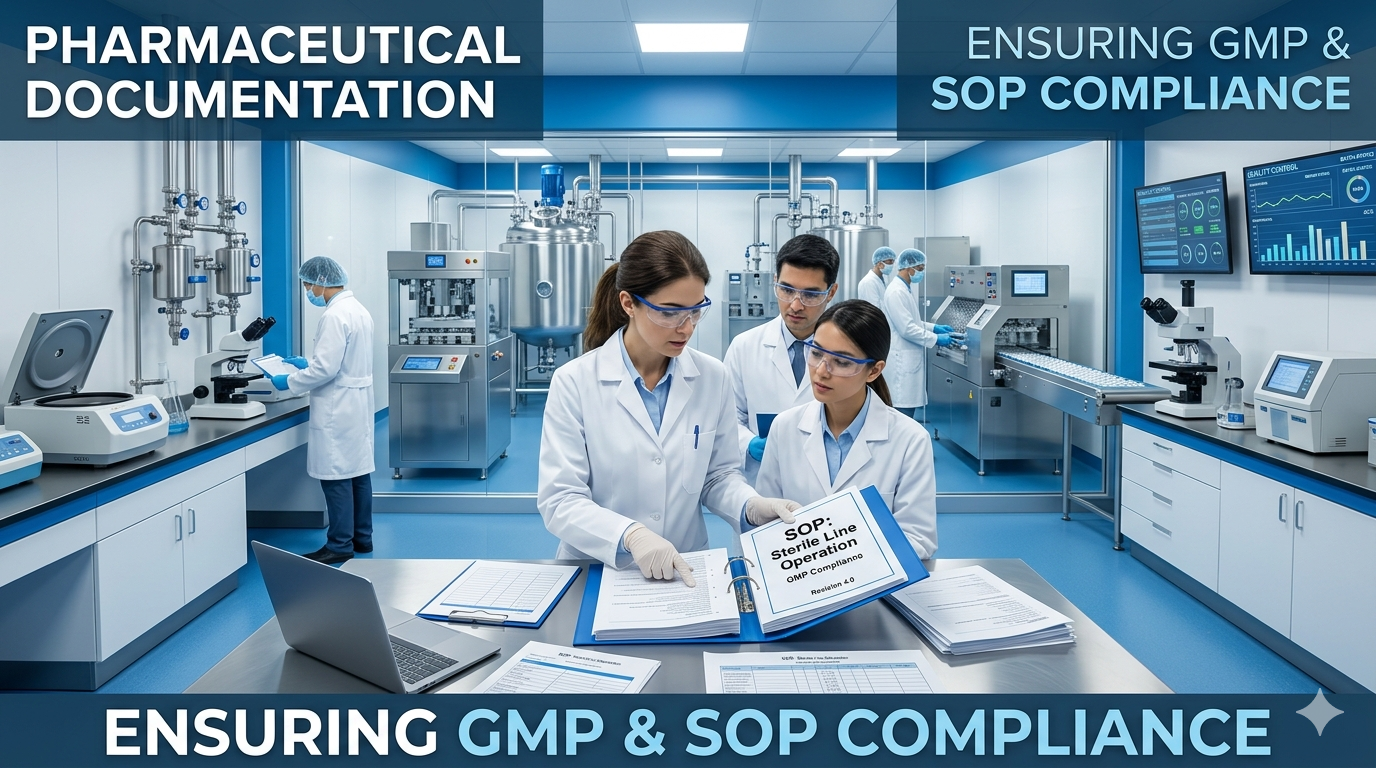
The pharmaceutical industry is one of the most highly regulated industries in the world. Every pharmaceutical company must follow strict quality standards, regulatory guidelines, and documentation procedures to ensure the safety and effectiveness of medicines. In this entire process, SOP plays a very important role.
SOP stands for Standard Operating Procedure. It is a written document that provides step-by-step instructions for performing specific tasks or processes within a pharmaceutical company. SOPs help organizations maintain consistency, improve product quality, reduce errors, and comply with regulatory requirements.
Without proper SOPs, it becomes difficult for pharmaceutical companies to maintain operational efficiency, product safety, and compliance with GMP guidelines.
A Standard Operating Procedure (SOP) is an official document that explains how a specific process should be performed. SOPs are designed to ensure that every employee follows the same method while carrying out a task.
In pharmaceutical companies, SOPs are used in various departments such as:
SOPs provide clear instructions that help employees complete their work accurately and safely.
SOPs are extremely important because pharmaceutical companies deal with products that directly affect human health. Even a small mistake in manufacturing or testing can create serious health risks.
SOPs help companies maintain standardization and ensure that all activities are performed correctly.
| Benefit | Description |
|---|---|
| Process Standardization | Ensures all employees follow the same procedure |
| Regulatory Compliance | Helps companies meet FDA and GMP requirements |
| Error Reduction | Minimizes mistakes during manufacturing and testing |
| Better Training | Provides proper guidance for new employees |
| Product Quality | Maintains consistent pharmaceutical product quality |
| Audit Readiness | Makes inspections and audits easier |
Different departments in pharmaceutical companies require different types of SOPs.
Manufacturing SOPs explain production processes step by step.
Quality Control SOPs help laboratory staff perform testing activities properly.
Quality Assurance SOPs focus on compliance and quality management activities.
Cleaning SOPs ensure proper cleaning and sanitization of equipment and manufacturing areas.
Good Manufacturing Practices (GMP) are essential in the pharmaceutical industry. Regulatory authorities such as FDA, WHO-GMP, and CDSCO require pharmaceutical companies to maintain proper SOP documentation.
SOPs help companies:
Without proper SOPs, companies may face regulatory warnings, inspection failures, or legal issues.
Creating an effective SOP requires proper planning and structure. SOPs should be simple, accurate, and easy to understand.
A good SOP should be clear and practical. Employees should easily understand the procedure without confusion.
Most pharmaceutical companies use a standard SOP structure for consistency.
| SOP Section | Purpose |
|---|---|
| Title | Name of the SOP |
| SOP Number | Unique identification number |
| Objective | Purpose of the SOP |
| Scope | Defines applicable area |
| Responsibilities | Duties of employees |
| Procedure | Detailed process steps |
| Precautions | Safety instructions |
| References | Related documents |
SOPs provide multiple operational and compliance benefits to pharmaceutical companies.
SOPs ensure that manufacturing and testing processes are performed consistently, which helps maintain product quality.
Employees can work more efficiently because they receive clear instructions and proper guidance.
SOPs help pharmaceutical companies comply with FDA, WHO-GMP, and other regulatory standards.
Standardized procedures reduce the chances of mistakes during manufacturing and documentation.
Employees do not need repeated instructions because SOPs already provide complete guidance.
If pharmaceutical companies do not maintain proper SOPs, several problems may occur.
Creating SOPs is not enough. Employees must also receive proper training to understand and follow the procedures correctly.
Many pharmaceutical companies now use digital systems for SOP management. Electronic documentation systems help companies manage records more efficiently.
The pharmaceutical industry is rapidly evolving with technology and automation. Digital documentation systems and AI-based compliance tools are making SOP management more advanced and efficient.
In the future, pharmaceutical companies are expected to adopt smarter SOP systems with automated monitoring and cloud-based documentation management.
SOPs are one of the most important components of the pharmaceutical industry. They help companies maintain product quality, ensure regulatory compliance, reduce operational errors, and improve overall efficiency.
Whether it is manufacturing, quality control, quality assurance, or regulatory affairs, SOPs are essential for every department. A well-structured SOP system not only improves operational performance but also helps pharmaceutical companies maintain trust, safety, and compliance in the global market.
SOP stands for Standard Operating Procedure. It is a written document that explains how specific tasks should be performed.
SOPs help maintain quality, ensure compliance, reduce errors, and improve process consistency.
Usually, the Quality Assurance (QA) department prepares and manages SOPs.
Common types include Manufacturing SOPs, QC SOPs, QA SOPs, Cleaning SOPs, and Validation SOPs.
SOPs ensure that approved procedures are followed consistently according to GMP guidelines.
Failure to follow SOPs can result in quality issues, audit failures, regulatory penalties, and safety risks.