Download Our Application

Loading blogs…



Introduction
Are you preparing to crack the CDS (Combined Defence Services) written exam? Joining a structured preparation batch can be the key to your success! We’re excited to announce the launch of new online and offline batches specifically designed to help you tackle the CDS written exam with confidence and precision. This blog will cover everything you need to know about these batches, including their unique features, the benefits of joining, and how they can help you achieve your goal of joining the Armed Forces.
The CDS exam is competitive and requires rigorous preparation across multiple subjects, including English, General Knowledge, and Elementary Mathematics. Our online and offline batches are tailored to provide focused guidance and thorough practice to help you build a solid foundation and excel in the exam.
Here’s what you can expect from our CDS preparation batches:
1. Choice of Online or Offline Learning
Whether you prefer the comfort of online classes or the focus of an offline classroom environment, we have a batch that suits your learning style. Here’s a breakdown:
2. Regular Mock Tests and Practice Papers
Our batches include weekly mock tests and practice papers modeled on the CDS exam pattern. These tests help you gauge your progress, improve time management, and build confidence.
3. Targeted Preparation for Each Section of the CDS Exam
CDS covers a range of subjects, and each section demands focused preparation. Our batches provide:
4. Personal Mentoring and Performance Analysis
Our experienced mentors offer guidance tailored to your unique strengths and weaknesses. After each test, we provide detailed performance analysis to help you understand areas of improvement and monitor your progress.
a. Study Material and Notes
Receive comprehensive study material and subject-specific notes prepared by experts. Our resources include everything from theory notes to important formulas and tips for quick revision.
b. Exam Strategy Workshops
Join exclusive workshops where our experts share exam strategies, time management tips, and problem-solving techniques specifically designed for the CDS exam.
c. Regular Doubt-Clearing Sessions
In both our online and offline batches, we conduct regular doubt-clearing sessions to address student queries in real-time. This helps reinforce concepts and keeps your preparation on track.
d. Peer Interaction and Group Discussions
Our offline batches offer opportunities for group discussions, and our online classes include forums and chat groups where students can engage, share insights, and learn from each other.
Our CDS batches are designed for:
Enrollment is simple! Visit our website or contact us directly to register for either the online or offline batch. Early registration is encouraged as seats are limited and classes are designed to provide focused attention to each student.
Joining a well-structured CDS preparation batch can significantly boost your chances of success in the CDS written exam. Our online and offline batches offer comprehensive coverage of the syllabus, expert guidance, and the practice you need to build confidence. Whether you’re a first-time aspirant or aiming to improve your previous score, our batches will equip you with the knowledge and skills required to succeed.

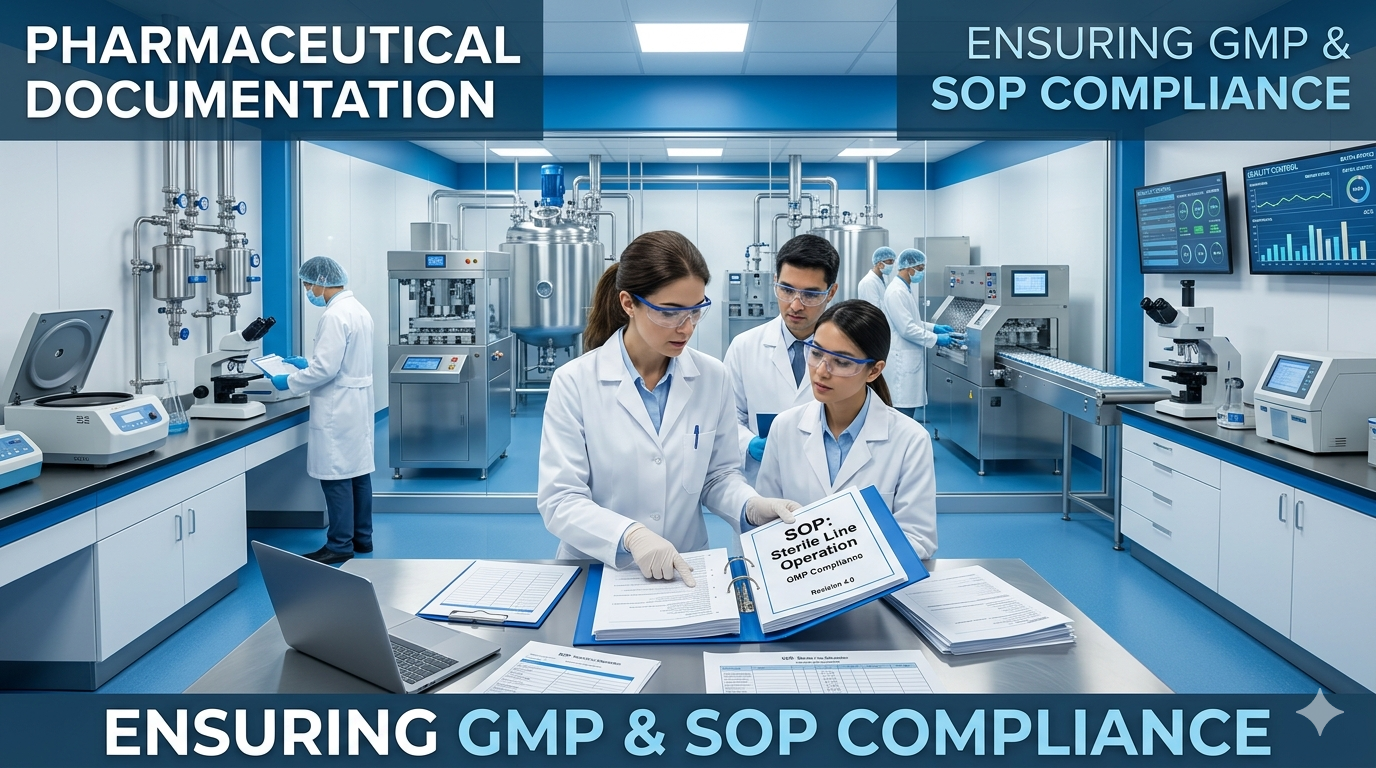
The pharmaceutical industry is one of the most highly regulated industries in the world. Every pharmaceutical company must follow strict quality standards, regulatory guidelines, and documentation procedures to ensure the safety and effectiveness of medicines. In this entire process, SOP plays a very important role.
SOP stands for Standard Operating Procedure. It is a written document that provides step-by-step instructions for performing specific tasks or processes within a pharmaceutical company. SOPs help organizations maintain consistency, improve product quality, reduce errors, and comply with regulatory requirements.
Without proper SOPs, it becomes difficult for pharmaceutical companies to maintain operational efficiency, product safety, and compliance with GMP guidelines.
A Standard Operating Procedure (SOP) is an official document that explains how a specific process should be performed. SOPs are designed to ensure that every employee follows the same method while carrying out a task.
In pharmaceutical companies, SOPs are used in various departments such as:
SOPs provide clear instructions that help employees complete their work accurately and safely.
SOPs are extremely important because pharmaceutical companies deal with products that directly affect human health. Even a small mistake in manufacturing or testing can create serious health risks.
SOPs help companies maintain standardization and ensure that all activities are performed correctly.
| Benefit | Description |
|---|---|
| Process Standardization | Ensures all employees follow the same procedure |
| Regulatory Compliance | Helps companies meet FDA and GMP requirements |
| Error Reduction | Minimizes mistakes during manufacturing and testing |
| Better Training | Provides proper guidance for new employees |
| Product Quality | Maintains consistent pharmaceutical product quality |
| Audit Readiness | Makes inspections and audits easier |
Different departments in pharmaceutical companies require different types of SOPs.
Manufacturing SOPs explain production processes step by step.
Quality Control SOPs help laboratory staff perform testing activities properly.
Quality Assurance SOPs focus on compliance and quality management activities.
Cleaning SOPs ensure proper cleaning and sanitization of equipment and manufacturing areas.
Good Manufacturing Practices (GMP) are essential in the pharmaceutical industry. Regulatory authorities such as FDA, WHO-GMP, and CDSCO require pharmaceutical companies to maintain proper SOP documentation.
SOPs help companies:
Without proper SOPs, companies may face regulatory warnings, inspection failures, or legal issues.
Creating an effective SOP requires proper planning and structure. SOPs should be simple, accurate, and easy to understand.
A good SOP should be clear and practical. Employees should easily understand the procedure without confusion.
Most pharmaceutical companies use a standard SOP structure for consistency.
| SOP Section | Purpose |
|---|---|
| Title | Name of the SOP |
| SOP Number | Unique identification number |
| Objective | Purpose of the SOP |
| Scope | Defines applicable area |
| Responsibilities | Duties of employees |
| Procedure | Detailed process steps |
| Precautions | Safety instructions |
| References | Related documents |
SOPs provide multiple operational and compliance benefits to pharmaceutical companies.
SOPs ensure that manufacturing and testing processes are performed consistently, which helps maintain product quality.
Employees can work more efficiently because they receive clear instructions and proper guidance.
SOPs help pharmaceutical companies comply with FDA, WHO-GMP, and other regulatory standards.
Standardized procedures reduce the chances of mistakes during manufacturing and documentation.
Employees do not need repeated instructions because SOPs already provide complete guidance.
If pharmaceutical companies do not maintain proper SOPs, several problems may occur.
Creating SOPs is not enough. Employees must also receive proper training to understand and follow the procedures correctly.
Many pharmaceutical companies now use digital systems for SOP management. Electronic documentation systems help companies manage records more efficiently.
The pharmaceutical industry is rapidly evolving with technology and automation. Digital documentation systems and AI-based compliance tools are making SOP management more advanced and efficient.
In the future, pharmaceutical companies are expected to adopt smarter SOP systems with automated monitoring and cloud-based documentation management.
SOPs are one of the most important components of the pharmaceutical industry. They help companies maintain product quality, ensure regulatory compliance, reduce operational errors, and improve overall efficiency.
Whether it is manufacturing, quality control, quality assurance, or regulatory affairs, SOPs are essential for every department. A well-structured SOP system not only improves operational performance but also helps pharmaceutical companies maintain trust, safety, and compliance in the global market.
SOP stands for Standard Operating Procedure. It is a written document that explains how specific tasks should be performed.
SOPs help maintain quality, ensure compliance, reduce errors, and improve process consistency.
Usually, the Quality Assurance (QA) department prepares and manages SOPs.
Common types include Manufacturing SOPs, QC SOPs, QA SOPs, Cleaning SOPs, and Validation SOPs.
SOPs ensure that approved procedures are followed consistently according to GMP guidelines.
Failure to follow SOPs can result in quality issues, audit failures, regulatory penalties, and safety risks.
.png&w=1920&q=75)
The pharmaceutical industry is highly regulated because it directly impacts patient health and safety. Every pharmaceutical company must maintain strict quality standards and follow proper compliance procedures to ensure product quality. One of the most important quality systems used in pharmaceutical companies is CAPA.
CAPA stands for Corrective and Preventive Action. It is a systematic process used to identify problems, investigate root causes, correct existing issues, and prevent future problems from happening again.
In simple words, CAPA helps pharmaceutical companies improve product quality, maintain compliance, and reduce operational risks.
Pharma companies use CAPA systems to handle deviations, customer complaints, audit observations, product failures, and quality issues. CAPA is considered an essential part of GMP (Good Manufacturing Practices) and pharmaceutical quality management systems.
CAPA is divided into two important parts:
| CAPA Term | Meaning |
|---|---|
| Corrective Action | Action taken to fix an existing problem |
| Preventive Action | Action taken to stop the problem from happening again |
Corrective action focuses on solving current issues, while preventive action focuses on avoiding future risks.
For example:
CAPA plays a critical role in maintaining quality and compliance in pharmaceutical companies. Without a proper CAPA system, companies may face product recalls, regulatory warnings, audit failures, and safety risks.
CAPA ensures that pharmaceutical companies continuously improve their processes and maintain high standards.
Pharmaceutical products directly affect human health. Even a small mistake in manufacturing, packaging, or testing can create serious consequences.
CAPA helps companies identify weak areas and implement long-term improvements.
7. CAPA is not only a quality tool but also a risk management system.
The CAPA process follows a structured approach to solve and prevent problems.
| CAPA Step | Description |
|---|---|
| Problem Identification | Detecting deviations or quality issues |
| Investigation | Finding the root cause of the issue |
| Corrective Action | Taking action to fix the problem |
| Preventive Action | Implementing steps to avoid recurrence |
| Implementation | Applying the CAPA plan |
| Verification | Checking effectiveness of CAPA |
| Documentation | Maintaining proper records |
The first step of CAPA is identifying the issue properly.
Problems can arise from:
Accurate identification helps companies take proper corrective and preventive actions.
Root Cause Analysis is one of the most important parts of the CAPA process.
Pharmaceutical companies must identify the actual reason behind the issue instead of only fixing the visible problem.
Root cause analysis helps organizations permanently solve problems.
Corrective action focuses on eliminating the current issue.
Corrective actions provide immediate solutions to existing problems.
Preventive action focuses on stopping the same issue from happening again in the future.
Preventive actions improve long-term operational performance.
CAPA is an important requirement under GMP guidelines. Regulatory authorities such as FDA, WHO-GMP, and CDSCO expect pharmaceutical companies to maintain an effective CAPA system.
CAPA helps companies:
Poor CAPA management can lead to warning letters, penalties, or inspection failures.
CAPA provides several operational and compliance advantages.
CAPA helps eliminate quality defects and improve manufacturing processes.
Companies can maintain compliance with FDA and GMP standards.
CAPA minimizes recurring deviations and process failures.
Organizations continuously improve systems and processes.
High-quality products improve customer trust and satisfaction.
Although CAPA is highly beneficial, companies may face challenges during implementation.
Proper planning and management are necessary for an effective CAPA system.
Documentation is a critical part of the CAPA process.
Pharmaceutical companies must maintain proper records for:
Good documentation improves transparency and audit readiness.
The Quality Assurance department usually manages CAPA activities in pharmaceutical companies.
QA teams ensure that:
QA plays an essential role in maintaining compliance and quality standards.
Many pharmaceutical companies now use digital CAPA software systems to improve efficiency.
Digital systems help companies manage CAPA processes more effectively.
Modern pharmaceutical companies are adopting advanced quality management systems with AI and automation.
Future CAPA systems may include:
Technology is making CAPA management more efficient and reliable.
CAPA is one of the most important quality management systems in the pharmaceutical industry. It helps companies identify problems, correct existing issues, and prevent future failures.
A strong CAPA system improves product quality, ensures GMP compliance, reduces operational risks, and supports continuous improvement. Pharmaceutical companies that maintain effective CAPA systems can achieve better regulatory compliance, operational efficiency, and customer satisfaction.
Whether it is manufacturing, quality control, quality assurance, or regulatory affairs, CAPA plays a vital role in every pharmaceutical operation.
CAPA stands for Corrective and Preventive Action. It is a system used to identify, correct, and prevent quality issues.
CAPA helps maintain product quality, reduce errors, and ensure regulatory compliance.
Corrective action fixes current problems, while preventive action prevents future recurrence.
Usually, the Quality Assurance (QA) department manages CAPA activities.
CAPA improves quality systems, documentation, and process control according to GMP guidelines.
Poor root cause analysis, delayed actions, weak documentation, and lack of monitoring are common CAPA challenges.


.png)
 Defence