
Download the App & Start Learning
- Expert Faculty Guidance
- Updated Study Material
- Mock Tests & Practice Quiz
- Live Doubt Solving Sessions
- Exam-Oriented Preparation
- Motivation & Success Strategy
Katara Academy

10/24/2026
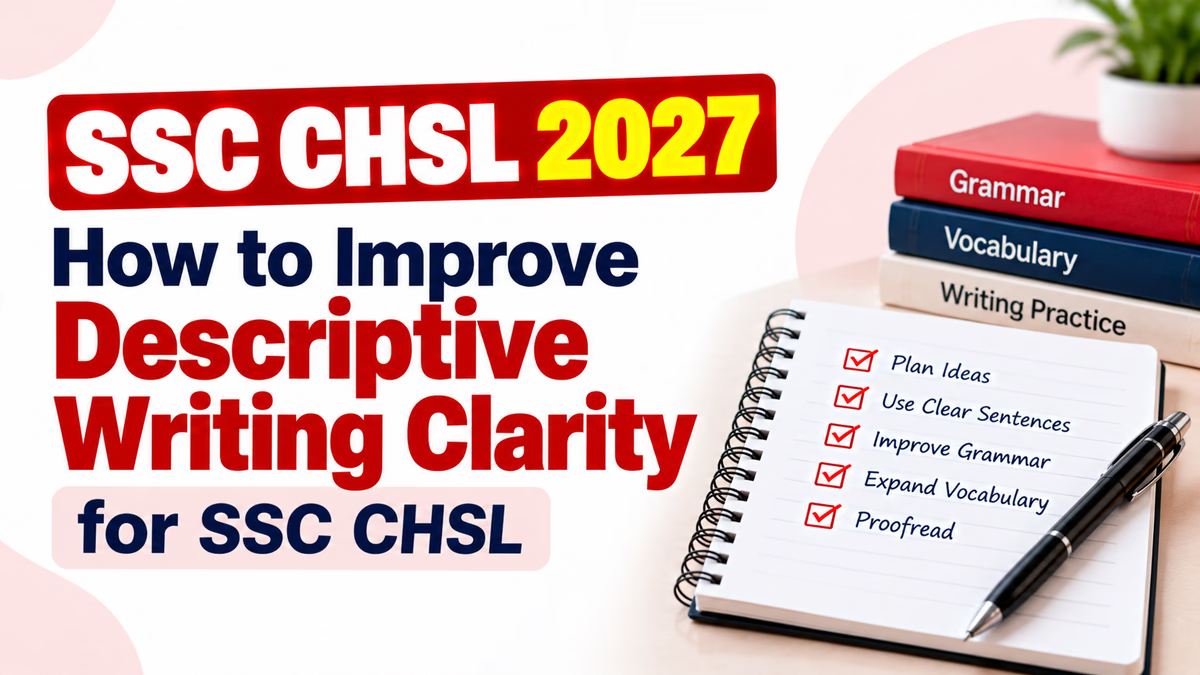
Clear writing helps candidates communicate ideas accurately, organise information logically and avoid unnecessary repetition. For SSC CHSL 2027 aspirants, strengthening English writing skills can support overall exam preparation and help with any writing task included in the applicable examination pattern.
Many students understand a topic but struggle to explain it in a structured way. Common problems include lengthy sentences, grammar errors, weak paragraph organisation and inappropriate word choices. The solution is to practise with a clear method, review mistakes and measure improvement over time.
This guide explains practical ways to improve writing clarity, along with examples, a daily practice plan and a checklist for reviewing your work.
Clear writing communicates the intended message without making the reader work unnecessarily to understand it. Every sentence should have a purpose and contribute to the topic.
Good writing does not require difficult vocabulary in every sentence. Simple and precise language is often more effective than complicated expressions used incorrectly.
One of the easiest ways to improve writing clarity is to understand the question before drafting a response. Writing without planning can lead to irrelevant details, repetition and an unclear conclusion.
Example topic: Importance of Time Management for Students.
Possible outline:
This short outline gives the response a clear direction before you begin writing.
Long sentences can become confusing when they contain several unrelated ideas. During practice, aim to express one main idea per sentence. Use longer sentences only when the connection between the ideas is clear.
Unclear example:
Students should read every day because they learn new words and they understand different subjects better which can help them in their studies and also improve their communication skills.
Improved example:
Students should read every day to develop their vocabulary. Regular reading also improves their understanding of different subjects and can strengthen communication skills.
The improved version separates related ideas and removes unnecessary wording. When editing your own work, check whether a long sentence can be divided into two clearer sentences without changing its meaning.
Grammar mistakes can affect both readability and meaning. Instead of revising every rule at once, identify the errors you make most often and practise them systematically.
| Grammar Area | What to Check | Example |
|---|---|---|
| Subject-verb agreement | The verb matches the subject. | She writes daily. |
| Verb tense | The time reference remains logical. | He completed the task yesterday. |
| Articles | Use a, an and the appropriately. | She read a book. |
| Prepositions | Choose the correct relationship word. | The class starts at ten. |
| Punctuation | Separate ideas correctly. | Revise regularly, and review your mistakes. |
After revising a rule, write your own sentences and check them. Maintain a notebook of recurring errors so you can review the exact areas that need improvement.
A strong vocabulary helps you express ideas precisely, but using difficult words without understanding their meaning can reduce clarity. Focus on learning words in context and using them naturally.
For example, the sentence “The plan is useful because it saves time” is clear and direct. Replacing it with several complicated expressions may not improve the message.
A paragraph should usually develop one central idea. When unrelated points are placed together, readers may find it difficult to follow the argument.
Use this simple structure for a general paragraph:
For a paragraph about reading habits, the topic sentence could explain that reading supports learning. The supporting sentences could discuss vocabulary and knowledge, while the final sentence could summarise the benefit.
Not every writing task needs the same structure. Follow the required format whenever the question specifies one.
Linking words help readers understand how ideas relate to each other. They can show contrast, addition, sequence, cause or an example.
| Purpose | Useful Words and Phrases |
|---|---|
| Adding a point | Also, moreover, in addition |
| Showing contrast | However, although, on the other hand |
| Explaining a result | Therefore, as a result, consequently |
| Introducing an example | For example, for instance |
| Showing sequence | First, next, finally |
Choose linking words according to the relationship between your ideas. Using them in every sentence can make the response repetitive.
Reading reliable articles, short essays and educational material exposes you to different sentence structures and ways of organising information. It can also help you recognise clear explanations and appropriate vocabulary.
Do not copy entire paragraphs as a substitute for practice. Use reading to understand how writing works, then develop your own response.
Proofreading helps you identify errors that may go unnoticed while drafting. Reserve time to review the response instead of submitting it immediately after writing.
Check the following points:
If you repeatedly make the same error, add it to an error log and review it before your next writing session. This turns proofreading into a practical improvement method.
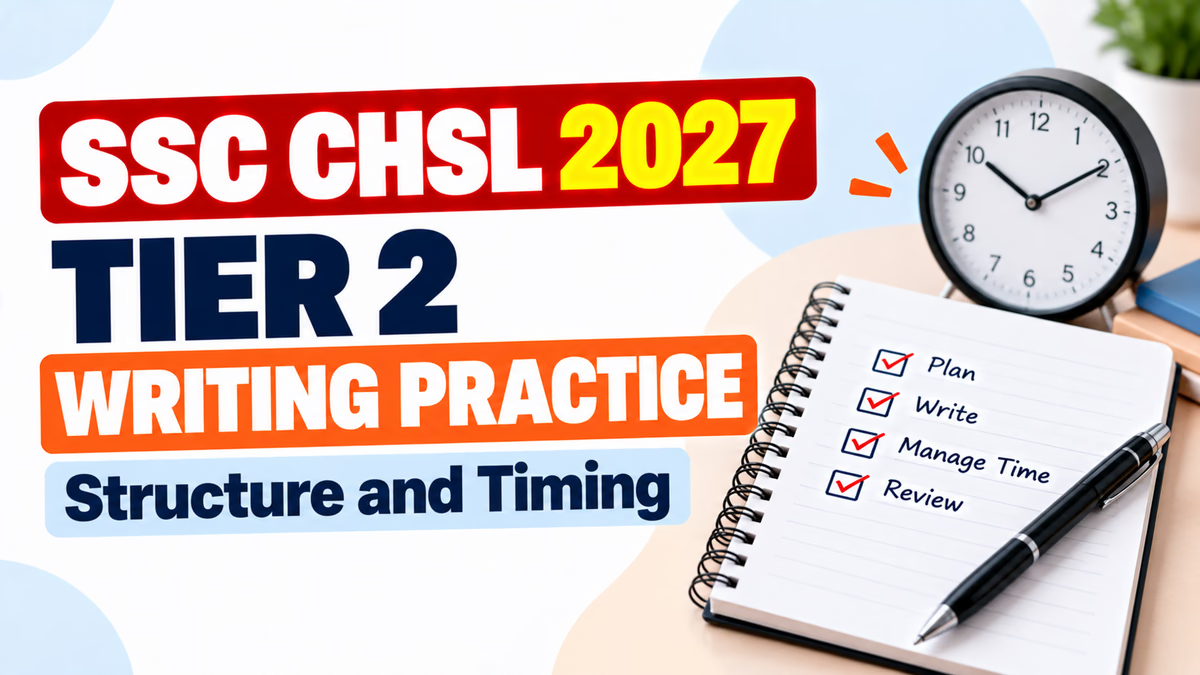
A short, consistent routine can help you improve writing skills without making your study schedule difficult to maintain.
| Activity | Suggested Time |
|---|---|
| Read a short passage or prompt | 5 minutes |
| Plan and write a paragraph | 10 minutes |
| Review grammar and organisation | 7 minutes |
| Record errors and improvement targets | 3 minutes |
This is a general practice routine, not an official examination timing rule. Adjust it to the writing tasks relevant to your preparation and the latest applicable examination instructions.
Original paragraph:
Students need a timetable because they have many subjects and if they do not plan their work they may forget revision and they can feel stressed before examinations which affects their preparation.
Improved paragraph:
Students benefit from following a realistic timetable because it helps them organise different subjects. Without a plan, they may overlook revision tasks and feel stressed before examinations. A balanced schedule should include study sessions, practice and sufficient breaks.
What improved?
Try rewriting similar paragraphs yourself before checking the example. This exercise helps develop independent editing skills.
Q1. What is the main goal of clear writing?
A. Using the most difficult words possible
B. Communicating ideas accurately and understandably
C. Making every sentence longer
D. Repeating the same information
Answer: B. Clear writing communicates the intended meaning effectively.
Q2. What should you do before writing about a topic?
A. Ignore the question
B. Copy an unrelated response
C. Identify the main idea and supporting points
D. Start without understanding the task
Answer: C. Planning helps maintain relevance and logical organisation.
Q3. Which sentence is grammatically correct?
A. She write every day.
B. She writes every day.
C. She writing every day.
D. She written every day.
Answer: B. The singular subject “She” takes “writes” in the simple present tense.
Q4. Why is proofreading important?
A. It increases word count unnecessarily.
B. It adds unrelated information.
C. It helps identify and correct mistakes.
D. It removes the need for planning.
Answer: C. Proofreading improves correctness and readability.
Q5. What makes a paragraph easier to understand?
A. Mixing unrelated ideas
B. Focusing on one central idea with supporting details
C. Repeating the opening sentence
D. Avoiding punctuation
Answer: B. A focused paragraph helps readers follow the main point.
Q6. What is a useful way to learn vocabulary?
A. Guess every word's meaning
B. Use words without understanding them
C. Learn meanings and practise appropriate usage
D. Replace every simple word with a difficult one
Answer: C. Learning words in context supports accurate usage.
Q7. Which word commonly introduces a contrast?
A. However
B. Therefore
C. First
D. For example
Answer: A. “However” is commonly used to introduce a contrasting point.
Q8. How can you improve your writing over time?
A. Practise once and never review it
B. Avoid reading
C. Practise regularly and correct recurring mistakes
D. Memorise every model answer
Answer: C. Consistent practice and review help identify areas for improvement.
Practise short paragraphs, use correct grammar, organise ideas logically and review your mistakes after each writing exercise.
No. Choose words that express your meaning accurately. Simple and correct language is preferable to complicated words used incorrectly.
You can begin with 20–30 minutes of focused practice and adjust the duration according to your needs and overall study plan.
No. The routine is a general learning exercise. Check the latest official SSC CHSL notification to confirm the applicable examination pattern and requirements.
Improving writing clarity requires consistent practice, careful planning, accurate grammar and logical paragraph organisation. SSC CHSL 2027 aspirants can strengthen their general English skills by using direct language, developing focused paragraphs and proofreading their responses.
Read regularly, practise expressing ideas in your own words and maintain a record of recurring mistakes. These habits can make your writing more organised and help you prepare systematically.
Before choosing an examination-specific strategy, consult the latest official SSC CHSL notification for the applicable Tier 2 pattern and requirements.
