
Download the App & Start Learning
- Expert Faculty Guidance
- Updated Study Material
- Mock Tests & Practice Quiz
- Live Doubt Solving Sessions
- Exam-Oriented Preparation
- Motivation & Success Strategy
Katara Academy

10/24/2026
Preparing for the SSC CHSL 2027 typing test requires more than simply practising on a keyboard. Candidates also need to develop accuracy, maintain a consistent typing rhythm, follow instructions and manage their time effectively.
Many students make avoidable mistakes during practice because they focus only on increasing typing speed. Others ignore punctuation, use incorrect finger placement or fail to review their performance after a test. These habits can make preparation less effective.
Understanding common SSC CHSL typing test mistakes can help candidates build a more structured preparation strategy. This guide explains the errors to watch for, practical ways to avoid them and useful steps to follow before the examination.
One of the most common mistakes is trying to type as quickly as possible without maintaining accuracy. Rushing can lead to missing letters, repeated characters, spelling mistakes and incorrect spacing.
Speed matters, but it should not come at the expense of correct typing. Build a reliable foundation first, then gradually increase your pace.
How to avoid this mistake:
Long words and familiar words with difficult letter combinations can cause repeated errors. Candidates may skip letters, type characters in the wrong order or accidentally repeat a letter.
These errors can continue throughout preparation if students do not identify and correct them.
How to avoid this mistake:
For example, practise words such as government, necessary, separate, development and environment. These are practice examples, not an official SSC word list.
Constantly looking down at the keyboard can interrupt your rhythm and make it harder to follow the source passage. It can also slow down your response when you need to locate frequently used keys.
Beginners may need to look at the keyboard initially, but gradually developing keyboard familiarity can make practice more consistent.
How to avoid this mistake:
Using only a few fingers to type can create unnecessary movement across the keyboard. It may also make longer typing sessions less comfortable.
Correct finger placement helps develop more consistent keyboard habits. However, changing an established typing method should be done gradually to avoid disrupting accuracy.
How to avoid this mistake:
Typing accuracy involves more than entering letters correctly. Missing spaces, extra spaces, incorrect capitalisation and omitted punctuation can affect how closely your text matches the original passage.
Candidates sometimes overlook these details when concentrating on speed.
How to avoid this mistake:
Untimed typing exercises are useful for beginners, but relying exclusively on them may leave candidates unfamiliar with working within a fixed time limit.
Timed practice helps you understand how consistently you can type under pressure. It also makes it easier to identify whether rushing causes your accuracy to decline.
How to avoid this mistake:
Completing multiple typing tests does not automatically mean that your technique is improving. If you never review the results, you may continue making the same mistakes.
Error analysis helps you identify recurring problems and decide what to practise next.
How to avoid this mistake:
Changing your keyboard layout, typing platform, passage difficulty or measurement method too frequently can make progress harder to assess.
Different tools may calculate speed and accuracy differently. An online typing score should therefore be treated as a practice indicator rather than an official examination result.
How to avoid this mistake:
Uncomfortable posture and excessive tension in the hands can make extended practice difficult. Candidates should avoid pressing keys with unnecessary force or continuing through discomfort.
How to avoid this mistake:
Another important mistake is relying entirely on old exam information or unofficial preparation websites. The applicable typing-test requirements, language, qualifying speed, duration and evaluation method should be checked against the official notification and instructions for the relevant examination cycle.
How to avoid this mistake:
For official updates, visit the Staff Selection Commission website.
Use this checklist before beginning a practice session to make sure you are following a consistent method.
Improving your typing technique requires consistency. Instead of trying to correct every weakness at once, select one or two areas for focused practice in each session.
For example, spend one session working on spelling and letter order, another on punctuation and spacing, and another on timed passage typing. At the end of the week, review your practice record and identify the areas that still need attention.
This approach makes it easier to track progress and prevents your preparation from becoming repetitive without a clear objective.
Common mistakes include rushing, misspelling words, missing letters, incorrect spacing, punctuation errors, poor keyboard technique and failing to review practice results.
Practise at a comfortable pace, review each passage, identify recurring mistakes and repeat targeted exercises. Increase your speed gradually as your accuracy improves.
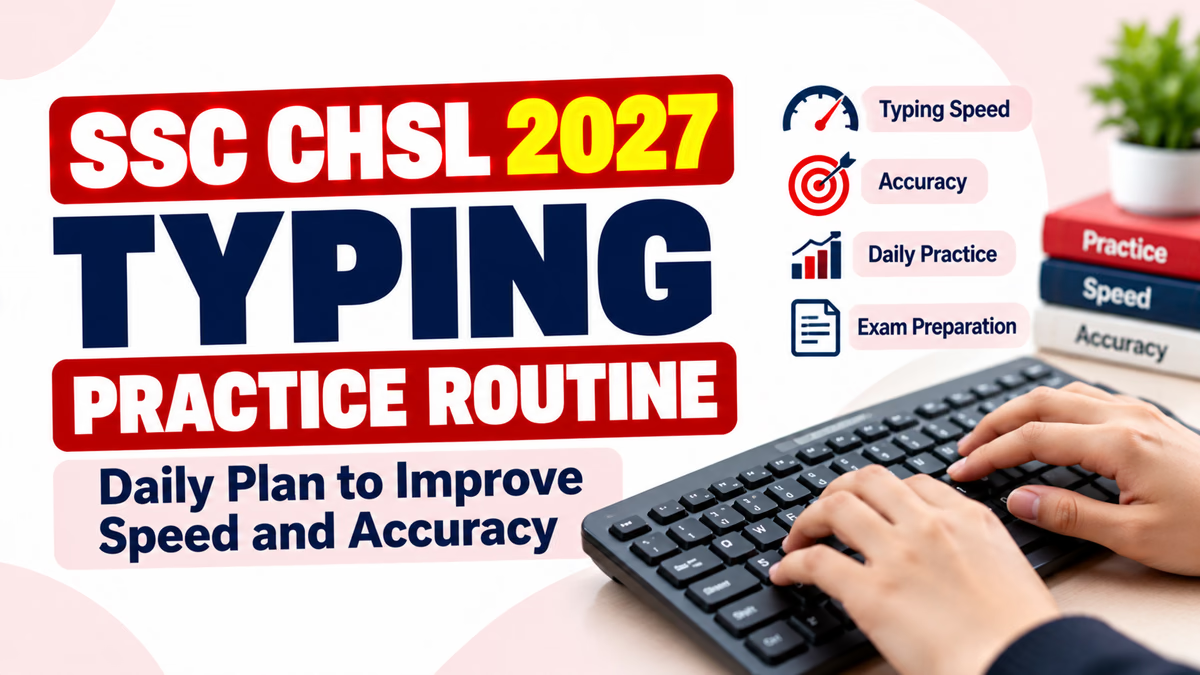
Regular practice can help develop consistent typing habits. Choose a manageable schedule that suits your current skill level and include short breaks when needed.
Both are important for effective preparation. Candidates should check the official evaluation rules and practise to meet the applicable requirements without ignoring accuracy.
Build a regular typing routine, practise complete passages, review errors and use timed exercises. Before the examination, verify the latest official instructions and requirements.
Avoiding common typing mistakes can make SSC CHSL 2027 preparation more focused and productive. Candidates should work on accuracy, spelling, finger placement, spacing, punctuation and time management while reviewing their performance regularly.
Do not measure progress by speed alone. Identify your weaknesses, practise them consistently and gradually introduce timed exercises. Most importantly, follow the official SSC CHSL examination instructions when planning your final preparation.
Keep visiting Katara Academy for more competitive-exam preparation guides, typing practice tips and study resources.