

Download the App & Start Learning
- Expert Faculty Guidance
- Updated Study Material
- Mock Tests & Practice Quiz
- Live Doubt Solving Sessions
- Exam-Oriented Preparation
- Motivation & Success Strategy
Katara Academy

10/23/2026
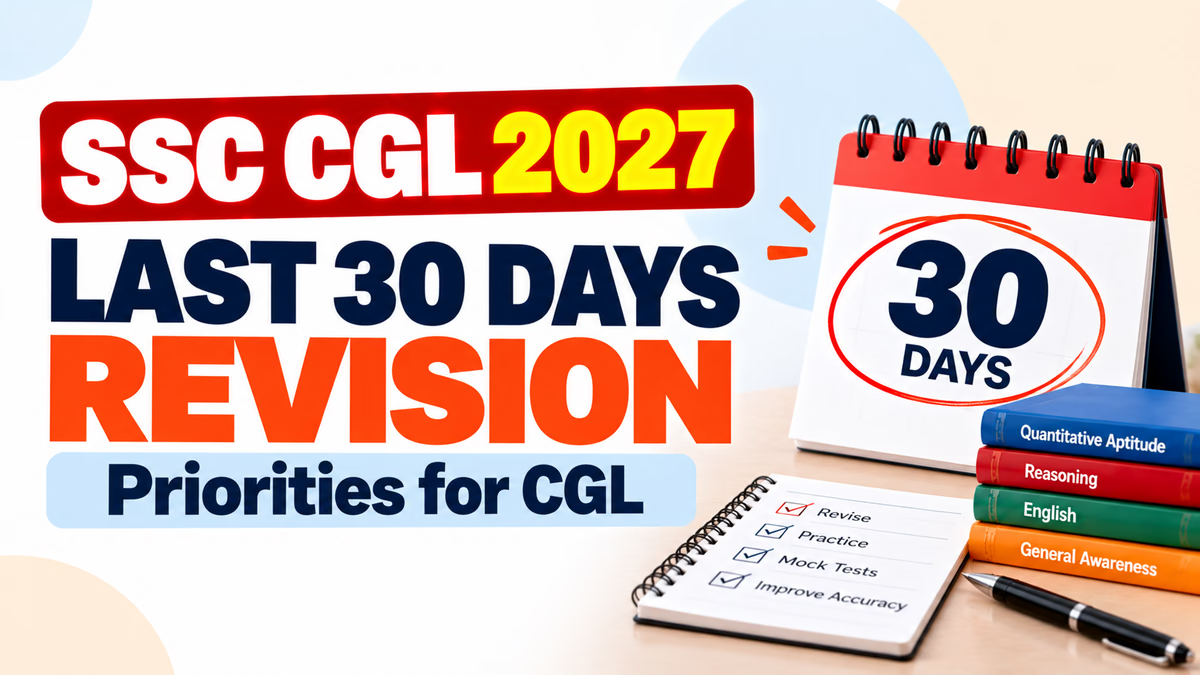
The final month before a competitive examination is an important period for revising concepts, strengthening accuracy and improving time management. For SSC CGL 2027 aspirants, the last 30 days should be used strategically rather than spent trying to learn every topic from the beginning.
A focused revision plan helps candidates identify important gaps, practise questions under timed conditions and retain information studied earlier. The best approach depends on your current preparation level, the official examination schedule and the topics that need the most attention.
Before creating a final-month timetable, evaluate your current performance. Review your recent mock tests, topic-wise accuracy and pending revision tasks.
Divide your preparation into three groups: strong topics that need maintenance, moderate topics that need practice and weak topics that require focused revision. This helps you allocate time according to actual needs instead of following an identical routine for every subject.
A three-phase plan can make the final month easier to manage. Adjust the duration of each phase according to your preparation level and the official examination date.
| Phase | Main Focus | Suggested Activities |
|---|---|---|
| Days 1–10 | Concept revision | Review important chapters, formulas, grammar rules and recurring mistakes. |
| Days 11–20 | Timed practice | Solve sectional tests, practise mixed questions and improve time management. |
| Days 21–30 | Final consolidation | Revise short notes, analyse mock tests and focus on familiar high-priority topics. |
This is a suggested framework, not an official SSC schedule. If you already have strong conceptual knowledge, you may need more practice and analysis than basic revision.
Quantitative Aptitude requires conceptual understanding, formula recall and calculation practice. During the final month, concentrate on the topics that are part of the applicable syllabus and relevant to your current preparation gaps.
Avoid spending several hours repeatedly reading a formula sheet without solving questions. Try recalling the formula from memory, apply it to practice problems and review any errors.
Reasoning preparation benefits from repeated exposure to different question formats. Use the final month to improve recognition of patterns, accuracy and decision-making.
Do not assume that solving a large number of questions automatically means you have mastered a topic. Reviewing why an answer is correct helps you apply the method to unfamiliar questions.
English revision should combine grammar, vocabulary and comprehension practice. Focus on the areas where your mock-test performance indicates a need for improvement.
Instead of memorising isolated rules without context, practise applying them in sentences. This can help you recognise grammar and usage patterns more effectively.
General Awareness can involve a broad range of factual and conceptual information. A structured revision system helps you revisit previously studied material without becoming overwhelmed.
Do not spend the entire final month collecting new study materials. Prioritise revision of trusted sources and address specific knowledge gaps where necessary.
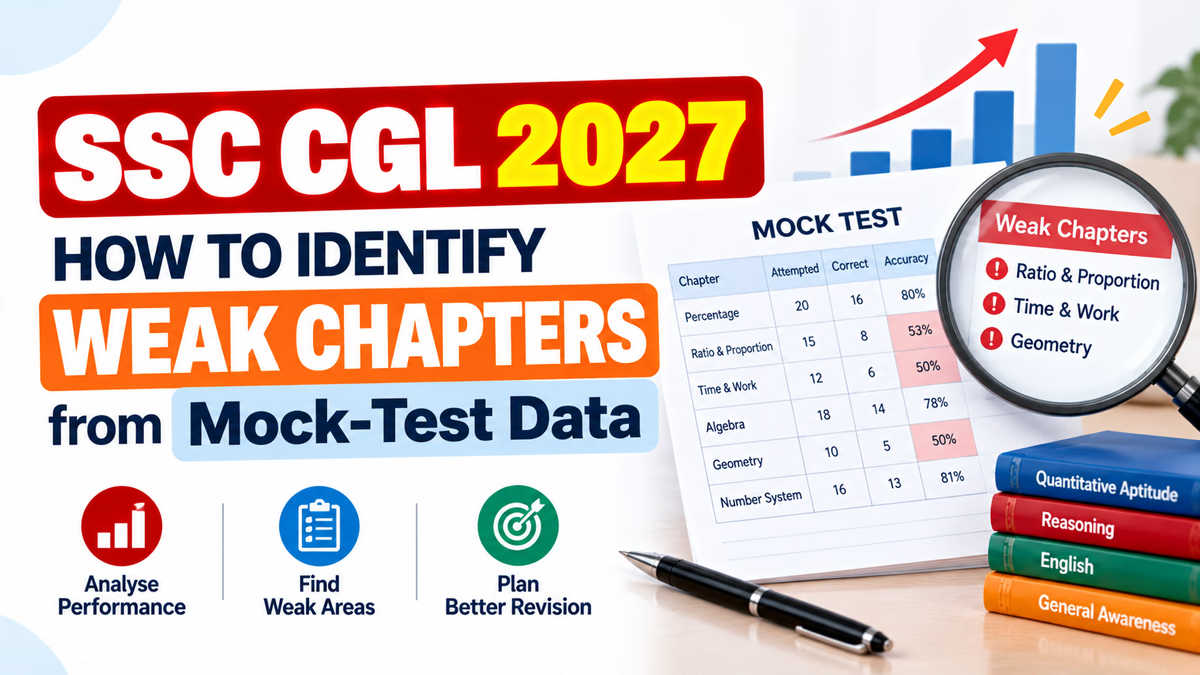
Mock tests help you evaluate whether your preparation is translating into performance under timed conditions. Their value comes from both the test attempt and the review that follows.
After each mock test, record:
| Performance Indicator | What to Review |
|---|---|
| Accuracy | Whether incorrect answers result from knowledge gaps or careless mistakes. |
| Time management | Which questions or sections take longer than expected. |
| Question selection | Whether you spend too much time on difficult questions. |
| Topic-wise results | Which chapters need additional practice. |
| Repeated mistakes | Which concepts or methods require another review. |
Use your results to choose the next revision priorities. Avoid taking multiple mock tests every day if doing so leaves no time to understand and correct your mistakes.
A daily timetable should be realistic enough to follow consistently. The following is an illustrative study structure that you can adjust to your available time and individual needs.
| Study Session | Suggested Activity |
|---|---|
| Session 1 | Revise a priority topic and solve related questions. |
| Session 2 | Practise a second subject or review a weak chapter. |
| Session 3 | Revise General Awareness or English, according to your needs. |
| Session 4 | Attempt a sectional test or a full mock when appropriate. |
| Final review | Check mistakes, revise short notes and plan the next day. |
Take suitable breaks between sessions and allow enough time for sleep. Consistency is more useful than creating a timetable that is too demanding to maintain.
A short error log can help you avoid repeating the same mistakes during the final month. Record the question topic, the reason for the error and the action needed to correct it.
For example:
| Problem | Revision Action |
|---|---|
| Incorrect formula application | Review the formula and solve fresh examples. |
| Calculation mistakes | Practise calculations and check intermediate steps. |
| Grammar confusion | Review the relevant rule and practise similar sentences. |
| Forgotten facts | Use short recall sessions and repeat revision. |
| Poor question selection | Practise timed tests and review time spent on difficult questions. |
Keep formula notes and factual revision notes concise. Their purpose is to make repeated review easier, not to reproduce entire textbooks.
During the last week, focus on consolidating what you have already learned and preparing for the examination process.
Use the checklist as a guide rather than a rigid rule. Your final priorities should reflect the actual examination date and your preparation progress.
Q1. What should candidates do before creating a final-month revision plan?
A. Buy several new books
B. Analyse mock-test results and identify weaknesses
C. Stop practising questions
D. Study only their strongest topics
Answer: B. Reviewing performance helps candidates allocate time according to their needs.
Q2. Why should mock tests be analysed after completion?
A. To avoid studying weak chapters
B. To identify errors, timing issues and revision priorities
C. To guarantee a particular rank
D. To eliminate the need for practice
Answer: B. Test analysis helps turn results into practical improvement steps.
Q3. What is a useful way to revise formulas?
A. Read them once and never return to them
B. Recall them from memory and apply them to practice questions
C. Memorise answers without understanding
D. Avoid solving numerical questions
Answer: B. Active recall combined with application helps check understanding.
Q4. What should you do when the same mistake appears in multiple tests?
A. Ignore it
B. Identify the underlying cause and practise the relevant concept
C. Stop taking all tests
D. Change every part of your timetable immediately
Answer: B. Repeated mistakes indicate an area that deserves targeted review.
Q5. What is the purpose of a formula notebook?
A. To replace all textbooks permanently
B. To keep important formulas organised for quick revision
C. To record only mock-test scores
D. To avoid practice questions
Answer: B. Concise notes make it easier to revisit important information.
Q6. What should candidates prioritise during the final week?
A. Starting several unrelated courses
B. Consolidating knowledge, reviewing errors and checking official instructions
C. Abandoning sleep routines
D. Ignoring previously studied material
Answer: B. Focused revision and practical preparation support a more organised final week.
Q7. How should study time be allocated across chapters?
A. Equally, regardless of performance
B. Only according to personal preference
C. According to preparation needs, performance and the applicable syllabus
D. Only to the easiest chapters
Answer: C. A targeted plan uses available time according to actual learning needs.
Q8. Why is sufficient sleep important during exam preparation?
A. It replaces revision
B. It guarantees a high score
C. It supports rest and readiness for study and examination tasks
D. It removes the need for mock tests
Answer: C. Adequate rest supports general well-being and readiness.
The final 30 days before an examination are best used for focused revision, targeted practice and careful performance analysis. SSC CGL 2027 aspirants should identify their weak areas, strengthen familiar concepts and use mock tests to evaluate their progress.
Follow a realistic timetable, maintain concise revision notes and correct recurring mistakes. Combine subject preparation with time management, adequate rest and attention to official examination instructions.
Always verify the latest official SSC notification for the examination schedule, syllabus and applicable rules before finalising your revision plan.
