





Download the App & Start Learning
- Expert Faculty Guidance
- Updated Study Material
- Mock Tests & Practice Quiz
- Live Doubt Solving Sessions
- Exam-Oriented Preparation
- Motivation & Success Strategy
Katara Academy

10/13/2026
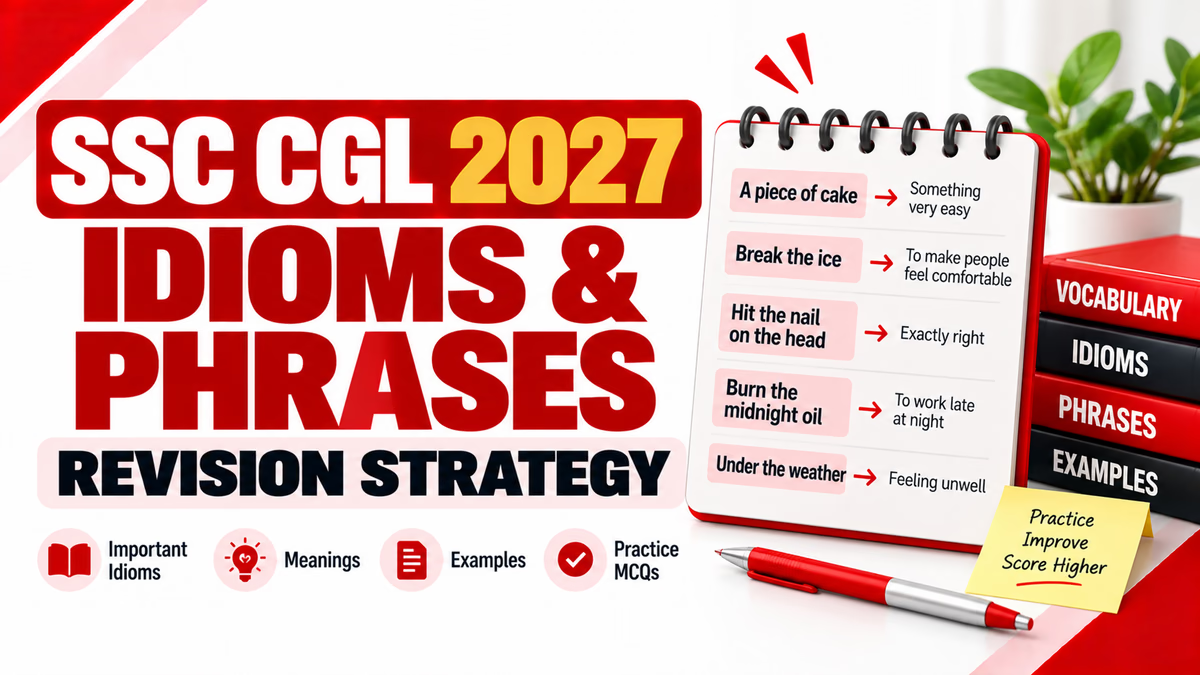
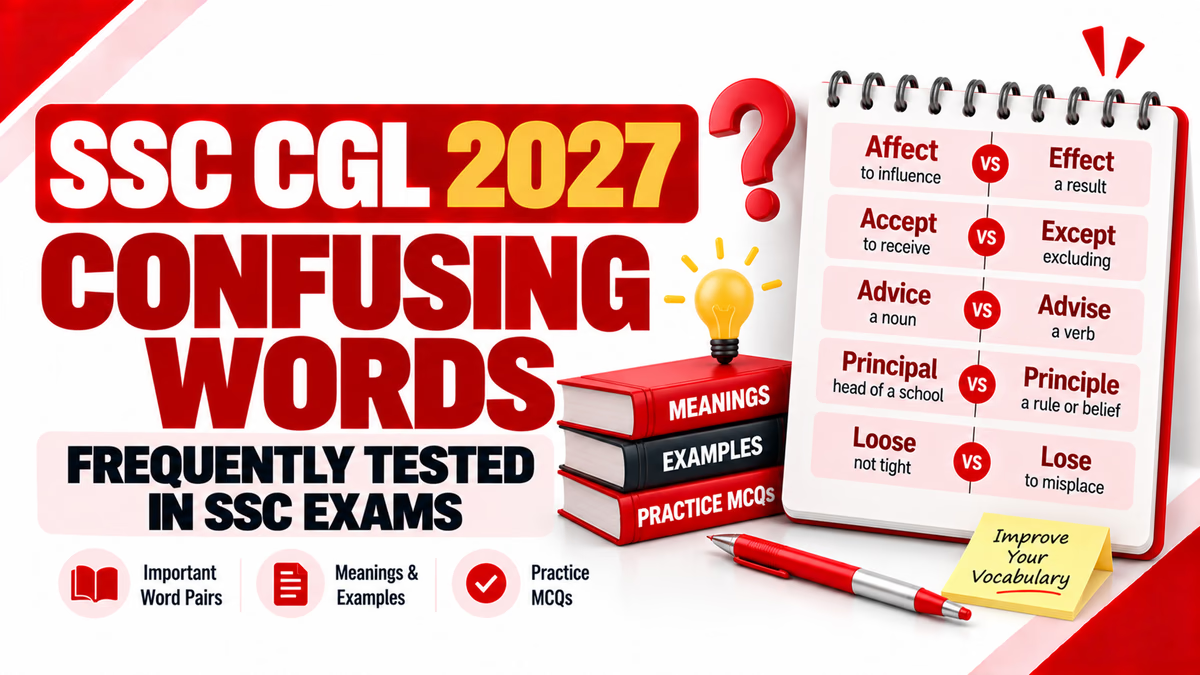
Idioms and phrases are an important part of English vocabulary preparation for SSC CGL 2027. These expressions often have meanings that cannot be understood by interpreting each word literally. Learning their meanings, usage and context can help candidates answer vocabulary questions more accurately.
A smart revision strategy is more effective than memorising hundreds of expressions in one sitting. In this guide, you will learn how to revise idioms and phrases, understand commonly used expressions, practise them in sentences and test your preparation through multiple-choice questions.
An idiom is a fixed expression whose meaning is different from the literal meanings of its individual words. A phrase is a group of words that conveys an idea or meaning. In competitive-exam vocabulary, idioms and phrases are often tested by asking candidates to identify the meaning of an expression or select its correct usage.
Example: "Once in a blue moon" means something that happens very rarely.
Example in a sentence: We visit that restaurant once in a blue moon.
Here, the expression does not refer to the literal appearance of the Moon. It describes an event that happens infrequently.
The exact questions asked in SSC CGL 2027 cannot be predicted. Therefore, focus on understanding a broad range of commonly used expressions and practise according to the latest official examination pattern.
Start your revision with the following frequently used expressions. Learn the meaning and read the example sentence to understand how each idiom works in context.
| Idiom or Phrase | Meaning | Example Sentence |
|---|---|---|
| Once in a blue moon | Very rarely | He eats fast food once in a blue moon. |
| A piece of cake | Something very easy | The first exercise was a piece of cake. |
| Break the ice | To make people feel comfortable at the beginning of an interaction | The teacher told a joke to break the ice. |
| Hit the nail on the head | To describe something exactly right | Your explanation hit the nail on the head. |
| Spill the beans | To reveal a secret | Rohan spilled the beans about the surprise party. |
| Burn the midnight oil | To work or study late into the night | She burned the midnight oil before the examination. |
| At the eleventh hour | At the last possible moment | They submitted the application at the eleventh hour. |
| Beat around the bush | To avoid discussing the main point | Please stop beating around the bush and answer directly. |
| Under the weather | Feeling unwell | I stayed home because I was feeling under the weather. |
| In hot water | In trouble | He was in hot water after missing the deadline. |
| Cost an arm and a leg | To be extremely expensive | That luxury watch costs an arm and a leg. |
| Call it a day | To stop working for the day | We finished the revision and decided to call it a day. |
| Keep an eye on | To watch carefully | Keep an eye on the clock during the test. |
| By leaps and bounds | Very quickly or significantly | Her English skills improved by leaps and bounds. |
| Make both ends meet | To manage expenses with available income | The family works hard to make both ends meet. |
| Through thick and thin | In good and bad circumstances | True friends support each other through thick and thin. |
| A blessing in disguise | Something that seems bad initially but turns out beneficial | Missing that train was a blessing in disguise. |
| Burn one's bridges | To destroy relationships or future opportunities | Think carefully before you burn your bridges. |
| Turn a blind eye | To deliberately ignore something | The supervisor refused to turn a blind eye to cheating. |
| Get cold feet | To become nervous and hesitate | He got cold feet just before the interview. |
Grouping expressions by their meaning can make revision easier. Instead of memorising a random list, learn related idioms together.
A structured revision routine can help you remember idioms for longer. Use the following method during your English preparation.
Begin with 10 to 15 expressions per study session. Focus on their meanings and usage before moving to a larger list. Consistent learning is more useful than trying to memorise too many expressions at once.
Create four columns: idiom, meaning, example sentence and revision status. Record unfamiliar expressions and mark those you repeatedly forget.
Revise new idioms on the same day, the next day and again after a few days. Revisit difficult expressions more frequently than the ones you already remember.
Do not learn only the dictionary meaning. Read the complete sentence and understand how the expression affects its meaning. This is particularly useful when two answer options seem similar.
Once you have revised a group of expressions, attempt a short MCQ quiz without looking at your notes. Review every incorrect answer and write the correct meaning again.
Keep a separate list of idioms you confuse with one another. Revise this list before attempting another quiz so that the same errors become less frequent.
Choose the most appropriate meaning of each idiom. Attempt all questions before checking the answer key.
Q1. What does "once in a blue moon" mean?
Q2. The idiom "a piece of cake" refers to something that is:
Q3. What does "spill the beans" mean?
Q4. If someone is "under the weather", they are:
Q5. "At the eleventh hour" means:
Q6. What does "beat around the bush" mean?
Q7. "Leave no stone unturned" means:
Q8. If someone "gets cold feet", they:
Q9. What does "turn a blind eye" mean?
Q10. "Back to square one" means:
Q11. What does "hit the nail on the head" mean?
Q12. "The ball is in your court" means:
Q13. What does "burn the midnight oil" mean?
Q14. "Cost an arm and a leg" means:
Q15. What does "read between the lines" mean?
Idioms and phrases preparation for SSC CGL 2027 becomes more manageable when you learn expressions in context, revise them regularly and test your understanding through MCQs. Focus on the meaning of each idiom, practise using it in a sentence and review the expressions you find difficult.
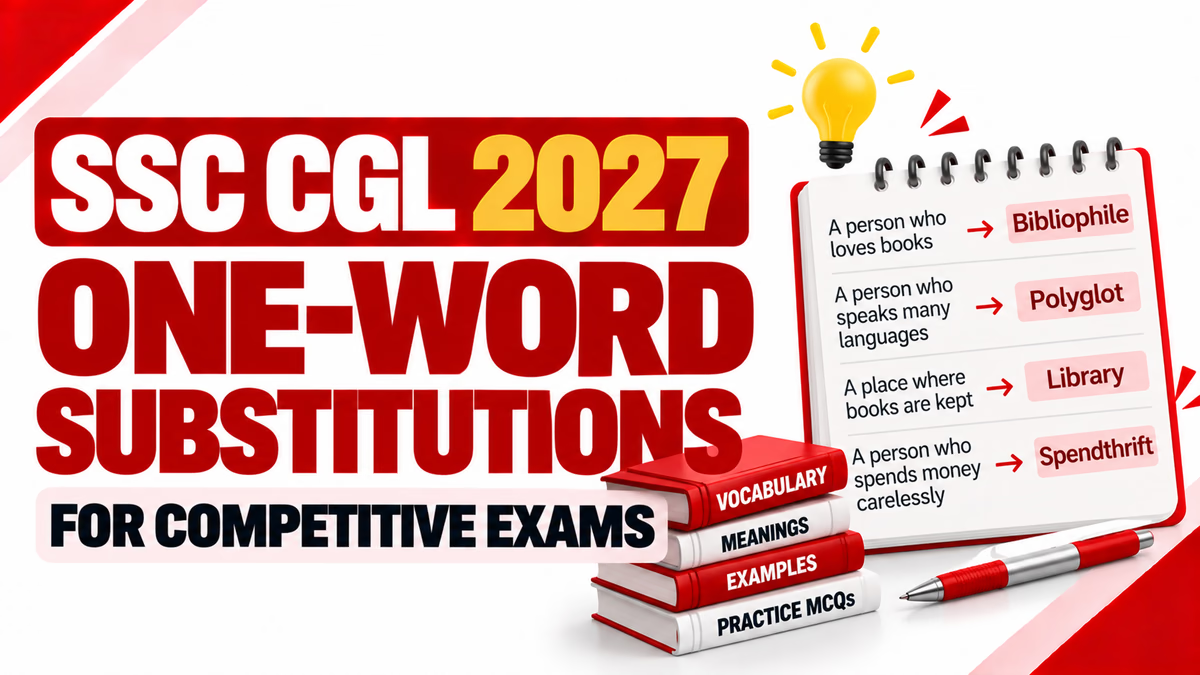
Include vocabulary revision in your daily English study routine. Combine idioms and phrases with synonyms, antonyms, one-word substitutions, grammar and reading comprehension to develop balanced preparation for the examination.
Keep practising with Katara Academy and strengthen your English vocabulary for SSC CGL 2027.
