


Download the App & Start Learning
- Expert Faculty Guidance
- Updated Study Material
- Mock Tests & Practice Quiz
- Live Doubt Solving Sessions
- Exam-Oriented Preparation
- Motivation & Success Strategy
Katara Academy

21/11/2026
Preparing for SSC MTS 2027 requires regular question practice, proper time management and a clear understanding of the examination pattern. Many candidates study different subjects every day but remain confused about one important thing: How many questions should they solve daily to improve their performance?
Practising too few questions may slow down your preparation, while solving hundreds of questions without understanding mistakes can waste valuable time. The right strategy is to maintain a balanced question-practice target for Mathematics, Reasoning, General Awareness and English.
Each subject requires a different preparation approach. Mathematics needs calculation practice, Reasoning requires logical thinking, English needs grammar and comprehension practice, and General Awareness requires regular learning and revision.
In this guide, you will learn the recommended daily question targets for each SSC MTS 2027 subject, weekly practice schedules and ways to improve speed and accuracy.
Before deciding how many questions to practise, candidates should understand the examination structure.
According to the SSC MTS 2025 official notification, the Computer-Based Examination consists of two compulsory sessions.
| Session | Subject | Questions | Marks |
|---|---|---|---|
| Session I | Numerical and Mathematical Ability | 20 | 60 |
| Session I | Reasoning Ability and Problem Solving | 20 | 60 |
| Session II | General Awareness | 25 | 75 |
| Session II | English Language and Comprehension | 25 | 75 |
| Total | Four Subjects | 90 | 270 |
Session I Duration: 45 minutes.
Session II Duration: 45 minutes.
Negative Marking: No negative marking in Session I. One mark is deducted for each incorrect answer in Session II under the 2025 scheme.
The 2027 examination pattern should be confirmed through the latest SSC notification when released.
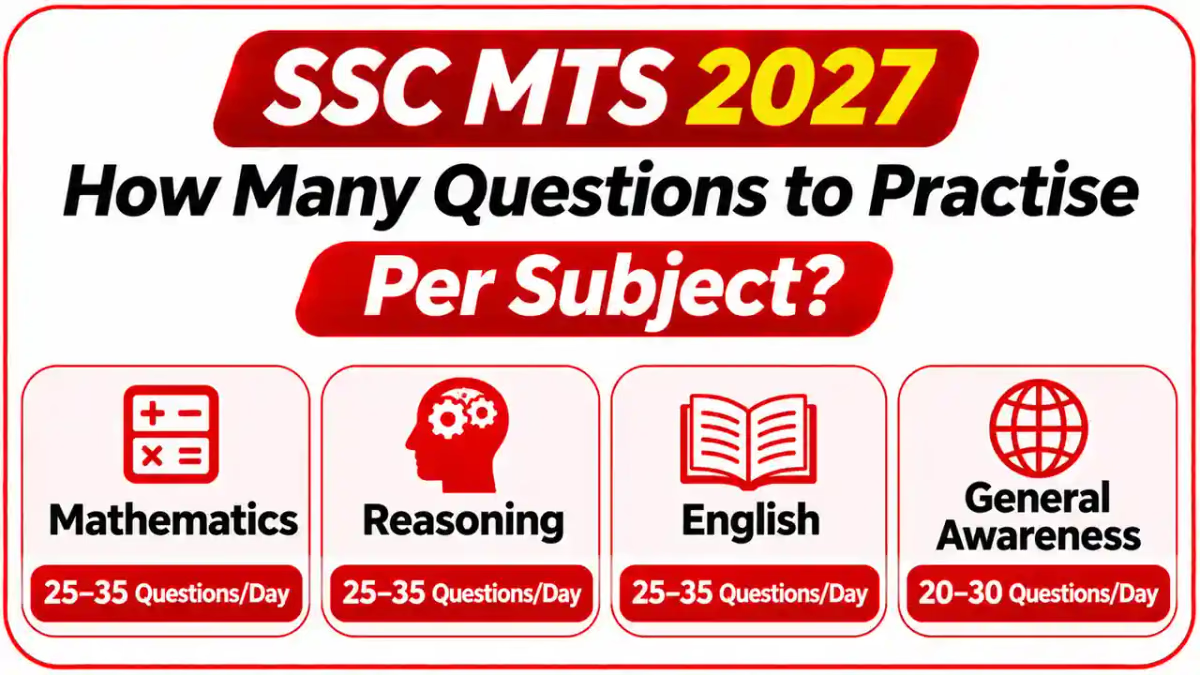
There is no official SSC rule specifying how many additional practice questions candidates must solve daily. However, the following targets provide a practical starting point for beginners.
| Subject | Daily Practice Target | Main Focus |
|---|---|---|
| Mathematics | 25–35 questions | Calculation and accuracy |
| Reasoning | 25–35 questions | Logical thinking and speed |
| General Awareness | 20–30 MCQs | Knowledge and revision |
| English | 25–35 questions | Grammar and comprehension |
| Total | 95–135 questions | Balanced practice |
These are recommended practice targets, not compulsory daily quotas. Beginners can start with fewer questions and gradually increase their practice as their understanding improves.
Mathematics requires regular practice because candidates need to understand formulas, calculations and different question patterns.
A beginner can start with 25–35 questions daily, depending on the difficulty of the topics being studied.
| Topic | Suggested Questions |
|---|---|
| Number System | 5 |
| Percentage | 5 |
| Ratio and Proportion | 5 |
| Average | 5 |
| Profit and Loss | 5 |
| Time and Work or other weak topics | 5–10 |
Target: Aim to solve a 20-question Mathematics practice set within a time limit similar to the examination, while maintaining accuracy.
Reasoning evaluates logical thinking, pattern recognition and problem-solving ability. Regular practice helps candidates identify question patterns and reduce unnecessary time spent on difficult problems.
Beginners can aim for 25–35 Reasoning questions daily.
| Topic | Suggested Questions |
|---|---|
| Analogy | 5 |
| Number Series | 5 |
| Coding and Decoding | 5 |
| Classification | 5 |
| Direction and Distance | 5 |
| Calendar, Clock or other topics | 5–10 |
Target: Practise completing 20 Reasoning questions within the Session I time limit by gradually improving your speed.
General Awareness requires consistent learning and revision. Unlike Mathematics and Reasoning, simply solving questions without understanding the information may not provide long-term benefits.
Candidates can practise 20–30 MCQs daily along with studying new topics.
| Subject Area | Suggested Questions |
|---|---|
| Indian History | 5 |
| Geography | 5 |
| Indian Polity | 5 |
| General Science | 5 |
| Economics, Culture or Current Affairs | 5–10 |
Target: Practise 20–30 MCQs and revise the related concepts instead of memorising answers without understanding them.
English preparation requires regular attention to grammar, vocabulary, sentence structure and comprehension. Candidates should practise different question formats rather than concentrating on only vocabulary.
A daily target of 25–35 questions is a useful starting point.
| Topic | Suggested Questions |
|---|---|
| Error Spotting | 5 |
| Synonyms and Antonyms | 5 |
| Fill in the Blanks | 5 |
| Sentence Improvement | 5 |
| Spelling and Vocabulary | 5 |
| Reading Comprehension | 5–10 |
Target: Practise 25–35 questions daily and gradually work towards completing a 25-question examination-style section within the prescribed time.
Beginners should not immediately attempt 100 or more questions every day. First, they should understand the syllabus and build a strong foundation.
The following progression can help beginners increase their practice gradually.
| Preparation Stage | Daily Question Target | Main Objective |
|---|---|---|
| First 2 Weeks | 40–60 questions | Understand basic concepts |
| Weeks 3–4 | 60–80 questions | Improve accuracy |
| Weeks 5–8 | 80–100 questions | Develop speed and confidence |
| Regular Practice Stage | 95–135 questions | Build examination readiness |
This is a suggested progression, not an official preparation requirement. Candidates can adjust the targets according to their available time and learning speed.
A weekly schedule can help candidates distribute their practice across all four subjects and avoid neglecting weaker areas.
| Day | Practice Focus |
|---|---|
| Monday | Mathematics and English |
| Tuesday | Reasoning and General Awareness |
| Wednesday | Mathematics and Reasoning |
| Thursday | English and General Awareness |
| Friday | Mixed practice from all four subjects |
| Saturday | Section-wise timed tests |
| Sunday | Full mock test, revision and mistake analysis |
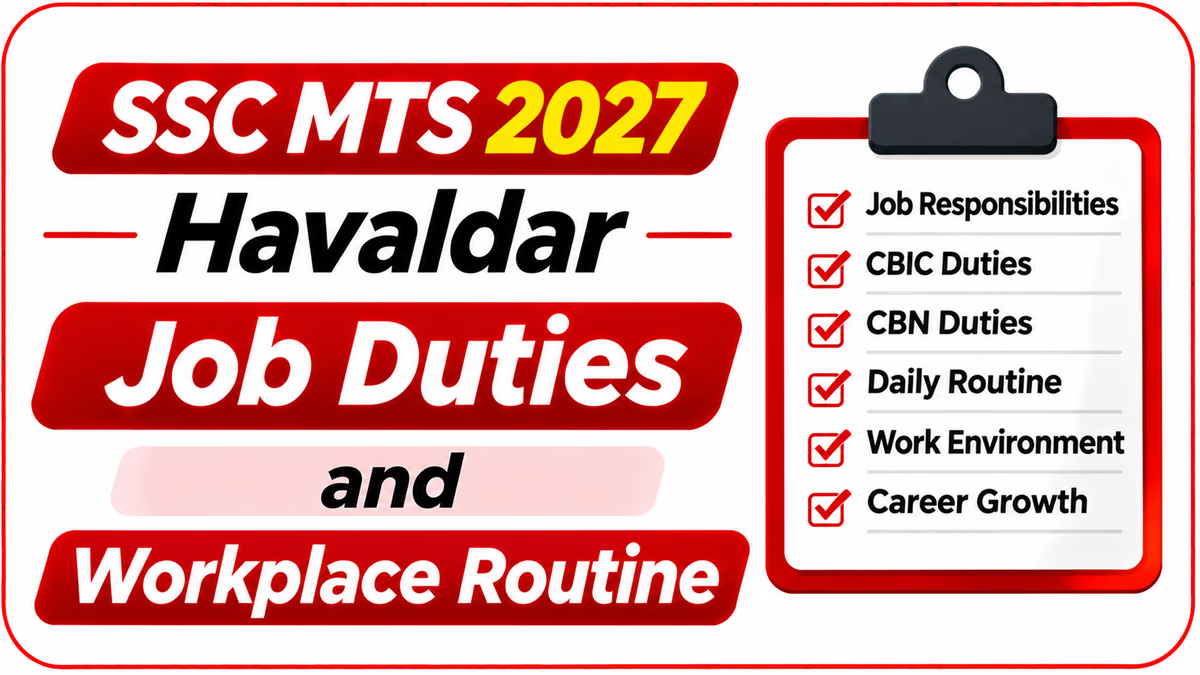
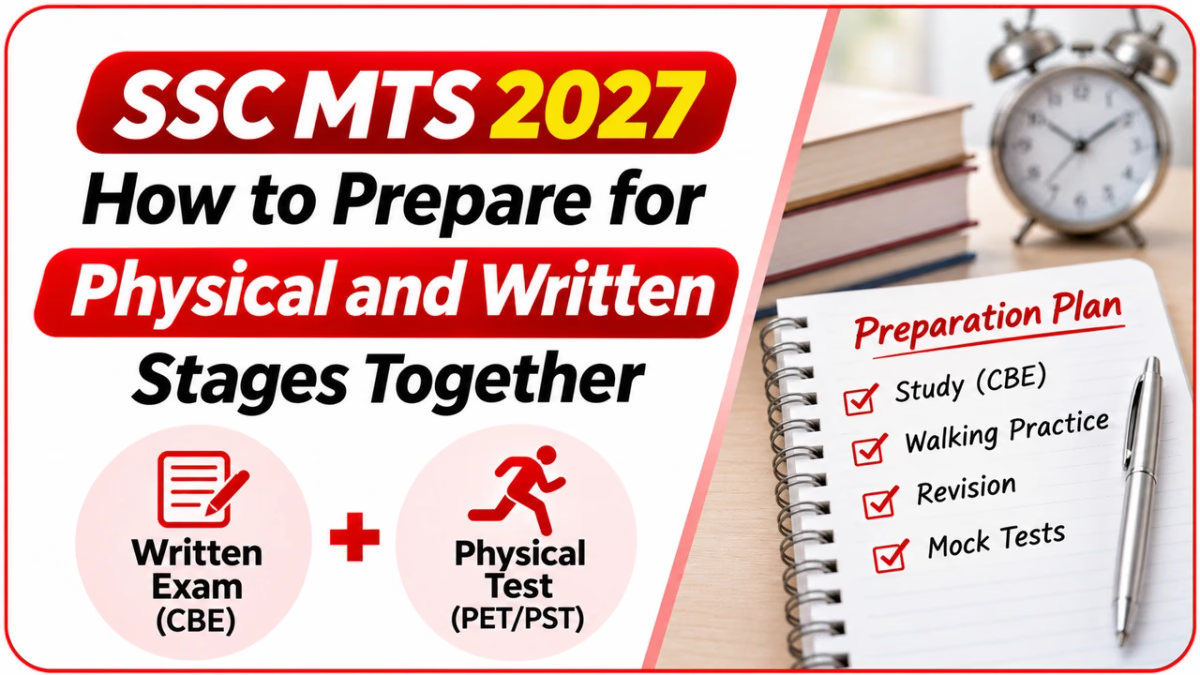
Along with the weekly schedule, candidates preparing for Havaldar should maintain a separate gradual walking and fitness routine for PET/PST.
Solving more questions is useful only when candidates learn to answer correctly within the available time. Speed and accuracy should improve together.
Remember that consistent and meaningful practice is more valuable than simply counting completed questions.
Maintaining a simple progress record can help candidates understand their improvement over time.
| Subject | Target | Questions Solved | Correct Answers |
|---|---|---|---|
| Mathematics | 30 | _____ | _____ |
| Reasoning | 30 | _____ | _____ |
| General Awareness | 25 | _____ | _____ |
| English | 30 | _____ | _____ |
| Total | 115 | _____ | _____ |
At the end of each week, review your accuracy, time taken and weak topics. Adjust the next week's targets based on your performance.
Practising questions regularly becomes more effective when candidates follow a structured syllabus, understand concepts and receive proper guidance.
Katara Academy provides learning resources and course opportunities for competitive examination aspirants. Explore the available courses to find suitable guidance for your SSC MTS 2027 preparation.
Learn important concepts, practise exam-oriented questions and improve your preparation with structured guidance.
A useful target for regular preparation is around 95–135 questions daily across all four subjects. Beginners can start with 40–60 questions and increase gradually.
Candidates can aim for 25–35 Mathematics questions daily, focusing on calculations, formulas, arithmetic concepts and accuracy.
A daily target of 25–35 Reasoning questions is a useful starting point. Practise analogy, series, coding-decoding, classification and other syllabus topics.
Practise around 20–30 General Awareness MCQs daily along with studying and revising History, Geography, Polity, Science and Economics.
Practise approximately 25–35 English questions daily, including grammar, vocabulary, sentence improvement and comprehension.
Yes, 100 well-practised questions can be a useful daily target. However, the quality of practice, topic coverage, revision and mistake analysis are more important than the total number alone.
Yes. Beginners should first understand the basic concepts and then start solving previous-year questions to become familiar with the examination style and difficulty level.
Beginners can start with one full mock test per week. As preparation improves, they can gradually increase the number while ensuring that every mock test is properly analysed.
Yes. Accuracy is especially important in Session II because the 2025 examination scheme includes negative marking of one mark for every incorrect answer.
Yes. Havaldar candidates follow the same Computer-Based Examination pattern, subject to the applicable notification. They should additionally maintain a separate physical fitness and PET preparation routine.
Reduce the target to a manageable level, focus on understanding concepts and gradually increase the number of questions. Consistency is more useful than rushing through practice sets.
Practise timed topic-wise tests, revise formulas, improve basic concepts, analyse mistakes and regularly attempt examination-style mock tests.
Preparing for SSC MTS 2027 requires a balanced approach to question practice. Candidates should aim to solve approximately 25–35 Mathematics questions, 25–35 Reasoning questions, 20–30 General Awareness MCQs and 25–35 English questions daily as a practical regular-study target.
However, beginners should start with manageable targets and gradually increase their practice. Focus on understanding concepts, improving accuracy, revising important topics and analysing mock-test performance.
Remember, successful preparation is not about solving the highest number of questions every day. It is about learning from every question and becoming better prepared for the actual examination.
