
Download the App & Start Learning
- Expert Faculty Guidance
- Updated Study Material
- Mock Tests & Practice Quiz
- Live Doubt Solving Sessions
- Exam-Oriented Preparation
- Motivation & Success Strategy
Katara Academy

21/11/2026
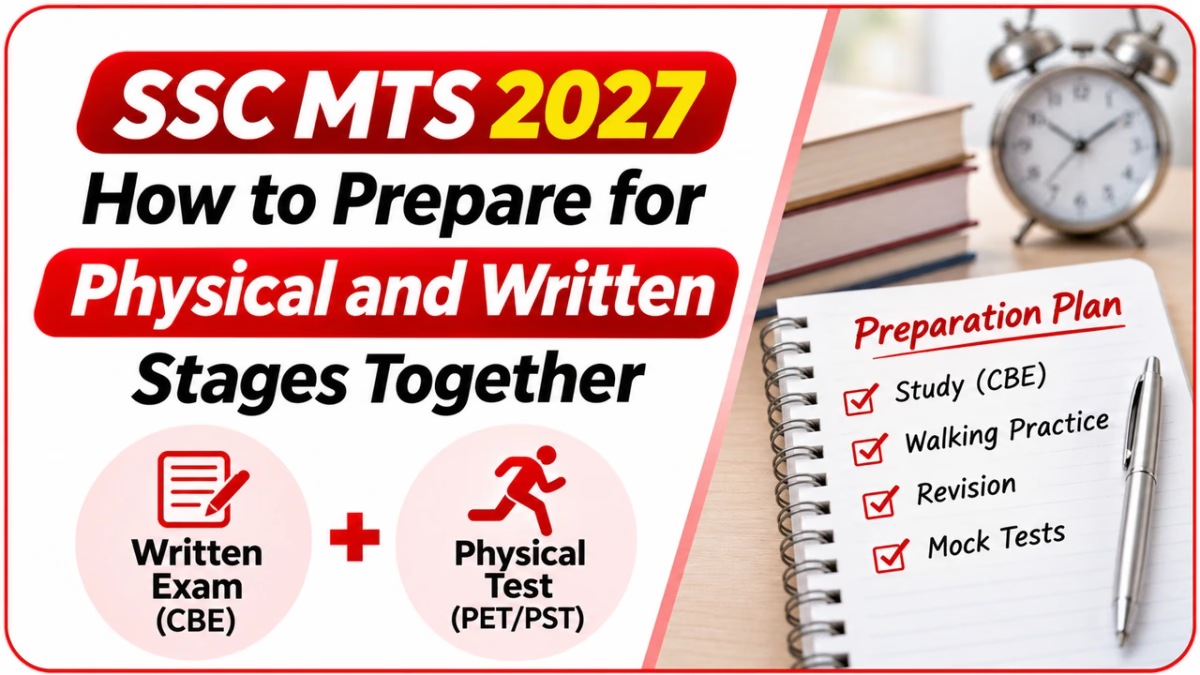
Preparing for SSC MTS 2027 requires a smart strategy, especially for candidates targeting the Havaldar post. Unlike candidates preparing only for MTS, Havaldar aspirants need to focus on both the Computer-Based Examination (CBE) and the Physical Efficiency Test (PET) and Physical Standard Test (PST).
Many candidates make the mistake of concentrating only on written exam preparation and starting physical training after the examination. This can create unnecessary pressure, particularly when candidates have limited time to improve their walking endurance and physical fitness.
A better approach is to prepare for both stages together through a balanced daily routine. Regular study, walking practice, revision, mock tests and proper recovery can help candidates manage both preparation goals.
In this guide, you will learn how to prepare for SSC MTS 2027 written and physical stages together, create a practical timetable, improve walking endurance and maintain consistent study progress.
Before creating a preparation plan, candidates should understand the selection requirements for their preferred post.
| Selection Stage | MTS | Havaldar |
|---|---|---|
| Computer-Based Examination | Required | Required |
| Physical Efficiency Test | Not Required | Required |
| Physical Standard Test | Not Required | Required |
| Document Verification | As applicable | As applicable |
Important: The physical stages apply to Havaldar recruitment, not to MTS-only candidates. If you are applying for both posts, you should prepare for the written examination and Havaldar physical requirements together.
According to the SSC MTS 2025 notification, the Computer-Based Examination is conducted in two compulsory sessions on the same day. Candidates preparing for the 2027 examination can use this as a reference until SSC publishes the next official notification.
| Session | Subject | Questions | Marks |
|---|---|---|---|
| Session I | Numerical and Mathematical Ability | 20 | 60 |
| Session I | Reasoning Ability and Problem Solving | 20 | 60 |
| Session II | General Awareness | 25 | 75 |
| Session II | English Language and Comprehension | 25 | 75 |
| Total | Four Subjects | 90 | 270 |
Time Duration: Each session is 45 minutes under the 2025 scheme.
Negative Marking: There is no negative marking in Session I. Session II carries a deduction of one mark for each incorrect answer.
Both sessions are compulsory. Candidates should practise all four subjects and pay particular attention to accuracy in Session II.
Havaldar candidates must also prepare for the prescribed physical tests. According to the SSC MTS 2025 notification, the Physical Efficiency Test includes a walking test.
| Candidate | Walking Distance | Time Limit |
|---|---|---|
| Male | 1600 metres | 15 minutes |
| Female | 1000 metres | 20 minutes |
Male Candidates:
Female Candidates:
Prescribed relaxations are available for eligible categories and regions. Candidates should check the official notification for the exact conditions.
Remember that physical preparation should start gradually. Avoid suddenly increasing walking distance or attempting maximum-speed walking every day.
One of the best ways to prepare for written and physical stages together is to divide your day into dedicated study and exercise sessions.
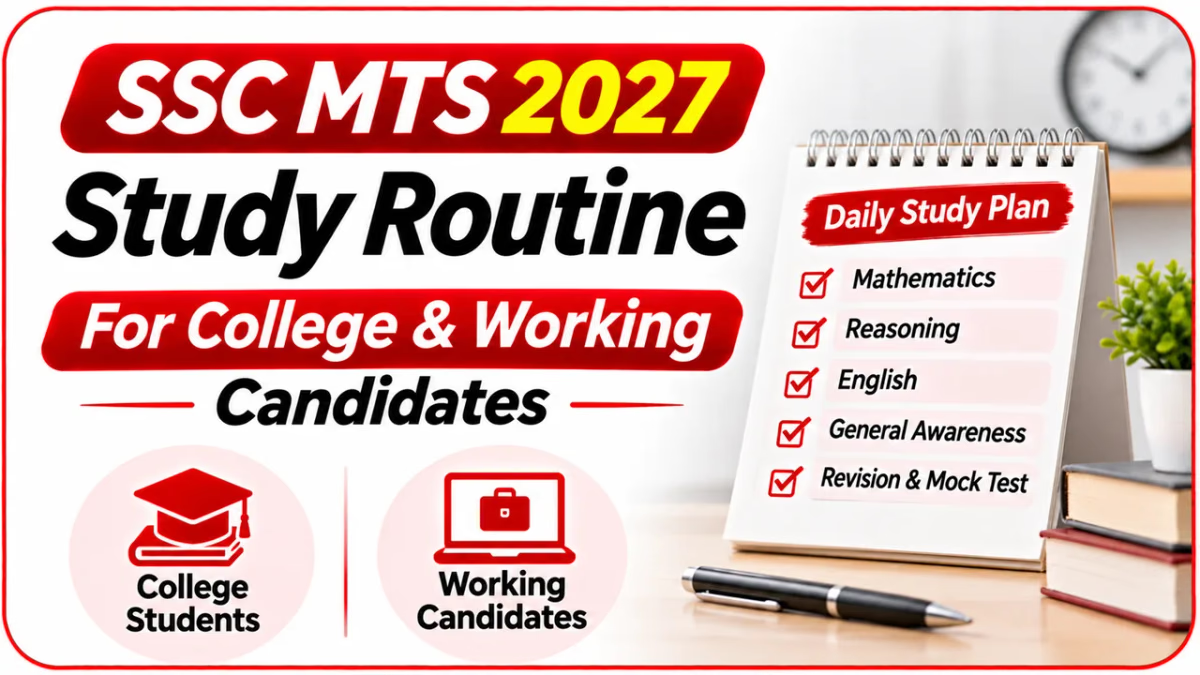
The following is a sample timetable for beginners. Adjust the timings according to your daily responsibilities and fitness level.
| Time | Activity |
|---|---|
| 6:00 AM – 6:15 AM | Warm-up and mobility exercises |
| 6:15 AM – 6:45 AM | Walking practice |
| 6:45 AM – 7:00 AM | Cool-down and recovery |
| 8:00 AM – 9:00 AM | Mathematics preparation |
| 10:00 AM – 11:00 AM | Reasoning practice |
| 12:00 PM – 12:45 PM | English preparation |
| 3:00 PM – 4:00 PM | General Awareness |
| 5:00 PM – 5:30 PM | Revision and previous questions |
| 7:00 PM – 7:30 PM | Mock-test analysis or weak-topic practice |
| Night | Proper dinner and sufficient sleep |
This timetable is a suggested routine, not a compulsory schedule. Candidates should maintain adequate sleep and avoid excessive training.
Mathematics and Reasoning are included in Session I. Both subjects require regular practice, conceptual clarity and speed.
Start with fundamental concepts before moving towards timed practice.
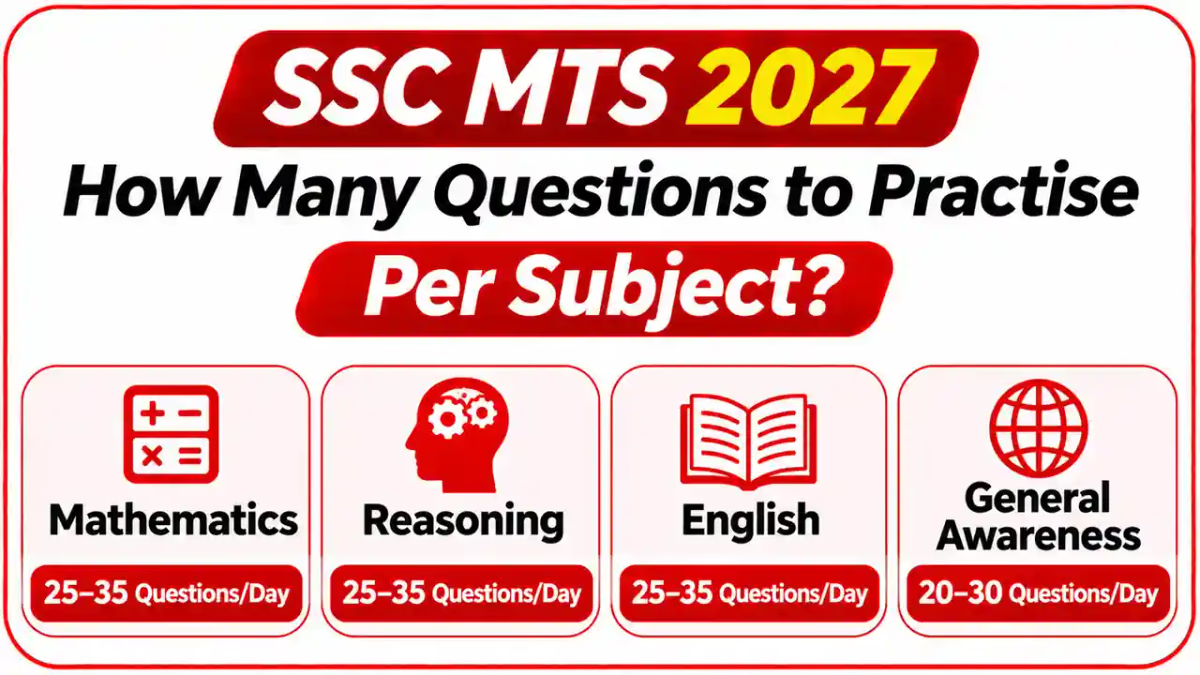
Practise 20–30 questions daily according to your current preparation level. Maintain a notebook for formulas and common calculation mistakes.
Focus on understanding question patterns and improving problem-solving speed.
Attempt short practice sets regularly and review every incorrect answer to understand the underlying concept.
Session II is particularly important because it carries negative marking under the 2025 examination scheme. Candidates should focus on accuracy instead of attempting every question without proper understanding.
Study one or two small topics daily and revise previously covered information. Short notes and topic-wise quizzes can improve retention.
Havaldar candidates should not wait until the written examination is completed to start physical training. Regular walking practice can help build endurance gradually.
| Training Stage | Suggested Practice |
|---|---|
| Initial Stage | Comfortable walking for 15–20 minutes. |
| Building Endurance | Gradually increase walking duration to 25–30 minutes. |
| Improving Pace | Include short intervals of brisk walking. |
| Progress Stage | Practise longer measured walks according to fitness. |
| Test Preparation | Practise the prescribed distance and target time when adequately conditioned. |
Do not increase speed and distance aggressively at the same time. Allow recovery between demanding sessions.
If you experience chest discomfort, dizziness, unusual breathlessness or significant pain, stop exercising and seek medical advice.
A weekly plan helps candidates balance written preparation and physical training without neglecting either area.
| Day | Written Preparation | Physical Preparation |
|---|---|---|
| Monday | Mathematics and English | Comfortable walking |
| Tuesday | Reasoning and General Awareness | Brisk walking |
| Wednesday | Mathematics and previous questions | Easy walking and recovery |
| Thursday | English and General Awareness | Walking with short brisk intervals |
| Friday | Reasoning and Mathematics | Comfortable endurance walk |
| Saturday | Mock test and analysis | Walking according to fitness level |
| Sunday | Weekly revision and weak topics | Rest or gentle recovery activity |
Modify the routine according to your preparation stage, fitness and recovery. A consistent weekly routine is more useful than irregular high-intensity training.
Mock tests help candidates understand the examination pattern, manage time and identify weak areas.
Follow these steps to improve your mock-test performance:
Do not focus only on the number of mock tests completed. Analysing mistakes and improving weak topics are equally important.
Written preparation and physical training both require energy and concentration. A healthy routine can support consistent preparation.
Balanced nutrition and recovery support preparation, but they cannot replace professional medical advice when needed.
Use this checklist to review your daily and weekly progress.
Preparing for SSC MTS and Havaldar requires the right combination of subject knowledge, regular practice and physical fitness. A structured preparation programme can help candidates follow the syllabus, practise examination-level questions and monitor their progress.
At Katara Academy, aspirants can explore available SSC preparation courses and learning resources to support their examination preparation.
Build your concepts, practise mock tests and prepare with a structured study approach.
Yes. Havaldar aspirants can prepare for the written examination and physical test simultaneously by following a balanced timetable with dedicated study and walking sessions.
No. PET and PST are required for the Havaldar post. Candidates applying only for MTS do not have to undergo the Havaldar-specific physical tests.
There is no fixed study duration for everyone. Beginners can start with a manageable daily study schedule and gradually increase focused preparation time according to their strengths and weak subjects.
Candidates should begin gradual walking practice early in their preparation rather than waiting for the written examination result. The routine should be adjusted according to current fitness and recovery.
Under the SSC MTS 2025 notification, male candidates must walk 1600 metres within 15 minutes in the PET.
Under the SSC MTS 2025 notification, female candidates must walk 1000 metres within 20 minutes in the PET.
The examination pattern in the 2025 notification includes Numerical and Mathematical Ability, Reasoning Ability and Problem Solving, General Awareness, and English Language and Comprehension.
According to the 2025 scheme, Session I has no negative marking, while Session II has a deduction of one mark for each incorrect answer.
Daily mock tests are not compulsory. Candidates should combine topic-wise practice, full-length mock tests and detailed performance analysis according to their preparation level.
Yes. Both posts share the Computer-Based Examination. Candidates interested in Havaldar should additionally prepare for PET and PST.
Schedule walking practice during a suitable morning or evening period and reserve separate study blocks for all four subjects. Include recovery time and maintain consistency.
The 2027 examination pattern can only be confirmed through the official notification. The 2025 notification is a preparation reference, and candidates should check SSC announcements for any changes.
Preparing for SSC MTS 2027 written and physical stages together requires discipline, planning and consistency. Candidates targeting Havaldar should combine regular subject preparation with gradual walking practice, while MTS-only candidates can focus entirely on the Computer-Based Examination.
Follow a realistic timetable, practise all four subjects, analyse mock tests and improve physical endurance without overtraining. Most importantly, keep checking the latest official SSC notification for the final examination pattern and PET/PST requirements.
A balanced preparation strategy can help you approach the SSC MTS 2027 recruitment process with confidence.
