Download the App & Start Learning
- Expert Faculty Guidance
- Updated Study Material
- Mock Tests & Practice Quiz
- Live Doubt Solving Sessions
- Exam-Oriented Preparation
- Motivation & Success Strategy
Katara Academy

Loading blogs…


Preparing for SSC MTS 2027 while attending college or managing a full-time job can be challenging. Between lectures, assignments, office hours and personal responsibilities, finding enough time for competitive exam preparation is not always easy.
However, you do not need to study for 8–10 hours every day to make progress. A consistent study routine, proper time management and regular revision can help you prepare effectively even with a busy schedule.
In this guide, you will learn how to create a practical SSC MTS 2027 study routine that fits around your college or work timings.
Before creating a timetable, identify how much time you can realistically dedicate to preparation. Avoid copying the schedule of candidates who study full-time.
The goal is to maintain consistency without disturbing your health, sleep or daily responsibilities.
College students can use the morning and evening hours for preparation. Adjust the timings according to your lecture schedule.
| Time | Study Activity |
|---|---|
| 6:00 AM – 7:00 AM | Mathematics concepts and practice |
| College Hours | Attend lectures and complete academic work |
| 5:00 PM – 5:30 PM | Rest and refresh |
| 5:30 PM – 6:15 PM | Reasoning practice |
| 6:15 PM – 7:00 PM | English grammar and vocabulary |
| 8:00 PM – 8:45 PM | General Awareness and current affairs |
| 8:45 PM – 9:00 PM | Quick revision |
Daily focused study time: Approximately 3 hours and 15 minutes.
Working candidates should prioritise short, distraction-free study sessions. Even two focused sessions every day can help build a strong preparation habit.
| Time | Study Activity |
|---|---|
| 6:00 AM – 7:00 AM | Mathematics or Reasoning |
| Office Hours | Work responsibilities |
| After Work – 30 Minutes | Rest and refresh |
| 7:30 PM – 8:15 PM | English practice |
| 8:15 PM – 9:00 PM | General Awareness |
| 9:00 PM – 9:15 PM | Revision and error analysis |
Daily focused study time: Approximately 2 hours and 30 minutes.
If your job timings are different, shift the morning or evening sessions accordingly. Consistency matters more than following these exact timings.
Divide your preparation across the main subjects. Give additional time to topics where you make frequent mistakes.
A weekly plan helps you cover all subjects without making your daily schedule too complicated.
| Day | Preparation Focus |
|---|---|
| Monday | Mathematics + English |
| Tuesday | Reasoning + General Awareness |
| Wednesday | Mathematics + Reasoning |
| Thursday | English + General Awareness |
| Friday | Mathematics + English revision |
| Saturday | Reasoning + General Awareness revision |
| Sunday | Mock test + complete weekly revision |
Use Sunday to identify weak areas and plan the following week's preparation. If you cannot take a full mock test every week initially, begin with sectional tests.
Weekends are useful for candidates who have limited study time during weekdays. Instead of studying randomly, follow a structured plan.
Do not spend the entire weekend only watching lectures. Balance learning, question practice and revision.
A realistic routine that you follow consistently is more effective than an ambitious timetable that you abandon after a few days.
Yes. College students can prepare alongside their studies by following a consistent daily timetable, practising questions and using weekends for revision and mock tests.
Working candidates can begin with 2–3 focused hours daily. They should adjust their study time according to their work schedule, preparation level and personal responsibilities.
You can study Mathematics or Reasoning in the morning because these subjects require concentration and regular problem-solving practice. Choose the subject that needs the most attention.
Sunday can be used for a mock test, error analysis and weekly revision. However, regular practice during weekdays is also important.
Divide your preparation into morning and evening sessions. Set small daily targets, revise during available breaks and use weekends to cover pending topics and take tests.
You can rotate subjects across the week while including short revision sessions regularly. Make sure that every subject receives sufficient practice time.
Start with topic-wise and sectional tests after understanding the basic concepts. Gradually include full-length mock tests and analyse your performance to identify weak areas.
Preparing for SSC MTS 2027 alongside college or work requires discipline, smart planning and consistency. You do not have to follow a full-time aspirant's timetable to make progress. Start with manageable daily targets, practise all subjects, revise regularly and use weekends effectively.
Remember, consistent preparation is more valuable than studying for long hours occasionally. Create a routine that fits your lifestyle and follow it with confidence.
Get structured guidance, practise important questions and strengthen your preparation with Katara Academy.

Random guessing is one of the common mistakes candidates make while attempting the SSC MTS examination. When candidates are unsure about an answer, they sometimes select an option without analysing the question properly. This can reduce accuracy and affect overall examination performance.
SSC MTS 2027 aspirants should understand that attempting more questions does not always mean achieving a better score. The ability to identify easy questions, eliminate incorrect options and make informed decisions is equally important.
With proper preparation and examination practice, candidates can reduce unnecessary guessing and improve their confidence while solving questions.
In this guide, you will learn how to avoid random guessing in SSC MTS 2027, understand negative marking, use option elimination techniques and improve accuracy in all four subjects.
Before learning guessing strategies, candidates should understand the examination structure.
According to the SSC MTS 2025 notification, the Computer-Based Examination consists of two compulsory sessions.
| Session | Subject | Questions | Marks |
|---|---|---|---|
| Session I | Numerical and Mathematical Ability | 20 | 60 |
| Session I | Reasoning Ability and Problem Solving | 20 | 60 |
| Session II | General Awareness | 25 | 75 |
| Session II | English Language and Comprehension | 25 | 75 |
| Total | Four Subjects | 90 | 270 |
Time Duration: 45 minutes for each session.
| Session | Negative Marking |
|---|---|
| Session I | No negative marking |
| Session II | 1 mark deducted for each incorrect answer |
This difference is important. Candidates should be particularly careful while attempting General Awareness and English questions in Session II.
Always verify the final marking scheme from the SSC MTS 2027 notification when it is released.
Random guessing means selecting an answer without sufficient knowledge, logical reasoning or elimination of incorrect options.
It can create several problems during the examination:
The goal should not be to avoid every uncertain question. Instead, candidates should learn to distinguish between an educated guess and a completely random selection.
Option elimination is one of the most useful techniques for reducing unnecessary guessing.
Instead of selecting an answer immediately, read all the options and identify which choices are clearly incorrect.
Question: Which part of the Indian Constitution deals with Fundamental Rights?
A. Part I
B. Part II
C. Part III
D. Part IV
Correct Answer: C. Part III
Explanation: Fundamental Rights are covered under Part III of the Indian Constitution. Knowing this concept helps candidates select the correct answer instead of guessing randomly.
Practise similar questions regularly to develop confidence in identifying correct options.
Mathematics requires calculation, formula knowledge and logical understanding. Selecting an answer without checking the calculation can lead to avoidable mistakes.
Question: What is 20% of 250?
A. 25
B. 40
C. 50
D. 75
Calculation: 250 × 20 ÷ 100 = 50.
Correct Answer: C. 50
Understanding percentage calculations helps candidates solve questions confidently without depending on random option selection.
Reasoning questions often involve patterns, relationships and logical sequences. Candidates should identify the underlying rule instead of selecting an option based only on appearance.
Question: Find the next number: 2, 4, 8, 16, ?
A. 20
B. 24
C. 32
D. 36
Explanation: Each number is multiplied by 2.
2 × 2 = 4
4 × 2 = 8
8 × 2 = 16
16 × 2 = 32
Correct Answer: C. 32
Identifying the pattern is more reliable than choosing an option without checking the sequence.
General Awareness can be challenging because questions cover different subjects, including History, Geography, Polity, Economics and General Science.
Some candidates attempt unfamiliar questions by selecting an option without knowing the relevant information. This approach can be risky because Session II carries negative marking under the 2025 examination scheme.
Important: If you have no knowledge of a question and cannot eliminate any option confidently, do not treat random guessing as a preparation strategy.
English questions require knowledge of grammar, vocabulary, sentence structure and comprehension. Candidates should understand the context of a question before selecting an answer.
Question: Choose the correct sentence.
A. She go to school every day.
B. She goes to school every day.
C. She going to school every day.
D. She gone to school every day.
Correct Answer: B. She goes to school every day.
Explanation: The singular subject 'She' takes the verb 'goes' in the simple present tense.
Learning basic grammar rules helps candidates answer English questions through understanding rather than guesswork.
One of the most important examination skills is knowing when to attempt a question and when to move forward.
Not every question deserves the same amount of time. Candidates should classify questions based on their understanding and confidence.
| Question Type | Recommended Action |
|---|---|
| Easy and Familiar | Attempt confidently. |
| Moderate but Solvable | Attempt after checking the concept. |
| Partially Understood | Use logical elimination before deciding. |
| Completely Unknown | Avoid blind guessing, especially in Session II. |
| Time-Consuming | Move forward and return if time permits. |
Remember that skipping a difficult question can be a better decision than spending excessive time on it and missing easier questions.
Understanding the marking scheme can help candidates make more informed decisions.
Under the SSC MTS 2025 examination scheme, Session II deducts one mark for every incorrect answer, while Session I has no negative marking.
Suppose a candidate attempts 20 questions in Session II.
| Performance | Questions | Marks |
|---|---|---|
| Correct Answers | 15 | 45 |
| Incorrect Answers | 5 | -5 |
| Net Score | 20 | 40 |
This example assumes three marks for each correct answer and one mark deducted for each incorrect answer.
It demonstrates why candidates should focus on accuracy instead of attempting questions without sufficient understanding.
Mock tests help candidates understand their examination behaviour and identify situations where they guess answers unnecessarily.
Follow these steps after every mock test:
| Subject | Mistake Type | Improvement Action |
|---|---|---|
| Mathematics | Calculation error | Revise calculations and practise again. |
| Reasoning | Wrong pattern | Practise similar question types. |
| General Awareness | Factual knowledge gap | Revise the related topic. |
| English | Grammar confusion | Study the grammar rule and solve examples. |
Regular mistake analysis helps candidates understand why they select incorrect options and gradually reduce unnecessary guessing.
Improving accuracy requires regular practice, concept clarity and proper examination guidance. Candidates should follow a structured study plan and practise questions from all four subjects.
Katara Academy offers learning resources and preparation courses for competitive examination aspirants. Explore the available courses to support your SSC MTS 2027 preparation.
Strengthen your concepts, practise exam-oriented questions and prepare with a structured learning approach.
Understand the question, revise important concepts, use logical option elimination and avoid selecting answers without sufficient knowledge. Regular mock-test analysis can also help reduce guessing.
According to the SSC MTS 2025 examination scheme, Session I has no negative marking, while Session II deducts one mark for every incorrect answer. Check the 2027 notification for the final rules.
No. Candidates should prioritise questions they understand and can solve accurately. Avoid wasting time on completely unfamiliar questions, particularly in a session with negative marking.
Option elimination involves identifying and removing incorrect answer choices using logical reasoning or subject knowledge before selecting the most suitable remaining option.
Under the 2025 scheme, Session I has no negative marking. However, candidates should still use their time efficiently and prioritise questions they can solve confidently. The 2027 rules should be checked when released.
Study important topics regularly, revise factual information, practise previous-year questions and avoid selecting answers based only on familiarity or assumptions.
Beginners can start with one full mock test per week and gradually increase the frequency according to their preparation level. Analysing every incorrect and guessed answer is important.
Yes. Educated guessing involves using partial knowledge, logical reasoning and elimination of incorrect options. Random guessing involves selecting an answer without a reasonable basis.
Check whether you can eliminate any options using subject knowledge. If you cannot identify a reasonable answer, avoid spending excessive time on the question. Follow the applicable marking scheme before deciding whether to leave it unanswered.
Yes. Under the 2025 scheme, incorrect answers in Session II attract negative marking. Repeated random guessing can reduce the marks earned through correct answers.
All subjects require accuracy. However, candidates should be especially careful in General Awareness and English because they are part of Session II, which carries negative marking under the 2025 scheme.
Start with basic concepts, solve topic-wise practice questions, attempt timed quizzes and gradually move towards full mock tests. Reviewing mistakes helps build confidence over time.
Avoiding random guessing is an important part of SSC MTS 2027 exam preparation. Candidates should focus on understanding concepts, improving accuracy, using option elimination and managing examination time effectively.
Remember that Session I and Session II have different marking schemes under the 2025 notification. Therefore, your answer-selection strategy should consider the applicable negative marking rules.
Practise regularly, analyse mock-test mistakes and develop the habit of making informed decisions. A thoughtful attempt strategy can help you use your examination time more effectively and avoid unnecessary loss of marks.

Preparing for SSC MTS 2027 requires regular question practice, proper time management and a clear understanding of the examination pattern. Many candidates study different subjects every day but remain confused about one important thing: How many questions should they solve daily to improve their performance?
Practising too few questions may slow down your preparation, while solving hundreds of questions without understanding mistakes can waste valuable time. The right strategy is to maintain a balanced question-practice target for Mathematics, Reasoning, General Awareness and English.
Each subject requires a different preparation approach. Mathematics needs calculation practice, Reasoning requires logical thinking, English needs grammar and comprehension practice, and General Awareness requires regular learning and revision.
In this guide, you will learn the recommended daily question targets for each SSC MTS 2027 subject, weekly practice schedules and ways to improve speed and accuracy.
Before deciding how many questions to practise, candidates should understand the examination structure.
According to the SSC MTS 2025 official notification, the Computer-Based Examination consists of two compulsory sessions.
| Session | Subject | Questions | Marks |
|---|---|---|---|
| Session I | Numerical and Mathematical Ability | 20 | 60 |
| Session I | Reasoning Ability and Problem Solving | 20 | 60 |
| Session II | General Awareness | 25 | 75 |
| Session II | English Language and Comprehension | 25 | 75 |
| Total | Four Subjects | 90 | 270 |
Session I Duration: 45 minutes.
Session II Duration: 45 minutes.
Negative Marking: No negative marking in Session I. One mark is deducted for each incorrect answer in Session II under the 2025 scheme.
The 2027 examination pattern should be confirmed through the latest SSC notification when released.
There is no official SSC rule specifying how many additional practice questions candidates must solve daily. However, the following targets provide a practical starting point for beginners.
| Subject | Daily Practice Target | Main Focus |
|---|---|---|
| Mathematics | 25–35 questions | Calculation and accuracy |
| Reasoning | 25–35 questions | Logical thinking and speed |
| General Awareness | 20–30 MCQs | Knowledge and revision |
| English | 25–35 questions | Grammar and comprehension |
| Total | 95–135 questions | Balanced practice |
These are recommended practice targets, not compulsory daily quotas. Beginners can start with fewer questions and gradually increase their practice as their understanding improves.
Mathematics requires regular practice because candidates need to understand formulas, calculations and different question patterns.
A beginner can start with 25–35 questions daily, depending on the difficulty of the topics being studied.
| Topic | Suggested Questions |
|---|---|
| Number System | 5 |
| Percentage | 5 |
| Ratio and Proportion | 5 |
| Average | 5 |
| Profit and Loss | 5 |
| Time and Work or other weak topics | 5–10 |
Target: Aim to solve a 20-question Mathematics practice set within a time limit similar to the examination, while maintaining accuracy.
Reasoning evaluates logical thinking, pattern recognition and problem-solving ability. Regular practice helps candidates identify question patterns and reduce unnecessary time spent on difficult problems.
Beginners can aim for 25–35 Reasoning questions daily.
| Topic | Suggested Questions |
|---|---|
| Analogy | 5 |
| Number Series | 5 |
| Coding and Decoding | 5 |
| Classification | 5 |
| Direction and Distance | 5 |
| Calendar, Clock or other topics | 5–10 |
Target: Practise completing 20 Reasoning questions within the Session I time limit by gradually improving your speed.
General Awareness requires consistent learning and revision. Unlike Mathematics and Reasoning, simply solving questions without understanding the information may not provide long-term benefits.
Candidates can practise 20–30 MCQs daily along with studying new topics.
| Subject Area | Suggested Questions |
|---|---|
| Indian History | 5 |
| Geography | 5 |
| Indian Polity | 5 |
| General Science | 5 |
| Economics, Culture or Current Affairs | 5–10 |
Target: Practise 20–30 MCQs and revise the related concepts instead of memorising answers without understanding them.
English preparation requires regular attention to grammar, vocabulary, sentence structure and comprehension. Candidates should practise different question formats rather than concentrating on only vocabulary.
A daily target of 25–35 questions is a useful starting point.
| Topic | Suggested Questions |
|---|---|
| Error Spotting | 5 |
| Synonyms and Antonyms | 5 |
| Fill in the Blanks | 5 |
| Sentence Improvement | 5 |
| Spelling and Vocabulary | 5 |
| Reading Comprehension | 5–10 |
Target: Practise 25–35 questions daily and gradually work towards completing a 25-question examination-style section within the prescribed time.
Beginners should not immediately attempt 100 or more questions every day. First, they should understand the syllabus and build a strong foundation.
The following progression can help beginners increase their practice gradually.
| Preparation Stage | Daily Question Target | Main Objective |
|---|---|---|
| First 2 Weeks | 40–60 questions | Understand basic concepts |
| Weeks 3–4 | 60–80 questions | Improve accuracy |
| Weeks 5–8 | 80–100 questions | Develop speed and confidence |
| Regular Practice Stage | 95–135 questions | Build examination readiness |
This is a suggested progression, not an official preparation requirement. Candidates can adjust the targets according to their available time and learning speed.
A weekly schedule can help candidates distribute their practice across all four subjects and avoid neglecting weaker areas.
| Day | Practice Focus |
|---|---|
| Monday | Mathematics and English |
| Tuesday | Reasoning and General Awareness |
| Wednesday | Mathematics and Reasoning |
| Thursday | English and General Awareness |
| Friday | Mixed practice from all four subjects |
| Saturday | Section-wise timed tests |
| Sunday | Full mock test, revision and mistake analysis |
Along with the weekly schedule, candidates preparing for Havaldar should maintain a separate gradual walking and fitness routine for PET/PST.
Solving more questions is useful only when candidates learn to answer correctly within the available time. Speed and accuracy should improve together.
Remember that consistent and meaningful practice is more valuable than simply counting completed questions.
Maintaining a simple progress record can help candidates understand their improvement over time.
| Subject | Target | Questions Solved | Correct Answers |
|---|---|---|---|
| Mathematics | 30 | _____ | _____ |
| Reasoning | 30 | _____ | _____ |
| General Awareness | 25 | _____ | _____ |
| English | 30 | _____ | _____ |
| Total | 115 | _____ | _____ |
At the end of each week, review your accuracy, time taken and weak topics. Adjust the next week's targets based on your performance.
Practising questions regularly becomes more effective when candidates follow a structured syllabus, understand concepts and receive proper guidance.
Katara Academy provides learning resources and course opportunities for competitive examination aspirants. Explore the available courses to find suitable guidance for your SSC MTS 2027 preparation.
Learn important concepts, practise exam-oriented questions and improve your preparation with structured guidance.
A useful target for regular preparation is around 95–135 questions daily across all four subjects. Beginners can start with 40–60 questions and increase gradually.
Candidates can aim for 25–35 Mathematics questions daily, focusing on calculations, formulas, arithmetic concepts and accuracy.
A daily target of 25–35 Reasoning questions is a useful starting point. Practise analogy, series, coding-decoding, classification and other syllabus topics.
Practise around 20–30 General Awareness MCQs daily along with studying and revising History, Geography, Polity, Science and Economics.
Practise approximately 25–35 English questions daily, including grammar, vocabulary, sentence improvement and comprehension.
Yes, 100 well-practised questions can be a useful daily target. However, the quality of practice, topic coverage, revision and mistake analysis are more important than the total number alone.
Yes. Beginners should first understand the basic concepts and then start solving previous-year questions to become familiar with the examination style and difficulty level.
Beginners can start with one full mock test per week. As preparation improves, they can gradually increase the number while ensuring that every mock test is properly analysed.
Yes. Accuracy is especially important in Session II because the 2025 examination scheme includes negative marking of one mark for every incorrect answer.
Yes. Havaldar candidates follow the same Computer-Based Examination pattern, subject to the applicable notification. They should additionally maintain a separate physical fitness and PET preparation routine.
Reduce the target to a manageable level, focus on understanding concepts and gradually increase the number of questions. Consistency is more useful than rushing through practice sets.
Practise timed topic-wise tests, revise formulas, improve basic concepts, analyse mistakes and regularly attempt examination-style mock tests.
Preparing for SSC MTS 2027 requires a balanced approach to question practice. Candidates should aim to solve approximately 25–35 Mathematics questions, 25–35 Reasoning questions, 20–30 General Awareness MCQs and 25–35 English questions daily as a practical regular-study target.
However, beginners should start with manageable targets and gradually increase their practice. Focus on understanding concepts, improving accuracy, revising important topics and analysing mock-test performance.
Remember, successful preparation is not about solving the highest number of questions every day. It is about learning from every question and becoming better prepared for the actual examination.

Preparing for SSC MTS 2027 requires a smart strategy, especially for candidates targeting the Havaldar post. Unlike candidates preparing only for MTS, Havaldar aspirants need to focus on both the Computer-Based Examination (CBE) and the Physical Efficiency Test (PET) and Physical Standard Test (PST).
Many candidates make the mistake of concentrating only on written exam preparation and starting physical training after the examination. This can create unnecessary pressure, particularly when candidates have limited time to improve their walking endurance and physical fitness.
A better approach is to prepare for both stages together through a balanced daily routine. Regular study, walking practice, revision, mock tests and proper recovery can help candidates manage both preparation goals.
In this guide, you will learn how to prepare for SSC MTS 2027 written and physical stages together, create a practical timetable, improve walking endurance and maintain consistent study progress.
Before creating a preparation plan, candidates should understand the selection requirements for their preferred post.
| Selection Stage | MTS | Havaldar |
|---|---|---|
| Computer-Based Examination | Required | Required |
| Physical Efficiency Test | Not Required | Required |
| Physical Standard Test | Not Required | Required |
| Document Verification | As applicable | As applicable |
Important: The physical stages apply to Havaldar recruitment, not to MTS-only candidates. If you are applying for both posts, you should prepare for the written examination and Havaldar physical requirements together.
According to the SSC MTS 2025 notification, the Computer-Based Examination is conducted in two compulsory sessions on the same day. Candidates preparing for the 2027 examination can use this as a reference until SSC publishes the next official notification.
| Session | Subject | Questions | Marks |
|---|---|---|---|
| Session I | Numerical and Mathematical Ability | 20 | 60 |
| Session I | Reasoning Ability and Problem Solving | 20 | 60 |
| Session II | General Awareness | 25 | 75 |
| Session II | English Language and Comprehension | 25 | 75 |
| Total | Four Subjects | 90 | 270 |
Time Duration: Each session is 45 minutes under the 2025 scheme.
Negative Marking: There is no negative marking in Session I. Session II carries a deduction of one mark for each incorrect answer.
Both sessions are compulsory. Candidates should practise all four subjects and pay particular attention to accuracy in Session II.
Havaldar candidates must also prepare for the prescribed physical tests. According to the SSC MTS 2025 notification, the Physical Efficiency Test includes a walking test.
| Candidate | Walking Distance | Time Limit |
|---|---|---|
| Male | 1600 metres | 15 minutes |
| Female | 1000 metres | 20 minutes |
Male Candidates:
Female Candidates:
Prescribed relaxations are available for eligible categories and regions. Candidates should check the official notification for the exact conditions.
Remember that physical preparation should start gradually. Avoid suddenly increasing walking distance or attempting maximum-speed walking every day.
One of the best ways to prepare for written and physical stages together is to divide your day into dedicated study and exercise sessions.
The following is a sample timetable for beginners. Adjust the timings according to your daily responsibilities and fitness level.
| Time | Activity |
|---|---|
| 6:00 AM – 6:15 AM | Warm-up and mobility exercises |
| 6:15 AM – 6:45 AM | Walking practice |
| 6:45 AM – 7:00 AM | Cool-down and recovery |
| 8:00 AM – 9:00 AM | Mathematics preparation |
| 10:00 AM – 11:00 AM | Reasoning practice |
| 12:00 PM – 12:45 PM | English preparation |
| 3:00 PM – 4:00 PM | General Awareness |
| 5:00 PM – 5:30 PM | Revision and previous questions |
| 7:00 PM – 7:30 PM | Mock-test analysis or weak-topic practice |
| Night | Proper dinner and sufficient sleep |
This timetable is a suggested routine, not a compulsory schedule. Candidates should maintain adequate sleep and avoid excessive training.
Mathematics and Reasoning are included in Session I. Both subjects require regular practice, conceptual clarity and speed.
Start with fundamental concepts before moving towards timed practice.
Practise 20–30 questions daily according to your current preparation level. Maintain a notebook for formulas and common calculation mistakes.
Focus on understanding question patterns and improving problem-solving speed.
Attempt short practice sets regularly and review every incorrect answer to understand the underlying concept.
Session II is particularly important because it carries negative marking under the 2025 examination scheme. Candidates should focus on accuracy instead of attempting every question without proper understanding.
Study one or two small topics daily and revise previously covered information. Short notes and topic-wise quizzes can improve retention.
Havaldar candidates should not wait until the written examination is completed to start physical training. Regular walking practice can help build endurance gradually.
| Training Stage | Suggested Practice |
|---|---|
| Initial Stage | Comfortable walking for 15–20 minutes. |
| Building Endurance | Gradually increase walking duration to 25–30 minutes. |
| Improving Pace | Include short intervals of brisk walking. |
| Progress Stage | Practise longer measured walks according to fitness. |
| Test Preparation | Practise the prescribed distance and target time when adequately conditioned. |
Do not increase speed and distance aggressively at the same time. Allow recovery between demanding sessions.
If you experience chest discomfort, dizziness, unusual breathlessness or significant pain, stop exercising and seek medical advice.
A weekly plan helps candidates balance written preparation and physical training without neglecting either area.
| Day | Written Preparation | Physical Preparation |
|---|---|---|
| Monday | Mathematics and English | Comfortable walking |
| Tuesday | Reasoning and General Awareness | Brisk walking |
| Wednesday | Mathematics and previous questions | Easy walking and recovery |
| Thursday | English and General Awareness | Walking with short brisk intervals |
| Friday | Reasoning and Mathematics | Comfortable endurance walk |
| Saturday | Mock test and analysis | Walking according to fitness level |
| Sunday | Weekly revision and weak topics | Rest or gentle recovery activity |
Modify the routine according to your preparation stage, fitness and recovery. A consistent weekly routine is more useful than irregular high-intensity training.
Mock tests help candidates understand the examination pattern, manage time and identify weak areas.
Follow these steps to improve your mock-test performance:
Do not focus only on the number of mock tests completed. Analysing mistakes and improving weak topics are equally important.
Written preparation and physical training both require energy and concentration. A healthy routine can support consistent preparation.
Balanced nutrition and recovery support preparation, but they cannot replace professional medical advice when needed.
Use this checklist to review your daily and weekly progress.
Preparing for SSC MTS and Havaldar requires the right combination of subject knowledge, regular practice and physical fitness. A structured preparation programme can help candidates follow the syllabus, practise examination-level questions and monitor their progress.
At Katara Academy, aspirants can explore available SSC preparation courses and learning resources to support their examination preparation.
Build your concepts, practise mock tests and prepare with a structured study approach.
Yes. Havaldar aspirants can prepare for the written examination and physical test simultaneously by following a balanced timetable with dedicated study and walking sessions.
No. PET and PST are required for the Havaldar post. Candidates applying only for MTS do not have to undergo the Havaldar-specific physical tests.
There is no fixed study duration for everyone. Beginners can start with a manageable daily study schedule and gradually increase focused preparation time according to their strengths and weak subjects.
Candidates should begin gradual walking practice early in their preparation rather than waiting for the written examination result. The routine should be adjusted according to current fitness and recovery.
Under the SSC MTS 2025 notification, male candidates must walk 1600 metres within 15 minutes in the PET.
Under the SSC MTS 2025 notification, female candidates must walk 1000 metres within 20 minutes in the PET.
The examination pattern in the 2025 notification includes Numerical and Mathematical Ability, Reasoning Ability and Problem Solving, General Awareness, and English Language and Comprehension.
According to the 2025 scheme, Session I has no negative marking, while Session II has a deduction of one mark for each incorrect answer.
Daily mock tests are not compulsory. Candidates should combine topic-wise practice, full-length mock tests and detailed performance analysis according to their preparation level.
Yes. Both posts share the Computer-Based Examination. Candidates interested in Havaldar should additionally prepare for PET and PST.
Schedule walking practice during a suitable morning or evening period and reserve separate study blocks for all four subjects. Include recovery time and maintain consistency.
The 2027 examination pattern can only be confirmed through the official notification. The 2025 notification is a preparation reference, and candidates should check SSC announcements for any changes.
Preparing for SSC MTS 2027 written and physical stages together requires discipline, planning and consistency. Candidates targeting Havaldar should combine regular subject preparation with gradual walking practice, while MTS-only candidates can focus entirely on the Computer-Based Examination.
Follow a realistic timetable, practise all four subjects, analyse mock tests and improve physical endurance without overtraining. Most importantly, keep checking the latest official SSC notification for the final examination pattern and PET/PST requirements.
A balanced preparation strategy can help you approach the SSC MTS 2027 recruitment process with confidence.

Getting selected as Multi-Tasking Staff (MTS) through the SSC examination is an important achievement for candidates seeking a Central Government job. However, many aspirants have another important question: What happens after joining as MTS, and what career growth opportunities are available in the future?
An MTS employee does not necessarily remain in the same position throughout their entire government service. Depending on the allotted department, applicable recruitment rules, educational qualifications, service experience and departmental examinations, employees may become eligible for higher responsibilities and promotion opportunities.
Career growth can also include financial progression under government schemes, even when a regular promotion is not immediately available.
In this guide, we will explain SSC MTS 2027 career growth, promotion opportunities, the MTS to LDC pathway, departmental examinations, salary progression and long-term career planning.
SSC MTS stands for Multi-Tasking (Non-Technical) Staff. It is a General Central Service Group C, Non-Gazetted and Non-Ministerial post available in various Central Government Ministries, Departments and Offices.
After selection and appointment, employees perform different non-technical and administrative support responsibilities according to their department.
| Particular | Details |
|---|---|
| Post Name | Multi-Tasking Staff (MTS) |
| Group | Group C |
| Classification | Non-Gazetted, Non-Ministerial |
| Pay Level | Level 1 |
| Starting Basic Pay | ₹18,000 |
| Pay Matrix Range | ₹18,000–₹56,900 |
| Recruitment Authority | Staff Selection Commission (SSC) |
The salary structure is based on the 7th Central Pay Commission Pay Matrix. Actual monthly earnings depend on applicable allowances, posting location and deductions.
Career progression for MTS employees generally depends on the recruitment rules of the concerned department or cadre. There is no single universal promotion hierarchy that applies identically to every MTS employee across all Central Government departments.
Broadly, career development can take place through the following routes:
Employees should check the applicable recruitment rules to understand which opportunities are available in their allotted department.
One important career opportunity for eligible MTS employees is progression to the Lower Division Clerk (LDC) grade.
The Staff Selection Commission conducts Limited Departmental Competitive Examinations for promotion from MTS to LDC in eligible cadres.
LDC stands for Lower Division Clerk. It is a clerical post involving administrative and record-management responsibilities in government offices.
Moving from MTS to LDC can provide an opportunity to take on more clerical and administrative responsibilities.
Eligibility depends on the applicable departmental recruitment rules and the specific examination quota.
For example, certain departmental procedures provide opportunities to eligible MTS employees who have:
Some departmental rules also provide promotion opportunities based on seniority-cum-fitness.
Important: Service requirements and eligibility conditions differ across cadres. Three years of service or any other qualifying period should not be treated as a universal SSC MTS promotion rule.
Departmental examinations can provide an additional opportunity for eligible employees to move into higher posts.
The Staff Selection Commission conducts certain Limited Departmental Competitive Examinations for serving government employees.
Eligible MTS employees may appear in the prescribed departmental examination for promotion to the LDC grade, subject to the relevant eligibility requirements and examination notification.
The exact syllabus and selection process depend on the examination and applicable recruitment rules. Employees should consult the official examination notice before beginning preparation.
Not every employee receives a regular promotion quickly. To provide financial progression in eligible cases, the Government of India has the Modified Assured Career Progression (MACP) Scheme.
MACP provides financial upgradation to eligible Central Government employees who meet the prescribed conditions and have not received the required regular promotions within the specified service periods.
| Service Milestone | Financial Upgradation |
|---|---|
| 10 Years | First financial upgradation, subject to eligibility |
| 20 Years | Second financial upgradation, subject to eligibility |
| 30 Years | Third financial upgradation, subject to eligibility |
Important: MACP is a financial upgradation scheme, not an automatic change in job designation or regular promotion. The benefits depend on applicable government instructions, service history and eligibility conditions.
Salary growth is another important factor for candidates considering an MTS career.
At the time of joining, MTS employees are placed in Pay Level 1 under the 7th Central Pay Commission Pay Matrix.
Therefore, salary growth is not limited to promotion alone. Annual increments and applicable allowances also contribute to changes in monthly earnings.
Employees who want to improve their career opportunities should focus on developing useful administrative and professional skills.
Learn basic computer operations, MS Word, MS Excel, email communication and document management.
Practise English typing and improve accuracy. Typing proficiency may be relevant for certain departmental examinations and clerical posts.
Improve written and verbal communication to handle official correspondence and interact effectively with colleagues.
Develop knowledge of government administration, office procedures and relevant departmental rules.
Learn to organise tasks, complete assigned responsibilities on time and maintain accurate records.
Newly appointed employees can follow a gradual career development plan while performing their regular responsibilities.
| Career Stage | Suggested Focus |
|---|---|
| After Joining | Understand departmental responsibilities and service rules. |
| Early Service | Develop computer, typing and communication skills. |
| During Service | Check eligibility for departmental examinations. |
| Career Development | Prepare for eligible LDC or other departmental opportunities. |
| Long-Term Service | Understand regular promotion and MACP eligibility. |
This is a suggested career-planning approach, not a fixed government promotion timetable.
SSC MTS can be a suitable long-term career option for candidates looking for Central Government employment.
Candidates should understand the career structure of their allotted department instead of assuming that every MTS employee follows the same promotion path.
MTS employees may become eligible for departmental promotions, limited departmental competitive examinations and financial upgradation under MACP, depending on their department and service rules.
Yes. Eligible MTS employees can have opportunities to move to the LDC grade through applicable departmental recruitment rules and examinations.
Certain LDC recruitment rules require a 12th-standard qualification for eligible departmental promotion or examination quotas. Candidates must check the specific rules applicable to their cadre.
Yes. SSC conducts Limited Departmental Competitive Examinations for eligible serving employees, including examinations for progression from MTS to LDC grade.
MACP stands for Modified Assured Career Progression. It provides financial upgradation to eligible employees under prescribed government conditions when regular promotions have not been received.
No. MACP provides financial upgradation but does not automatically change the employee's designation or grant a regular promotion.
There is no single service period applicable to every MTS employee. Qualifying service depends on the relevant departmental recruitment rules and promotion channel.
No. Promotion depends on vacancies, eligibility, departmental rules, examination performance and other prescribed conditions.
Yes. Annual increments, applicable allowances and eligible financial upgradation under MACP can contribute to salary growth without a regular promotion.
Yes. It offers a Central Government employment opportunity with a defined pay structure, service benefits and potential career progression under applicable departmental rules.
SSC MTS 2027 is not just an opportunity to enter Central Government service; it can also provide a foundation for long-term career development.
After joining as MTS, employees can explore eligible departmental examinations, promotion opportunities, clerical positions and financial progression under government schemes.
However, career growth depends on the allotted department, recruitment rules, educational qualifications, service requirements and available vacancies.
Candidates should focus on building computer skills, improving communication, understanding departmental procedures and preparing for eligible examinations. With consistent professional development and knowledge of service rules, MTS employees can make informed decisions about their future career.

The SSC Multi-Tasking (Non-Technical) Staff examination offers candidates an opportunity to secure a Group C government job in different Central Government departments. Through the same recruitment examination, candidates can also apply for the Havaldar post in the Central Board of Indirect Taxes and Customs (CBIC) and Central Bureau of Narcotics (CBN).
Although both posts are included in the SSC MTS examination, their job responsibilities, departments, physical requirements and workplace environments are different.
MTS employees generally perform multi-tasking and office-support responsibilities, whereas Havaldars work in CBIC and CBN establishments and may perform security, field-support and other departmental duties.
Understanding these differences can help candidates decide which post matches their interests, physical fitness and career expectations.
MTS stands for Multi-Tasking (Non-Technical) Staff. It is a General Central Service Group C, Non-Gazetted and Non-Ministerial post offered in various Ministries, Departments, Offices and other government organisations.
MTS employees support the daily functioning of government offices by performing different non-technical and administrative tasks assigned by senior officials.
The exact responsibilities depend on the allotted Ministry, Department or government office. Not every MTS employee performs all the duties listed above.
Havaldar is a General Central Service Group C, Non-Gazetted and Non-Ministerial post under the Department of Revenue, Ministry of Finance.
Through SSC MTS recruitment, Havaldar vacancies are offered in two departments:
The nature of Havaldar duties can differ according to the department and posting.
CBN Havaldars have specific responsibilities such as assisting Sub-Inspectors in measuring licensed poppy fields, accompanying executive officers during enforcement operations, guarding government buildings and escorting opium consignments.
| Comparison | MTS | Havaldar |
|---|---|---|
| Full Form | Multi-Tasking Staff | Havaldar |
| Department | Various Central Government Departments | CBIC and CBN |
| Ministry | Various Ministries | Ministry of Finance |
| Group | Group C | Group C |
| Gazetted Status | Non-Gazetted | Non-Gazetted |
| Pay Level | Level 1 | Level 1 |
| Basic Pay Range | ₹18,000–₹56,900 | ₹18,000–₹56,900 |
| Computer-Based Exam | Required | Required |
| PET/PST | Not required | Required |
| Work Nature | Multi-tasking and office support | Departmental, security and field support |
| Workplace | Various government offices | CBIC and CBN establishments |
Important: Both posts are classified under Pay Level 1 in the SSC MTS 2025 notification. The actual salary and allowances depend on applicable government rules and posting location.
One of the most important differences between MTS and Havaldar is the selection process after the Computer-Based Examination.
For the MTS post, the selection process includes the Computer-Based Examination (CBE), followed by the applicable merit, preference and document verification procedures.
For Havaldar, candidates must qualify the Computer-Based Examination and also meet the prescribed Physical Efficiency Test (PET) and Physical Standard Test (PST) requirements.
| Selection Stage | MTS | Havaldar |
|---|---|---|
| Computer-Based Examination | Yes | Yes |
| Physical Efficiency Test | No | Yes |
| Physical Standard Test | No | Yes |
| Document Verification | As applicable | As applicable |
Therefore, candidates interested in Havaldar must prepare for both the written examination and physical assessments.
Physical requirements are another major difference between these two posts.
The Havaldar-specific PET and PST are not applicable to candidates applying only for the MTS post. Candidates must satisfy the general eligibility requirements and other applicable recruitment conditions.
Havaldar candidates must qualify the prescribed walking test and physical measurement standards.
| Candidate | Walking Distance | Time Limit |
|---|---|---|
| Male | 1600 metres | 15 minutes |
| Female | 1000 metres | 20 minutes |
Male Candidates:
Female Candidates:
Applicable relaxations are available to eligible candidates under the prescribed conditions. Candidates should check the latest official notification for final standards.
According to the SSC MTS 2025 official notification, both MTS and Havaldar posts are classified under Pay Level 1 of the 7th Central Pay Commission Pay Matrix.
| Salary Component | MTS | Havaldar |
|---|---|---|
| Pay Level | Level 1 | Level 1 |
| Starting Basic Pay | ₹18,000 | ₹18,000 |
| Maximum Basic Pay in Level | ₹56,900 | ₹56,900 |
| Dearness Allowance | As applicable | As applicable |
| House Rent Allowance | As applicable | As applicable |
| Transport Allowance | As applicable | As applicable |
The basic pay structure is the same, but the actual monthly salary may differ depending on the posting location, eligible allowances and deductions.
Neither post should automatically be considered higher-paying than the other based only on the job title.
MTS employees are posted in different Central Government Ministries, Departments and Offices. Their work environment is generally associated with routine administrative and office-support activities.
Depending on the department, an MTS employee may work in:
Havaldars are posted in CBIC and CBN establishments. Their workplace can involve office, security, operational and field-support responsibilities.
Possible workplaces include:
Actual duties and workplace conditions depend on the allotted department and administrative requirements.
The daily routine of MTS and Havaldar employees can be different depending on their department and assigned duties.
Working hours, shifts, weekly holidays and duty schedules depend on the concerned establishment. There is no single fixed timetable for all MTS or Havaldar employees.
Both posts provide Central Government employment opportunities, but the better choice depends on your preferences and career expectations.
Neither post is universally better. Candidates should compare the actual vacancy, department, job responsibilities and personal preferences before making their choice.
Both MTS and Havaldar employees can have career progression opportunities under their respective departmental recruitment and service rules.
MTS employees may become eligible for promotion to higher posts according to departmental recruitment rules, service requirements, seniority and other prescribed conditions.
Havaldars may also have departmental promotion opportunities depending on the applicable recruitment rules, eligibility, vacancies and service conditions.
Promotion channels are not necessarily identical across departments. Candidates should avoid assuming a guaranteed promotion timeline or a specific higher post without checking the relevant departmental rules.
Before selecting your preferred post, consider the following points:
MTS is a general multi-tasking support post in various Central Government departments, whereas Havaldar is recruited specifically for CBIC and CBN and includes prescribed physical tests.
Both posts are classified under Pay Level 1 in the SSC MTS 2025 notification, with a basic pay range of ₹18,000 to ₹56,900.
The Havaldar-specific PET and PST are not required for candidates applying only for the MTS post.
Yes. Havaldar candidates must qualify the prescribed walking test under the Physical Efficiency Test.
Subject to the application rules and eligibility conditions in the relevant notification, candidates can indicate their preferences for both posts where the application process permits it.
MTS vacancies are offered in various Ministries, Departments, Offices and other eligible Central Government organisations.
Havaldar vacancies are offered in CBIC and CBN establishments under the Department of Revenue, Ministry of Finance.
Havaldar recruitment includes mandatory physical efficiency and standard tests. Some Havaldar assignments may also involve security or field-support work. MTS does not have the Havaldar-specific PET/PST.
MTS may be more suitable for candidates interested in general office-support responsibilities. However, actual duties depend on the allotted department and workplace.
Yes. Both are classified as General Central Service Group C, Non-Gazetted and Non-Ministerial posts under the SSC MTS 2025 notification.
SSC MTS and Havaldar are two different government job opportunities offered through the same recruitment examination. Both provide Pay Level 1 employment, but their departments, responsibilities and selection requirements differ.
MTS is generally associated with multi-tasking and office-support duties across various government departments. Havaldar is associated with CBIC and CBN and may involve security, operational and field-support responsibilities along with mandatory PET/PST qualification.
Candidates should compare their physical fitness, job interests, department preferences and career expectations before selecting their preferred post for SSC MTS 2027.
Always refer to the latest official SSC notification for final eligibility, vacancies, post preferences and selection rules.

The SSC Multi-Tasking Staff (MTS) examination provides an opportunity for candidates seeking government employment in various departments. One of the important posts offered through this examination is Havaldar in the Central Board of Indirect Taxes and Customs (CBIC) and the Central Bureau of Narcotics (CBN).
Unlike a regular office-support position, the Havaldar job profile can involve a combination of administrative assistance, security-related responsibilities, field support and departmental duties. The actual work depends on the department, office location and instructions of senior officers.
Candidates preparing for SSC MTS 2027 should understand the responsibilities, workplace environment and daily routine before choosing this post.
In this guide, you will learn about SSC MTS Havaldar job duties, CBIC and CBN responsibilities, daily workplace activities, working conditions and career opportunities.
Havaldar is a Group C, Non-Gazetted and Non-Ministerial government post under the Department of Revenue, Ministry of Finance.
Through SSC MTS recruitment, Havaldar vacancies are generally offered in two important departments:
Both departments have different administrative and operational responsibilities. Therefore, the daily work of a Havaldar can differ depending on the department and posting.
The Central Board of Indirect Taxes and Customs (CBIC) works under the Department of Revenue and is responsible for administering indirect tax and customs-related functions.
Havaldars posted in CBIC formations may perform duties that support officers and the smooth functioning of departmental offices and operational locations.
Depending on the posting, the workplace may be a CGST or customs office, warehouse, airport, port or another departmental establishment.
Note: These are broad examples of possible support responsibilities. Exact duties are determined by the concerned CBIC formation and official instructions.
The Central Bureau of Narcotics (CBN) is responsible for functions connected with the regulation and control of narcotic drugs and psychotropic substances under applicable laws.
The CBN has specifically described the responsibilities of Sepoy/Havaldar in its official public information.
These responsibilities are based on the official CBN description of Sepoy/Havaldar duties.
CBN Havaldars may therefore have a combination of office, field-support, security and escort-related responsibilities depending on their assignment.
The daily workplace routine of a Havaldar is not identical in every department or location. Some employees may work mainly in office premises, while others may be assigned security, escort or field-support responsibilities.
The following is an illustrative routine to help candidates understand how a working day may be organised.
| Work Period | Possible Activities |
|---|---|
| Reporting Time | Report to the assigned workplace and receive duty instructions. |
| Morning Duties | Assist with office arrangements, security or assigned departmental work. |
| Midday Activities | Support officers, handle assigned documents or perform operational assistance. |
| Afternoon Duties | Continue assigned office, security or field-support responsibilities. |
| End of Duty | Complete assigned work and follow handover instructions where required. |
Actual reporting times, breaks, shifts and duty hours depend on the office, location and departmental requirements. This table is an example, not an official fixed timetable.
Havaldars can be assigned to different departmental establishments. The workplace environment depends on the department and the nature of the duty.
Some Havaldars may work in government office buildings, supporting departmental activities and carrying out assigned security or assistance duties.
Depending on the CBIC formation, duties may be connected with customs offices and designated operational establishments.
Some customs-related postings may involve airport or port establishments. The nature of the assignment can include support and security-related responsibilities.
Depending on departmental requirements, Havaldars may assist with the security and handling of designated government materials or premises.
CBN postings may involve assistance during poppy field measurement activities and other authorised departmental operations.
Not every Havaldar is posted to an airport, port or field location. The actual workplace is determined by the allotted department and posting authority.
One common question among SSC MTS aspirants is whether Havaldar work is mainly office-based or field-based.
The answer depends on the department and posting.
| Work Environment | Possible Responsibilities |
|---|---|
| Office-Based | Departmental assistance, office support and security duties. |
| Field-Based | Assisting authorised officers during departmental operations. |
| Security-Based | Guarding designated government buildings or premises. |
| Escort-Based | Escorting authorised consignments or materials when assigned. |
Therefore, candidates should not assume that every Havaldar job involves the same daily activities or workplace conditions.
Working hours can vary according to the department, office and assigned responsibilities.
Some office-based duties may follow regular departmental working hours. However, operational locations and security-related assignments may require different duty schedules.
Candidates should understand the following points:
There is no single fixed shift schedule that applies to every Havaldar posting.
Although the educational qualification for the post is based on matriculation, certain practical qualities can help employees perform their responsibilities effectively.
SSC MTS and Havaldar are different posts, even though both are recruited through the same examination.
| Feature | MTS | Havaldar |
|---|---|---|
| Department | Various Ministries and Government Offices | CBIC and CBN |
| Nature of Work | General office-support duties | Departmental, security and operational support duties |
| Physical Tests | No Havaldar-specific PET/PST | PET and PST required as prescribed |
| Work Environment | Generally office-oriented, depending on posting | Office, security or field-support environments |
| Pay Level | Level 1 | Level 1 |
Both posts offer government employment, but their responsibilities and working environments can differ significantly.
According to the SSC MTS 2025 recruitment notification, the Havaldar post is classified under Pay Level 1 of the 7th Central Pay Commission Pay Matrix.
The basic pay range for Pay Level 1 is ₹18,000 to ₹56,900.
In addition to basic pay, eligible employees may receive applicable allowances according to government rules and their posting.
Havaldars can have opportunities for career progression according to the applicable departmental recruitment rules, service conditions, vacancies and promotion eligibility.
Depending on the department, employees may be considered for eligible higher posts through departmental promotion channels and other prescribed processes.
Promotion is not automatic and depends on the applicable service rules and eligibility conditions.
Candidates should understand both the advantages and responsibilities before selecting the Havaldar post.
Havaldars may perform departmental assistance, security, escort and field-support duties depending on their department and posting.
Havaldars are recruited for CBIC and CBN establishments. Their postings may include government offices, customs establishments, warehouses and other departmental locations.
CBN Havaldars assist Sub-Inspectors in measuring licensed poppy fields, accompany executive officers during enforcement operations, guard government buildings and escort opium consignments.
Some CBIC postings may be connected with airport customs establishments. However, every Havaldar is not necessarily posted at an airport.
Some assignments can involve standing, walking, outdoor activities and security-related responsibilities. The level of physical activity depends on the posting.
Shift arrangements depend on the concerned department and assigned workplace. Some operational or security-related postings may require different duty schedules.
The post is classified under Pay Level 1, with a basic pay range of ₹18,000 to ₹56,900 under the 7th Central Pay Commission Pay Matrix.
Yes. MTS generally involves multi-tasking office-support responsibilities across different government offices, whereas Havaldar duties are associated with CBIC and CBN and may include security and operational support.
No. Field duties depend on the department, location and assigned responsibilities. Some employees may primarily work in office or security-related environments.
The SSC MTS 2027 Havaldar post offers an opportunity to work in important government departments such as CBIC and CBN. The job can involve office assistance, security responsibilities, escort duties and field-support activities depending on the assigned department.
Understanding the daily workplace routine, job responsibilities, working conditions and career opportunities can help candidates make an informed decision before applying.
Before choosing this post, candidates should review the official SSC notification and understand the department-specific nature of the work. Proper preparation and a clear understanding of the job profile can help aspirants approach the recruitment process with confidence.

Preparing for the SSC MTS 2027 Havaldar recruitment involves more than clearing the Computer-Based Examination and completing the Physical Efficiency Test (PET) and Physical Standard Test (PST). Candidates should also pay attention to their general health and medical fitness.
Good health, proper nutrition, adequate sleep and regular physical activity can help candidates prepare confidently for the recruitment process. Understanding the difference between physical tests and medical fitness is equally important.
Many beginners become confused about medical requirements, eyesight, general health checks and medical documents. This guide explains the basic medical preparation steps for SSC MTS Havaldar candidates without relying on unverified medical-test requirements.
Before beginning medical preparation, candidates should understand the different stages of the Havaldar recruitment process.
The CBE evaluates candidates' knowledge and aptitude through subjects such as Numerical and Mathematical Ability, Reasoning Ability, General Awareness and English Language.
PET evaluates physical efficiency through the prescribed walking test. According to the SSC MTS 2025 notification, the requirements are:
| Candidate | Walking Distance | Time Limit |
|---|---|---|
| Male | 1600 metres | 15 minutes |
| Female | 1000 metres | 20 minutes |
PST checks the prescribed physical measurements, including height, chest for male candidates and weight for female candidates.
Medical fitness is a separate health-related consideration. Candidates should follow the applicable recruitment and appointment instructions issued by the concerned authority. They should not assume that every medical examination or test mentioned in general recruitment discussions is compulsory for every Havaldar candidate.
Important: The SSC MTS 2025 notification specifies PET/PST requirements. It does not provide a universal detailed medical-test checklist covering every possible examination. Candidates must follow the relevant official instructions for their recruitment cycle.
Maintaining good general health can support walking endurance, daily activities and recovery during physical preparation.
Beginners should focus on the following habits:
These habits can support overall fitness, but they do not replace any official medical assessment that may be required.
Vision is important for everyday activities, reading examination instructions and performing job responsibilities safely. Candidates should maintain eye health and seek professional advice if they experience vision-related problems.
Important: Do not assume that a particular eyesight limit, colour-vision test or spectacle restriction applies to every SSC MTS Havaldar candidate. Check the applicable recruitment rules and official medical instructions before drawing conclusions.
Good hearing and general well-being are important for communication and performing workplace responsibilities.
Candidates should follow these basic precautions:
These are general health precautions, not a statement of a specific SSC-prescribed hearing test or hearing threshold.
Physical preparation is an important part of the Havaldar recruitment process. Candidates should build endurance gradually rather than following extreme exercise routines.
Start with comfortable walking and gradually introduce brisk walking. Practise on a safe and measured route to monitor your distance and time.
Simple exercises such as bodyweight squats, calf raises and marching in place can help develop general lower-body strength.
Begin with gentle movements and comfortable walking. Finish with slow walking and gentle mobility exercises.
Include recovery days in your weekly schedule. Avoid repeated maximum-effort sessions that can cause excessive fatigue.
Candidates with existing medical conditions, injuries or exercise-related symptoms should consult a healthcare professional before starting or increasing their training.
Nutrition supports energy levels, physical activity and recovery. Candidates should choose a balanced diet rather than depending on expensive supplements or special stamina products.
A balanced diet and adequate hydration support general health but cannot guarantee medical fitness or replace professional treatment.
Candidates who have existing health concerns should understand their condition and obtain appropriate medical advice before starting demanding physical preparation.
Some areas worth discussing with a healthcare professional include:
Do not stop prescribed medication or change a treatment plan to prepare for a recruitment examination. Share relevant medical information honestly whenever an official medical assessment requires it.
The exact medical documents required depend on the official recruitment and appointment instructions. Candidates should avoid assuming that every medical certificate is compulsory.
For preparation, candidates can organise the following where applicable:
Keep your medical records organised and carry only the documents specifically required by the concerned authority. A general health certificate should not be assumed to replace an official medical examination.
The following is a sample routine for beginners to maintain general fitness. It is not an official SSC medical examination schedule.
| Day | Suggested Activity |
|---|---|
| Monday | Comfortable walking and balanced meals |
| Tuesday | Walking and light strength exercises |
| Wednesday | Easy walking and recovery |
| Thursday | Brisk walking according to fitness level |
| Friday | Light exercise and gentle mobility |
| Saturday | Comfortable walking and progress tracking |
| Sunday | Rest and recovery |
Adjust the routine according to your health, fitness and recovery. Stop exercising if you experience concerning symptoms and seek medical advice.
Yes. Maintaining general health and fitness can help candidates prepare for physical activities and follow applicable recruitment requirements.
The notification specifies PET and PST requirements for Havaldar. It does not provide a universal detailed medical-test checklist. Candidates should follow the relevant departmental recruitment and appointment instructions.
Candidates should not assume a specific eyesight test or visual standard without checking the applicable official medical requirements.
Do not assume that wearing spectacles automatically makes a candidate eligible or ineligible. Check the applicable medical and recruitment rules for the post.
A general health check-up can help candidates understand their health, particularly if they have existing concerns. It is not a substitute for any officially required assessment.
There is no need to depend on supplements for basic physical preparation. Follow a balanced diet and consult a qualified healthcare professional before taking supplements.
They should consult a healthcare professional, follow the prescribed treatment and check the applicable recruitment requirements. They should not stop medication or hide relevant information.
Check the latest SSC notification, applicable Recruitment Rules and official instructions issued by the concerned department or appointing authority.
Medical preparation for SSC MTS 2027 Havaldar should begin with maintaining good general health, following a balanced diet, getting sufficient sleep and developing physical fitness gradually.
Candidates should understand the difference between PET, PST and any separate medical or appointment-stage requirements. Avoid relying on unverified claims about eyesight standards, medical tests or automatic disqualification conditions.
Follow the latest official instructions, seek professional medical advice when necessary and prepare responsibly. A healthy routine and accurate information can help candidates approach the Havaldar recruitment process with greater confidence.

Preparing for the SSC MTS 2027 Havaldar Physical Efficiency Test (PET) and Physical Standard Test (PST) involves more than improving walking endurance and checking physical measurements. Candidates must also keep their important documents ready before attending the physical assessment.
Shortlisted candidates are required to report to the allotted PET/PST centre with their admission certificate or call letter, identity proof and applicable supporting documents. Missing documents or incorrect certificates may create problems during the verification process.
Whether you are a male or female candidate, preparing a document folder in advance can help you avoid last-minute confusion.
In this guide, you will learn which documents to prepare for SSC MTS Havaldar PET/PST, which certificates may be required for category or physical-standard relaxation and how to organise your documents before the test.
Based on previous SSC/CBIC PET/PST candidate instructions, candidates should prepare the following documents. The exact list may differ according to the examination cycle, regional call letter and applicable eligibility claims.
| Document | Purpose |
|---|---|
| PET/PST Call Letter or Intimation Letter | Confirms the physical test schedule and centre |
| Original Photo Identity Proof | Verifies candidate identity |
| Passport-Size Photographs | Used for candidate identification as instructed |
| Matriculation Certificate | Supports date-of-birth verification |
| SSC MTS CBT Admit Card | Supports examination record verification |
| Category Certificate | Supports applicable reservation claims |
| Physical Relaxation Certificate | Supports eligible physical-standard relaxation claims |
| Disability Certificate | Required where applicable to a claimed PwBD status or exemption |
| Ex-Servicemen Discharge Certificate | Supports applicable Ex-Servicemen claims |
Important: This is a preparation checklist based on previous PET/PST instructions, not a confirmed final document list for SSC MTS 2027. Follow the exact requirements mentioned in your official call letter and regional instructions.
The PET/PST admission certificate or call letter is one of the most important documents for attending the physical assessment.
It contains important information such as:
Do not depend only on a mobile phone screenshot. Carry the printed document if required by the official instructions.
Candidates should carry an accepted original photo identity document to establish their identity at the physical test centre.
Examples of photo identity documents mentioned in previous CBIC PET/PST instructions include:
Important: Not every identity document will necessarily be accepted in every examination cycle. Carry an ID specifically permitted by your official instructions.
Recent passport-size photographs may be required during the physical assessment for identification and administrative purposes.
In a previous CBIC PET/PST intimation letter dated 30 January 2025, candidates were instructed to bring four copies of passport-size photographs.
The number of photographs required for SSC MTS 2027 should be confirmed from the final call letter.
The Class 10 or matriculation certificate is an important educational document because it supports the date-of-birth information provided during the SSC application process.
Previous CBIC PET/PST instructions specifically listed the matriculation school certificate as a document to be carried for date-of-birth verification.
If there is a discrepancy in your name or date of birth, check the applicable SSC instructions and contact the relevant authority before the physical test rather than assuming that an alternative document will be accepted.
Candidates should also keep their SSC MTS and Havaldar Computer-Based Examination admit card or other examination record ready if required.
A previous CBIC PET/PST intimation letter instructed candidates to bring the original and photocopy of the SSC MTS and Havaldar CBT examination admit card.
Before attending the physical test, candidates should:
Candidates claiming reservation benefits must keep the applicable category certificate ready in the prescribed format.
Depending on the claim, the following documents may be relevant:
SC/ST candidates claiming reservation benefits should ensure that their certificates meet the applicable government and SSC requirements.
OBC candidates claiming reservation benefits should verify the applicable certificate format, community eligibility and Non-Creamy Layer conditions wherever required.
Candidates claiming Economically Weaker Section benefits should check the prescribed Income and Asset Certificate requirements for the relevant recruitment cycle.
Eligible Ex-Servicemen candidates should prepare the prescribed discharge certificate or other supporting service documents required for their claim.
Important: A category certificate may support a reservation claim, but it does not automatically establish eligibility for a physical measurement relaxation. Physical-standard relaxation has separate prescribed conditions.
Some candidates may be eligible for specific physical-standard relaxations or exemptions under the applicable recruitment rules.
According to previous SSC MTS notification provisions, certain height, weight and other physical-standard relaxations are available to eligible categories and communities under specified conditions.
Candidates claiming such benefits should check whether they need:
For certain permitted PwBD categories, exemptions from the walking test may be considered under the applicable rules. Such exemption is not automatic and may require a medical certificate from a Government Medical Officer or Medical Board.
Always verify the exact exemption, eligibility category and certificate format in the current notification.
The basic identity and examination documents are generally common to male and female candidates. However, supporting documents may differ depending on the physical standards and relaxation claims.
Both male and female candidates should follow the same official document instructions unless a specific additional certificate applies to their individual circumstances.
Keeping all documents in one organised folder can make the reporting process easier.
Collect the original documents specifically required in your call letter. Check that all pages are readable and undamaged.
Prepare photocopies of the relevant certificates and identity documents where instructed. Keep originals and copies in separate sections.
Keep the required number of passport-size photographs in a small envelope to avoid damage.
Check your name, date of birth, roll number and other details across your examination records and certificates.
Before travelling, review the reporting time, test centre, accepted ID proof, document list and prohibited-item instructions.
Along with documents, candidates should prepare for the practical requirements of the physical assessment.
Previous CBIC instructions mentioned PT shoes, shorts and vests as possible clothing arrangements for PET candidates. However, candidates should follow the current centre-specific instructions rather than assuming the same dress requirements will apply in 2027.
Previous PET/PST instructions have listed the call letter, original photo ID, passport-size photographs, matriculation certificate, CBT admit card and applicable supporting certificates. The final list must be checked in the current call letter.
Previous CBIC instructions listed Aadhaar among the examples of acceptable photo identity documents. Candidates should check the current call letter for the accepted ID proof list.
A previous CBIC PET/PST intimation letter required four passport-size photographs. The exact number for SSC MTS 2027 should be confirmed from the official instructions.
Previous CBIC instructions specifically required the matriculation school certificate for date-of-birth proof. Candidates should keep it ready and follow the current call letter.
Yes, candidates claiming applicable reservation or relaxation benefits should prepare the original prescribed certificates and copies where required.
A previous CBIC PET/PST intimation letter instructed candidates to carry the original and photocopy of their CBT admit card. Check the current instructions for confirmation.
Candidates should not assume that digital copies will replace required original or printed documents. Carry the documents in the format specified in the call letter.
The basic identity and examination documents are generally similar. Additional certificates depend on individual category, eligibility and relaxation claims.
Candidates should check the official SSC website, their regional SSC website and the PET/PST call letter for the latest instructions.
Preparing the required documents is an important part of SSC MTS 2027 Havaldar physical-test preparation. Candidates should organise their call letter, original identity proof, photographs, matriculation certificate, examination records and applicable supporting certificates well before the PET/PST date.
Do not depend entirely on old document lists. Requirements can differ between examination cycles and regional instructions. Read your official call letter carefully and carry every document in the required format.
With proper document preparation and timely verification, candidates can avoid unnecessary last-minute confusion and focus on their physical assessment.

The SSC Multi-Tasking Staff (MTS) examination offers recruitment opportunities for Multi-Tasking Staff and Havaldar posts in various government departments. Candidates applying for the Havaldar post in CBIC and CBN must qualify the Physical Efficiency Test (PET) and Physical Standard Test (PST), as prescribed in the official notification.
The Physical Standard Test checks whether candidates meet the required physical measurements, including height, chest and weight. Male and female candidates have different measurement requirements.
For beginners, understanding the measurement standards before attending the physical test is important. Checking your measurements in advance can help you identify whether you meet the prescribed requirements and prepare the necessary supporting documents.
This article provides a complete SSC MTS 2027 Havaldar PST measurement preparation checklist, including height requirements, chest measurements, weight standards, applicable relaxations and important preparation tips.
PST stands for Physical Standard Test. It is conducted to verify whether candidates meet the minimum physical measurement requirements for the Havaldar post.
The PST generally checks the following measurements:
PST is different from PET. PET evaluates physical efficiency through the prescribed walking test, whereas PST checks physical measurements.
According to the SSC MTS 2025 official notification, the following minimum physical standards apply to Havaldar recruitment in CBIC and CBN.
| Measurement | Required Standard |
|---|---|
| Minimum Height | 157.5 cm |
| Chest (Unexpanded) | 76 cm |
| Minimum Chest Expansion | 5 cm |
| Chest (Fully Expanded) | 81 cm |
Important: The notification specifies a chest measurement of 81 cm fully expanded, with a minimum expansion of 5 cm. This corresponds to an unexpanded measurement of 76 cm.
| Measurement | Required Standard |
|---|---|
| Minimum Height | 152 cm |
| Minimum Weight | 48 kg |
Female candidates should pay particular attention to the minimum height and weight requirements while checking their physical measurements.
The SSC notification provides specific height relaxations for eligible candidates belonging to certain communities and categories.
| Candidate Category | Male Height | Female Height |
|---|---|---|
| General Standard | 157.5 cm | 152 cm |
| Eligible Relaxation | 5 cm | 2.5 cm |
| Relaxed Minimum | 152.5 cm | 149.5 cm |
The specified height relaxation applies to eligible Garhwalis, Assamese, Gorkhas and members of Scheduled Tribes, subject to the applicable rules and documentary requirements.
Important: Relaxation is not automatically available to every candidate belonging to a particular state or region. Candidates must satisfy the applicable eligibility conditions and produce the prescribed supporting certificate.
Chest measurement is an important part of the Havaldar PST for male candidates. Candidates should understand the difference between unexpanded and fully expanded chest measurements.
The unexpanded chest measurement is taken while breathing normally, without deliberately expanding the chest.
The minimum corresponding measurement is 76 cm under the 2025 standard.
The expanded chest measurement is taken after inhaling and expanding the chest. The prescribed standard is 81 cm fully expanded, with a minimum expansion of 5 cm.
Home measurements are only for preparation. The authorised examination team will conduct the official measurement at the designated centre.
Female candidates applying for the Havaldar post must meet the prescribed minimum weight requirement.
According to the SSC MTS 2025 notification:
The specified weight relaxation applies to eligible Garhwalis, Assamese, Gorkhas and Scheduled Tribe candidates, subject to the applicable rules.
Candidates should focus on maintaining their health rather than following unsafe methods to change body weight.
Checking your measurements at home can help you understand your current physical standards before attending the official PST.
Note: These steps are for preliminary self-checking. The official PST measurement procedure and final assessment are controlled by the authorised examination team.
Candidates claiming physical measurement relaxation should carefully check the certificate requirements mentioned in the official notification and their PST instructions.
Depending on the applicable category, supporting documents may include:
Do not assume that an ordinary residence certificate or a general community document will automatically be accepted for physical relaxation.
Verify the prescribed format and eligibility conditions before attending the physical assessment.
Use the following checklist to organise your physical measurement preparation before the examination.
Many candidates make avoidable mistakes while preparing for the physical measurement test. Being aware of these issues can help reduce confusion.
Both PET and PST are parts of the physical assessment for the Havaldar post, but they evaluate different aspects of physical eligibility.
| Feature | PET | PST |
|---|---|---|
| Full Form | Physical Efficiency Test | Physical Standard Test |
| Purpose | Checks physical endurance | Checks physical measurements |
| Assessment | Prescribed walking test | Height, chest and weight |
| Preparation | Walking and endurance practice | Measurement and document verification |
Candidates should prepare for both assessments rather than focusing only on walking practice.
The minimum height is 157.5 cm according to the SSC MTS 2025 notification. Applicable relaxation may reduce this requirement by 5 cm for eligible candidates.
The minimum height is 152 cm. Eligible candidates may receive a relaxation of 2.5 cm under the prescribed rules.
The prescribed chest measurement is 81 cm fully expanded, with a minimum expansion of 5 cm. This corresponds to an unexpanded measurement of 76 cm.
The minimum prescribed weight is 48 kg. Eligible candidates may receive a relaxation of 2 kg under the applicable rules.
The physical standards listed in the SSC MTS 2025 notification specify height and weight for female candidates. Chest measurement is specified for male candidates.
Yes. Candidates can use a suitable measuring device and weighing scale for preliminary self-checking. The official assessment is conducted by authorised officials.
The 2025 notification specifies relaxations for eligible Garhwalis, Assamese, Gorkhas and Scheduled Tribe candidates, subject to the prescribed conditions and supporting documents.
No. PET and PST apply to the Havaldar post in CBIC and CBN. Candidates applying only for the MTS post do not undergo the Havaldar physical assessment.
SSC MTS 2027 Havaldar PST preparation begins with understanding the prescribed physical standards and checking your measurements in advance. Male candidates should focus on height and chest requirements, while female candidates should check height and weight requirements.
Keep your measurements accurate, verify eligibility for applicable relaxations and arrange the necessary documents before attending the physical assessment.
Most importantly, refer to the latest official SSC notification for the final 2027 requirements. Proper preparation and advance verification can help candidates approach the Havaldar PST with greater confidence.

Physical fitness is an important part of preparation for candidates applying for the Havaldar post through the SSC MTS examination. Along with written exam preparation, candidates must develop the walking endurance required for the Physical Efficiency Test (PET).
Many beginners believe that practising for several hours every day or pushing their bodies to exhaustion is the fastest way to improve stamina. However, excessive training without sufficient recovery can lead to muscle soreness, fatigue, injuries and reduced performance.
The better approach is to follow a balanced fitness routine that combines regular walking, gradual improvement, strength exercises, proper nutrition and adequate rest.
In this guide, you will learn how to build stamina for SSC MTS 2027 Havaldar PET without overtraining, how to plan weekly workouts and how to recognise signs that your body needs recovery.
Before starting stamina training, candidates should understand the prescribed physical efficiency requirements.
According to the SSC MTS 2025 notification, the Havaldar PET includes the following walking requirements:
| Candidate Category | Walking Distance | Time Limit |
|---|---|---|
| Male Candidates | 1600 metres (1.6 km) | 15 minutes |
| Female Candidates | 1000 metres (1 km) | 20 minutes |
These requirements are provided as a preparation reference based on the 2025 notification. Candidates preparing for SSC MTS 2027 should check the latest official notification for the final PET requirements.
Important: The prescribed activity is walking, not running. Therefore, candidates should focus on walking endurance, pace control and consistent practice.
Stamina is the ability of the body to continue physical activity for an extended period without becoming excessively tired.
For Havaldar PET preparation, good stamina helps candidates maintain a consistent walking pace and complete the required distance within the prescribed time.
Stamina depends on several factors:
Improving these areas gradually can help candidates prepare more effectively for the physical test.
Beginners should avoid starting with long-distance or high-speed walking sessions. The first goal should be to develop a regular exercise habit.
Initially, a 15–20-minute session may be sufficient for someone who is not physically active. Increase the duration gradually according to your fitness and recovery.
Beginner Tip: Consistency is more important than completing a difficult workout on the first day.
A balanced weekly routine should include walking practice, light strength exercises and recovery days. Avoid performing maximum-effort training every day.
| Day | Training Activity |
|---|---|
| Monday | Comfortable walking and short brisk-walking intervals |
| Tuesday | Walking and light leg-strength exercises |
| Wednesday | Easy walking and gentle mobility exercises |
| Thursday | Brisk walking and measured-distance practice |
| Friday | Light walking and basic strength training |
| Saturday | Comfortable endurance walking and progress tracking |
| Sunday | Rest and recovery |
This is a sample routine, not an official SSC training schedule. Beginners can reduce the number of training days or session duration according to their current fitness level.
One of the most important ways to avoid overtraining is to increase physical activity gradually. Sudden increases in walking distance, speed or training frequency can place unnecessary stress on muscles and joints.
Remember: This four-week schedule is a beginner example, not a guaranteed fitness programme. Some candidates may need more time before progressing to longer or faster sessions.
Walking should remain the main activity for candidates preparing for the Havaldar PET. A few simple exercises can support leg strength and general fitness.
Brisk walking improves cardiovascular endurance. Begin at a comfortable speed and gradually introduce faster intervals as your fitness improves.
Perform controlled squats using your body weight. They help strengthen the thighs, hips and lower-body muscles.
Stand upright, lift your heels slowly and lower them in a controlled manner. This exercise strengthens the calf muscles.
Lift your knees alternately while standing in one place. This is a simple exercise for coordination and leg movement.
Use a low and stable step to practise stepping up and down. This exercise helps improve leg strength and coordination.
Start with a small number of repetitions and increase gradually. Avoid performing every exercise at maximum intensity in one session.
Overtraining occurs when physical training exceeds the body's ability to recover. Training too hard without sufficient rest can negatively affect fitness and performance.
Candidates should pay attention to the following warning signs:
These symptoms can have different causes and do not automatically mean overtraining. If they persist, reduce training and seek advice from a healthcare professional.
Rest is an essential part of stamina development. During recovery, the body adapts to physical activity and repairs muscles that have been stressed during exercise.
Taking a rest day does not mean losing fitness. It helps maintain a sustainable training routine.
Proper nutrition supports physical performance and recovery. Candidates do not need expensive supplements to develop basic walking endurance.
A balanced diet, regular meals and adequate hydration are more important than relying on special stamina drinks or supplements.
Tracking your walking performance helps you understand whether your fitness is improving without putting unnecessary pressure on your body.
| Tracking Factor | What to Monitor |
|---|---|
| Walking Distance | Total distance covered during each session |
| Walking Time | Time taken to complete the distance |
| Walking Pace | Comfortable, moderate or brisk |
| Energy Level | How energetic you feel during the session |
| Muscle Recovery | Whether soreness improves after rest |
| Sleep | Whether you are sleeping and recovering well |
For example, if you can walk the same distance more comfortably than before, it may indicate an improvement in endurance even if your walking time has not changed significantly.
Use a measured route or a reliable fitness tracking application to record your progress.
Safety Advice: Stop exercising if you experience chest pain, dizziness, faintness or unusual breathlessness. Seek appropriate medical attention. Candidates with existing health concerns should consult a healthcare professional before starting a new exercise programme.
Beginners should start with comfortable walking, gradually increase walking duration and introduce brisk-walking intervals as their fitness improves.
No. A balanced routine with training sessions and recovery days can help improve endurance without excessive physical stress.
Yes. Excessive training without adequate recovery can cause fatigue, soreness and reduced physical performance.
Walking should be the primary training activity because the prescribed PET in the SSC MTS 2025 notification is a walking test. Candidates should practise the actual test activity.
Beginners should include regular recovery days in their weekly schedule. The exact number depends on fitness level, training intensity and recovery.
Yes. Adequate sleep supports muscle recovery, energy levels and the body's adaptation to physical exercise.
No. A balanced diet supports physical fitness, but regular walking practice, appropriate training and recovery are also necessary.
Building stamina for SSC MTS 2027 Havaldar PET requires patience, consistency and a balanced training routine. Beginners should avoid excessive workouts and focus on gradually improving walking endurance, leg strength and physical fitness.
Follow a manageable weekly schedule, maintain a balanced diet, get sufficient sleep and pay attention to your body's recovery signals. Remember that proper rest is just as important as physical training.
With regular practice and a sensible approach, candidates can work towards improving their stamina and preparing confidently for the Havaldar Physical Efficiency Test.

Physical fitness is an important part of preparation for candidates applying for the Havaldar post through the SSC MTS examination. Along with written examination preparation, candidates must develop the walking endurance required for the Physical Efficiency Test (PET).
Walking and endurance training help candidates improve stamina, maintain a steady pace and complete the prescribed distance within the required time. Beginners who are not accustomed to regular exercise should start slowly and gradually increase their walking duration and speed.
This guide explains the SSC MTS 2027 Havaldar PET walking requirements, daily walking routine, stamina-building exercises, weekly training schedule and practical fitness tips for beginners.
According to the SSC MTS 2025 official notification, the Havaldar Physical Efficiency Test includes a walking test. Male and female candidates have different distance and time requirements.
| Candidate | Walking Distance | Time Limit |
|---|---|---|
| Male | 1600 metres (1.6 km) | 15 minutes |
| Female | 1000 metres (1 km) | 20 minutes |
Knowing the approximate walking speed can help candidates plan their training.
These are average speeds calculated from the prescribed distance and time. Candidates should practise maintaining a steady and controlled walking pace rather than starting too fast.
Important: These requirements are based on the 2025 notification and are provided as a preparation reference for SSC MTS 2027. Check the final 2027 notification for any revised requirements.
Walking endurance is the ability to continue walking for a particular distance or duration without becoming excessively tired.
It depends on several factors, including cardiovascular fitness, leg strength, breathing control, walking technique and recovery.
For Havaldar PET preparation, candidates should focus on developing the following abilities:
A structured daily routine helps beginners build walking endurance gradually. The following routine is a sample training session that can be adjusted according to individual fitness levels.
Before beginning brisk walking, prepare your muscles and joints with gentle movements.
Start with comfortable walking to prepare your body for a faster pace. Keep your posture upright and allow your arms to move naturally.
Gradually increase your walking speed while maintaining comfortable breathing. Avoid sprinting or making sudden changes in pace.
As your fitness improves, begin practising measured distances. Use a stopwatch or a fitness tracking application to record your progress.
Finish your session with slow walking and gentle movements. Allow your breathing and heart rate to return gradually towards normal.
Beginners should not attempt the complete PET distance at maximum speed on their first day. Follow a gradual training schedule and increase the workload according to your comfort and recovery.
Goal: Develop a regular walking habit.
Focus: Getting your body accustomed to regular physical activity.
Goal: Gradually increase walking endurance.
Focus: Walking for a longer duration without excessive tiredness.
Goal: Develop the ability to maintain a faster walking pace.
Focus: Improving speed while maintaining walking endurance.
Goal: Become familiar with the prescribed PET distance and time.
Focus: Building confidence and improving performance during the timed walk.
Note: This is a suggested beginner training plan, not an official SSC training schedule. Progress will differ depending on individual fitness and health.
A weekly schedule can help candidates balance walking practice, strength exercises and recovery.
| Day | Training Activity |
|---|---|
| Monday | Normal walking and brisk-walking practice |
| Tuesday | Walking practice and light leg-strength exercises |
| Wednesday | Easy walking and gentle mobility exercises |
| Thursday | Brisk walking and measured-distance practice |
| Friday | Walking endurance and light strength training |
| Saturday | Comfortable walking and progress tracking |
| Sunday | Rest and recovery |
Adjust the duration and intensity according to your current fitness. If you experience excessive fatigue, take additional recovery time rather than forcing yourself to complete the schedule.
Along with walking, simple exercises can help strengthen the muscles used during physical activity.
Stand with your feet approximately shoulder-width apart. Bend your knees and lower your hips comfortably, then return to the standing position. Squats help strengthen the thighs and hips.
Stand upright and slowly lift your heels while keeping your toes on the ground. Lower your heels gently. This exercise strengthens the calf muscles.
Lift your knees alternately while standing in one place. Maintain a comfortable rhythm and avoid unnecessary strain.
Use a low, stable step and step up and down carefully. This exercise helps improve leg strength and coordination.
Practise comfortable ankle, hip and knee movements to maintain mobility and prepare your body for walking.
Beginner Tip: Start with a small number of repetitions. Increase gradually and stop if an exercise causes pain or unusual discomfort.
Walking technique plays an important role in maintaining a comfortable pace throughout the PET.
Good nutrition and hydration support energy levels, physical activity and recovery. Candidates should maintain a balanced diet during PET preparation.
Expensive supplements are not necessary for a basic walking routine. Focus on regular meals, sufficient hydration and consistent training.
Tracking walking performance helps candidates understand their improvement and identify areas that need more practice.
Maintain a simple training record containing the following details:
| Tracking Detail | What to Record |
|---|---|
| Date | Date of walking practice |
| Distance | Total distance covered |
| Time | Time taken to complete the walk |
| Walking Pace | Comfortable, moderate or brisk |
| Fitness Level | How comfortable you felt during practice |
| Recovery | Whether you felt sufficiently recovered |
For example, if you initially complete a measured distance in 18 minutes and later complete it in 16 minutes with similar comfort, this indicates an improvement in your walking performance.
Use a reliable measured track or route for accurate distance recording. Mobile fitness applications can also help estimate distance and time.
According to the SSC MTS 2025 notification, male candidates must walk 1600 metres within 15 minutes.
Female candidates must walk 1000 metres within 20 minutes according to the 2025 notification.
No. The prescribed PET in the 2025 notification is a walking test. Candidates should focus on brisk walking and endurance practice.
Beginners can start with comfortable walking, increase their duration gradually and introduce brisk-walking intervals as their fitness improves.
Candidates can follow a manageable weekly routine with a combination of walking sessions, light exercises and recovery days. Training frequency should depend on their current fitness and health.
Yes. Fitness applications can help estimate walking distance, duration and pace. However, candidates should use a properly measured route for accurate timed practice.
No. Repeated maximum-effort timed walks are not necessary for beginners. Alternate easier sessions with more demanding practice and allow sufficient recovery.
SSC MTS 2027 Havaldar PET preparation requires regular walking practice, gradual improvement in endurance and a disciplined fitness routine. Beginners should focus on building stamina first and then work towards maintaining the prescribed walking speed.
Follow a structured weekly schedule, practise on measured routes, maintain a balanced diet and allow adequate recovery. Most importantly, keep track of your progress and check the official SSC notification for the final PET requirements.

The Staff Selection Commission (SSC) conducts the Multi-Tasking Staff (MTS) and Havaldar Examination to recruit candidates for various government departments. Unlike the MTS post, the Havaldar post in the Central Board of Indirect Taxes and Customs (CBIC) and Central Bureau of Narcotics (CBN) includes a Physical Efficiency Test (PET) and Physical Standard Test (PST).
For beginners, preparing for the Havaldar physical test can seem challenging, especially if they are not used to regular walking or physical exercise. However, a gradual training routine, regular practice and proper preparation can help candidates improve their stamina and confidence.
This guide explains the SSC MTS 2027 Havaldar PET requirements, walking test preparation, physical fitness exercises, a beginner-friendly training schedule and important examination tips.
PET stands for Physical Efficiency Test. It evaluates whether a candidate can complete the prescribed walking distance within the specified time.
According to the SSC MTS 2025 official notification, the Havaldar PET includes a walking test with different requirements for male and female candidates.
| Candidate Category | Walking Distance | Time Limit |
|---|---|---|
| Male | 1600 metres (1.6 km) | 15 minutes |
| Female | 1000 metres (1 km) | 20 minutes |
Important: The PET standard listed above is based on the SSC MTS 2025 notification and is provided as a preparation reference for SSC MTS 2027. Candidates should verify the final 2027 notification for any changes.
Remember: The prescribed activity is walking, not running. Candidates should practise brisk walking while maintaining a consistent pace.
PET and PST are two different physical assessments. Candidates should understand both before beginning their preparation.
PET checks physical endurance through the prescribed walking test. Candidates must complete the required distance within the specified time.
PST checks the physical measurements required for the Havaldar post. These include height, chest measurements for male candidates and weight for female candidates.
Key Difference: PET evaluates walking endurance, whereas PST evaluates prescribed physical measurements.
Along with PET, candidates must meet the applicable physical standards. The following measurements are based on the SSC MTS 2025 notification.
| Physical Measurement | Required Standard |
|---|---|
| Minimum Height | 157.5 cm |
| Chest (Unexpanded) | 76 cm |
| Minimum Chest Expansion | 5 cm |
| Chest (Fully Expanded) | 81 cm |
| Physical Measurement | Required Standard |
|---|---|
| Minimum Height | 152 cm |
| Minimum Weight | 48 kg |
The 2025 notification provides specified relaxations for Garhwalis, Assamese, Gorkhas and candidates belonging to Scheduled Tribes.
Applicable eligibility conditions and supporting certificates must be checked in the official notification. Do not assume that every candidate receives these relaxations.
Candidates who do not exercise regularly should begin with comfortable walking rather than immediately attempting the complete test distance at maximum speed.
Begin with 10–15 minutes of comfortable walking. Focus on maintaining a natural walking posture and a steady pace.
After becoming comfortable with normal walking, gradually increase the duration to 20–30 minutes. Avoid increasing distance and speed too quickly.
Brisk walking means walking faster than your normal pace while maintaining control and proper breathing. It helps improve cardiovascular endurance and walking efficiency.
Once your stamina improves, begin practising the actual PET distance. Use a stopwatch or fitness application to record your walking time.
Maintain a simple record of your walking distance, time and comfort level. This helps you understand whether your endurance is improving.
The following is a sample gradual walking schedule for beginners. It is a practice plan, not an official SSC training programme. Adjust the duration according to your fitness level and recovery.
Preparation Goal: Male candidates should work towards 1600 metres in 15 minutes, while female candidates should work towards 1000 metres in 20 minutes, subject to the final applicable notification.
In addition to walking practice, simple exercises can help beginners improve general fitness and muscular endurance.
Start each session with a few minutes of slow walking. This prepares your body for more active movement.
Stand upright and slowly raise your heels while keeping your toes on the ground. Lower your heels in a controlled manner. This exercise strengthens the calf muscles.
Perform comfortable bodyweight squats with controlled movement. They help strengthen the muscles of the legs and hips.
Lift your knees alternately while standing in one place. This provides a simple way to practise coordinated leg movement.
Gentle stretching after exercise can help maintain flexibility. Avoid forcing a stretch or bouncing during the movement.
Beginner Tip: Start with a small number of repetitions and increase gradually. Exercise should not cause sharp pain or unusual discomfort.
Proper walking technique can help candidates maintain a comfortable and consistent pace throughout the PET.
Proper nutrition and hydration support general fitness and recovery during physical preparation.
There is no need to follow an expensive diet or use supplements for basic walking preparation. A balanced diet and consistent routine are good starting points.
Many candidates make avoidable mistakes when preparing for a physical test. Understanding these mistakes can help improve preparation.
Before attending the physical assessment, candidates should carefully read their official call letter and follow the instructions provided by the examination authorities.
Important: This is a general preparation checklist. The exact documents and entry requirements must be confirmed from the candidate's official admission certificate and SSC instructions.
According to the SSC MTS 2025 notification, male candidates must walk 1600 metres within 15 minutes.
Female candidates must walk 1 kilometre within 20 minutes according to the 2025 notification.
No. The prescribed PET activity in the 2025 notification is walking, not running.
Yes. The Havaldar selection process includes a Physical Standard Test to check the applicable height, chest and weight requirements.
Yes. Beginners can start with comfortable walking and gradually improve their stamina through regular practice and recovery.
Beginners should follow a consistent but manageable routine with recovery days. The frequency and duration should depend on their current fitness level and health.
The SSC MTS 2025 notification specifies a walking test for Havaldar PET. Candidates should not rely on older cycling requirements and must check the final 2027 notification.
No. Walking distance and time, as well as certain physical measurements, differ between male and female candidates.
SSC MTS 2027 Havaldar PET preparation requires regular walking practice, gradual improvement in stamina and a clear understanding of physical standards. Beginners should focus on building a consistent routine instead of trying to complete the entire distance at high speed from the first day.
Remember the prescribed walking requirements, check the applicable PST measurements and follow the official notification carefully. With disciplined preparation, proper recovery and regular progress tracking, candidates can approach the Havaldar physical assessment with greater confidence.

Books and their authors are an important part of Static General Knowledge for competitive examinations. Questions are commonly asked about famous literary works, autobiographies, historical books, Indian writers and international authors.
For the SSC MTS 2027 examination, candidates should remember important books along with their authors, historical periods and special contributions. Questions may ask who wrote a particular book or which famous work belongs to a particular author.
This article covers important books and authors from ancient India, medieval India, the Indian freedom movement, modern Indian literature and world literature. It also includes quick revision tables and practice MCQs to help beginners prepare effectively.
Ancient Indian literature includes important epics, Sanskrit works, historical texts, poetry and books on administration. These works are frequently included in General Knowledge preparation.
| Book | Author | Important Information |
|---|---|---|
| Ramayana | Valmiki | Ancient Indian epic |
| Mahabharata | Ved Vyasa | One of the major Indian epics |
| Arthashastra | Kautilya (Chanakya) | Politics, administration and economics |
| Ashtadhyayi | Panini | Sanskrit grammar |
| Mahabhashya | Patanjali | Commentary on Sanskrit grammar |
| Abhijnanasakuntalam | Kalidasa | Famous Sanskrit drama |
| Meghaduta | Kalidasa | Classical Sanskrit poem |
| Raghuvamsha | Kalidasa | Sanskrit epic poem |
| Panchatantra | Vishnu Sharma | Collection of animal fables and moral stories |
| Rajatarangini | Kalhana | Historical account of Kashmir |
| Buddhacharita | Ashvaghosha | Life of Gautama Buddha |
| Mudrarakshasa | Vishakhadatta | Historical Sanskrit drama |
| Mrichchhakatika | Shudraka | Classical Sanskrit play |
| Gita Govinda | Jayadeva | Poetry about Radha and Krishna |
| Indica | Megasthenes | Account of ancient India |
| Kamasutra | Vatsyayana | Ancient work on human relationships and social life |
| Harshacharita | Banabhatta | Biography of King Harsha |
| Kadambari | Banabhatta | Sanskrit prose romance |
Exam Tip: Remember these important combinations: Arthashastra – Kautilya, Rajatarangini – Kalhana, Panchatantra – Vishnu Sharma and Indica – Megasthenes.
Medieval Indian literature includes historical records, biographies, travel accounts, religious poetry and works written during the Delhi Sultanate and Mughal periods.
| Book | Author | Important Information |
|---|---|---|
| Akbarnama | Abul Fazl | History of Emperor Akbar |
| Ain-i-Akbari | Abul Fazl | Administration and system of Akbar's empire |
| Baburnama | Babur | Autobiographical memoirs of Babur |
| Tuzuk-i-Jahangiri | Jahangir | Autobiography and memoirs of Jahangir |
| Humayun Nama | Gulbadan Begum | Account of Humayun's life |
| Kitab-ul-Hind | Al-Biruni | Study of Indian society, religion and knowledge |
| Tarikh-i-Firozshahi | Ziauddin Barani | History of the Delhi Sultanate |
| Ramcharitmanas | Tulsidas | Retelling of the Ramayana in Awadhi |
| Sur Sagar | Surdas | Devotional poetry about Krishna |
| Padmavat | Malik Muhammad Jayasi | Awadhi epic poem |
Exam Tip: Akbarnama and Ain-i-Akbari were written by Abul Fazl, while Baburnama was written by Babur himself.
Several Indian freedom fighters and national leaders wrote books about India's history, independence, political ideas and personal experiences. These books are particularly useful for SSC General Awareness.
| Book | Author |
|---|---|
| The Story of My Experiments with Truth | Mahatma Gandhi |
| Hind Swaraj | Mahatma Gandhi |
| The Discovery of India | Jawaharlal Nehru |
| Glimpses of World History | Jawaharlal Nehru |
| India Wins Freedom | Maulana Abul Kalam Azad |
| Gita Rahasya | Bal Gangadhar Tilak |
| Unhappy India | Lala Lajpat Rai |
| Anandamath | Bankim Chandra Chatterjee |
| Why I Am an Atheist | Bhagat Singh |
| The Indian War of Independence, 1857 | V. D. Savarkar |
| Poverty and Un-British Rule in India | Dadabhai Naoroji |
| Ghulamgiri | Jyotirao Phule |
| Satyarth Prakash | Swami Dayanand Saraswati |
| Annihilation of Caste | Dr. B. R. Ambedkar |
| The Buddha and His Dhamma | Dr. B. R. Ambedkar |
| India Divided | Dr. Rajendra Prasad |
Important Facts:
Modern Indian literature includes novels, short stories, poetry, autobiographies and literary works written in different Indian languages and English. Candidates should remember the following popular book-author combinations.
| Book | Author |
|---|---|
| Gitanjali | Rabindranath Tagore |
| Gora | Rabindranath Tagore |
| Ghare-Baire | Rabindranath Tagore |
| Godan | Munshi Premchand |
| Gaban | Munshi Premchand |
| Madhushala | Harivansh Rai Bachchan |
| Kamayani | Jaishankar Prasad |
| Devdas | Sarat Chandra Chattopadhyay |
| Parineeta | Sarat Chandra Chattopadhyay |
| Malgudi Days | R. K. Narayan |
| Swami and Friends | R. K. Narayan |
| The Guide | R. K. Narayan |
| Train to Pakistan | Khushwant Singh |
| Untouchable | Mulk Raj Anand |
| A Suitable Boy | Vikram Seth |
| The Shadow Lines | Amitav Ghosh |
| The God of Small Things | Arundhati Roy |
| Midnight's Children | Salman Rushdie |
| The White Tiger | Aravind Adiga |
| The Inheritance of Loss | Kiran Desai |
| Interpreter of Maladies | Jhumpa Lahiri |
| The Argumentative Indian | Amartya Sen |
| India After Gandhi | Ramachandra Guha |
| Wings of Fire | A. P. J. Abdul Kalam and Arun Tiwari |
International books and authors are also important for Static GK. Questions may be asked about famous world literature, philosophy, science and political works.
| Book | Author |
|---|---|
| The Wealth of Nations | Adam Smith |
| Das Kapital | Karl Marx |
| The Republic | Plato |
| The Prince | Niccolò Machiavelli |
| The Social Contract | Jean-Jacques Rousseau |
| Leviathan | Thomas Hobbes |
| On the Origin of Species | Charles Darwin |
| A Brief History of Time | Stephen Hawking |
| War and Peace | Leo Tolstoy |
| Animal Farm | George Orwell |
| Nineteen Eighty-Four (1984) | George Orwell |
| Hamlet | William Shakespeare |
| Paradise Lost | John Milton |
| Utopia | Thomas More |
| Mein Kampf | Adolf Hitler |
Autobiographies and memoirs are popular topics in competitive examinations. These books describe the personal experiences, achievements and life journeys of well-known personalities.
| Book | Author / Personality |
|---|---|
| The Story of My Experiments with Truth | Mahatma Gandhi |
| Wings of Fire | A. P. J. Abdul Kalam with Arun Tiwari |
| Playing It My Way | Sachin Tendulkar |
| The Test of My Life | Yuvraj Singh |
| Unbreakable | Mary Kom |
| Ace Against Odds | Sania Mirza with Shivani Gupta |
| My Life | Bill Clinton |
| Long Walk to Freedom | Nelson Mandela |
| My Truth | Indira Gandhi |
| An Autobiography | Jawaharlal Nehru |
Some books become particularly famous because they receive prestigious literary awards. Remembering important Indian Booker Prize-winning books can strengthen your Static GK preparation.
| Book | Author | Booker Prize Year |
|---|---|---|
| Midnight's Children | Salman Rushdie | 1981 |
| The God of Small Things | Arundhati Roy | 1997 |
| The Inheritance of Loss | Kiran Desai | 2006 |
| The White Tiger | Aravind Adiga | 2008 |
Important Nobel Prize Fact: Rabindranath Tagore received the Nobel Prize in Literature in 1913 for Gitanjali, becoming the first Asian Nobel laureate.
Exam Note: The Booker Prize winners listed above are individual winning authors. For recent awards and international joint winners, check the relevant award year separately.
Use this table for quick revision before attempting SSC MTS practice questions.
| Book | Author |
|---|---|
| Arthashastra | Kautilya |
| Indica | Megasthenes |
| Rajatarangini | Kalhana |
| Abhijnanasakuntalam | Kalidasa |
| Panchatantra | Vishnu Sharma |
| Akbarnama | Abul Fazl |
| Ramcharitmanas | Tulsidas |
| Gitanjali | Rabindranath Tagore |
| Anandamath | Bankim Chandra Chatterjee |
| Godan | Munshi Premchand |
| Discovery of India | Jawaharlal Nehru |
| Hind Swaraj | Mahatma Gandhi |
| India Wins Freedom | Maulana Abul Kalam Azad |
| Gita Rahasya | Bal Gangadhar Tilak |
| Wings of Fire | A. P. J. Abdul Kalam and Arun Tiwari |
| Train to Pakistan | Khushwant Singh |
| The Guide | R. K. Narayan |
| The White Tiger | Aravind Adiga |
| The Wealth of Nations | Adam Smith |
| On the Origin of Species | Charles Darwin |
Test your knowledge with these multiple-choice questions based on important books and their authors.
A) Kalidasa
B) Kautilya
C) Panini
D) Patanjali
Correct Answer: B) Kautilya
A) Bankim Chandra Chatterjee
B) Rabindranath Tagore
C) Munshi Premchand
D) Sarojini Naidu
Correct Answer: B) Rabindranath Tagore
A) Mahatma Gandhi
B) Sardar Vallabhbhai Patel
C) Jawaharlal Nehru
D) Subhas Chandra Bose
Correct Answer: C) Jawaharlal Nehru
A) R. K. Narayan
B) Munshi Premchand
C) Khushwant Singh
D) Sarat Chandra Chattopadhyay
Correct Answer: B) Munshi Premchand
A) Anandamath
B) Gitanjali
C) Godan
D) Madhushala
Correct Answer: A) Anandamath
A) Banabhatta
B) Kalhana
C) Kalidasa
D) Tulsidas
Correct Answer: B) Kalhana
A) Vikram Seth
B) A. P. J. Abdul Kalam
C) R. K. Narayan
D) Amartya Sen
Correct Answer: B) A. P. J. Abdul Kalam
A) Maulana Abul Kalam Azad
B) Jawaharlal Nehru
C) Mahatma Gandhi
D) Dr. Rajendra Prasad
Correct Answer: A) Maulana Abul Kalam Azad
A) Karl Marx
B) Adam Smith
C) Plato
D) Thomas Hobbes
Correct Answer: B) Adam Smith
A) Kiran Desai
B) Arundhati Roy
C) Jhumpa Lahiri
D) Anita Desai
Correct Answer: B) Arundhati Roy
A) Kautilya
B) Megasthenes
C) Kalhana
D) Vishnu Sharma
Correct Answer: B) Megasthenes
A) Kapil Dev
B) Yuvraj Singh
C) Sachin Tendulkar
D) Sourav Ganguly
Correct Answer: C) Sachin Tendulkar
Important Books and Authors is a useful Static GK topic for SSC MTS 2027 and other competitive examinations. Candidates should focus on ancient Indian literature, medieval historical texts, freedom movement books, modern Indian writers and famous international works.
Start by learning the most important book-author combinations, revise them regularly and practise MCQs to improve your General Awareness preparation. A systematic revision strategy can make this topic easier to remember during the examination.

Everyday Science explains scientific principles that we observe and use in our daily lives. It helps us understand common activities such as cooking, breathing, washing, travelling, electricity usage and changes in weather.
For the SSC MTS 2027 examination, Everyday Science is an important part of General Awareness. Questions may cover basic Physics, Chemistry, Biology, human body functions, scientific instruments and common scientific phenomena.
Learning science through one-liners with simple explanations makes it easier to remember important facts and understand why everyday events happen. This article covers frequently useful science facts with explanations and practice MCQs for SSC MTS 2027 preparation.
Physics explains concepts related to motion, force, energy, light, sound, heat and electricity. The following facts are important for basic science preparation.
Answer: Due to friction and air resistance.
Explanation: Friction between the tyres and road, along with air resistance, opposes motion and gradually reduces the speed of the bicycle.
Answer: Because light travels much faster than sound.
Explanation: Light travels at approximately 3 × 10⁸ metres per second, while sound travels through air at approximately 343 metres per second at 20°C. Therefore, the flash reaches our eyes before the thunder reaches our ears.
Answer: Due to the reflection of light.
Explanation: A smooth mirror reflects light rays in an orderly manner. These reflected rays produce an image of the object.
Answer: Due to conduction of heat.
Explanation: Metals are good conductors of heat. Heat moves from the hot tea through the spoon towards its cooler end.
Answer: Light colours reflect more sunlight.
Explanation: Light-coloured clothes generally absorb less solar radiation than dark-coloured clothes, helping us remain cooler in sunlight.
Answer: Because increased pressure raises the boiling point of water.
Explanation: Inside a pressure cooker, pressure increases, allowing water and steam to reach a temperature higher than 100°C under normal atmospheric pressure. This helps food cook faster.
Answer: Due to buoyant force.
Explanation: Water exerts an upward force on an immersed object. An object floats when the upward buoyant force balances its weight. Its average density is generally lower than that of water.
Answer: Due to refraction of light.
Explanation: Light changes direction when it passes from water into air. This makes the coin appear closer to the surface than its actual position.
Answer: Because sound requires a material medium to travel.
Explanation: Sound is a mechanical wave that travels through particles of air, water or solids. Outer space is nearly a vacuum, so sound cannot travel through it in the usual way.
Answer: Due to refraction, dispersion and internal reflection of sunlight in water droplets.
Explanation: Sunlight enters water droplets, separates into different colours and emerges in different directions, producing a rainbow.
Answer: Due to gravitational force.
Explanation: Earth's gravity attracts objects towards its centre, causing unsupported objects to fall towards the ground.
Answer: Because plastic and rubber are electrical insulators.
Explanation: Insulating materials reduce the risk of electric current passing through the outer covering and protect people from electric shocks.
Answer: Due to atmospheric refraction.
Explanation: Light from stars passes through different layers of Earth's atmosphere. Changes in air density cause the apparent position and brightness of stars to fluctuate.
Answer: Due to condensation of water vapour.
Explanation: Warm, moist air from our lungs cools when it meets cold outside air. Water vapour condenses into tiny droplets that appear as a white mist.
Answer: Because they provide a wider field of view.
Explanation: Convex mirrors form erect, virtual and diminished images, allowing drivers to see a larger area behind the vehicle.
Chemistry deals with the composition, properties and changes of matter. Many everyday activities, including cooking, cleaning and food preservation, involve chemical processes.
Answer: Due to oxidation of iron.
Explanation: Iron reacts with oxygen and moisture to form hydrated iron oxide, commonly known as rust.
Answer: Because it contains citric acid.
Explanation: Citric acid is a naturally occurring organic acid that gives lemons their characteristic sour taste.
Answer: Because soap molecules help emulsify grease.
Explanation: Soap molecules have a water-attracting part and an oil-attracting part. They surround grease particles and help water wash them away.
Answer: Because it releases carbon dioxide during a suitable chemical reaction.
Explanation: Baking soda, or sodium hydrogen carbonate, reacts with acidic ingredients and releases carbon dioxide gas. The gas forms bubbles that make the cake rise.
Answer: Due to bacterial fermentation.
Explanation: Certain bacteria convert lactose, the natural sugar in milk, into lactic acid. This increases acidity and makes milk sour.
Answer: Because it has a high calorific value and burns efficiently.
Explanation: Liquefied Petroleum Gas mainly contains propane and butane. It produces considerable heat when burned properly and can be stored in liquid form under pressure.
Answer: To improve taste and, in suitable concentrations, help preserve food.
Explanation: Salt enhances flavour. It can also reduce the availability of water for microorganisms, slowing their growth in preserved foods.
Answer: Because it contains acetic acid.
Explanation: Acetic acid is the main acid responsible for the characteristic sour taste and smell of vinegar.
Answer: To disinfect water.
Explanation: Chlorine helps destroy or inactivate many disease-causing microorganisms and makes water safer for drinking when used at appropriate levels.
Answer: Because ice is less dense than liquid water.
Explanation: When water freezes, hydrogen bonding forms an open crystal structure. This makes ice occupy more volume for the same mass, reducing its density.
Answer: Because it is relatively resistant to corrosion.
Explanation: Stainless steel contains chromium, which forms a thin protective oxide layer on its surface and helps prevent rusting.
Answer: Because turmeric acts as a natural indicator.
Explanation: Turmeric generally remains yellow in acidic and neutral conditions but turns reddish-brown in alkaline solutions such as many soap solutions.
Answer: Because it helps displace oxygen around the fire.
Explanation: Carbon dioxide does not support combustion and helps reduce the oxygen available to the fire. It is particularly useful for certain electrical and flammable-liquid fires.
Biology is the study of living organisms. Questions related to the human body, plants, nutrition, diseases and microorganisms are important for basic science preparation.
Answer: Heart.
Explanation: The heart is a muscular organ that pumps blood through the circulatory system, supplying oxygen and nutrients to body tissues.
Answer: Kidneys.
Explanation: The kidneys remove waste products and excess water from the blood and help maintain the body's fluid and electrolyte balance.
Answer: Haemoglobin.
Explanation: Haemoglobin is an iron-containing protein present in red blood cells. It gives blood its red colour and helps transport oxygen.
Answer: Vitamin D.
Explanation: Ultraviolet B (UVB) radiation from sunlight helps the skin produce vitamin D3, which supports calcium absorption and bone health.
Answer: Brain.
Explanation: The brain is the main control centre of the nervous system. It coordinates movement, thinking, memory and many body functions.
Answer: Roots.
Explanation: Root hairs increase the surface area of roots and help absorb water and dissolved minerals from the soil.
Answer: Carbon dioxide.
Explanation: Green plants use carbon dioxide and water, along with light energy, to produce carbohydrates during photosynthesis. Oxygen is released as a by-product.
Answer: Mainly the green leaves.
Explanation: Leaves contain chlorophyll, which absorbs sunlight and helps plants carry out photosynthesis.
Answer: White blood cells.
Explanation: White blood cells are part of the immune system and protect the body against pathogens and other foreign substances.
Answer: Platelets.
Explanation: Platelets gather at an injured blood vessel and help form a clot to reduce bleeding.
Answer: Skin.
Explanation: Skin covers the body and protects it from external damage, microorganisms and excessive water loss.
Answer: Lungs.
Explanation: The lungs are responsible for gas exchange. Oxygen enters the blood and carbon dioxide leaves the blood during respiration.
Answer: Vitamin C.
Explanation: Vitamin C is necessary for collagen formation. Its deficiency can cause bleeding gums, weakness and poor wound healing.
Answer: Vitamin D deficiency.
Explanation: Vitamin D helps the body absorb calcium and phosphorus. Its deficiency can lead to weak and improperly mineralised bones.
Answer: Pancreas.
Explanation: Beta cells in the pancreas produce insulin, a hormone that helps regulate blood glucose levels.
Answer: Lactobacillus bacteria.
Explanation: Lactic acid bacteria convert milk sugar into lactic acid, which helps milk proteins coagulate and form curd.
These additional facts explain common scientific phenomena and are useful for quick revision.
Scientific instruments are used to measure different physical quantities and environmental conditions. Remembering their names and functions is useful for competitive examinations.
| Scientific Instrument | Used For |
|---|---|
| Thermometer | Measuring temperature |
| Barometer | Measuring atmospheric pressure |
| Hygrometer | Measuring humidity |
| Anemometer | Measuring wind speed |
| Speedometer | Measuring the speed of a vehicle |
| Odometer | Measuring distance travelled by a vehicle |
| Voltmeter | Measuring voltage |
| Ammeter | Measuring electric current |
| Hydrometer | Measuring the relative density of liquids |
| Seismograph | Recording ground motion caused by earthquakes |
| Microscope | Observing very small objects |
| Telescope | Observing distant objects |
| Rain Gauge | Measuring rainfall |
| Lactometer | Estimating the relative density of milk |
Test your knowledge with these multiple-choice questions based on everyday science and basic scientific concepts.
A) Sound travels faster than light
B) Light travels faster than sound
C) Thunder occurs later
D) Light is produced before sound
Correct Answer: B) Light travels faster than sound
A) Oxygen
B) Nitrogen
C) Carbon dioxide
D) Hydrogen
Correct Answer: C) Carbon dioxide
A) Thermometer
B) Barometer
C) Hygrometer
D) Ammeter
Correct Answer: B) Barometer
A) Vitamin A
B) Vitamin B12
C) Vitamin C
D) Vitamin D
Correct Answer: C) Vitamin C
A) Liver
B) Kidney
C) Pancreas
D) Heart
Correct Answer: C) Pancreas
A) Ice is heavier than water
B) Ice is less dense than water
C) Ice contains air only
D) Water is a solid
Correct Answer: B) Ice is less dense than water
A) Watt
B) Joule
C) Newton
D) Ampere
Correct Answer: C) Newton
A) Red blood cells
B) White blood cells
C) Platelets
D) Plasma cells
Correct Answer: C) Platelets
A) Barometer
B) Anemometer
C) Hydrometer
D) Lactometer
Correct Answer: B) Anemometer
A) Citric acid
B) Sulphuric acid
C) Acetic acid
D) Hydrochloric acid
Correct Answer: C) Acetic acid
A) Brain
B) Heart
C) Lungs
D) Liver
Correct Answer: B) Heart
A) Reflection only
B) Refraction, dispersion and internal reflection
C) Evaporation
D) Magnetic force
Correct Answer: B) Refraction, dispersion and internal reflection
Everyday Science is an important topic for building basic scientific knowledge and preparing for the SSC MTS 2027 General Awareness section. Understanding common scientific phenomena helps candidates remember facts more effectively than memorising answers alone.
Focus on Physics, Chemistry, Biology, human body functions, scientific instruments and common scientific facts. Revise the one-liners regularly, understand their explanations and practise MCQs to improve your accuracy and confidence in the examination.
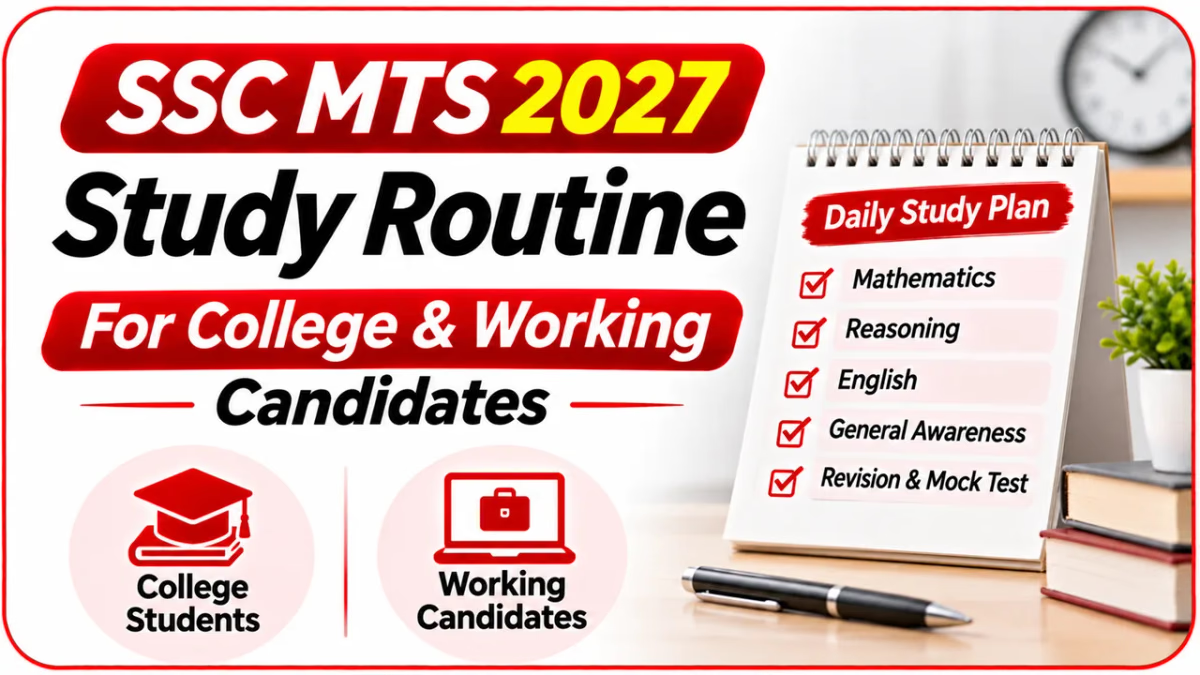
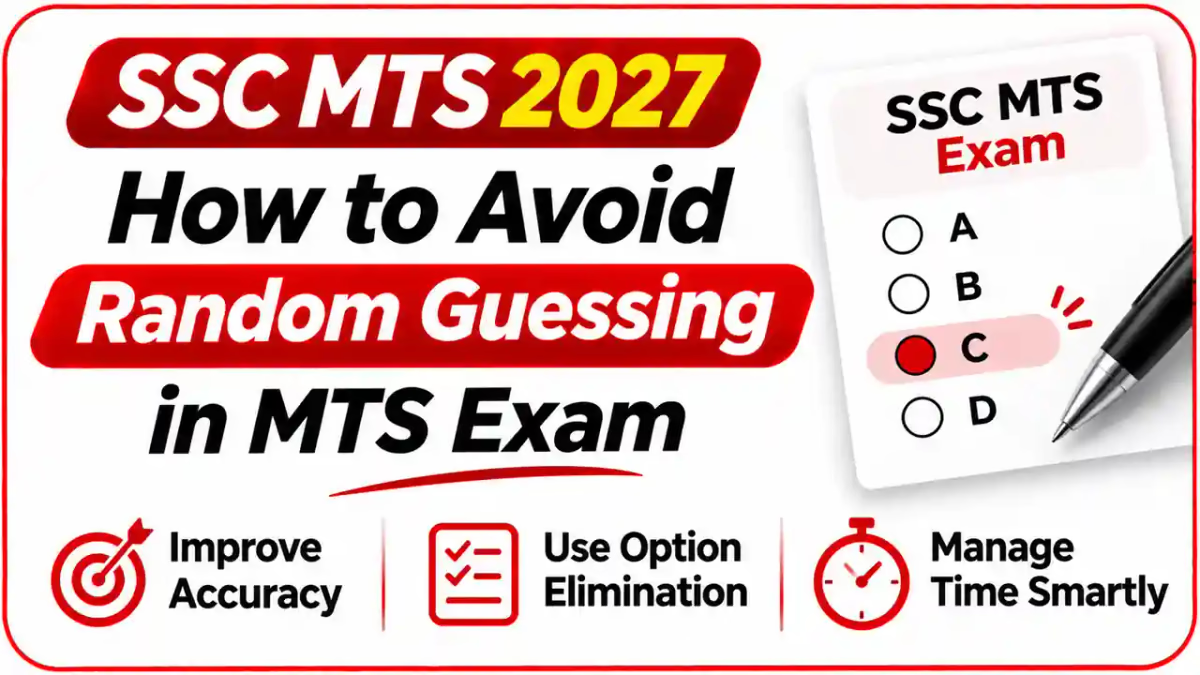
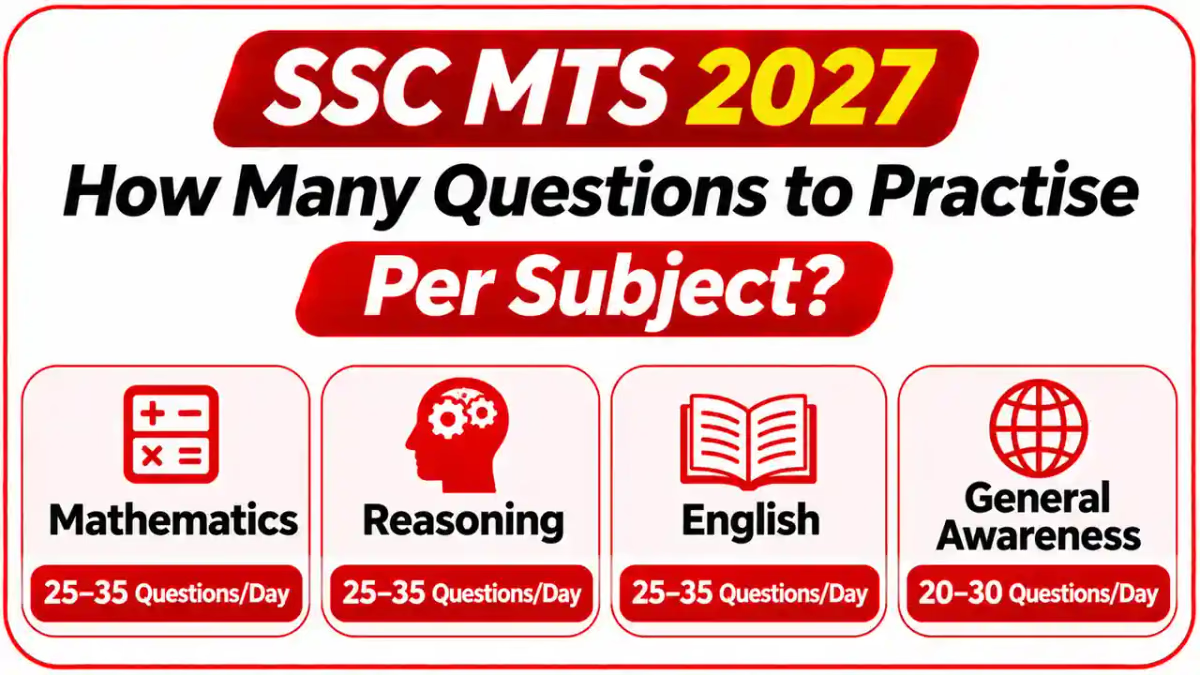
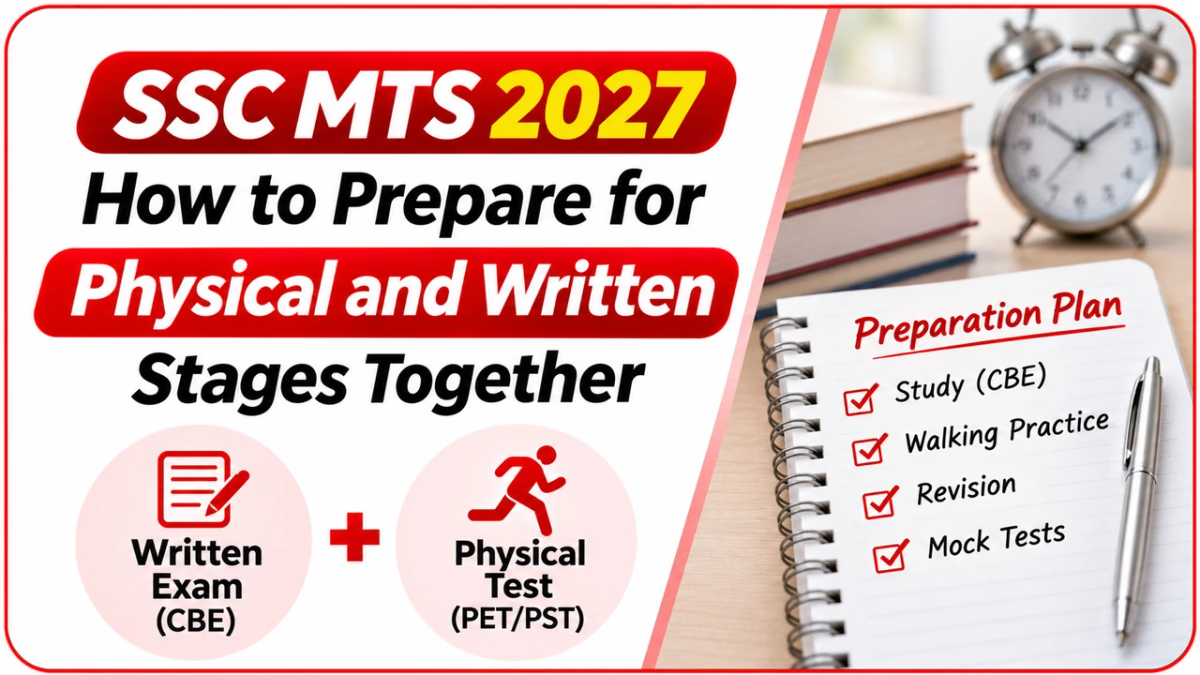
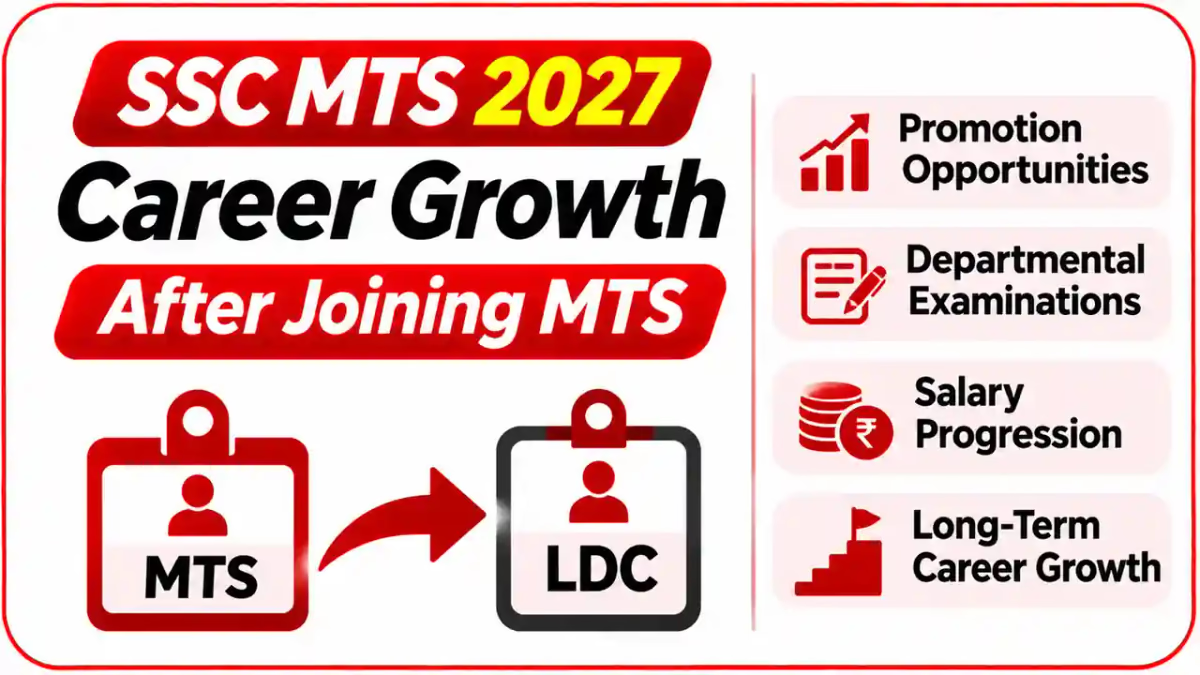
 Defence
 SSC
 Govt Job