

Download the App & Start Learning
- Expert Faculty Guidance
- Updated Study Material
- Mock Tests & Practice Quiz
- Live Doubt Solving Sessions
- Exam-Oriented Preparation
- Motivation & Success Strategy
Katara Academy

20/11/2026
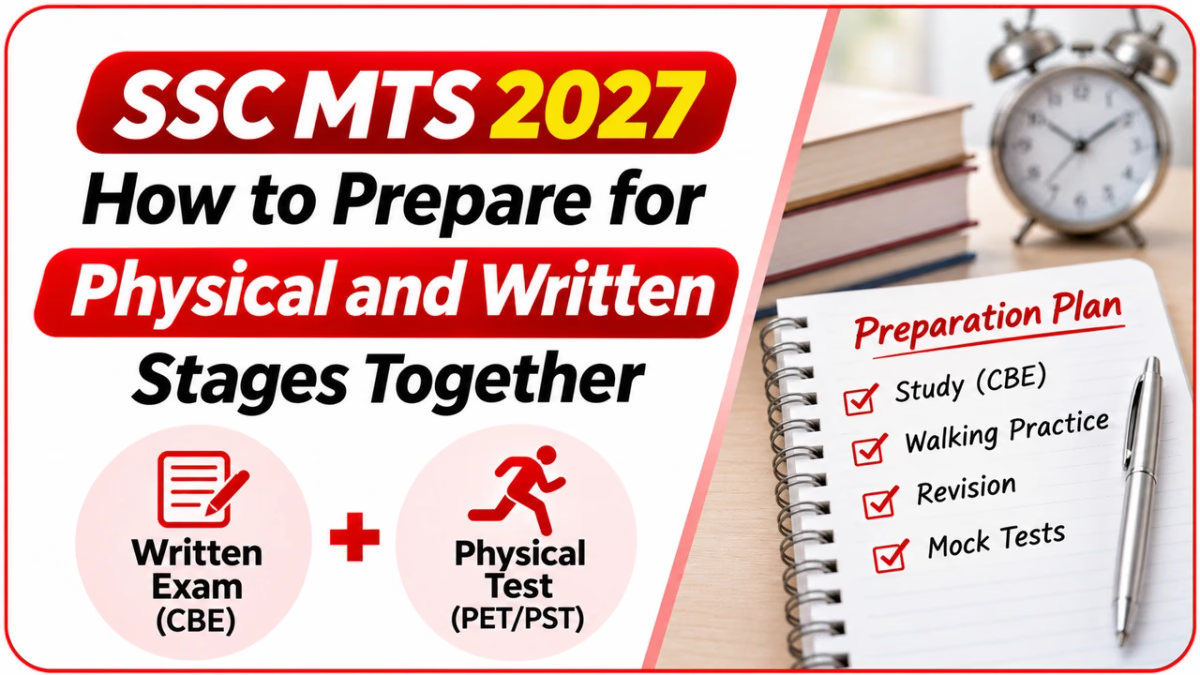
The Staff Selection Commission (SSC) conducts the Multi-Tasking Staff (MTS) and Havaldar Examination to recruit candidates for various government departments. Unlike the MTS post, the Havaldar post in the Central Board of Indirect Taxes and Customs (CBIC) and Central Bureau of Narcotics (CBN) includes a Physical Efficiency Test (PET) and Physical Standard Test (PST).
For beginners, preparing for the Havaldar physical test can seem challenging, especially if they are not used to regular walking or physical exercise. However, a gradual training routine, regular practice and proper preparation can help candidates improve their stamina and confidence.
This guide explains the SSC MTS 2027 Havaldar PET requirements, walking test preparation, physical fitness exercises, a beginner-friendly training schedule and important examination tips.
PET stands for Physical Efficiency Test. It evaluates whether a candidate can complete the prescribed walking distance within the specified time.
According to the SSC MTS 2025 official notification, the Havaldar PET includes a walking test with different requirements for male and female candidates.
| Candidate Category | Walking Distance | Time Limit |
|---|---|---|
| Male | 1600 metres (1.6 km) | 15 minutes |
| Female | 1000 metres (1 km) | 20 minutes |
Important: The PET standard listed above is based on the SSC MTS 2025 notification and is provided as a preparation reference for SSC MTS 2027. Candidates should verify the final 2027 notification for any changes.
Remember: The prescribed activity is walking, not running. Candidates should practise brisk walking while maintaining a consistent pace.
PET and PST are two different physical assessments. Candidates should understand both before beginning their preparation.
PET checks physical endurance through the prescribed walking test. Candidates must complete the required distance within the specified time.
PST checks the physical measurements required for the Havaldar post. These include height, chest measurements for male candidates and weight for female candidates.
Key Difference: PET evaluates walking endurance, whereas PST evaluates prescribed physical measurements.
Along with PET, candidates must meet the applicable physical standards. The following measurements are based on the SSC MTS 2025 notification.
| Physical Measurement | Required Standard |
|---|---|
| Minimum Height | 157.5 cm |
| Chest (Unexpanded) | 76 cm |
| Minimum Chest Expansion | 5 cm |
| Chest (Fully Expanded) | 81 cm |
| Physical Measurement | Required Standard |
|---|---|
| Minimum Height | 152 cm |
| Minimum Weight | 48 kg |
The 2025 notification provides specified relaxations for Garhwalis, Assamese, Gorkhas and candidates belonging to Scheduled Tribes.
Applicable eligibility conditions and supporting certificates must be checked in the official notification. Do not assume that every candidate receives these relaxations.
Candidates who do not exercise regularly should begin with comfortable walking rather than immediately attempting the complete test distance at maximum speed.
Begin with 10–15 minutes of comfortable walking. Focus on maintaining a natural walking posture and a steady pace.
After becoming comfortable with normal walking, gradually increase the duration to 20–30 minutes. Avoid increasing distance and speed too quickly.
Brisk walking means walking faster than your normal pace while maintaining control and proper breathing. It helps improve cardiovascular endurance and walking efficiency.
Once your stamina improves, begin practising the actual PET distance. Use a stopwatch or fitness application to record your walking time.
Maintain a simple record of your walking distance, time and comfort level. This helps you understand whether your endurance is improving.
The following is a sample gradual walking schedule for beginners. It is a practice plan, not an official SSC training programme. Adjust the duration according to your fitness level and recovery.
Preparation Goal: Male candidates should work towards 1600 metres in 15 minutes, while female candidates should work towards 1000 metres in 20 minutes, subject to the final applicable notification.
In addition to walking practice, simple exercises can help beginners improve general fitness and muscular endurance.
Start each session with a few minutes of slow walking. This prepares your body for more active movement.
Stand upright and slowly raise your heels while keeping your toes on the ground. Lower your heels in a controlled manner. This exercise strengthens the calf muscles.
Perform comfortable bodyweight squats with controlled movement. They help strengthen the muscles of the legs and hips.
Lift your knees alternately while standing in one place. This provides a simple way to practise coordinated leg movement.
Gentle stretching after exercise can help maintain flexibility. Avoid forcing a stretch or bouncing during the movement.
Beginner Tip: Start with a small number of repetitions and increase gradually. Exercise should not cause sharp pain or unusual discomfort.
Proper walking technique can help candidates maintain a comfortable and consistent pace throughout the PET.
Proper nutrition and hydration support general fitness and recovery during physical preparation.
There is no need to follow an expensive diet or use supplements for basic walking preparation. A balanced diet and consistent routine are good starting points.
Many candidates make avoidable mistakes when preparing for a physical test. Understanding these mistakes can help improve preparation.
Before attending the physical assessment, candidates should carefully read their official call letter and follow the instructions provided by the examination authorities.
Important: This is a general preparation checklist. The exact documents and entry requirements must be confirmed from the candidate's official admission certificate and SSC instructions.
According to the SSC MTS 2025 notification, male candidates must walk 1600 metres within 15 minutes.
Female candidates must walk 1 kilometre within 20 minutes according to the 2025 notification.
No. The prescribed PET activity in the 2025 notification is walking, not running.
Yes. The Havaldar selection process includes a Physical Standard Test to check the applicable height, chest and weight requirements.
Yes. Beginners can start with comfortable walking and gradually improve their stamina through regular practice and recovery.
Beginners should follow a consistent but manageable routine with recovery days. The frequency and duration should depend on their current fitness level and health.
The SSC MTS 2025 notification specifies a walking test for Havaldar PET. Candidates should not rely on older cycling requirements and must check the final 2027 notification.
No. Walking distance and time, as well as certain physical measurements, differ between male and female candidates.
SSC MTS 2027 Havaldar PET preparation requires regular walking practice, gradual improvement in stamina and a clear understanding of physical standards. Beginners should focus on building a consistent routine instead of trying to complete the entire distance at high speed from the first day.
Remember the prescribed walking requirements, check the applicable PST measurements and follow the official notification carefully. With disciplined preparation, proper recovery and regular progress tracking, candidates can approach the Havaldar physical assessment with greater confidence.
