

Download the App & Start Learning
- Expert Faculty Guidance
- Updated Study Material
- Mock Tests & Practice Quiz
- Live Doubt Solving Sessions
- Exam-Oriented Preparation
- Motivation & Success Strategy
Katara Academy

20/11/2026
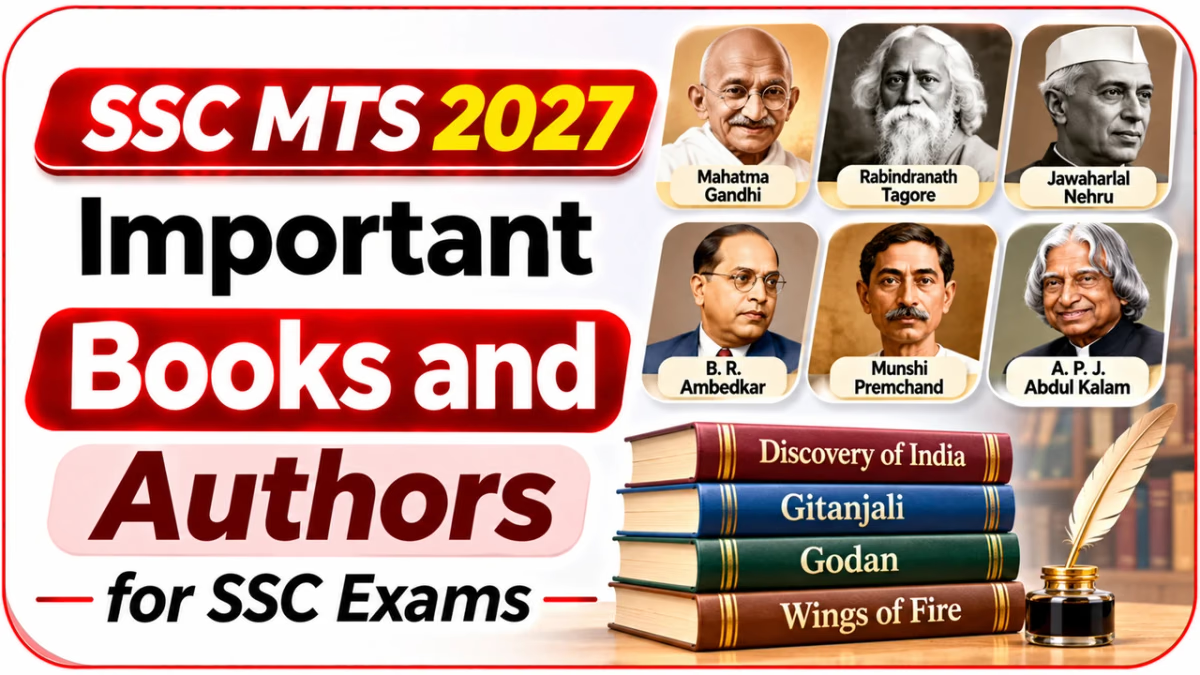
Books and their authors are an important part of Static General Knowledge for competitive examinations. Questions are commonly asked about famous literary works, autobiographies, historical books, Indian writers and international authors.
For the SSC MTS 2027 examination, candidates should remember important books along with their authors, historical periods and special contributions. Questions may ask who wrote a particular book or which famous work belongs to a particular author.
This article covers important books and authors from ancient India, medieval India, the Indian freedom movement, modern Indian literature and world literature. It also includes quick revision tables and practice MCQs to help beginners prepare effectively.
Ancient Indian literature includes important epics, Sanskrit works, historical texts, poetry and books on administration. These works are frequently included in General Knowledge preparation.
| Book | Author | Important Information |
|---|---|---|
| Ramayana | Valmiki | Ancient Indian epic |
| Mahabharata | Ved Vyasa | One of the major Indian epics |
| Arthashastra | Kautilya (Chanakya) | Politics, administration and economics |
| Ashtadhyayi | Panini | Sanskrit grammar |
| Mahabhashya | Patanjali | Commentary on Sanskrit grammar |
| Abhijnanasakuntalam | Kalidasa | Famous Sanskrit drama |
| Meghaduta | Kalidasa | Classical Sanskrit poem |
| Raghuvamsha | Kalidasa | Sanskrit epic poem |
| Panchatantra | Vishnu Sharma | Collection of animal fables and moral stories |
| Rajatarangini | Kalhana | Historical account of Kashmir |
| Buddhacharita | Ashvaghosha | Life of Gautama Buddha |
| Mudrarakshasa | Vishakhadatta | Historical Sanskrit drama |
| Mrichchhakatika | Shudraka | Classical Sanskrit play |
| Gita Govinda | Jayadeva | Poetry about Radha and Krishna |
| Indica | Megasthenes | Account of ancient India |
| Kamasutra | Vatsyayana | Ancient work on human relationships and social life |
| Harshacharita | Banabhatta | Biography of King Harsha |
| Kadambari | Banabhatta | Sanskrit prose romance |
Exam Tip: Remember these important combinations: Arthashastra – Kautilya, Rajatarangini – Kalhana, Panchatantra – Vishnu Sharma and Indica – Megasthenes.
Medieval Indian literature includes historical records, biographies, travel accounts, religious poetry and works written during the Delhi Sultanate and Mughal periods.
| Book | Author | Important Information |
|---|---|---|
| Akbarnama | Abul Fazl | History of Emperor Akbar |
| Ain-i-Akbari | Abul Fazl | Administration and system of Akbar's empire |
| Baburnama | Babur | Autobiographical memoirs of Babur |
| Tuzuk-i-Jahangiri | Jahangir | Autobiography and memoirs of Jahangir |
| Humayun Nama | Gulbadan Begum | Account of Humayun's life |
| Kitab-ul-Hind | Al-Biruni | Study of Indian society, religion and knowledge |
| Tarikh-i-Firozshahi | Ziauddin Barani | History of the Delhi Sultanate |
| Ramcharitmanas | Tulsidas | Retelling of the Ramayana in Awadhi |
| Sur Sagar | Surdas | Devotional poetry about Krishna |
| Padmavat | Malik Muhammad Jayasi | Awadhi epic poem |
Exam Tip: Akbarnama and Ain-i-Akbari were written by Abul Fazl, while Baburnama was written by Babur himself.
Several Indian freedom fighters and national leaders wrote books about India's history, independence, political ideas and personal experiences. These books are particularly useful for SSC General Awareness.
| Book | Author |
|---|---|
| The Story of My Experiments with Truth | Mahatma Gandhi |
| Hind Swaraj | Mahatma Gandhi |
| The Discovery of India | Jawaharlal Nehru |
| Glimpses of World History | Jawaharlal Nehru |
| India Wins Freedom | Maulana Abul Kalam Azad |
| Gita Rahasya | Bal Gangadhar Tilak |
| Unhappy India | Lala Lajpat Rai |
| Anandamath | Bankim Chandra Chatterjee |
| Why I Am an Atheist | Bhagat Singh |
| The Indian War of Independence, 1857 | V. D. Savarkar |
| Poverty and Un-British Rule in India | Dadabhai Naoroji |
| Ghulamgiri | Jyotirao Phule |
| Satyarth Prakash | Swami Dayanand Saraswati |
| Annihilation of Caste | Dr. B. R. Ambedkar |
| The Buddha and His Dhamma | Dr. B. R. Ambedkar |
| India Divided | Dr. Rajendra Prasad |
Important Facts:
Modern Indian literature includes novels, short stories, poetry, autobiographies and literary works written in different Indian languages and English. Candidates should remember the following popular book-author combinations.
| Book | Author |
|---|---|
| Gitanjali | Rabindranath Tagore |
| Gora | Rabindranath Tagore |
| Ghare-Baire | Rabindranath Tagore |
| Godan | Munshi Premchand |
| Gaban | Munshi Premchand |
| Madhushala | Harivansh Rai Bachchan |
| Kamayani | Jaishankar Prasad |
| Devdas | Sarat Chandra Chattopadhyay |
| Parineeta | Sarat Chandra Chattopadhyay |
| Malgudi Days | R. K. Narayan |
| Swami and Friends | R. K. Narayan |
| The Guide | R. K. Narayan |
| Train to Pakistan | Khushwant Singh |
| Untouchable | Mulk Raj Anand |
| A Suitable Boy | Vikram Seth |
| The Shadow Lines | Amitav Ghosh |
| The God of Small Things | Arundhati Roy |
| Midnight's Children | Salman Rushdie |
| The White Tiger | Aravind Adiga |
| The Inheritance of Loss | Kiran Desai |
| Interpreter of Maladies | Jhumpa Lahiri |
| The Argumentative Indian | Amartya Sen |
| India After Gandhi | Ramachandra Guha |
| Wings of Fire | A. P. J. Abdul Kalam and Arun Tiwari |
International books and authors are also important for Static GK. Questions may be asked about famous world literature, philosophy, science and political works.
| Book | Author |
|---|---|
| The Wealth of Nations | Adam Smith |
| Das Kapital | Karl Marx |
| The Republic | Plato |
| The Prince | Niccolò Machiavelli |
| The Social Contract | Jean-Jacques Rousseau |
| Leviathan | Thomas Hobbes |
| On the Origin of Species | Charles Darwin |
| A Brief History of Time | Stephen Hawking |
| War and Peace | Leo Tolstoy |
| Animal Farm | George Orwell |
| Nineteen Eighty-Four (1984) | George Orwell |
| Hamlet | William Shakespeare |
| Paradise Lost | John Milton |
| Utopia | Thomas More |
| Mein Kampf | Adolf Hitler |
Autobiographies and memoirs are popular topics in competitive examinations. These books describe the personal experiences, achievements and life journeys of well-known personalities.
| Book | Author / Personality |
|---|---|
| The Story of My Experiments with Truth | Mahatma Gandhi |
| Wings of Fire | A. P. J. Abdul Kalam with Arun Tiwari |
| Playing It My Way | Sachin Tendulkar |
| The Test of My Life | Yuvraj Singh |
| Unbreakable | Mary Kom |
| Ace Against Odds | Sania Mirza with Shivani Gupta |
| My Life | Bill Clinton |
| Long Walk to Freedom | Nelson Mandela |
| My Truth | Indira Gandhi |
| An Autobiography | Jawaharlal Nehru |
Some books become particularly famous because they receive prestigious literary awards. Remembering important Indian Booker Prize-winning books can strengthen your Static GK preparation.
| Book | Author | Booker Prize Year |
|---|---|---|
| Midnight's Children | Salman Rushdie | 1981 |
| The God of Small Things | Arundhati Roy | 1997 |
| The Inheritance of Loss | Kiran Desai | 2006 |
| The White Tiger | Aravind Adiga | 2008 |
Important Nobel Prize Fact: Rabindranath Tagore received the Nobel Prize in Literature in 1913 for Gitanjali, becoming the first Asian Nobel laureate.
Exam Note: The Booker Prize winners listed above are individual winning authors. For recent awards and international joint winners, check the relevant award year separately.
Use this table for quick revision before attempting SSC MTS practice questions.
| Book | Author |
|---|---|
| Arthashastra | Kautilya |
| Indica | Megasthenes |
| Rajatarangini | Kalhana |
| Abhijnanasakuntalam | Kalidasa |
| Panchatantra | Vishnu Sharma |
| Akbarnama | Abul Fazl |
| Ramcharitmanas | Tulsidas |
| Gitanjali | Rabindranath Tagore |
| Anandamath | Bankim Chandra Chatterjee |
| Godan | Munshi Premchand |
| Discovery of India | Jawaharlal Nehru |
| Hind Swaraj | Mahatma Gandhi |
| India Wins Freedom | Maulana Abul Kalam Azad |
| Gita Rahasya | Bal Gangadhar Tilak |
| Wings of Fire | A. P. J. Abdul Kalam and Arun Tiwari |
| Train to Pakistan | Khushwant Singh |
| The Guide | R. K. Narayan |
| The White Tiger | Aravind Adiga |
| The Wealth of Nations | Adam Smith |
| On the Origin of Species | Charles Darwin |
Test your knowledge with these multiple-choice questions based on important books and their authors.
A) Kalidasa
B) Kautilya
C) Panini
D) Patanjali
Correct Answer: B) Kautilya
A) Bankim Chandra Chatterjee
B) Rabindranath Tagore
C) Munshi Premchand
D) Sarojini Naidu
Correct Answer: B) Rabindranath Tagore
A) Mahatma Gandhi
B) Sardar Vallabhbhai Patel
C) Jawaharlal Nehru
D) Subhas Chandra Bose
Correct Answer: C) Jawaharlal Nehru
A) R. K. Narayan
B) Munshi Premchand
C) Khushwant Singh
D) Sarat Chandra Chattopadhyay
Correct Answer: B) Munshi Premchand
A) Anandamath
B) Gitanjali
C) Godan
D) Madhushala
Correct Answer: A) Anandamath
A) Banabhatta
B) Kalhana
C) Kalidasa
D) Tulsidas
Correct Answer: B) Kalhana
A) Vikram Seth
B) A. P. J. Abdul Kalam
C) R. K. Narayan
D) Amartya Sen
Correct Answer: B) A. P. J. Abdul Kalam
A) Maulana Abul Kalam Azad
B) Jawaharlal Nehru
C) Mahatma Gandhi
D) Dr. Rajendra Prasad
Correct Answer: A) Maulana Abul Kalam Azad
A) Karl Marx
B) Adam Smith
C) Plato
D) Thomas Hobbes
Correct Answer: B) Adam Smith
A) Kiran Desai
B) Arundhati Roy
C) Jhumpa Lahiri
D) Anita Desai
Correct Answer: B) Arundhati Roy
A) Kautilya
B) Megasthenes
C) Kalhana
D) Vishnu Sharma
Correct Answer: B) Megasthenes
A) Kapil Dev
B) Yuvraj Singh
C) Sachin Tendulkar
D) Sourav Ganguly
Correct Answer: C) Sachin Tendulkar
Important Books and Authors is a useful Static GK topic for SSC MTS 2027 and other competitive examinations. Candidates should focus on ancient Indian literature, medieval historical texts, freedom movement books, modern Indian writers and famous international works.
Start by learning the most important book-author combinations, revise them regularly and practise MCQs to improve your General Awareness preparation. A systematic revision strategy can make this topic easier to remember during the examination.
