

Download the App & Start Learning
- Expert Faculty Guidance
- Updated Study Material
- Mock Tests & Practice Quiz
- Live Doubt Solving Sessions
- Exam-Oriented Preparation
- Motivation & Success Strategy
Katara Academy

21/11/2026
The SSC Multi-Tasking (Non-Technical) Staff examination offers candidates an opportunity to secure a Group C government job in different Central Government departments. Through the same recruitment examination, candidates can also apply for the Havaldar post in the Central Board of Indirect Taxes and Customs (CBIC) and Central Bureau of Narcotics (CBN).
Although both posts are included in the SSC MTS examination, their job responsibilities, departments, physical requirements and workplace environments are different.
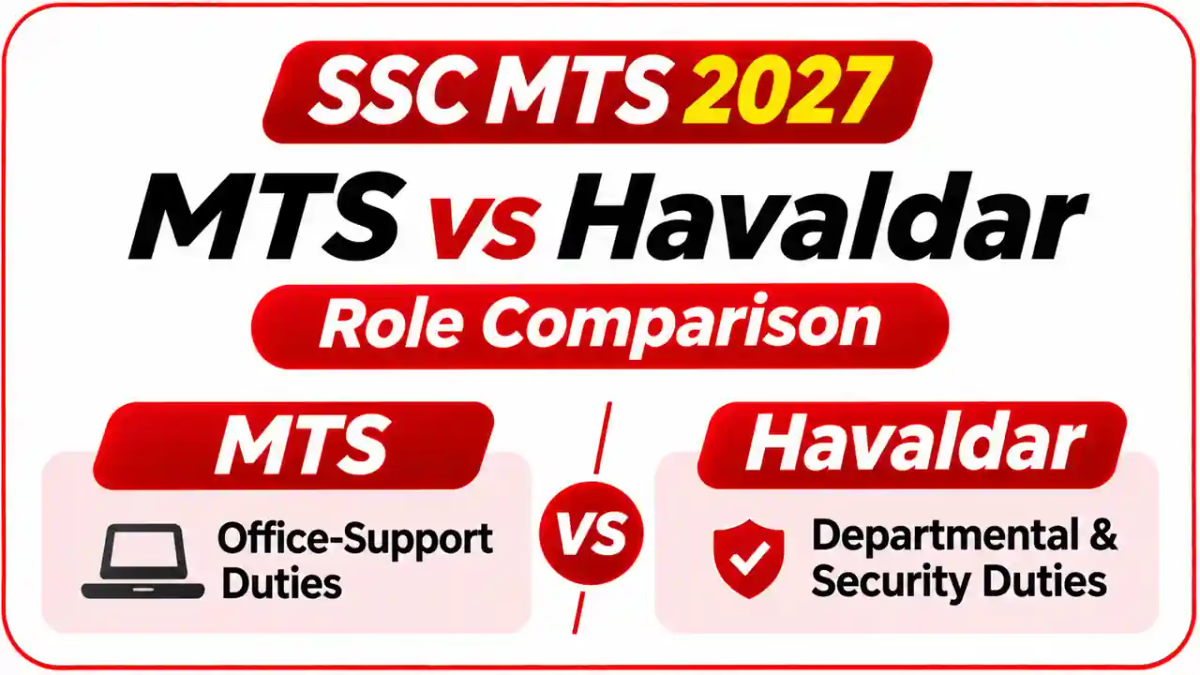
MTS employees generally perform multi-tasking and office-support responsibilities, whereas Havaldars work in CBIC and CBN establishments and may perform security, field-support and other departmental duties.
Understanding these differences can help candidates decide which post matches their interests, physical fitness and career expectations.
MTS stands for Multi-Tasking (Non-Technical) Staff. It is a General Central Service Group C, Non-Gazetted and Non-Ministerial post offered in various Ministries, Departments, Offices and other government organisations.
MTS employees support the daily functioning of government offices by performing different non-technical and administrative tasks assigned by senior officials.
The exact responsibilities depend on the allotted Ministry, Department or government office. Not every MTS employee performs all the duties listed above.
Havaldar is a General Central Service Group C, Non-Gazetted and Non-Ministerial post under the Department of Revenue, Ministry of Finance.
Through SSC MTS recruitment, Havaldar vacancies are offered in two departments:
The nature of Havaldar duties can differ according to the department and posting.
CBN Havaldars have specific responsibilities such as assisting Sub-Inspectors in measuring licensed poppy fields, accompanying executive officers during enforcement operations, guarding government buildings and escorting opium consignments.
| Comparison | MTS | Havaldar |
|---|---|---|
| Full Form | Multi-Tasking Staff | Havaldar |
| Department | Various Central Government Departments | CBIC and CBN |
| Ministry | Various Ministries | Ministry of Finance |
| Group | Group C | Group C |
| Gazetted Status | Non-Gazetted | Non-Gazetted |
| Pay Level | Level 1 | Level 1 |
| Basic Pay Range | ₹18,000–₹56,900 | ₹18,000–₹56,900 |
| Computer-Based Exam | Required | Required |
| PET/PST | Not required | Required |
| Work Nature | Multi-tasking and office support | Departmental, security and field support |
| Workplace | Various government offices | CBIC and CBN establishments |
Important: Both posts are classified under Pay Level 1 in the SSC MTS 2025 notification. The actual salary and allowances depend on applicable government rules and posting location.
One of the most important differences between MTS and Havaldar is the selection process after the Computer-Based Examination.
For the MTS post, the selection process includes the Computer-Based Examination (CBE), followed by the applicable merit, preference and document verification procedures.
For Havaldar, candidates must qualify the Computer-Based Examination and also meet the prescribed Physical Efficiency Test (PET) and Physical Standard Test (PST) requirements.
| Selection Stage | MTS | Havaldar |
|---|---|---|
| Computer-Based Examination | Yes | Yes |
| Physical Efficiency Test | No | Yes |
| Physical Standard Test | No | Yes |
| Document Verification | As applicable | As applicable |
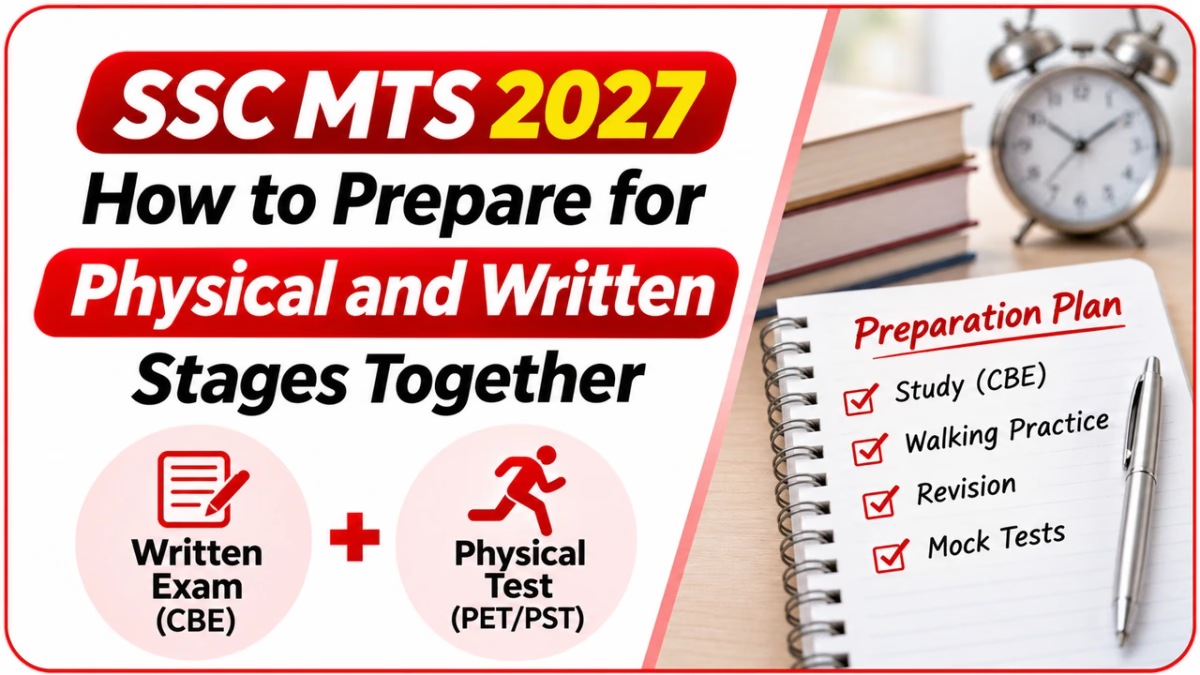
Therefore, candidates interested in Havaldar must prepare for both the written examination and physical assessments.
Physical requirements are another major difference between these two posts.
The Havaldar-specific PET and PST are not applicable to candidates applying only for the MTS post. Candidates must satisfy the general eligibility requirements and other applicable recruitment conditions.
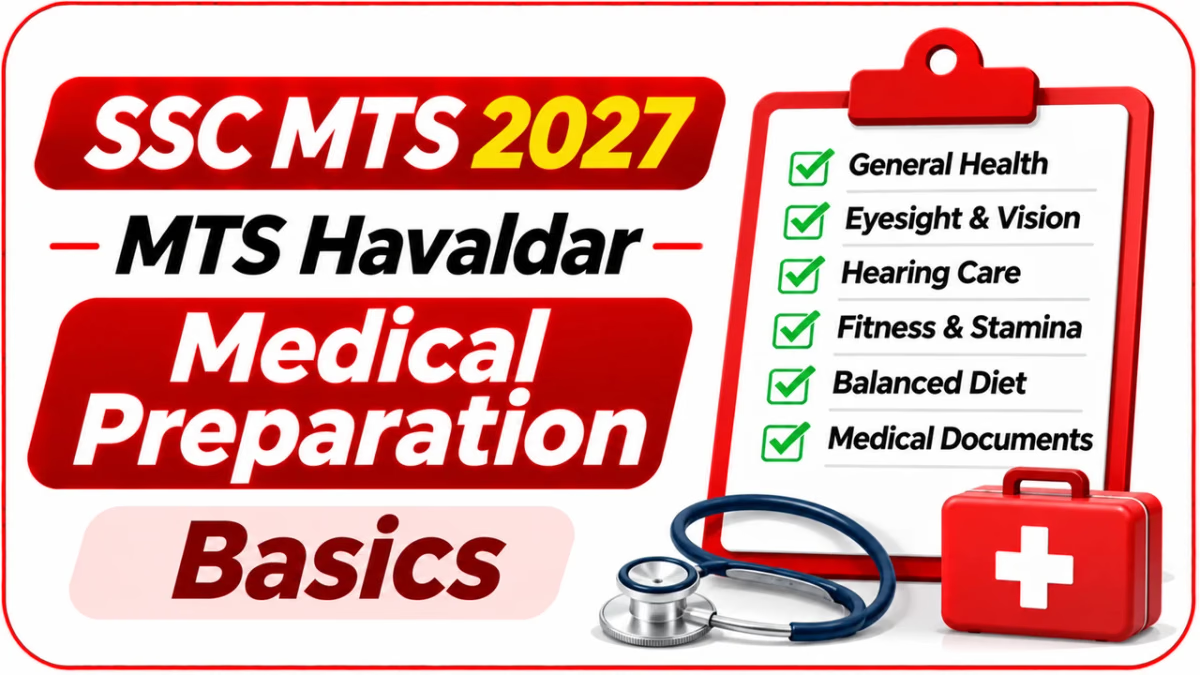
Havaldar candidates must qualify the prescribed walking test and physical measurement standards.
| Candidate | Walking Distance | Time Limit |
|---|---|---|
| Male | 1600 metres | 15 minutes |
| Female | 1000 metres | 20 minutes |
Male Candidates:
Female Candidates:
Applicable relaxations are available to eligible candidates under the prescribed conditions. Candidates should check the latest official notification for final standards.
According to the SSC MTS 2025 official notification, both MTS and Havaldar posts are classified under Pay Level 1 of the 7th Central Pay Commission Pay Matrix.
| Salary Component | MTS | Havaldar |
|---|---|---|
| Pay Level | Level 1 | Level 1 |
| Starting Basic Pay | ₹18,000 | ₹18,000 |
| Maximum Basic Pay in Level | ₹56,900 | ₹56,900 |
| Dearness Allowance | As applicable | As applicable |
| House Rent Allowance | As applicable | As applicable |
| Transport Allowance | As applicable | As applicable |
The basic pay structure is the same, but the actual monthly salary may differ depending on the posting location, eligible allowances and deductions.
Neither post should automatically be considered higher-paying than the other based only on the job title.
MTS employees are posted in different Central Government Ministries, Departments and Offices. Their work environment is generally associated with routine administrative and office-support activities.
Depending on the department, an MTS employee may work in:
Havaldars are posted in CBIC and CBN establishments. Their workplace can involve office, security, operational and field-support responsibilities.
Possible workplaces include:
Actual duties and workplace conditions depend on the allotted department and administrative requirements.
The daily routine of MTS and Havaldar employees can be different depending on their department and assigned duties.
Working hours, shifts, weekly holidays and duty schedules depend on the concerned establishment. There is no single fixed timetable for all MTS or Havaldar employees.
Both posts provide Central Government employment opportunities, but the better choice depends on your preferences and career expectations.
Neither post is universally better. Candidates should compare the actual vacancy, department, job responsibilities and personal preferences before making their choice.
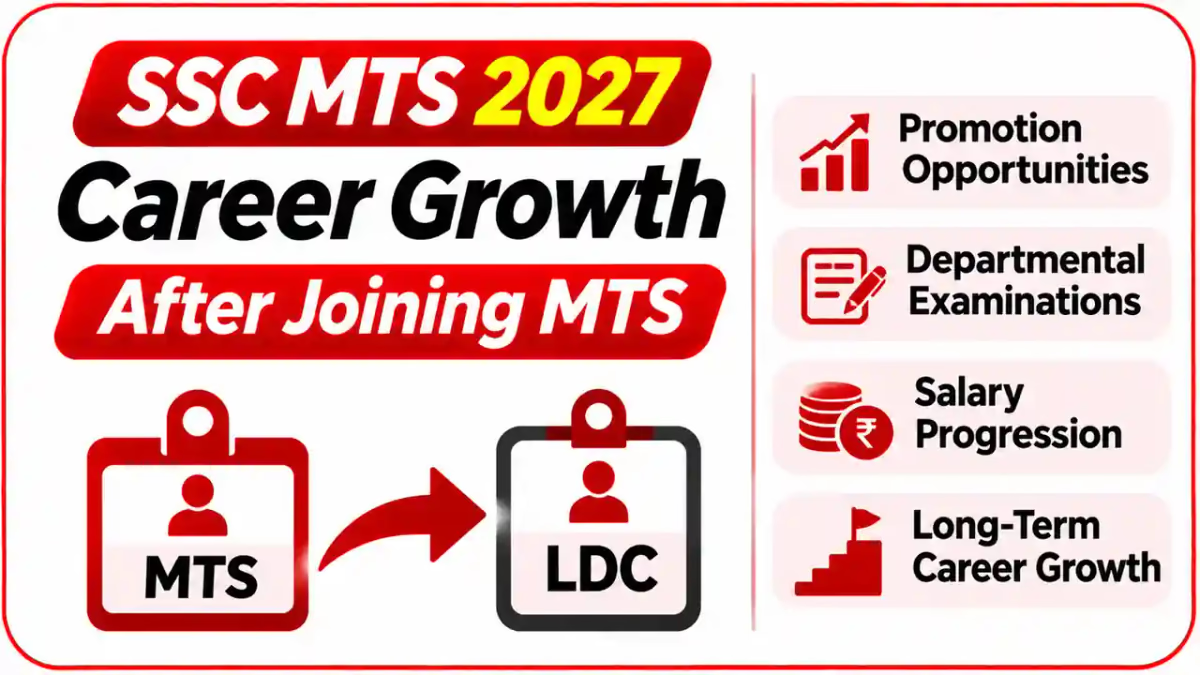
Both MTS and Havaldar employees can have career progression opportunities under their respective departmental recruitment and service rules.
MTS employees may become eligible for promotion to higher posts according to departmental recruitment rules, service requirements, seniority and other prescribed conditions.
Havaldars may also have departmental promotion opportunities depending on the applicable recruitment rules, eligibility, vacancies and service conditions.
Promotion channels are not necessarily identical across departments. Candidates should avoid assuming a guaranteed promotion timeline or a specific higher post without checking the relevant departmental rules.
Before selecting your preferred post, consider the following points:
MTS is a general multi-tasking support post in various Central Government departments, whereas Havaldar is recruited specifically for CBIC and CBN and includes prescribed physical tests.
Both posts are classified under Pay Level 1 in the SSC MTS 2025 notification, with a basic pay range of ₹18,000 to ₹56,900.
The Havaldar-specific PET and PST are not required for candidates applying only for the MTS post.
Yes. Havaldar candidates must qualify the prescribed walking test under the Physical Efficiency Test.
Subject to the application rules and eligibility conditions in the relevant notification, candidates can indicate their preferences for both posts where the application process permits it.
MTS vacancies are offered in various Ministries, Departments, Offices and other eligible Central Government organisations.
Havaldar vacancies are offered in CBIC and CBN establishments under the Department of Revenue, Ministry of Finance.
Havaldar recruitment includes mandatory physical efficiency and standard tests. Some Havaldar assignments may also involve security or field-support work. MTS does not have the Havaldar-specific PET/PST.
MTS may be more suitable for candidates interested in general office-support responsibilities. However, actual duties depend on the allotted department and workplace.
Yes. Both are classified as General Central Service Group C, Non-Gazetted and Non-Ministerial posts under the SSC MTS 2025 notification.
SSC MTS and Havaldar are two different government job opportunities offered through the same recruitment examination. Both provide Pay Level 1 employment, but their departments, responsibilities and selection requirements differ.
MTS is generally associated with multi-tasking and office-support duties across various government departments. Havaldar is associated with CBIC and CBN and may involve security, operational and field-support responsibilities along with mandatory PET/PST qualification.
Candidates should compare their physical fitness, job interests, department preferences and career expectations before selecting their preferred post for SSC MTS 2027.
Always refer to the latest official SSC notification for final eligibility, vacancies, post preferences and selection rules.
