






Download the App & Start Learning
- Expert Faculty Guidance
- Updated Study Material
- Mock Tests & Practice Quiz
- Live Doubt Solving Sessions
- Exam-Oriented Preparation
- Motivation & Success Strategy
Katara Academy

19/11/2026
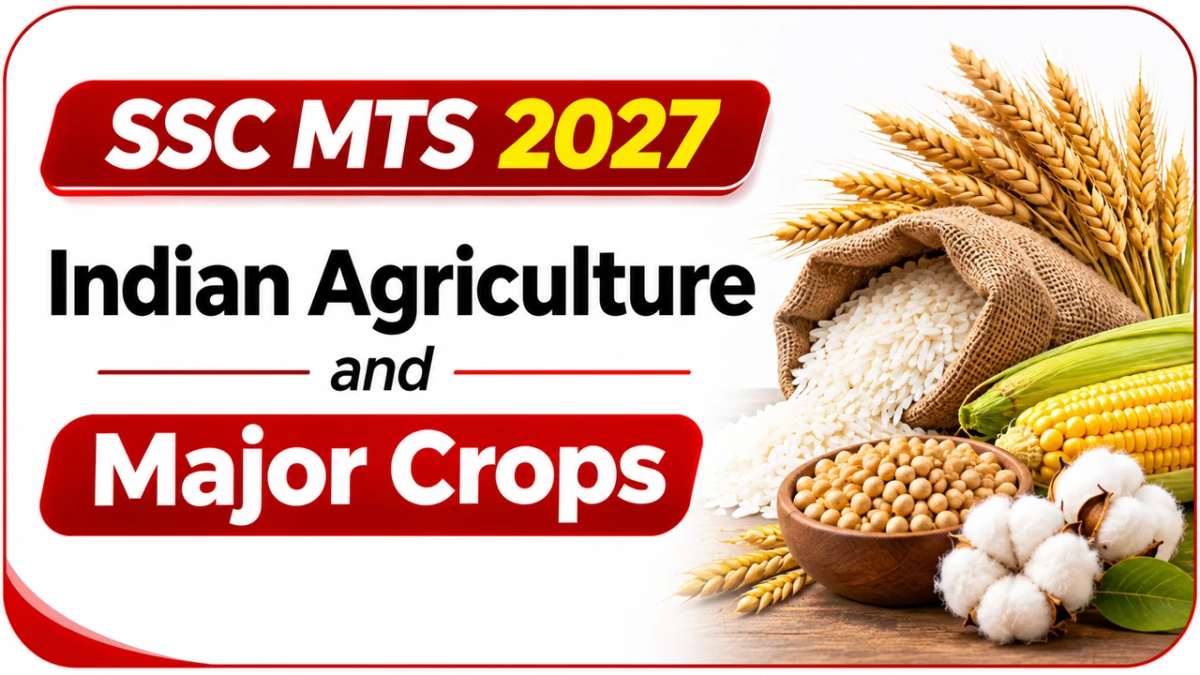
Indian agriculture is one of the most important sectors of the Indian economy. It provides employment to a large section of the population and plays a significant role in food production, rural development and economic growth. India has diverse climatic conditions, soil types and geographical features that support the cultivation of different crops.
For the SSC MTS 2027 examination, questions related to Indian agriculture, major crops, crop seasons, soil types and leading crop-producing states are important topics under General Awareness. Understanding these basic concepts can help candidates answer agriculture-related questions accurately.
Indian crops can be broadly classified into food crops, cash crops, plantation crops and horticultural crops.
Indian agriculture follows three major cropping seasons: Kharif, Rabi and Zaid. These seasons are mainly determined by rainfall, temperature and climatic conditions.
Kharif crops are also known as monsoon crops. They are generally sown with the arrival of the southwest monsoon and harvested during September and October.
Rabi crops are winter crops. They are generally sown after the monsoon season and harvested during the spring season.
Zaid crops are grown during the short summer season between the Rabi and Kharif seasons.
India produces a wide variety of agricultural crops. The following table highlights important crops and some of their major producing states. These facts are useful for SSC MTS General Awareness preparation.
| Crop | Major Producing States | Crop Season |
|---|---|---|
| Rice | West Bengal, Uttar Pradesh, Punjab, Odisha, Telangana | Kharif |
| Wheat | Uttar Pradesh, Madhya Pradesh, Punjab, Haryana, Rajasthan | Rabi |
| Maize | Karnataka, Madhya Pradesh, Maharashtra, Bihar | Mainly Kharif |
| Sugarcane | Uttar Pradesh, Maharashtra, Karnataka | Long-duration crop |
| Cotton | Gujarat, Maharashtra, Telangana, Rajasthan | Kharif |
| Jute | West Bengal, Assam, Bihar | Kharif |
| Groundnut | Gujarat, Rajasthan, Tamil Nadu, Andhra Pradesh | Mainly Kharif |
| Tea | Assam, West Bengal, Tamil Nadu, Kerala | Plantation crop |
| Coffee | Karnataka, Kerala, Tamil Nadu | Plantation crop |
| Mustard | Rajasthan, Haryana, Uttar Pradesh, Madhya Pradesh | Rabi |
Rice is a major staple food crop in India. It generally requires high temperatures, sufficient water and humid conditions. It is widely cultivated in West Bengal, Uttar Pradesh, Punjab and other states.
Wheat is one of India's most important food grains. It is mainly cultivated during the Rabi season and requires cool weather during growth and dry, sunny conditions during ripening.
Sugarcane is an important commercial crop used for producing sugar, jaggery and ethanol. It requires a warm climate and a relatively long growing period.
Cotton is an important fibre crop used in the textile industry. Black soil, also known as regur soil, is particularly suitable for cotton cultivation.
Jute is known as the Golden Fibre of India. It is used to manufacture bags, ropes, mats and other products. It grows well in warm and humid conditions.
Soil is an important factor influencing agricultural production. Different soil types support the cultivation of different crops.
| Soil Type | Suitable Crops |
|---|---|
| Alluvial Soil | Rice, wheat, sugarcane, jute |
| Black Soil | Cotton, soybean, groundnut |
| Red Soil | Millets, pulses, groundnut |
| Laterite Soil | Tea, coffee, cashew |
| Desert Soil | Bajra and drought-resistant crops |
| Mountain Soil | Tea, fruits and certain plantation crops |
Test your knowledge with these important multiple-choice questions prepared for SSC MTS 2027 General Awareness.
A) Cotton
B) Jute
C) Wheat
D) Rice
Correct Answer: B) Jute
A) Alluvial Soil
B) Laterite Soil
C) Black Soil
D) Desert Soil
Correct Answer: C) Black Soil
A) Rice
B) Wheat
C) Cotton
D) Jute
Correct Answer: B) Wheat
A) Wheat
B) Gram
C) Rice
D) Mustard
Correct Answer: C) Rice
A) Assam
B) Rajasthan
C) Punjab
D) Haryana
Correct Answer: A) Assam
A) Green Revolution
B) Blue Revolution
C) White Revolution
D) Yellow Revolution
Correct Answer: C) White Revolution
A) During winter
B) Between Rabi and Kharif seasons
C) During the monsoon
D) Only during autumn
Correct Answer: B) Between Rabi and Kharif seasons
Indian agriculture and major crops are important topics for the SSC MTS 2027 General Awareness section. Candidates should focus on crop seasons, major producing states, soil types, agricultural revolutions and important crop-related facts.
Regular revision of these concepts and solving agriculture-related MCQs can improve your understanding of Indian geography and agriculture. Include this topic in your daily SSC MTS preparation routine to strengthen your General Awareness section.
