
Download the App & Start Learning
- Expert Faculty Guidance
- Updated Study Material
- Mock Tests & Practice Quiz
- Live Doubt Solving Sessions
- Exam-Oriented Preparation
- Motivation & Success Strategy
Katara Academy

16/11/2026
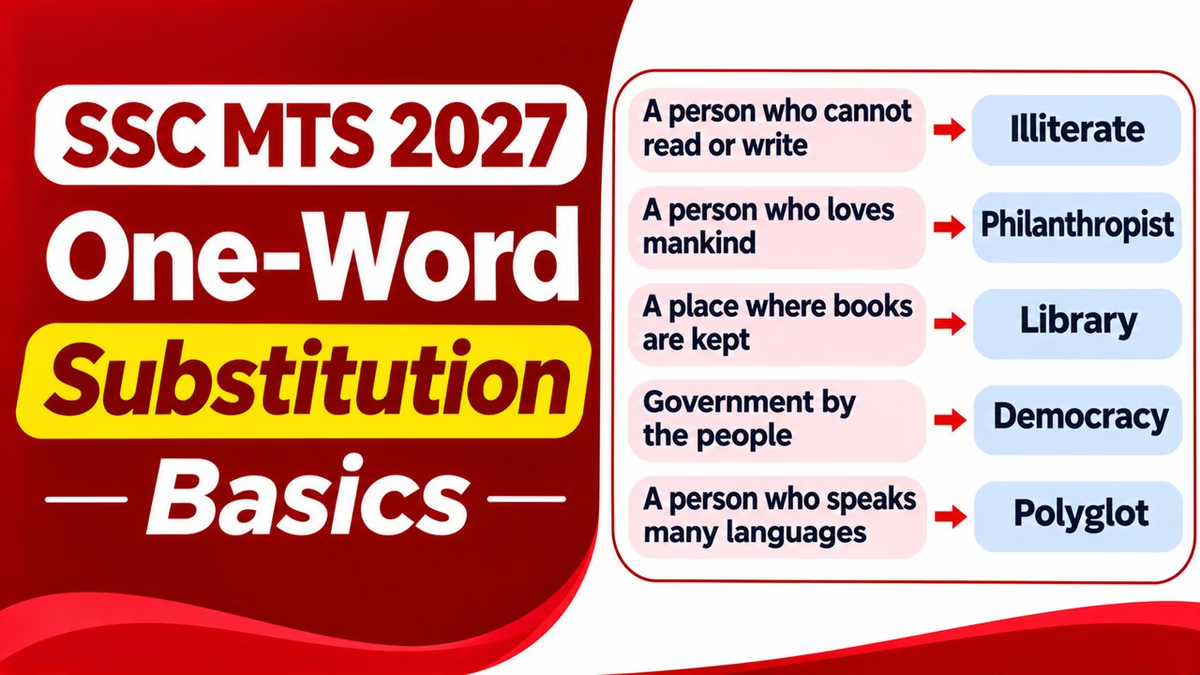
One-word substitution is an important vocabulary topic for candidates preparing for the SSC MTS 2027 examination. It involves replacing a group of words or a descriptive phrase with a single word that expresses the same meaning. Learning commonly used one-word substitutions can help candidates improve their English vocabulary, reading comprehension and accuracy in objective-type questions.
For example, a person who cannot read or write is called an illiterate. Instead of using the complete phrase, one precise word communicates the meaning.
This guide explains the basics of one-word substitution, common categories, examples, preparation methods and practice questions for SSC MTS English preparation.
One-word substitution is the use of a single word in place of a phrase or group of words without changing its original meaning.
Example:
The objective is to understand the complete meaning of a phrase and identify the most accurate word that represents it.
Learning words category-wise makes vocabulary easier to understand and remember. Start with frequently used categories and gradually expand your word list.
| Phrase | One Word |
|---|---|
| A person who cannot read or write | Illiterate |
| A person who loves mankind | Philanthropist |
| A person who speaks many languages | Polyglot |
| A person who does not believe in God | Atheist |
| A person who believes in the existence of God | Theist |
| A person who looks at the positive side of things | Optimist |
| A person who expects the worst | Pessimist |
| Phrase | One Word |
|---|---|
| A place where books are kept | Library |
| A place where birds are kept | Aviary |
| A place where bees are kept | Apiary |
| A place where dead bodies are buried | Cemetery |
| A place where weapons are stored | Arsenal |
| A place where animals are slaughtered | Abattoir |
| Phrase | One Word |
|---|---|
| Government by the people | Democracy |
| Government by a king or queen | Monarchy |
| Government by a few people | Oligarchy |
| Government by one person with absolute power | Autocracy |
| Government by religious leaders | Theocracy |
| Phrase | One Word |
|---|---|
| Something that happens every day | Daily |
| Something that happens every week | Weekly |
| Something that happens every year | Annual |
| Something that lasts forever | Eternal |
| Something that happens once in a lifetime | Unprecedented |
| Phrase | One Word |
|---|---|
| A person who writes poems | Poet |
| A person who writes books | Author |
| A person who writes dictionaries | Lexicographer |
| A short account of a person's life written by another person | Biography |
| A person's account of their own life | Autobiography |
Attempt these 15 multiple-choice questions to check your understanding. These are practice questions prepared for revision, not claims about confirmed future examination questions.
1. A person who cannot read or write is called:
A. Literate
B. Illiterate
C. Scholar
D. Author
2. A person who loves mankind is known as:
A. Misanthrope
B. Philanthropist
C. Atheist
D. Optimist
3. A place where birds are kept is called:
A. Apiary
B. Aquarium
C. Aviary
D. Library
4. A person who speaks many languages is called:
A. Linguist
B. Polyglot
C. Orator
D. Poet
5. Government by the people is known as:
A. Monarchy
B. Autocracy
C. Democracy
D. Oligarchy
6. A person's account of their own life is called:
A. Biography
B. Autobiography
C. Bibliography
D. Geography
7. A person who does not believe in God is called:
A. Theist
B. Atheist
C. Priest
D. Optimist
8. A place where bees are kept is called:
A. Aviary
B. Apiary
C. Arsenal
D. Sanctuary
9. A person who looks at the positive side of things is a/an:
A. Pessimist
B. Optimist
C. Critic
D. Atheist
10. A person who writes dictionaries is called:
A. Biographer
B. Lexicographer
C. Photographer
D. Calligrapher
11. Government by a king or queen is called:
A. Democracy
B. Monarchy
C. Theocracy
D. Autocracy
12. A place where weapons are stored is called:
A. Arsenal
B. Library
C. Apiary
D. Cemetery
13. A short account of another person's life is called:
A. Autobiography
B. Biography
C. Diary
D. Novel
14. Something that lasts forever is described as:
A. Temporary
B. Annual
C. Eternal
D. Daily
15. A person who expects the worst is called a:
A. Optimist
B. Philanthropist
C. Pessimist
D. Polyglot
| Question | Answer | Explanation |
|---|---|---|
| 1 | B. Illiterate | An illiterate person cannot read or write. |
| 2 | B. Philanthropist | A philanthropist works for the welfare of others. |
| 3 | C. Aviary | An aviary is a place where birds are kept. |
| 4 | B. Polyglot | A polyglot knows or speaks several languages. |
| 5 | C. Democracy | Democracy is government by the people. |
| 6 | B. Autobiography | An autobiography is written by a person about their own life. |
| 7 | B. Atheist | An atheist does not believe in the existence of God. |
| 8 | B. Apiary | An apiary is a place where bees are kept. |
| 9 | B. Optimist | An optimist generally expects positive outcomes. |
| 10 | B. Lexicographer | A lexicographer compiles or edits dictionaries. |
| 11 | B. Monarchy | Monarchy is a system headed by a king or queen. |
| 12 | A. Arsenal | An arsenal is a place where weapons are stored. |
| 13 | B. Biography | A biography describes another person's life. |
| 14 | C. Eternal | Eternal means lasting forever. |
| 15 | C. Pessimist | A pessimist tends to expect negative outcomes. |
| Day | Study Target |
|---|---|
| Day 1 | Learn 15 words related to people and characteristics. |
| Day 2 | Learn 15 words related to places and buildings. |
| Day 3 | Revise government and political terms. |
| Day 4 | Study words related to books, language and literature. |
| Day 5 | Practise time-related words and revise previous lists. |
| Day 6 | Solve 15–20 mixed practice questions. |
| Day 7 | Take a short vocabulary test and revise incorrect answers. |
Consistent practice and a clear understanding of English vocabulary can strengthen your preparation for competitive examinations. Revise one-word substitutions, practise grammar and solve regular mock tests to improve your confidence.
Explore Courses at Katara Academy
One-word substitution helps candidates express complete phrases through precise vocabulary. For SSC MTS 2027 English preparation, begin with common words related to people, places, government, time and literature. Understand each meaning, revise regularly and solve practice questions to strengthen your vocabulary.
One-word substitution means replacing a phrase or group of words with a single word that expresses the same meaning.
Yes. It is a useful vocabulary topic to practise as part of English preparation for SSC MTS 2027.
Beginners should start with common words, learn their meanings category-wise and revise them regularly using short practice tests.
You can begin with 10–15 words daily. Focus on understanding and remembering each word rather than memorising a large number without revision.
A biography is an account of someone's life written by another person. An autobiography is an account of a person's own life written by that person.
A philanthropist is a person who works to promote the welfare of others, often through charitable activities and donations.
Maintain a vocabulary notebook, revise words at regular intervals, group related terms and use them in example sentences.
No. The 15 questions in this article are original practice questions designed to help candidates understand and revise one-word substitution basics.