

Download the App & Start Learning
- Expert Faculty Guidance
- Updated Study Material
- Mock Tests & Practice Quiz
- Live Doubt Solving Sessions
- Exam-Oriented Preparation
- Motivation & Success Strategy
Katara Academy

16/11/2026
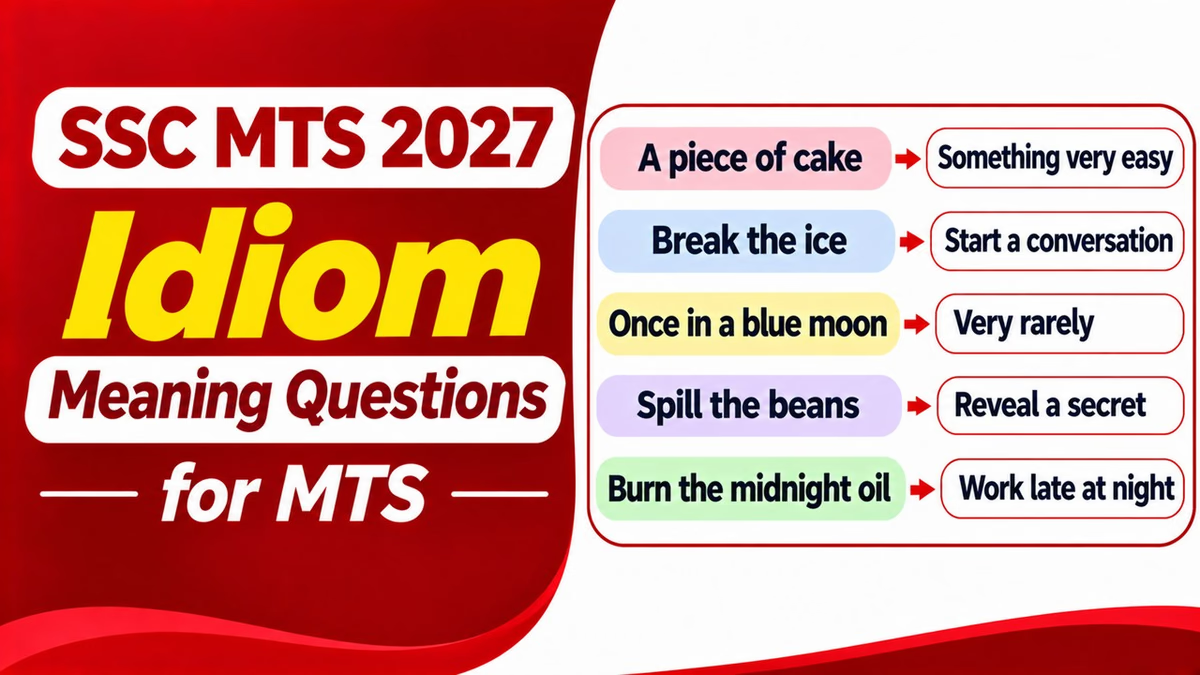
Idioms and phrases are an important part of English vocabulary preparation for competitive examinations such as SSC MTS 2027. These expressions have meanings that are different from the literal meanings of their individual words. Understanding them helps candidates interpret sentences correctly and improve their vocabulary.
For example, the expression "a piece of cake" does not refer to an actual piece of cake. It means something that is very easy to do. Similarly, "once in a blue moon" refers to something that happens very rarely.
Learning common idioms with their meanings and contextual examples can make vocabulary preparation more effective. This guide covers important idioms, their meanings, sentence usage, common mistakes and 15 practice questions with answers for SSC MTS 2027.
An idiom is a group of words whose overall meaning is different from the literal meaning of the individual words. Idioms are commonly used in everyday English and written communication.
A phrase is a group of words that functions as a unit in a sentence. Some phrases have figurative meanings and are commonly learned alongside idioms in competitive examination vocabulary preparation.
Examples:
| Idiom | Meaning |
|---|---|
| A piece of cake | Something very easy |
| Break the ice | To start a conversation or make people feel comfortable |
| Once in a blue moon | Very rarely |
| Under the weather | Feeling unwell |
| Hit the nail on the head | To say or identify exactly the right thing |
Learning idioms and phrases helps candidates develop a better understanding of English expressions and their meanings.
Regular practice can help you recognise idioms more quickly and understand their usage in different contexts.
Study the following idioms with their meanings and example sentences. These are useful vocabulary practice expressions, not a prediction of specific examination questions.
| Idiom | Meaning | Example |
|---|---|---|
| A piece of cake | Very easy | The grammar test was a piece of cake for her. |
| Break the ice | Start a conversation comfortably | The teacher told a joke to break the ice. |
| Once in a blue moon | Very rarely | He visits his hometown once in a blue moon. |
| Under the weather | Feeling unwell | I stayed home because I was feeling under the weather. |
| In a nutshell | In a few words | In a nutshell, the plan was successful. |
| Idiom | Meaning | Example |
|---|---|---|
| Burn the midnight oil | Work or study late at night | She burned the midnight oil to prepare for the examination. |
| Hit the jackpot | Have great or unexpected success | He hit the jackpot when he found an excellent job opportunity. |
| Learn the ropes | Learn how to do a job or activity | The new employee is learning the ropes of the business. |
| Get the ball rolling | Start an activity or process | The team held a meeting to get the ball rolling. |
| Go the extra mile | Make an additional effort | The teacher went the extra mile to help her students. |
| Idiom | Meaning | Example |
|---|---|---|
| A blessing in disguise | Something that seems bad but turns out to be beneficial | Missing that bus was a blessing in disguise because he avoided the traffic jam. |
| Add fuel to the fire | Make a bad situation worse | His rude comments added fuel to the fire during the argument. |
| At one's wit's end | Unable to decide what to do next | She was at her wit's end trying to solve the problem. |
| Back to square one | Return to the starting point | The plan failed, so the team was back to square one. |
| A hard nut to crack | A difficult problem or person to understand | This mathematics problem is a hard nut to crack. |
| Idiom | Meaning | Example |
|---|---|---|
| Spill the beans | Reveal a secret | He spilled the beans about the surprise party. |
| Beat around the bush | Avoid talking about the main point | Stop beating around the bush and answer the question. |
| Hit the nail on the head | Identify or describe something exactly | You hit the nail on the head with your explanation. |
| Keep an eye on | Watch or monitor carefully | Please keep an eye on the children. |
| Let the cat out of the bag | Reveal a secret accidentally | He let the cat out of the bag about the new project. |
| Idiom | Meaning | Example |
|---|---|---|
| In the nick of time | Just before it is too late | The ambulance arrived in the nick of time. |
| Call it a day | Stop working for the day | We completed the task and decided to call it a day. |
| Miss the boat | Miss an opportunity | He missed the boat by applying after the deadline. |
| Take the plunge | Make a bold decision or take a risk | She finally took the plunge and started her own business. |
| Time flies | Time passes quickly | Time flies when you are enjoying yourself. |
Follow these steps when solving idiom-meaning questions:
Example:
After several unsuccessful attempts, Rahul decided to call it a day.
Correct Answer: B. Stop working
Explanation: "Call it a day" means to stop working or finish an activity for the day.
Choose the correct meaning of the idiom used in each question.
Q1. What does "A piece of cake" mean?
Q2. What does "Once in a blue moon" mean?
Q3. What does "Break the ice" mean?
Q4. What does "Burn the midnight oil" mean?
Q5. What does "Spill the beans" mean?
Q6. What does "Hit the nail on the head" mean?
Q7. What does "Under the weather" mean?
Q8. What does "Miss the boat" mean?
Q9. What does "Add fuel to the fire" mean?
Q10. What does "In the nick of time" mean?
Q11. What does "Beat around the bush" mean?
Q12. What does "Go the extra mile" mean?
Q13. What does "Back to square one" mean?
Q14. What does "Call it a day" mean?
Q15. What does "A blessing in disguise" mean?
| Question | Answer | Explanation |
|---|---|---|
| 1 | B. A very easy task | A piece of cake describes something that requires very little effort. |
| 2 | C. Very rarely | Once in a blue moon refers to an event that happens very infrequently. |
| 3 | B. Start a conversation comfortably | Break the ice means to reduce awkwardness and help people start interacting. |
| 4 | B. Work or study late at night | Burn the midnight oil means to continue working late into the night. |
| 5 | C. Reveal a secret | Spill the beans means to disclose information that was supposed to remain secret. |
| 6 | B. Say exactly the right thing | Hit the nail on the head means to identify or explain something accurately. |
| 7 | A. Feeling unwell | Under the weather means feeling slightly ill or unwell. |
| 8 | B. Lose an opportunity | Miss the boat means to fail to take advantage of an opportunity. |
| 9 | B. Make a situation worse | Add fuel to the fire means to increase an existing problem or conflict. |
| 10 | C. Just before it is too late | In the nick of time means at the last possible moment before a deadline or problem. |
| 11 | B. Avoid the main point | Beat around the bush means to avoid speaking directly about the subject. |
| 12 | B. Make an additional effort | Go the extra mile means to do more than what is expected. |
| 13 | B. Return to the starting point | Back to square one means having to start again from the beginning. |
| 14 | C. Stop working for the day | Call it a day means to stop an activity or work session for the day. |
| 15 | B. Something that seems bad but turns out to be beneficial | A blessing in disguise describes an apparently unfortunate event that produces a good result. |
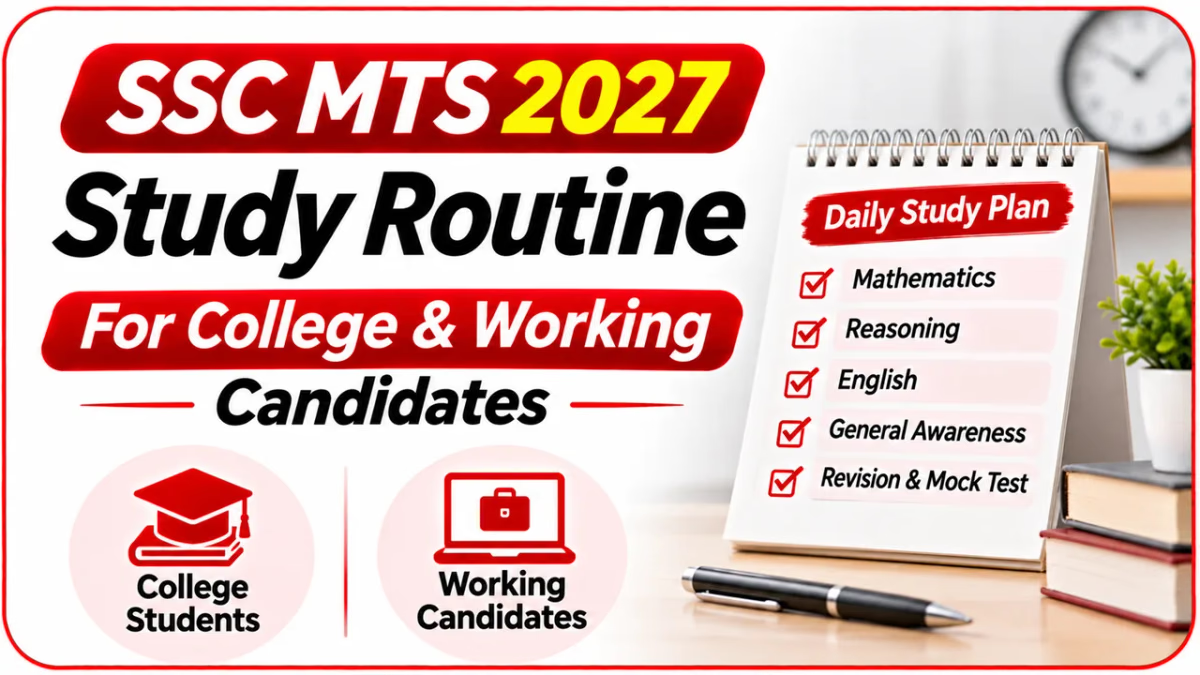
| Day | Topic | Practice Task |
|---|---|---|
| Day 1 | Everyday Idioms | Learn five idioms with meanings and examples. |
| Day 2 | Hard Work and Success | Revise five expressions and write sentences. |
| Day 3 | Problems and Difficult Situations | Practise 10 meaning-based questions. |
| Day 4 | Truth and Communication | Learn five idioms with contextual examples. |
| Day 5 | Time and Opportunities | Revise all previously learned expressions. |
| Day 6 | Mixed Idiom Practice | Attempt 20 mixed MCQs. |
| Day 7 | Revision and Self-Test | Take a timed test and review mistakes. |
Building a strong English vocabulary requires consistent learning and regular revision. Understanding idioms through their meanings and contextual examples can help you recognise figurative expressions and improve your language skills.
Explore learning resources and courses at Katara Academy to support your competitive examination preparation.
Explore Courses at Katara Academy
Idioms and phrases are useful vocabulary topics for SSC MTS 2027 English preparation. Learning their meanings with contextual examples helps students understand figurative expressions instead of interpreting them literally.
Practise regularly, revise important idioms and solve meaning-based MCQs to strengthen your vocabulary. A consistent study routine can help improve your confidence in English preparation.
An idiom is a group of words whose overall meaning differs from the literal meanings of its individual words. For example, "a piece of cake" means something very easy.
"Once in a blue moon" means something that happens very rarely or infrequently.
"Break the ice" means to start a conversation or make people feel more comfortable in a social situation.
Read the complete sentence, identify the idiomatic expression, understand its context and choose the option that matches its figurative meaning.
Learning idioms helps develop vocabulary and understand figurative expressions used in English. It is a useful part of competitive examination preparation.
"Burn the midnight oil" means to work or study late into the night, often to complete a task or prepare for something.
Start with five idioms daily. Learn their meanings, write example sentences and revise them regularly before adding more expressions.
A literal expression uses words in their direct meaning, while an idiom has a figurative meaning. For example, "spill the beans" means reveal a secret, not physically spill beans.
