

Download the App & Start Learning
- Expert Faculty Guidance
- Updated Study Material
- Mock Tests & Practice Quiz
- Live Doubt Solving Sessions
- Exam-Oriented Preparation
- Motivation & Success Strategy
Katara Academy

17/11/2026
A strong vocabulary is an important part of English preparation for the SSC MTS 2027 examination. Learning new English words is useful, but remembering them and using them correctly requires regular revision. Without a proper revision plan, candidates may forget previously studied words, confuse similar meanings or make mistakes in vocabulary-based questions.
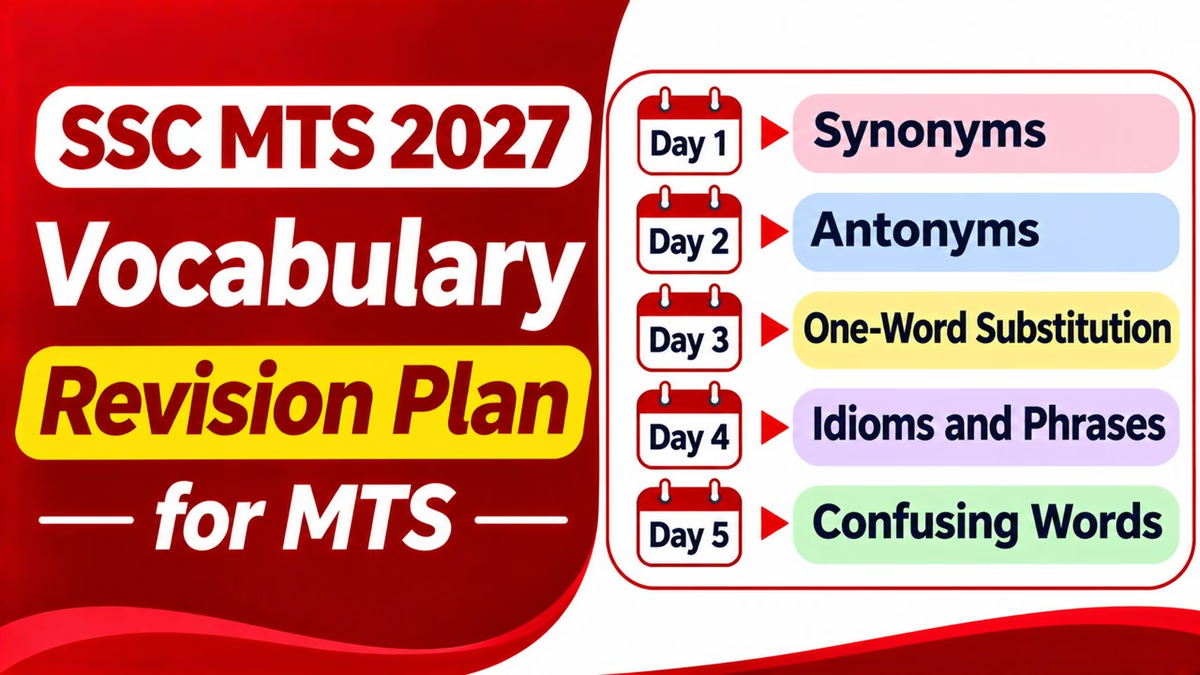
A structured vocabulary revision plan helps candidates revise synonyms, antonyms, one-word substitutions, idioms, phrases and commonly confused words systematically. Instead of memorising hundreds of words in one sitting, students should follow a daily routine with short revision sessions and regular practice.
This article provides a practical vocabulary revision strategy, a 7-day timetable, revision techniques and practice questions to help SSC MTS 2027 aspirants strengthen their English vocabulary.
Vocabulary revision helps candidates retain word meanings and recognise their correct usage. It also supports reading comprehension and other English language exercises.
Organise your vocabulary notebook into separate sections. This makes revision easier and helps you identify topics that need more attention.
Synonyms are words that have the same or nearly the same meaning.
| Word | Synonym |
|---|---|
| Abundant | Plentiful |
| Brave | Courageous |
| Ancient | Old |
| Rapid | Swift |
| Assist | Help |
Antonyms are words that have opposite meanings.
| Word | Antonym |
|---|---|
| Expand | Contract |
| Victory | Defeat |
| Generous | Selfish |
| Permanent | Temporary |
| Accept | Reject |
One-word substitution replaces a phrase with a single word that expresses the same meaning.
| Phrase | One Word |
|---|---|
| A person who cannot read or write | Illiterate |
| A person who loves mankind | Philanthropist |
| A place where books are kept | Library |
| A person who speaks many languages | Polyglot |
| A person who writes poems | Poet |
Idioms are expressions whose meanings are different from the literal meanings of their individual words.
| Idiom | Meaning |
|---|---|
| A piece of cake | Something very easy |
| Break the ice | Start a conversation |
| Once in a blue moon | Very rarely |
| Spill the beans | Reveal a secret |
| Burn the midnight oil | Work or study late at night |
Some English words have similar spellings or pronunciations but different meanings. Revise these pairs carefully.
| Word Pair | Difference |
|---|---|
| Accept / Except | Accept means to receive; except means excluding. |
| Advice / Advise | Advice is a noun; advise is a verb. |
| Principal / Principle | Principal can mean a school head or main; principle means a rule or belief. |
| Stationary / Stationery | Stationary means not moving; stationery means writing materials. |
| Lose / Loose | Lose means to fail to keep; loose means not tight. |
Follow this weekly schedule to revise different vocabulary topics without spending the entire day on one category.
| Day | Revision Topic | Practice Task |
|---|---|---|
| Day 1 | Synonyms | Revise 20 words and solve 10 questions. |
| Day 2 | Antonyms | Revise 20 opposite-word pairs and solve 10 questions. |
| Day 3 | One-Word Substitution | Revise 15 phrases and their corresponding words. |
| Day 4 | Idioms and Phrases | Revise 15 idioms with meanings and examples. |
| Day 5 | Confusing Words and Spelling | Revise 15 word pairs and 10 spelling questions. |
| Day 6 | Mixed Vocabulary | Attempt 25 mixed vocabulary questions. |
| Day 7 | Weekly Revision Test | Take a mixed test and revise incorrect answers. |
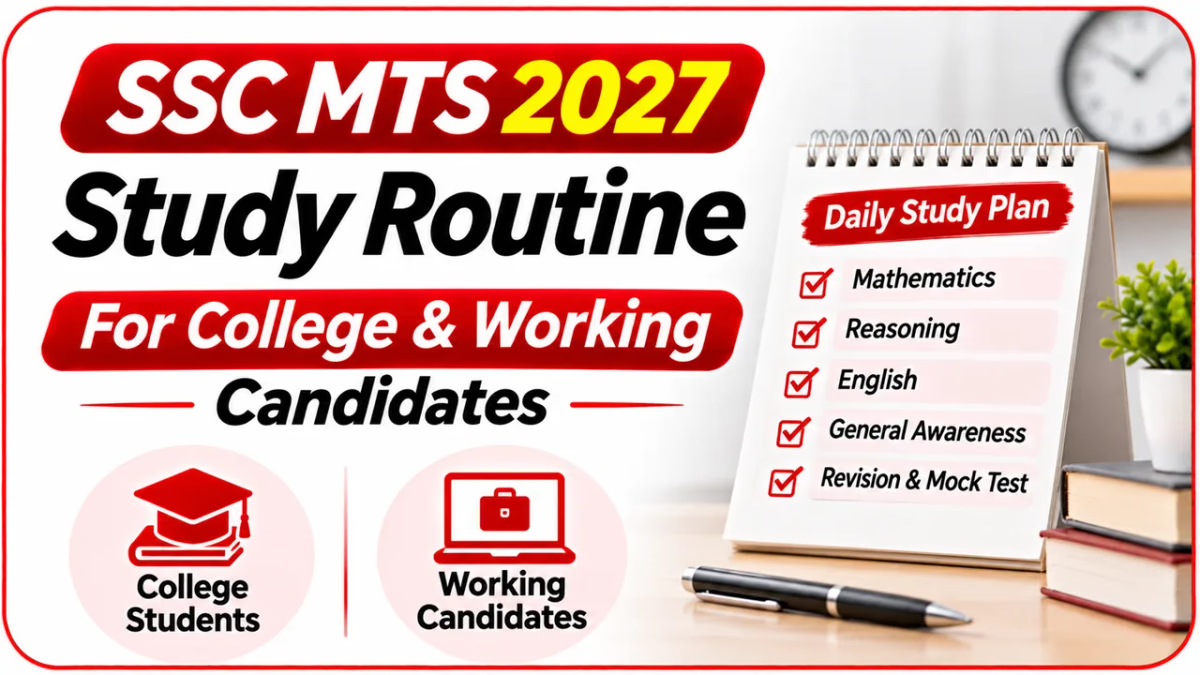
A short daily routine can make vocabulary revision easier to maintain. The following 30-minute schedule can be adjusted according to your preparation level.
| Time | Activity |
|---|---|
| 5 minutes | Revise previously learned words. |
| 10 minutes | Learn new vocabulary or revise one topic. |
| 10 minutes | Solve vocabulary-based MCQs. |
| 5 minutes | Review mistakes and update your vocabulary notebook. |
Write each new word with its meaning, synonym, antonym and an example sentence. Keep separate sections for different vocabulary topics.
Revise newly learned words after one day, three days and seven days. Repeat the process for difficult words until you can recall them confidently.
Group words according to similar meanings, opposite meanings or common themes. This helps you understand connections between words.
Test your memory with objective questions. Review every incorrect answer and understand why the correct option is appropriate.
Mark words that you repeatedly forget. Give these words additional revision time instead of revising every familiar word equally.
Attempt these 15 mixed vocabulary questions to check your revision. These are original practice questions, not confirmed future examination questions.
1. Choose the synonym of "Abundant".
A. Scarce
B. Plentiful
C. Empty
D. Limited
2. Choose the antonym of "Expand".
A. Increase
B. Extend
C. Contract
D. Enlarge
3. A person who cannot read or write is called:
A. Literate
B. Illiterate
C. Author
D. Scholar
4. What does the idiom "A piece of cake" mean?
A. Something very difficult
B. Something very easy
C. An expensive item
D. A sweet dish
5. Choose the correct word: Please _____ my invitation.
A. Except
B. Accept
C. Expect
D. Access
6. Choose the synonym of "Courageous".
A. Brave
B. Cowardly
C. Weak
D. Fearful
7. Choose the antonym of "Permanent".
A. Lasting
B. Stable
C. Temporary
D. Fixed
8. A place where bees are kept is called:
A. Aviary
B. Apiary
C. Library
D. Aquarium
9. What does "Spill the beans" mean?
A. Cook food
B. Reveal a secret
C. Waste money
D. Make a mistake
10. Choose the correct word: The school _____ addressed the students.
A. Principle
B. Principal
C. Principel
D. Principall
11. Choose the synonym of "Rapid".
A. Slow
B. Swift
C. Weak
D. Late
12. Choose the antonym of "Generous".
A. Kind
B. Helpful
C. Selfish
D. Friendly
13. A person who speaks many languages is called:
A. Polyglot
B. Poet
C. Orator
D. Novelist
14. What does "Once in a blue moon" mean?
A. Every day
B. Very rarely
C. Every month
D. At night
15. Choose the correct word: Please _____ me on this matter.
A. Advice
B. Advise
C. Advises
D. Advising
| Q. | Answer | Explanation |
|---|---|---|
| 1 | B. Plentiful | Abundant means available in large quantities. |
| 2 | C. Contract | Contract means to become smaller or reduce in size. |
| 3 | B. Illiterate | An illiterate person cannot read or write. |
| 4 | B. Something very easy | The idiom describes a task that is very easy to complete. |
| 5 | B. Accept | Accept means to receive or agree to something. |
| 6 | A. Brave | Courageous and brave have similar meanings. |
| 7 | C. Temporary | Temporary means lasting for a limited period. |
| 8 | B. Apiary | An apiary is a place where bees are kept. |
| 9 | B. Reveal a secret | The idiom means to disclose confidential information. |
| 10 | B. Principal | Principal refers to the head of a school. |
| 11 | B. Swift | Rapid and swift both mean fast. |
| 12 | C. Selfish | Generous means willing to give; selfish means primarily concerned with oneself. |
| 13 | A. Polyglot | A polyglot knows or speaks several languages. |
| 14 | B. Very rarely | The idiom describes something that happens very infrequently. |
| 15 | B. Advise | Advise is a verb meaning to give a suggestion or recommendation. |
Consistent vocabulary revision, regular practice and proper analysis of mistakes can strengthen your English preparation. Follow a structured study routine, revise important words and attempt practice tests to monitor your progress.
Explore Courses at Katara Academy
A proper vocabulary revision plan helps SSC MTS 2027 aspirants remember important words and improve their English skills. Revise synonyms, antonyms, one-word substitutions, idioms and confusing words through a weekly timetable. Combine short daily revision sessions with MCQ practice and regular mistake analysis to make vocabulary learning more effective.
Divide vocabulary into categories such as synonyms, antonyms, one-word substitutions, idioms and confusing words. Follow a weekly revision schedule and practise MCQs regularly.
You can begin with 30 minutes daily, including revision of old words, learning or reviewing vocabulary, solving questions and analysing mistakes.
Focus on synonyms, antonyms, one-word substitutions, idioms and phrases, spelling and commonly confused words as part of your English preparation.
Spaced revision means reviewing words at increasing intervals, such as after one day, three days and seven days, to strengthen memory.
Start with 10–15 words daily if you can revise them properly. Understanding and remembering words is more useful than memorising a large list without practice.
Write their meanings in a notebook, use them in sentences, create word groups and revise them more frequently than familiar words.
Yes. MCQs help test your understanding and reveal which words or topics need additional revision.
Maintain a list of learned words, mark difficult words, record your practice-test scores and review repeated mistakes every week.
