
Download the App & Start Learning
- Expert Faculty Guidance
- Updated Study Material
- Mock Tests & Practice Quiz
- Live Doubt Solving Sessions
- Exam-Oriented Preparation
- Motivation & Success Strategy
Katara Academy

22/11/2026
Preparing for SSC MTS 2027 requires regular study, question practice and revision. However, many students spend most of their time learning new topics and leave their weak chapters untouched. As a result, the same mistakes continue to appear in practice tests, and previously studied concepts become difficult to remember.
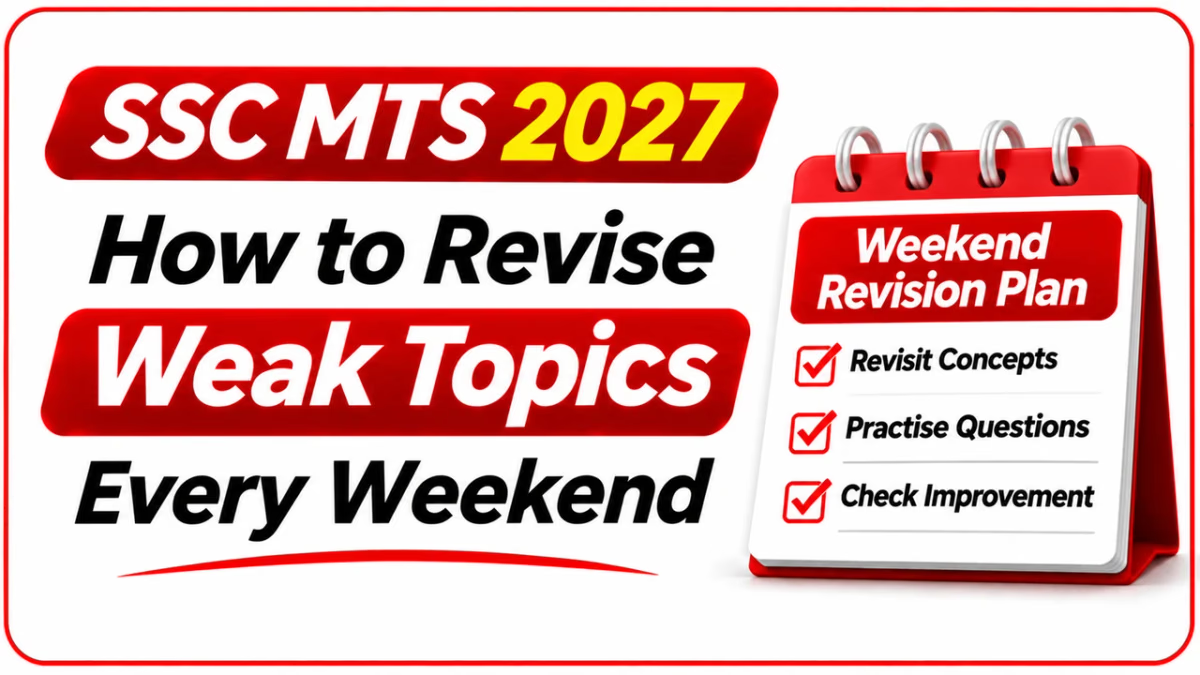
Weekend revision is an effective way to solve this problem. Instead of studying everything again, candidates can use Saturday and Sunday to identify difficult topics, revisit concepts, practise questions and evaluate their improvement.
A structured weekend revision routine helps you work on your weaknesses without disturbing your regular weekday study schedule. The goal is not to revise the entire syllabus every weekend but to improve a few specific topics consistently.
During the week, students usually focus on completing chapters, attending classes, studying concepts and solving daily practice questions. Some topics may remain difficult even after multiple study sessions.
Weekend revision gives you dedicated time to revisit those topics and understand why you are struggling.
Do not wait until Saturday morning to decide what to revise. During the week, maintain a list of topics where you face difficulty. This makes your weekend revision focused and saves time.
Identify weak topics using these indicators:
Choose your revision topics based on actual mistakes and performance rather than simply selecting chapters you dislike.
Trying to revise every weak topic in one weekend can become overwhelming. Select a manageable number of topics and focus on improving them properly.
Use a simple priority system:
For example, if you are struggling with Percentage in Maths, Coding-Decoding in Reasoning and Subject-Verb Agreement in English, these can be your weekend priorities. You do not need to revise every chapter in all subjects on the same day.
Keep your weekend target realistic. Revising three difficult topics properly is often more useful than quickly touching ten topics without checking your understanding.
Use the same process whenever you revise a weak topic. This creates a repeatable system and prevents passive reading from becoming your only revision activity.
Before opening your notes, try to remember the main concepts, formulas, rules or facts from the topic. Write down what you can recall without looking at your study material.
This helps you identify the exact knowledge gap. If you cannot recall the basic rule, you may need concept revision. If you remember the rule but still answer questions incorrectly, you may need more application practice.
Review your notes, class material or textbook for the specific concept you are struggling with. Avoid restarting the entire chapter unless your fundamentals are genuinely weak.
Focus on:
After revising the concept, solve questions related to the exact weak area. Start with straightforward questions and gradually move towards moderate or exam-level questions.
Do not immediately check the solution when you get stuck. Try to identify the approach, recall the relevant rule and complete the question independently before reviewing the explanation.
Finish the revision session with a short self-test. Solve a small set of questions without using notes, hints or explanations.
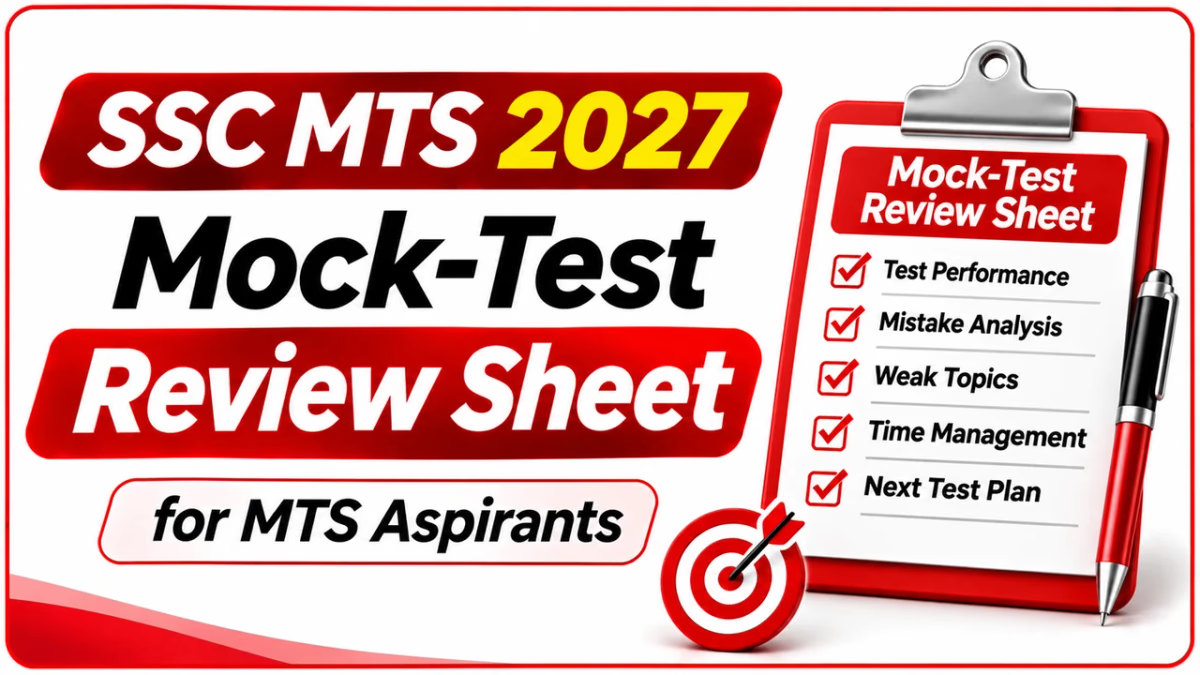
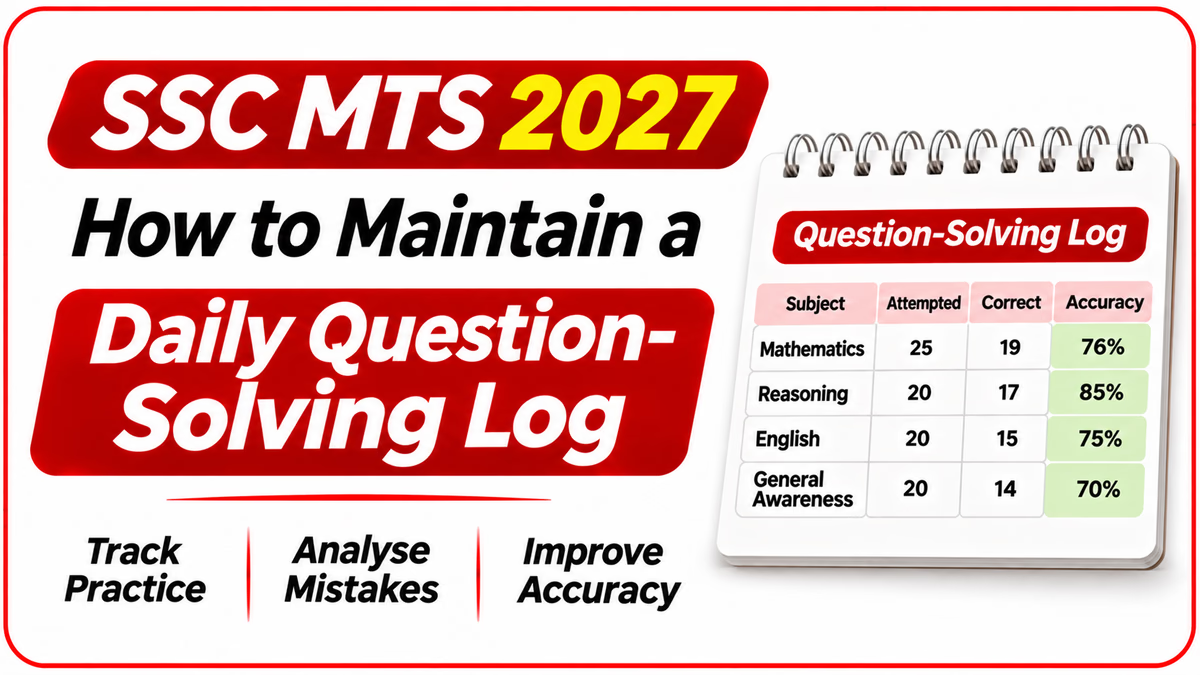
Record your score, accuracy, time taken and mistakes. This helps you determine whether the topic has improved or requires another revision session.
Use Saturday primarily for concept correction and targeted practice. Adjust the session timings according to your availability.
| Session | Activity | Purpose |
|---|---|---|
| Session 1 | Review weak topic in Maths | Understand concepts and formulas |
| Session 2 | Practise Maths questions | Improve application and accuracy |
| Session 3 | Revise a weak Reasoning topic | Understand question patterns |
| Session 4 | Reasoning question practice | Reduce repeated mistakes |
| Short final review | Update your mistake notes | Record what still needs improvement |
Take short breaks between sessions. If one topic requires more time because the concepts are unclear, reduce the number of topics rather than rushing through the revision.
Sunday should focus on recalling what you revised on Saturday, improving weak areas in other subjects and checking your progress.
| Session | Activity | Purpose |
|---|---|---|
| Session 1 | Revise weak English topic | Correct grammar or vocabulary gaps |
| Session 2 | English practice set | Check understanding through questions |
| Session 3 | Revise weak General Awareness area | Recall important information |
| Session 4 | Short mixed-topic test | Evaluate weekend revision |
| Final review | Plan next week's priorities | Maintain consistent progress |
Do not make Sunday another full day of exhausting study. Keep enough time for breaks, preparation for the next week and rest. A revision plan should be sustainable over several months.
For Mathematics, weak topics are often related to formula recall, calculation mistakes, concept confusion or difficulty selecting the correct method.
During weekend revision:
For example, if you make mistakes in Profit and Loss, do not practise random Maths questions. Revisit the concepts of cost price, selling price, profit percentage and loss percentage, then solve questions specifically related to your weak area.
In Reasoning, students may struggle to understand the logic behind a question or apply the correct approach consistently.
Use weekend revision to:
If you are weak in Number Series, focus on identifying patterns such as differences, alternate sequences or other relevant relationships instead of randomly solving mixed reasoning questions.
English revision should focus on understanding why an option is correct or incorrect. Memorising answers without understanding the grammar rule is unlikely to help you solve new questions consistently.
During weekend revision:
If you repeatedly make mistakes in Subject-Verb Agreement, revisit the rules and practise sentences with singular and plural subjects, collective expressions and other structures relevant to the questions you find difficult.
General Awareness requires repeated recall and revision. Students may recognise information while reading but fail to remember it during a test.
Use a short revision cycle:
For example, if you struggle with Indian Polity, focus on a smaller area such as constitutional bodies, important constitutional provisions or functions of institutions rather than trying to revise the entire subject at once.
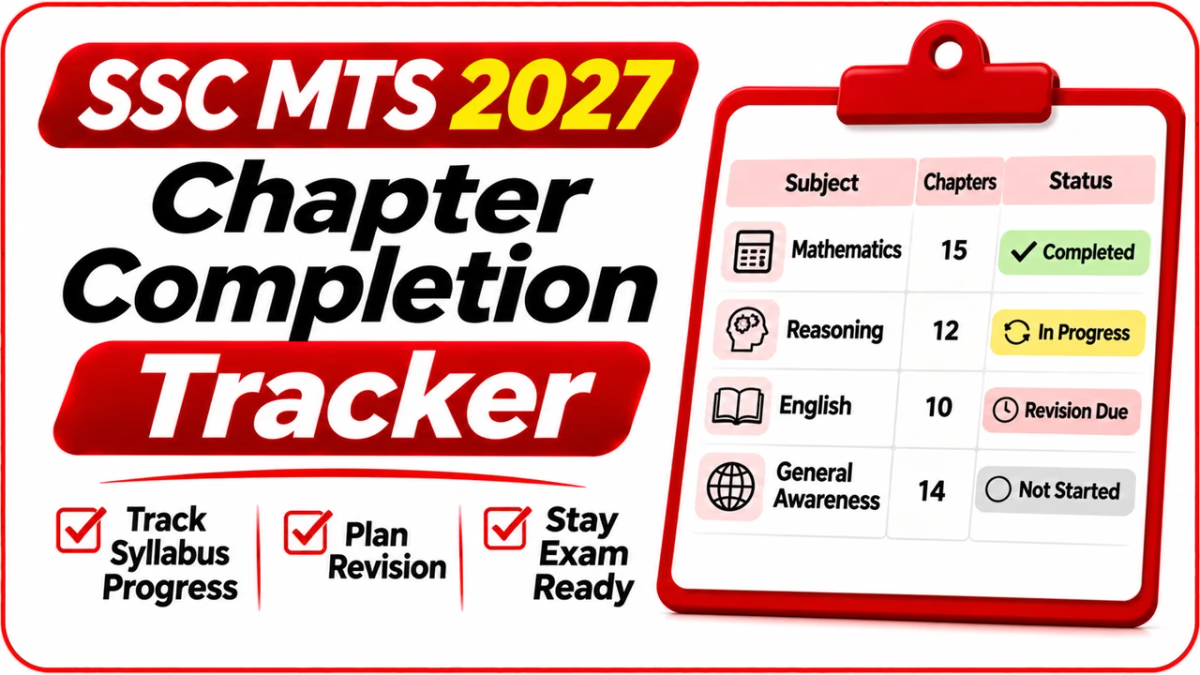
Keep a simple record of what you revised and whether you improved. This helps you avoid repeating the same revision without measurable progress.
| Topic | Problem | Revision Action | Test Result | Next Step |
|---|---|---|---|---|
| Percentage | Formula confusion | Revised formulas + 20 questions | 16/20 | Re-test next week |
| Number Series | Pattern identification | Reviewed examples + practice | 14/20 | Practise alternate patterns |
| Subject-Verb Agreement | Grammar errors | Rules + sentence practice | 17/20 | Quick revision in 7 days |
These are illustrative entries. Use your own results in the tracker.
Keep the record short. You should spend your time improving topics rather than creating a complicated revision spreadsheet.
After revising a topic, do not judge improvement only by how familiar the chapter feels. Use your performance to make the decision.
Check the following:
If your performance has improved, move the topic to periodic revision. If mistakes continue, keep it on your weak-topic list and plan another focused session. Do not keep repeating the same questions; practise similar questions to confirm that you understand the concept.
Use this checklist every weekend to ensure that your weak-topic revision is complete.
Choose a manageable number based on difficulty and available time. Two to four focused topics may be a reasonable starting point, but fewer topics may be necessary if your concepts are very weak.
You can divide revision across both days. Use Saturday for concept correction and targeted practice, and Sunday for recall, testing, revision of another subject and next-week planning.
Identify the exact problem, revisit the relevant concept, review solved examples and practise similar questions. If the basics are unclear, return to foundational learning instead of increasing question difficulty.
A full mock test is not necessary every weekend solely for weak-topic revision. Short topic-wise tests or a mixed practice set can help you check improvement without taking too much time.
Maintain a notebook or spreadsheet with the topic name, type of mistake, revision date, practice score, accuracy and next action. Update it after your revision session.
Not necessarily. You can continue learning new chapters if your schedule allows. However, reserve dedicated time to revise weak topics so they do not remain unfinished throughout your preparation.
Weekend revision is not about studying the entire syllabus again. It is about finding the topics that are holding back your preparation and working on them with a clear strategy.
Identify your weak areas, revisit the concepts, solve targeted questions, check your performance and plan the next revision. Following this routine every weekend can help you gradually reduce repeated mistakes and build confidence across subjects.
For SSC MTS 2027, make weak-topic revision a regular part of your preparation instead of waiting until the final weeks before the examination.
Study your weak areas consistently, track your improvement and make every weekend count.
