Download the App & Start Learning
- Expert Faculty Guidance
- Updated Study Material
- Mock Tests & Practice Quiz
- Live Doubt Solving Sessions
- Exam-Oriented Preparation
- Motivation & Success Strategy
Katara Academy

Loading blogs…



Synonyms and antonyms are important vocabulary topics for candidates preparing for SSC GD Constable 2027. Learning word meanings is not enough; candidates must also revise them regularly to remember the meanings and identify the correct options during the examination. Many students learn dozens of new words but forget them after a few days because they do not follow a proper revision strategy. A smart revision technique can help you remember vocabulary for longer, improve accuracy and solve English questions more confidently. In this guide, you will learn practical techniques for revising synonyms and antonyms, creating word pairs, following a daily revision routine and practising exam-style MCQs.
Synonyms are words with similar meanings, while antonyms are words with opposite meanings. These questions require you to understand the meaning of a word and recognise its relationship with other words. Regular revision helps you: - Remember previously learned vocabulary. - Recognise similar and opposite word meanings quickly. - Avoid confusion between unfamiliar options. - Improve vocabulary-based English question accuracy. - Reduce the time spent solving vocabulary MCQs. - Build confidence for competitive English examinations. Instead of learning hundreds of words randomly, revise a smaller number of words consistently and test your memory.
The easiest way to revise synonyms and antonyms is to learn each word along with its similar and opposite meanings. Do not memorise only one meaning. Create a small vocabulary table and revise the complete word group. | Word | Meaning | Synonyms | Antonyms | |---|---|---|---| | Abundant | Available in large quantities | Plenty, Ample | Scarce, Limited | | Ancient | Very old | Old, Historic | Modern, Recent | | Brave | Showing courage | Courageous, Fearless | Cowardly, Timid | | Expand | Increase in size | Enlarge, Extend | Contract, Reduce | | Hostile | Unfriendly | Aggressive, Antagonistic | Friendly, Kind | | Rapid | Very fast | Quick, Swift | Slow, Sluggish | | Victory | Success in a contest | Triumph, Win | Defeat, Loss | | Generous | Willing to give | Kind, Charitable | Stingy, Selfish | | Diligent | Hard-working | Industrious, Dedicated | Lazy, Careless | | Transparent | Clear or easy to see through | Clear, Visible | Opaque, Cloudy | **Revision Tip:** Cover the synonym and antonym columns and try to recall the words yourself. Active recall is more effective than simply reading the same list repeatedly.
Use this simple three-step technique whenever you learn new vocabulary.
Learn 5–10 words in one session. Understand the meaning of each word and read one simple sentence using it. Example: **Rapid** – Fast or happening quickly. Sentence: The train was moving at a rapid speed.
After learning the words, close your notebook and try to remember their meanings, synonyms and antonyms without looking. Ask yourself: - What does the word mean? - Can I recall one synonym? - Can I recall one antonym?
Solve 5–10 MCQs based on the words you studied. Mark the questions you answered incorrectly and revise those words again. This Learn–Recall–Test method helps you identify which words you actually remember and which need more practice.
Do not revise all vocabulary only on the day you learn it. Review the same words after increasing time intervals. A simple revision cycle can be: | Revision | When to Revise | |---|---| | Revision 1 | Same day | | Revision 2 | After 1 day | | Revision 3 | After 3 days | | Revision 4 | After 7 days | | Revision 5 | After 15 days | | Revision 6 | After 30 days | For example, if you learn 10 words on Monday, revise them on Monday evening, Tuesday, Thursday, the following Monday and continue according to your revision cycle. Words you forget should be revised more frequently than words you already know well.
A mistake notebook is one of the most useful tools for English revision. Whenever you answer a synonym or antonym question incorrectly, write the word in a separate notebook. Use the following format: | Word | Meaning | Synonym | Antonym | My Mistake | |---|---|---|---|---| | Hostile | Unfriendly | Aggressive | Friendly | Confused with helpful | | Scarce | Limited | Rare | Abundant | Forgot opposite | | Diligent | Hard-working | Industrious | Lazy | Forgot synonym | Review this notebook every few days. Do not waste too much time revising words you already know perfectly; give more attention to difficult and forgotten words.
Learning a word with both similar and opposite meanings improves your understanding of vocabulary. For example: **Word: Generous** - Meaning: Willing to give or share. - Synonym: Kind, charitable. - Antonym: Stingy, selfish. **Word: Victory** - Meaning: Success in a competition or battle. - Synonym: Triumph, win. - Antonym: Defeat, loss. **Word: Ancient** - Meaning: Belonging to a very old period. - Synonym: Old, historic. - Antonym: Modern, recent. This approach helps you revise three or four vocabulary connections at the same time instead of learning isolated words.
Do not practise only synonyms or only antonyms in separate sessions. Once you have learned the words, solve mixed questions to improve your ability to identify what the question is asking. **Q1. Choose the synonym of “Abundant.”** A) Scarce B) Ample C) Empty D) Weak **Q2. Choose the antonym of “Hostile.”** A) Aggressive B) Angry C) Friendly D) Unkind **Q3. Choose the synonym of “Diligent.”** A) Lazy B) Industrious C) Careless D) Weak **Q4. Choose the antonym of “Ancient.”** A) Historic B) Old C) Traditional D) Modern **Q5. Choose the synonym of “Rapid.”** A) Slow B) Swift C) Late D) Weak **Q6. Choose the antonym of “Generous.”** A) Helpful B) Kind C) Stingy D) Charitable **Q7. Choose the synonym of “Victory.”** A) Failure B) Defeat C) Triumph D) Problem **Q8. Choose the antonym of “Expand.”** A) Extend B) Enlarge C) Increase D) Contract **Q9. Choose the synonym of “Brave.”** A) Timid B) Fearless C) Weak D) Nervous **Q10. Choose the antonym of “Transparent.”** A) Clear B) Visible C) Opaque D) Bright
**Q1. Answer: B) Ample** — Abundant means available in a large quantity; ample means sufficient or plenty. **Q2. Answer: C) Friendly** — Hostile means unfriendly, so friendly is its opposite. **Q3. Answer: B) Industrious** — Diligent describes someone who works hard and carefully. **Q4. Answer: D) Modern** — Ancient refers to the distant past, while modern refers to the present or recent period. **Q5. Answer: B) Swift** — Rapid means fast or quick. **Q6. Answer: C) Stingy** — Generous means willing to give, while stingy means unwilling to spend or share. **Q7. Answer: C) Triumph** — Victory means success or triumph. **Q8. Answer: D) Contract** — Expand means increase in size, while contract means decrease in size. **Q9. Answer: B) Fearless** — Brave means showing courage or being fearless. **Q10. Answer: C) Opaque** — Transparent means allowing light to pass through or being easy to see through; opaque means not allowing light to pass through.
Follow this simple routine every day to keep vocabulary revision consistent. | Time | Activity | |---|---| | 5 minutes | Learn 5 new words with meanings | | 5 minutes | Revise synonyms and antonyms | | 5 minutes | Recall yesterday's vocabulary without notes | | 5 minutes | Solve 5–10 MCQs | You can increase the number of words as your vocabulary improves. Focus on remembering the words correctly instead of rushing through a large list.
- Learning too many words in one day and forgetting them later. - Reading vocabulary lists without testing memory. - Memorising only synonyms and ignoring antonyms. - Revising only new words without reviewing older words. - Not recording difficult words and incorrect answers. - Practising without checking explanations. - Ignoring words from previous SSC exam questions. Avoid these mistakes by following a fixed revision cycle and testing yourself regularly.
Learn words in pairs, recall their meanings without looking, solve MCQs and revise them at regular intervals.
Start with 5–10 words daily. Focus on meanings, synonyms, antonyms and correct recall.
Both are important, but revision is necessary to retain words you have already learned. Balance new words with older vocabulary.
Use active recall, word pairs, simple sentences, a vocabulary notebook and spaced revision to remember words for longer.
Yes. Previous SSC vocabulary questions are useful for practising exam-style word meanings, synonyms and antonyms. Include them in your regular revision sessions.
Synonyms and antonyms revision for SSC GD 2027 becomes easier when you follow a consistent method. Learning word pairs, using active recall, maintaining a mistake notebook, following spaced revision and solving mixed MCQs can help improve vocabulary retention. Do not try to learn hundreds of words in one sitting. Learn a few words daily, revise them regularly and test your progress to build stronger English vocabulary for SSC GD 2027.

Correct spelling is an important part of English language preparation for SSC GD Constable 2027. Spelling-based questions test a candidate's ability to identify correctly spelled words, spot spelling mistakes and distinguish between commonly confused English words. Regular practice of spelling correction questions can help candidates improve accuracy and avoid losing marks in English. In this blog, you will learn common spelling rules, frequently confused words and practice MCQs with answers and explanations.
Spelling correction involves identifying a word that is incorrectly spelled and choosing its correct spelling. In competitive examinations, questions may ask you to select the correctly spelled word or identify the word containing a spelling error. **Example:** A) Recieve B) Receive C) Receeve D) Receve **Correct Answer: B) Receive** The correct spelling is “Receive.” Remember the spelling pattern: i before e, except after c, in words such as receive.
Many English words end with “-tion.” Be careful with the spelling and order of letters. - Education - Information - Preparation - Competition - Situation Incorrect: Educasion Correct: Education
Many adverbs are formed by adding “-ly” to adjectives, but the spelling of the original word may change. - Quickly - Carefully - Completely - Certainly - Basically Incorrect: Carefuly Correct: Carefully
Some words contain double consonants, which are frequently missed during spelling practice. - Necessary - Occasion - Different - Successful - Beginning Incorrect: Necesary Correct: Necessary
Some English words contain letters that are not pronounced. Candidates should remember the complete spelling instead of writing words according to their pronunciation. - Knowledge - Honest - Island - Wednesday - Receipt Incorrect: Knowlege Correct: Knowledge
Some words look or sound similar but have different spellings. | Incorrect Spelling | Correct Spelling | |---|---| | Recieve | Receive | | Definately | Definitely | | Seperate | Separate | | Accomodation | Accommodation | | Occassion | Occasion | | Goverment | Government | | Enviroment | Environment | | Begining | Beginning | | Beleive | Believe | | Writting | Writing |
Practise these questions and select the correctly spelled word or identify the spelling error. **Q1. Choose the correctly spelled word.** A) Recieve B) Receive C) Receeve D) Recive **Q2. Choose the correctly spelled word.** A) Definately B) Definetely C) Definitely D) Definatly **Q3. Identify the incorrectly spelled word.** A) Separate B) Necessary C) Goverment D) Different **Q4. Choose the correct spelling.** A) Accomodation B) Accommodation C) Acommodation D) Accommadation **Q5. Choose the correctly spelled word.** A) Enviroment B) Envirnoment C) Environment D) Enviornment **Q6. Identify the correct spelling.** A) Begining B) Beginning C) Beggining D) Begginning **Q7. Choose the correctly spelled word.** A) Beleive B) Belive C) Believe D) Beleave **Q8. Identify the incorrectly spelled word.** A) Knowledge B) Occasion C) Successfull D) Competition **Q9. Choose the correct spelling.** A) Writting B) Writing C) Writeing D) Writeng **Q10. Choose the correctly spelled word.** A) Febuary B) February C) Febraury D) Feburary **Q11. Choose the correct spelling.** A) Privilege B) Priviledge C) Privelege D) Privilage **Q12. Identify the incorrectly spelled word.** A) Government B) Education C) Occassion D) Information **Q13. Choose the correctly spelled word.** A) Commitee B) Committee C) Committe D) Comittee **Q14. Choose the correct spelling.** A) Existance B) Existence C) Existense D) Existince **Q15. Choose the correctly spelled word.** A) Millenium B) Millennium C) Milennium D) Milleniam
**Q1. Answer: B) Receive** “Receive” follows the i-before-e-after-c spelling pattern. **Q2. Answer: C) Definitely** The correct spelling is definitely. Do not add an extra “a” after “defin.” **Q3. Answer: C) Goverment** The correct spelling is Government. The letter “n” is required after “r.” **Q4. Answer: B) Accommodation** Accommodation contains double “c” and double “m.” **Q5. Answer: C) Environment** The correct spelling is Environment. Remember the sequence “n-m-e-n-t.” **Q6. Answer: B) Beginning** Beginning contains double “n.” The word begins with “begin” and adds another “n” before “ing.” **Q7. Answer: C) Believe** The correct spelling is Believe, not “Beleive.” **Q8. Answer: C) Successfull** The correct spelling is Successful, with one “l” at the end and double “c” in the middle. **Q9. Answer: B) Writing** When “write” becomes “writing,” the final “e” is removed before adding “ing.” **Q10. Answer: B) February** The correct spelling is February, with an “r” after “b.” **Q11. Answer: A) Privilege** The correct spelling is Privilege. It does not contain “d” before “g.” **Q12. Answer: C) Occassion** The correct spelling is Occasion, with one “s” and double “c.” **Q13. Answer: B) Committee** Committee contains double “m,” double “t” and double “e.” **Q14. Answer: B) Existence** The correct spelling is Existence, ending in “-ence.” **Q15. Answer: B) Millennium** Millennium is spelled with double “l” and double “n.”
Candidates frequently make spelling mistakes because they write words based only on their pronunciation. Some words have silent letters, double consonants or unusual letter combinations. Avoid these common mistakes: - Writing “definately” instead of “definitely.” - Writing “seperate” instead of “separate.” - Missing double letters in accommodation and committee. - Confusing believe and belief. - Forgetting silent letters in words like knowledge. - Adding unnecessary letters while writing words ending in -ing.
Follow these simple steps to improve spelling accuracy: - Learn 5–10 new spellings every day. - Write difficult words two or three times. - Maintain a notebook of incorrectly spelled words. - Revise old words before learning new ones. - Practise spelling MCQs regularly. - Read English newspapers, short passages and exam-related content. - Focus on double letters, silent letters and confusing word patterns. A short daily revision session can help you remember difficult spellings for a longer time.
Spelling practice helps candidates improve English accuracy and prepare for spelling-based and word-identification questions.
Start with 5–10 difficult words daily and revise them regularly.
Common mistakes involve double letters, silent letters, words ending in -tion, and confusing spellings such as receive, definitely and separate.
Write difficult words, divide them into letter patterns, use them in sentences and revise them repeatedly.
Yes. Previous SSC questions and exam-style practice sets help you understand the types of spelling errors commonly tested in competitive exams.
Spelling correction is a simple but valuable part of SSC GD 2027 English preparation. Learning frequently misspelled words, understanding spelling patterns and practising MCQs can help candidates improve their accuracy. Revise difficult words daily, avoid common spelling errors and continue practising exam-level questions to build confidence in English.

Fill-in-the-blanks questions are an important part of English language practice for SSC GD Constable aspirants. These questions test your understanding of grammar, vocabulary, sentence structure, tenses, articles, prepositions and appropriate word usage. For SSC GD 2027, candidates should practise completing sentences by selecting the correct word or phrase from the given options. A strong understanding of basic grammar rules and regular MCQ practice can help improve accuracy and confidence.
Fill-in-the-blanks questions contain an incomplete sentence with one or more missing words. Candidates must select the correct option to complete the sentence grammatically and meaningfully. **Example:** She _____ to school every day. A) go B) goes C) going D) gone **Correct Answer: B) goes** The subject “She” is singular, so the verb “goes” is used in the simple present tense.
The verb must agree with the subject in number and person. **Examples:** - He _____ cricket every evening. (play/plays) Answer: plays - They _____ ready for the examination. (is/are) Answer: are - Each student _____ a notebook. (has/have) Answer: has
Understanding tenses helps you identify the correct form of a verb based on the time of an action. **Examples:** - I _____ my homework yesterday. (complete/completed) Answer: completed - She _____ here since morning. (has been/is) Answer: has been - They _____ Delhi next week. (visit/will visit) Answer: will visit
Articles are used before nouns. Select a, an or the according to the noun and the meaning of the sentence. **Examples:** - He is _____ honest man. (a/an) Answer: an - I bought _____ book yesterday. (a/the) Answer: a - _____ Earth revolves around the Sun. (A/The) Answer: The
Prepositions are used to indicate relationships involving time, place, direction and other connections. **Examples:** - She is interested _____ music. (in/at) Answer: in - He arrived _____ the station on time. (at/in) Answer: at - We have been studying _____ two hours. (since/for) Answer: for
Pronouns replace nouns and should be used correctly according to the sentence structure. **Examples:** - Rahul and _____ went to the market. (I/me) Answer: I - This book belongs to _____. (my/me) Answer: me - Everyone _____ present today. (is/are) Answer: is
Some fill-in-the-blanks questions test vocabulary, meaning, synonyms or the appropriate word for a particular context. **Examples:** - The soldiers showed great _____ during the battle. (courage/fear) Answer: courage - She was _____ after hearing the good news. (delighted/sad) Answer: delighted - We should always _____ our elders. (respect/insult) Answer: respect
Try these questions before checking the answer key. Choose the most appropriate option to complete each sentence. **Q1.** He _____ his work before leaving the office. A) finish B) finishes C) finished D) finishing **Q2.** She has been living in Mumbai _____ 2022. A) for B) since C) from D) at **Q3.** Ramesh is _____ honest person. A) a B) an C) the D) no article **Q4.** The children _____ playing in the park. A) is B) was C) are D) has **Q5.** I am looking _____ my lost mobile phone. A) at B) for C) on D) from **Q6.** Neither of the boys _____ completed the assignment. A) have B) are C) has D) were **Q7.** She is better _____ mathematics than her brother. A) in B) at C) on D) with **Q8.** If it rains tomorrow, we _____ at home. A) stayed B) will stay C) staying D) stays **Q9.** The teacher asked the students _____ quiet. A) remain B) remained C) to remain D) remaining **Q10.** He is afraid _____ dogs. A) from B) with C) of D) by **Q11.** My father _____ to the office every day. A) go B) going C) goes D) gone **Q12.** The train arrived _____ the platform on time. A) at B) for C) by D) into
**Q1. Answer: C) finished** The sentence refers to an action completed before leaving the office. “Finished” is the appropriate past form. **Q2. Answer: B) since** “Since” is used with a starting point in time, such as 2022. **Q3. Answer: B) an** “Honest” begins with a vowel sound because the h is silent, so “an” is correct. **Q4. Answer: C) are** “Children” is plural, so the correct helping verb is “are.” **Q5. Answer: B) for** The correct phrase is “look for,” which means to search for something. **Q6. Answer: C) has** “Neither” is treated as singular in this construction, so “has” is correct. **Q7. Answer: A) in** The correct expression is “better in mathematics” when referring to performance in a subject. **Q8. Answer: B) will stay** In a first conditional sentence, the if-clause uses the simple present tense and the main clause generally uses “will” + base verb. **Q9. Answer: C) to remain** The correct structure is “ask someone to do something.” **Q10. Answer: C) of** The correct phrase is “afraid of.” **Q11. Answer: C) goes** “My father” is a singular subject, so “goes” is used in the simple present tense. **Q12. Answer: A) at** “Arrived at” is commonly used with a specific point or place, such as a platform or station.
- Read the complete sentence before looking at the options. - Identify whether the blank requires a noun, verb, adjective, adverb or preposition. - Check the subject to determine the correct verb form. - Look for time indicators such as yesterday, since, for, tomorrow and last year. - Eliminate grammatically incorrect options first. - Read the completed sentence once again to check whether it makes sense. - Practise common grammar combinations and vocabulary regularly.
- Choosing an answer without reading the entire sentence. - Confusing “since” and “for.” - Using incorrect verb forms after has, have, had, do or did. - Ignoring subject-verb agreement. - Confusing articles a and an. - Selecting a word based only on meaning without checking grammar. - Not revising incorrect answers after practice.
Candidates can follow a simple 20-minute routine to improve fill-in-the-blanks accuracy. - **5 minutes:** Revise one grammar rule. - **5 minutes:** Learn 5 vocabulary words. - **5 minutes:** Solve 10 fill-in-the-blanks questions. - **5 minutes:** Review incorrect answers and note the grammar rule. Consistency is more important than solving a large number of questions in one sitting. Daily practice helps candidates recognise grammar patterns and avoid repeated mistakes.
Fill-in-the-blanks practice helps strengthen grammar, vocabulary and sentence understanding, which are useful for SSC GD English preparation.
Focus on tenses, subject-verb agreement, articles, prepositions, pronouns, vocabulary and sentence structure.
Learn basic grammar rules, practise short MCQ sets daily and revise your mistakes regularly.
Yes. Vocabulary practice helps you select appropriate words based on sentence meaning and context.
Start with 10–15 questions per day and gradually increase the practice level as your accuracy improves.
Fill-in-the-blanks is a useful practice area for SSC GD 2027 English preparation. By learning grammar basics, understanding sentence context and solving MCQs regularly, candidates can improve their accuracy and confidence. Start with simple questions, revise your grammar rules and gradually practise more difficult sentences to build a stronger foundation for the SSC GD examination.

Sentence Correction is an important part of English language preparation for SSC GD Constable. It tests your ability to identify grammatical mistakes and select the correct sentence. Candidates who understand basic grammar rules can solve these questions more accurately and improve their overall English score. For SSC GD 2027, beginners should focus on common grammar rules such as subject-verb agreement, tenses, articles, prepositions, pronouns, adjectives and sentence structure. Instead of memorising complicated grammar, learn the basic rules and practise them through simple examples.
Sentence correction means identifying grammatical errors in a sentence and correcting them without changing its intended meaning. In competitive exams, you may be asked to find the incorrect part of a sentence, choose the correct alternative or identify the grammatically correct sentence. **Example:** Incorrect: She go to school every day. Correct: She goes to school every day. The error is in the verb. Since the subject is “She,” the verb should be “goes” in the simple present tense.
A verb must agree with its subject in number and person. A singular subject generally takes a singular verb, while a plural subject takes a plural verb. **Basic rule:** - He, She, It or a singular noun → singular verb - I, We, You, They or plural nouns → plural verb (depending on the sentence structure) **Examples:** Incorrect: He play cricket every Sunday. Correct: He plays cricket every Sunday. Incorrect: The students is ready for the test. Correct: The students are ready for the test. **Exam Tip:** Pay attention to words like everyone, somebody, each, neither and either. These generally take singular verbs.
Tense tells us when an action takes place. A sentence should use the correct tense according to its meaning and time reference. **Examples:** Incorrect: I have seen him yesterday. Correct: I saw him yesterday. Incorrect: She is living here since 2020. Correct: She has been living here since 2020. Incorrect: They will went to Delhi tomorrow. Correct: They will go to Delhi tomorrow. **Remember:** - Yesterday, last week, ago → generally use simple past. - Since → starting point of time. - For → duration of time. - Will + base form of verb.
Articles are frequently used in English sentences. Using the wrong article can make a sentence grammatically incorrect. **Basic rules:** - A is used before a consonant sound. - An is used before a vowel sound. - The is used for a specific or already identified person, place or thing. **Examples:** Incorrect: He is an university student. Correct: He is a university student. Incorrect: I saw a elephant in the zoo. Correct: I saw an elephant in the zoo. Incorrect: Sun rises in east. Correct: The sun rises in the east. Remember that article usage depends on the sound, not only the spelling.
Prepositions show relationships involving time, place, direction and other connections. Commonly tested prepositions include in, on, at, by, with, from, to, since and for. **Examples:** Incorrect: He is good in English. Correct: He is good at English. Incorrect: She is married with a doctor. Correct: She is married to a doctor. Incorrect: We discussed about the problem. Correct: We discussed the problem. **Important combinations to remember:** - Interested in - Good at - Afraid of - Depend on - Listen to - Belong to - Different from
Pronouns are used in place of nouns. They must be used correctly according to the sentence. **Examples:** Incorrect: Me and Rahul went to the market. Correct: Rahul and I went to the market. Incorrect: Each student must bring their books. Correct for traditional exam grammar: Each student must bring his or her book. Incorrect: This is between you and I. Correct: This is between you and me. **Exam Tip:** After prepositions such as between, with, for and to, use the appropriate object pronoun.
Adjectives describe nouns, while adverbs generally describe verbs, adjectives or other adverbs. **Examples:** Incorrect: She sings beautiful. Correct: She sings beautifully. Incorrect: He is a carefully driver. Correct: He is a careful driver. Incorrect: The boy runs quick. Correct: The boy runs quickly. However, some verbs such as look, feel, smell and taste can take adjectives when describing a condition or quality. Example: The food tastes delicious.
Comparisons should be formed using the correct adjective structure. **Basic rules:** - Use comparative forms when comparing two. - Use superlative forms when comparing three or more within a group. - Avoid unnecessary double comparison. **Examples:** Incorrect: Ram is more taller than Shyam. Correct: Ram is taller than Shyam. Incorrect: This is the most best answer. Correct: This is the best answer. Incorrect: She is senior than me. Correct: She is senior to me.
| Incorrect Usage | Correct Usage | |---|---| | Discuss about the issue | Discuss the issue | | Return back | Return | | More better | Better | | He did not went | He did not go | | One of the boy | One of the boys | | She is good in maths | She is good at maths | | I prefer tea than coffee | I prefer tea to coffee | | He is senior than me | He is senior to me | These expressions are useful for quick revision because they commonly reflect the kinds of grammar patterns tested in competitive English.
Try to identify the error or select the correct sentence. Answers are provided below. **Q1.** Identify the incorrect part of the sentence: She go to the gym every morning. A) She B) go C) to the gym D) every morning **Q2.** Choose the correct sentence. A) He don't like tea. B) He doesn't likes tea. C) He doesn't like tea. D) He not like tea. **Q3.** Fill in the blank: They have been waiting here _____ two hours. A) since B) for C) from D) at **Q4.** Choose the grammatically correct sentence. A) She is an honest girl. B) She is a honest girl. C) She honest is a girl. D) She is honest a girl. **Q5.** Find the error: The students was playing in the field. A) The students B) was playing C) in the field D) No error **Q6.** Choose the correct alternative: He is good _____ mathematics. A) in B) on C) at D) for **Q7.** Select the correct sentence. A) I did not knew the answer. B) I did not know the answer. C) I do not knew the answer. D) I not know the answer. **Q8.** Find the incorrect sentence. A) She speaks English fluently. B) He runs quickly. C) They worked carefully. D) She sings beautiful.
**Q1. Answer: B – go** “She” is a singular subject. The correct verb is “goes.” The corrected sentence is: She goes to the gym every morning. **Q2. Answer: C – He doesn't like tea.** After does not or doesn't, use the base form of the verb. **Q3. Answer: B – for** “For” is used to indicate a duration. Two hours is a period of time. **Q4. Answer: A – She is an honest girl.** “Honest” begins with a vowel sound because the h is silent, so “an” is used. **Q5. Answer: B – was playing** “Students” is plural. The correct sentence is: The students were playing in the field. **Q6. Answer: C – at** The correct phrase is “good at mathematics.” **Q7. Answer: B – I did not know the answer.** After did not, use the base form “know,” not “knew.” **Q8. Answer: D – She sings beautiful.** The correct sentence is “She sings beautifully.” The adverb beautifully describes how she sings.
- Reading the sentence too quickly without checking the subject and verb. - Changing a sentence without understanding its original meaning. - Confusing past tense and present perfect tense. - Using an incorrect preposition with familiar words. - Choosing an answer based only on how it sounds. - Ignoring small words such as a, an, the, is, are, has and have.
Follow a simple daily routine to improve your grammar and accuracy. - Learn one grammar rule every day. - Solve 10–15 sentence correction questions. - Maintain a notebook of common errors. - Revise incorrect questions regularly. - Practise previous SSC exam questions. - Read simple English sentences to improve grammar awareness. Even 20 minutes of daily grammar practice can help beginners gradually improve their confidence in English.
Sentence correction is useful for improving grammar accuracy and preparing for error detection and other English language questions in SSC GD.
Start with subject-verb agreement, tenses, articles, prepositions, pronouns and basic sentence structure.
Beginners can start with 10–15 questions daily and gradually increase the number as their accuracy improves.
Yes. Understanding basic grammar rules and practising common sentence patterns can help you solve many questions correctly.
Read each sentence carefully, check the subject and verb, identify the tense and review commonly confused grammar rules.
Sentence Correction is a scoring opportunity for SSC GD 2027 candidates when its basic grammar rules are understood properly. Focus on subject-verb agreement, tense, articles, prepositions, pronouns and comparison rules. Regular practice with simple examples and MCQs will help you identify errors faster and improve your English preparation. Start with the basics, practise every day and revise your mistakes to build a strong foundation for SSC GD 2027.

Vocabulary is an important part of the English section in the SSC GD Constable 2027 examination. Questions may test synonyms, antonyms, word meanings, contextual usage, spelling and the ability to understand unfamiliar words in a sentence.
Preparing vocabulary from previous SSC questions is an effective way to understand the types of words asked in competitive examinations. Instead of memorising random word lists, candidates should focus on exam-relevant words, their meanings, similar words, opposite words and usage in sentences.
In this guide, you will learn how to build vocabulary for SSC GD 2027 using previous SSC question words, simple meanings, synonyms, antonyms, examples and practice MCQs.
A strong vocabulary helps candidates answer different types of English questions with better accuracy. Learning a word's meaning also makes it easier to understand reading passages, sentence-based questions and vocabulary options.
Vocabulary preparation should be consistent. Learning a few words every day and revising previously studied words is more effective than memorising a large list once and forgetting it.
Start with words that have appeared in SSC examination vocabulary questions. Learn the meaning, synonyms, antonyms and one example sentence for each word.
Meaning: To reduce or become less intense.
Hindi Meaning: कम होना / घटाना
Synonyms: Reduce, Diminish, Decrease
Antonym: Increase, Intensify
Example: The heavy rain began to abate in the evening.
Meaning: Small and delicately built or of a small size.
Hindi Meaning: छोटा / नाजुक कद का
Synonyms: Small, Tiny, Little
Antonym: Large, Huge
Example: She chose a petite handbag for the occasion.
Meaning: Done intentionally or carefully planned.
Hindi Meaning: जानबूझकर / सोच-समझकर किया गया
Synonyms: Intentional, Planned, Purposeful
Antonym: Accidental, Unintentional
Example: The damage was deliberate rather than accidental.
Meaning: Something unusual or different from what is expected.
Hindi Meaning: असामान्य चीज़ / विसंगति
Synonyms: Irregularity, Exception, Abnormality
Antonym: Normality, Regularity
Example: The scientist noticed an anomaly in the test results.
Meaning: A feeling of sadness or disappointment.
Hindi Meaning: निराशा / उदासी
Synonyms: Sadness, Despondency, Disappointment
Antonym: Cheerfulness, Happiness
Example: He felt dejection after losing the competition.
Meaning: To clean or search thoroughly, depending on the context.
Hindi Meaning: अच्छी तरह साफ करना / तलाशना
Synonyms: Scrub, Search, Examine
Antonym: Ignore (in the sense of searching)
Example: The team scoured the area for missing documents.
Meaning: Awkward in movement or lacking grace or skill.
Hindi Meaning: अनाड़ी / भद्दा
Synonyms: Awkward, Ungainly, Inept
Antonym: Graceful, Skillful
Example: His clumsy movements made it difficult to carry the glass.
Meaning: Bitter or angry feelings, especially in speech or disagreement.
Hindi Meaning: कटुता / कड़वाहट
Synonyms: Bitterness, Hostility, Resentment
Antonym: Friendliness, Harmony
Example: The discussion ended with unnecessary acrimony.
Do not learn vocabulary words in isolation. Pairing a word with its synonym and antonym helps you understand its meaning more deeply and remember it for longer.
| Word | Synonym | Antonym |
|---|---|---|
| Abate | Reduce | Increase |
| Petite | Small | Large |
| Deliberate | Intentional | Accidental |
| Anomaly | Irregularity | Normality |
| Dejection | Sadness | Cheerfulness |
| Scour | Scrub / Search | Neglect |
| Clumsy | Awkward | Graceful |
| Acrimony | Bitterness | Harmony |
Remember that synonyms and antonyms can change slightly according to the sentence. Always check how the word is used in the question.
After learning a new word, create a short sentence of your own. This helps connect the meaning with a real situation.
Study synonyms and antonyms together. For example, Abate – Reduce – Increase. Pair learning makes revision easier.
Revise words on the same day, the next day, after three days and again after one week. Repeated revision helps strengthen memory.
Keep a notebook or digital list containing the word, Hindi meaning, synonym, antonym and a sample sentence. Add new words while practising previous SSC questions.
Test your vocabulary with multiple-choice questions. Try answering first without looking at the meaning or answer key.
A daily 30-minute vocabulary routine can help build a strong word bank over time. Focus on understanding and revising words rather than memorising them only once.
Test your understanding of the vocabulary words studied above.
Q1 – B) Reduce
Abate means to decrease or become less intense.
Q2 – C) Accidental
Deliberate means intentional; accidental is its opposite.
Q3 – B) Small
Petite refers to a small size or small build.
Q4 – C) Sadness
Dejection means a feeling of sadness or disappointment.
Q5 – B) Awkward
Clumsy describes someone or something lacking graceful movement or coordination.
Q6 – C) Bitterness
Acrimony means bitter or hostile feelings.
Q7 – B) Scrub thoroughly
Scour can mean cleaning something by rubbing it hard.
Q8 – C) An unusual occurrence
An anomaly is something that differs from what is normal or expected.
Learn a few words daily from previous SSC questions. Study their meanings, synonyms, antonyms and sentence usage, and revise them regularly.
Yes. Hindi meanings can help you understand English words quickly. Also learn an English synonym and a sentence so you can recognise the word in different contexts.
Start with 5 to 10 words per day. Focus on accurate understanding and revision instead of memorising too many words at once.
Yes. Previous SSC questions provide useful practice for understanding exam-style vocabulary and common question formats. However, the exact questions in the upcoming examination may vary.
Focus on synonyms, antonyms, word meanings, contextual vocabulary, spelling, one-word substitutions and idioms and phrases.
Building vocabulary for SSC GD 2027 does not require memorising hundreds of words in one sitting. A consistent approach using previous SSC question words, simple meanings, synonyms, antonyms, example sentences and regular practice can make vocabulary learning easier.
Learn a few words every day, revise them consistently and practise MCQs to improve your English vocabulary and exam confidence.

Basic Algebra is an important part of the Mathematics section for SSC GD Constable 2027 preparation. Algebra questions test a candidate's understanding of variables, algebraic expressions, simple equations, mathematical identities and basic calculations involving unknown values.
Unlike lengthy calculations, many basic algebra questions can be solved quickly by understanding the rules and applying the correct formula. Candidates should focus on simplifying expressions, finding unknown values and practising commonly used algebraic identities.
In this blog, you will learn basic algebra concepts, important formulas, solved examples, shortcut methods and practice MCQs for SSC GD 2027.
Algebra is a branch of mathematics in which letters or symbols are used to represent unknown numbers or quantities. These letters are called variables.
An algebraic expression contains numbers, variables and operations such as addition, subtraction, multiplication or division. Expressions can be simplified by combining like terms.
Like Terms: Terms having the same variable and power can be added or subtracted.
Examples:
Remember that 3x and 3x² are not like terms because their powers are different.
Memorising these identities can help solve algebra questions faster and reduce calculation time.
These identities are useful in expansion, simplification and finding values of algebraic expressions.
To simplify an algebraic expression, remove brackets where necessary and combine like terms. Follow the correct order of mathematical operations.
Example 1: Simplify 5x + 3x − 2x.
= (5 + 3 − 2)x
Answer: 6x
Example 2: Simplify 4a + 7 − 2a + 5.
= 4a − 2a + 7 + 5
= 2a + 12
Answer: 2a + 12
Example 3: Simplify 3(x + 4).
= 3x + 12
Answer: 3x + 12
An equation contains an unknown variable. The goal is to find the value of that variable while maintaining equality on both sides.
Use the same mathematical operation on both sides of the equation to isolate the variable.
Example 1: Find x if x + 8 = 15.
x = 15 − 8
Answer: x = 7
Example 2: Find x if 4x = 28.
x = 28 ÷ 4
Answer: x = 7
Example 3: Solve 3x + 5 = 20.
3x = 20 − 5
3x = 15
x = 15 ÷ 3
Answer: x = 5
When the value of a variable is given, substitute it into the expression and perform the calculation.
Example 1: Find the value of 3x + 5 when x = 4.
= 3 × 4 + 5
= 12 + 5
Answer: 17
Example 2: Find the value of x² + 2x when x = 5.
= 5² + 2 × 5
= 25 + 10
Answer: 35
Example 3: Find the value of (a + b)² when a = 3 and b = 2.
= (3 + 2)²
= 5²
Answer: 25
Try to solve the following questions without looking at the answer key.
Q1 – C) 6x
5x + 3x − 2x = (5 + 3 − 2)x = 6x.
Q2 – C) 8
x = 17 − 9 = 8.
Q3 – C) 19
3 × 5 + 4 = 15 + 4 = 19.
Q4 – C) a² + 2ab + b²
Using the identity (a + b)² = a² + 2ab + b².
Q5 – C) 9
x = 45 ÷ 5 = 9.
Q6 – A) 4a + 10
7a − 3a = 4a and 4 + 6 = 10.
Q7 – B) 16
5² − 9 = 25 − 9 = 16.
Q8 – C) 6
2x = 18 − 6 = 12, so x = 12 ÷ 2 = 6.
Algebra uses letters and symbols to represent unknown values and helps solve mathematical expressions and equations.
Start with variables, constants, coefficients, simplification, basic linear equations, substitution and common algebraic identities.
Focus on (a + b)², (a − b)², a² − b² and (a + b)(a − b). These identities are useful for simplifying and expanding expressions.
Use inverse operations to isolate the variable. Perform the same operation on both sides to maintain equality.
Practise simplification, revise identities, learn multiplication tables and solve short equation-based MCQs regularly.
Basic Algebra is easier when you understand variables, expressions, identities and simple equations. These concepts help solve algebra-based questions with fewer calculations and better accuracy.
Regularly revise algebraic identities, practise simplification and solve equations step by step to build confidence for the SSC GD 2027 mathematics examination.

Mensuration of 2D figures is an important topic in the Mathematics section of the SSC GD Constable 2027 examination. Questions from this topic generally involve calculating the area, perimeter and dimensions of common geometrical shapes such as squares, rectangles, triangles, circles and parallelograms.
To solve these questions quickly, candidates should understand the basic properties of each figure and memorise the important formulas. Practising direct formula-based questions and simple application problems can help improve calculation speed and accuracy.
This guide covers 2D mensuration formulas, shortcuts, solved examples and practice MCQs for SSC GD 2027.
2D mensuration deals with flat geometrical figures that have two dimensions: length and breadth, or length and height. These figures have area and perimeter but do not have volume.
Use π = 22/7 or 3.14 as specified in the question.
Square and rectangle questions are among the most straightforward mensuration problems. Most questions require substituting the given dimensions into the area or perimeter formulas.
Example 1: Find the area of a square whose side is 12 cm.
Area = side²
= 12 × 12
Answer: 144 cm²
Example 2: Find the perimeter of a rectangle having length 18 cm and breadth 7 cm.
Perimeter = 2 × (18 + 7)
= 2 × 25
Answer: 50 cm
Example 3: A rectangular field is 25 m long and 12 m wide. Find its area.
Area = 25 × 12
Answer: 300 m²
For triangles, the base and perpendicular height are required to calculate area. For other figures, identify the correct dimensions before applying the formula.
Example 1: Find the area of a triangle with base 16 cm and height 9 cm.
Area = 1/2 × 16 × 9
Answer: 72 cm²
Example 2: Find the area of an equilateral triangle whose side is 8 cm.
Area = (√3/4) × 8²
= (√3/4) × 64
Answer: 16√3 cm²
Example 3: A parallelogram has a base of 14 cm and height of 6 cm. Find its area.
Area = Base × Height
= 14 × 6
Answer: 84 cm²
Circle questions generally involve radius, diameter, circumference and area. Remember that the radius is half of the diameter.
Example 1: Find the circumference of a circle with radius 7 cm. Use π = 22/7.
Circumference = 2 × π × r
= 2 × 22/7 × 7
Answer: 44 cm
Example 2: Find the area of a circle whose radius is 14 cm.
Area = πr²
= 22/7 × 14 × 14
Answer: 616 cm²
Example 3: Find the diameter of a circle having radius 10 cm.
Diameter = 2 × radius
= 2 × 10
Answer: 20 cm
Try to solve these questions using the formulas covered above.
Q1 – C) 81 cm²
Area = 9 × 9 = 81 cm².
Q2 – B) 46 cm
Perimeter = 2 × (15 + 8) = 46 cm.
Q3 – A) 120 cm²
Area = 1/2 × 20 × 12 = 120 cm².
Q4 – B) 44 cm
Circumference = 2 × 22/7 × 7 = 44 cm.
Q5 – C) 240 cm²
Area = 24 × 10 = 240 cm².
Q6 – A) 80 cm²
Area = 1/2 × 16 × 10 = 80 cm².
Q7 – B) 154 cm²
Area = 22/7 × 7 × 7 = 154 cm².
Q8 – B) 90 cm²
Area = 18 × 5 = 90 cm².
Focus on squares, rectangles, triangles, circles, parallelograms, rhombuses and trapeziums, including their basic perimeter and area formulas.
Perimeter is the total length of the boundary of a figure, while area is the space enclosed inside the figure.
The area of a circle is πr², where r is the radius.
Practise drawing each figure, label its dimensions and revise the formula along with a simple numerical example.
Memorise the basic formulas, practise direct calculation questions and learn squares, multiplication tables and common values of π.
2D mensuration is a scoring topic when candidates understand the formulas for area and perimeter of common geometrical figures. Square, rectangle, triangle and circle questions are especially useful for building a strong foundation.
Revise formulas regularly, practise calculation-based MCQs and carefully check the units to improve your accuracy in SSC GD 2027 mathematics.

Speed, Distance and Time is an important topic in quantitative aptitude for SSC GD Constable 2027 preparation. Questions from this chapter are based on calculating speed, travelling distance, time taken, average speed, and the movement of trains across poles, platforms or other trains.
Understanding the relationship between speed, distance and time helps candidates solve these questions accurately and quickly. Train-based questions may require calculating the total distance covered while crossing an object, whereas road-based questions often involve travel time, average speed and speed conversions.
In this blog, you will learn important formulas, speed conversion tricks, road-based calculations, train questions, solved examples and MCQs for SSC GD 2027 mathematics preparation.
These three quantities are related. If any two are known, the third can be calculated using a basic formula.
Always make sure that distance and time units are compatible before using these formulas.
Speed conversion is frequently used in train questions. When train length is given in metres and speed in kilometres per hour, convert the speed into metres per second before calculating the time.
Examples:
Road-based questions generally involve cars, buses, bikes or people travelling over a given distance. These questions may ask for speed, journey time, distance or average speed.
Example: A bus travels 120 km in 3 hours. Find its speed.
Speed = Distance ÷ Time
= 120 ÷ 3
Answer: 40 km/h
When the speed is constant, the distance covered increases proportionally with time. For example, if a vehicle travels at 40 km/h for 2 hours, the distance covered is 80 km.
Average speed is calculated by dividing the total distance travelled by the total time taken. It is not always equal to the simple average of the speeds.
Average Speed = Total Distance ÷ Total Time
When a person travels equal distances at two different speeds, the average speed can be calculated using:
Average Speed = 2ab ÷ (a + b)
Here, a and b are the speeds for the two equal-distance journeys.
Example: A person travels equal distances at 40 km/h and 60 km/h.
Average speed = (2 × 40 × 60) ÷ (40 + 60)
= 4,800 ÷ 100
Answer: 48 km/h
When a train crosses a pole or a stationary person, it must travel a distance equal to its own length to completely cross the object.
Time Taken = Train Length ÷ Speed
Speed must be converted into metres per second when the train length is in metres.
Example: A train 180 metres long travels at 54 km/h. How much time will it take to cross a pole?
Speed = 54 × 5/18 = 15 m/s
Time = 180 ÷ 15
Answer: 12 seconds
When a train crosses a platform, the train must cover its own length plus the platform's length to completely pass the platform.
Total Distance = Train Length + Platform Length
Time = Total Distance ÷ Speed
Example: A 150-metre train crosses a 250-metre platform at 45 km/h. Find the time taken.
Total distance = 150 + 250 = 400 metres
Speed = 45 × 5/18 = 12.5 m/s
Time = 400 ÷ 12.5
Answer: 32 seconds
When two trains move in opposite directions, their relative speed is the sum of their individual speeds.
Relative Speed = Speed of Train A + Speed of Train B
Crossing Time = Sum of Train Lengths ÷ Relative Speed
Example: Two trains are moving in opposite directions at 40 km/h and 50 km/h. Their lengths are 100 metres and 150 metres. Find the time taken to cross each other.
Total length = 100 + 150 = 250 metres
Relative speed = 40 + 50 = 90 km/h
90 km/h = 25 m/s
Time = 250 ÷ 25
Answer: 10 seconds
When two trains travel in the same direction, their relative speed is the difference between their speeds. A faster train catches up with a slower train based on this relative speed.
Relative Speed = Faster Speed − Slower Speed
Time to Cross = Sum of Train Lengths ÷ Relative Speed
Example: A 120-metre train moving at 60 km/h catches a 180-metre train moving at 45 km/h in the same direction. Find the crossing time.
Total length = 120 + 180 = 300 metres
Relative speed = 60 − 45 = 15 km/h
15 km/h = 15 × 5/18 = 25/6 m/s
Time = 300 ÷ (25/6) = 72 seconds
Answer: 72 seconds
Try these MCQs before looking at the answer key.
Q1 – C) 30 km/h
Speed = 60 ÷ 2 = 30 km/h.
Q2 – B) 50 km/h
Speed = 150 ÷ 3 = 50 km/h.
Q3 – C) 20 m/s
72 × 5/18 = 20 m/s.
Q4 – C) 12 seconds
54 km/h = 15 m/s. Time = 180 ÷ 15 = 12 seconds.
Q5 – B) 12 seconds
36 km/h = 10 m/s. Time = 120 ÷ 10 = 12 seconds.
Q6 – C) 32 seconds
Total distance = 400 metres. Speed = 12.5 m/s. Time = 400 ÷ 12.5 = 32 seconds.
Q7 – B) 36 seconds
Relative speed = 60 − 45 = 15 km/h = 25/6 m/s. Time = 150 ÷ (25/6) = 36 seconds.
Q8 – C) 46.67 km/h approximately
Total distance = 140 km. Total time = 40/40 + 100/60 = 1 + 5/3 = 8/3 hours. Average speed = 140 ÷ (8/3) = 52.5 km/h.
Speed = Distance ÷ Time. Make sure the units of distance and time are compatible.
Multiply the speed in kilometres per hour by 5/18 to convert it into metres per second.
To completely cross a stationary pole, a train travels a distance equal to its own length.
Add the train's length and platform's length, convert speed into metres per second and divide total distance by speed.
Add their speeds when they move in opposite directions. Subtract the speeds when they move in the same direction.
Speed, Distance and Time questions become easier when you understand the basic formulas, unit conversions, average speed and relative speed. Train questions mainly require you to calculate the correct distance and relative speed, while road-based questions focus on travel time, speed and average speed.
Practise different types of questions, revise the conversion shortcuts and carefully check the units to improve your speed and accuracy in SSC GD 2027 mathematics.

Time and Work is an important arithmetic topic for candidates preparing for the SSC GD Constable 2027 examination. Questions from this topic are commonly based on the time taken by individuals to complete a task, their combined working capacity, work efficiency and the amount of work completed in a given time.
Understanding the relationship between work, time and efficiency makes these questions easier to solve. Instead of lengthy calculations, candidates can use simple formulas and efficiency-based methods to find answers quickly. This blog covers basic concepts, formulas, shortcut tricks, solved examples and practice questions for SSC GD 2027.
In Time and Work questions, the total work is considered a task that must be completed. If a person can finish a task in a certain number of days, we can calculate the amount of work completed in one day.
If a person completes a job in 10 days, their one-day work is 1/10 of the total work.
These formulas are useful for solving questions involving one worker, two workers or multiple workers working together.
Efficiency represents how much work a person can complete in one unit of time. A person with higher efficiency completes more work in the same amount of time.
If A completes a job in 12 days, A's efficiency is 1/12 of the work per day. If B completes the same job in 18 days, B's efficiency is 1/18 per day.
To avoid fractions, assume the total work is the LCM of 12 and 18, which is 36 units.
Efficiency-based calculations are often easier because they convert fractions into whole-number work units.
When two people work together, their individual work rates are added to calculate the combined rate.
Formula:
Combined Time = (A × B) ÷ (A + B)
Here, A and B represent the individual number of days required to finish the entire work.
Example: A can complete a task in 12 days and B can complete it in 18 days.
Combined time = (12 × 18) ÷ (12 + 18)
= 216 ÷ 30
Answer: 7.2 days
When a person completes part of a job and another person finishes the remaining task, calculate the work done first and subtract it from the total work.
Remaining Work = Total Work − Completed Work
Example: A can finish a task in 10 days. How much work will A complete in 4 days?
One-day work = 1/10
Work completed in 4 days = 4 × 1/10 = 4/10 = 2/5
Remaining work = 1 − 2/5 = 3/5
Answer: 3/5 of the work remains.
One-day work = 1 ÷ 15
Answer: 1/15 of the work
A's one-day work = 1/20
B's one-day work = 1/30
Combined work = 1/20 + 1/30
= 3/60 + 2/60 = 5/60 = 1/12
Answer: 12 days
Combined time = (12 × 24) ÷ (12 + 24)
= 288 ÷ 36
Answer: 8 days
One-day work = 1/16
Work completed in 6 days = 6/16 = 3/8
Answer: 3/8 of the total work
Combined one-day work = 1/10
A's one-day work = 1/15
B's one-day work = 1/10 − 1/15
= 3/30 − 2/30 = 1/30
Answer: 30 days
A's one-day work = 1/8
B's one-day work = 1/12
Combined one-day work = 1/8 + 1/12 = 5/24
Work in 2 days = 2 × 5/24 = 10/24 = 5/12
Answer: 5/12 of the total work
Try solving these questions on your own before checking the answer key.
Q1 – B) 1/10
One-day work = 1 ÷ 10 = 1/10.
Q2 – B) 7.2 days
Combined time = (12 × 18) ÷ 30 = 216 ÷ 30 = 7.2 days.
Q3 – C) 1/4
Work completed = 5/20 = 1/4.
Q4 – B) 10 days
Combined time = (15 × 30) ÷ 45 = 10 days.
Q5 – B) 12 days
B's work = 1/8 − 1/24 = 2/24 = 1/12. Therefore, B takes 12 days.
Q6 – C) 5 units/day
Total work = 48 units. A's efficiency = 48 ÷ 16 = 3 units/day. B's efficiency = 48 ÷ 24 = 2 units/day. Combined efficiency = 5 units/day.
Q7 – B) 3/8
Work completed in 3 days = 3 × 1/8 = 3/8.
Q8 – B) 6 days
Combined time = (10 × 15) ÷ 25 = 150 ÷ 25 = 6 days.
One-day work is the fraction of the total task completed by a person in one day. If a job takes 10 days, one-day work is 1/10.
Efficiency is the amount of work completed per unit of time. If total work is 60 units and a person completes it in 12 days, efficiency is 5 units per day.
When they work at constant rates on the same task, their individual work rates are added. The combined rate is used to calculate the time needed.
If A takes a days and B takes b days, the time taken together is (a × b) ÷ (a + b), assuming constant rates and the same work.
Learn one-day work, combined work and efficiency methods. Practice missing-work and work-completed questions, then solve MCQs regularly to improve speed and accuracy.
Time and Work questions become easier when you understand one-day work, efficiency and combined work rates. Instead of adding completion times, calculate the amount of work completed per day and use it to find the required time.
Practice different question types regularly, revise the formulas and check your calculations to improve accuracy for SSC GD 2027 mathematics preparation.

Average is a basic arithmetic topic for candidates preparing for the SSC GD Constable 2027 examination. Questions based on averages often involve calculating the average of numbers, finding missing values, combining groups and solving simple word problems.
Weighted average is another useful concept in which different values contribute differently to the final average. Understanding the difference between a simple average and a weighted average can help candidates solve questions more accurately.
This guide covers average formulas, weighted-average basics, shortcut methods, solved examples and practice MCQs for SSC GD 2027.
Average is a value that represents a group of numbers. It is calculated by adding all the observations and dividing the sum by the total number of observations.
Average = Sum of all values ÷ Number of values
Example: Find the average of 10, 20, 30, 40 and 50.
Sum = 10 + 20 + 30 + 40 + 50 = 150
Number of values = 5
Average = 150 ÷ 5
Answer: 30
These formulas are useful when a question gives the average and asks for the total, the number of observations or a missing value.
If the average and the other values are given, first calculate the total sum using average × number of values. Then subtract the known values to find the missing number.
Example: The average of five numbers is 18. Four numbers are 12, 15, 20 and 17. Find the fifth number.
Total = 18 × 5 = 90
Sum of known numbers = 12 + 15 + 20 + 17 = 64
Missing number = 90 − 64
Answer: 26
When two groups have different numbers of members and different averages, the combined average is calculated using the total sum of both groups divided by their combined number of members.
Combined Average = (Group 1 Total + Group 2 Total) ÷ (Total Members)
Group total = Group average × Number of members
Example: The average marks of 20 students is 50 and the average marks of 30 students is 60. Find the combined average.
Total marks of first group = 20 × 50 = 1,000
Total marks of second group = 30 × 60 = 1,800
Combined total = 2,800
Total students = 20 + 30 = 50
Combined average = 2,800 ÷ 50
Answer: 56 marks
A weighted average is used when different values have different importance or occur in different quantities. Each value is multiplied by its weight, and the products are added together. The result is divided by the total weight.
Weighted Average = Sum of (Value × Weight) ÷ Sum of weights
Unlike a simple average, a weighted average does not treat every value equally when their weights are different.
Example: A student scores 70 marks in a test carrying weight 2 and 80 marks in a test carrying weight 3. Find the weighted average.
Weighted total = (70 × 2) + (80 × 3)
= 140 + 240 = 380
Total weight = 2 + 3 = 5
Weighted average = 380 ÷ 5
Answer: 76 marks
When all weights are equal, the weighted average is the same as the simple average.
Sum = 15 + 25 + 35 + 45 + 50 = 170
Average = 170 ÷ 5
Answer: 34
Total of eight numbers = 8 × 24 = 192
Missing number = 192 − 168
Answer: 24
First group total = 10 × 40 = 400
Second group total = 20 × 50 = 1,000
Combined total = 1,400
Number of workers = 30
Combined average = 1,400 ÷ 30
Answer: 46.67 approximately
Total cost = (2 × 40) + (3 × 60)
= 80 + 180 = ₹260
Total quantity = 2 + 3 = 5 kg
Average price = 260 ÷ 5
Answer: ₹52 per kg
Total of six numbers = 6 × 15 = 90
Remaining total = 90 − 20 = 70
Remaining numbers = 5
Average = 70 ÷ 5
Answer: 14
Try to solve the following questions before checking the answer key.
Q1 – C) 15
Sum = 60. Average = 60 ÷ 4 = 15.
Q2 – C) 24
Total = 8 × 24 = 192. Missing number = 192 − 168 = 24.
Q3 – B) 63.75
Total = (5 × 60) + (3 × 70) = 510. Combined average = 510 ÷ 8 = 63.75.
Q4 – C) ₹52
Total cost = 80 + 180 = 260. Total quantity = 5 kg. Average = 260 ÷ 5 = ₹52.
Q5 – C) 14
Total = 6 × 15 = 90. Remaining total = 90 − 20 = 70. Average = 70 ÷ 5 = 14.
Q6 – C) 46.67
Combined total = 400 + 1,000 = 1,400. Average = 1,400 ÷ 30 ≈ 46.67.
Q7 – C) ₹26
Weighted total = (4 × 20) + (6 × 30) = 260. Total items = 10. Average = 260 ÷ 10 = ₹26.
Q8 – C) 45
Sum = 180. Average = 180 ÷ 4 = 45.
Average is the sum of all values divided by the total number of values.
Calculate the total using average × number of observations, then subtract the sum of known numbers.
A weighted average considers the importance or quantity of each value by multiplying values by their weights and dividing by the total weights.
A simple average treats all values equally, while a weighted average considers different weights or quantities for different values.
Practice basic average calculations, missing-number problems, combined averages and weighted-average questions. Learn the formulas and solve MCQs regularly.
Average and weighted-average questions can be solved easily when candidates understand totals, group sizes and the role of weights. Start with simple average calculations, practice missing-number questions and gradually move to combined and weighted averages.
Regular practice of these mathematical concepts can help improve speed and accuracy for SSC GD 2027 preparation.

Profit and Loss is an important arithmetic topic for candidates preparing for the SSC GD Constable 2027 examination. Questions from this chapter are based on cost price, selling price, profit, loss, and percentage calculations. Understanding these basic concepts helps candidates solve questions involving shopkeepers, discounts, price changes and selling rates.
With regular practice of formulas and short calculations, candidates can improve their speed and accuracy in profit and loss questions. This blog covers important concepts, formulas, shortcut methods, solved examples and practice MCQs for SSC GD 2027.
If CP and SP are equal, there is neither profit nor loss.
Profit = Selling Price − Cost Price
Loss = Cost Price − Selling Price
Profit Percentage = (Profit ÷ Cost Price) × 100
Loss Percentage = (Loss ÷ Cost Price) × 100
Remember: Profit percentage and loss percentage are calculated on the cost price, not on the selling price.
When an item is sold at a profit, the selling price is greater than the cost price.
Selling Price at Profit:
SP = CP × (100 + Profit %) ÷ 100
When an item is sold at a loss, the selling price is lower than the cost price.
Selling Price at Loss:
SP = CP × (100 − Loss %) ÷ 100
If the selling price and profit percentage are given, cost price can be calculated using the following formula:
CP = SP × 100 ÷ (100 + Profit %)
For a loss:
CP = SP × 100 ÷ (100 − Loss %)
These calculations help quickly find profit or loss amounts when the percentage is simple.
CP = ₹500
SP = ₹650
Profit = 650 − 500 = ₹150
Answer: ₹150 profit
Profit = 1,000 − 800 = ₹200
Profit % = (200 ÷ 800) × 100
Answer: 25% profit
Loss = 1,200 − 960 = ₹240
Loss % = (240 ÷ 1,200) × 100
Answer: 20% loss
Profit = 15% of 2,000 = ₹300
SP = 2,000 + 300 = ₹2,300
Answer: ₹2,300
CP = 720 × 100 ÷ 90
CP = ₹800
Answer: ₹800
Profit = 20% of 1,500 = ₹300
SP = 1,500 + 300 = ₹1,800
Answer: ₹1,800
Try to solve these questions yourself before checking the answer key.
Q1 – C) ₹150
Profit = 750 − 600 = ₹150.
Q2 – B) 10%
Loss = 800 − 720 = ₹80. Loss % = 80 ÷ 800 × 100 = 10%.
Q3 – C) ₹1,500
25% of 1,200 = ₹300. SP = 1,200 + 300 = ₹1,500.
Q4 – C) ₹750
CP = 900 × 100 ÷ 120 = ₹750.
Q5 – B) ₹600
CP = 540 × 100 ÷ 90 = ₹600.
Q6 – C) 20%
Profit = 3,000 − 2,500 = ₹500. Profit % = 500 ÷ 2,500 × 100 = 20%.
Q7 – C) ₹120
Loss = 960 − 840 = ₹120.
Q8 – C) ₹910
30% of 700 = ₹210. SP = 700 + 210 = ₹910.
Profit occurs when the selling price of an item is greater than its cost price. Profit is calculated by subtracting cost price from selling price.
Profit percentage is calculated by dividing profit by cost price and multiplying the result by 100.
Loss percentage is calculated by dividing loss by cost price and multiplying the result by 100.
Add the profit amount to the cost price or use SP = CP × (100 + Profit %) ÷ 100.
Learn the basic formulas, practice finding CP and SP, solve percentage questions and attempt timed MCQ sets to improve calculation speed.
Profit and loss questions become easier when you understand the relationship between cost price, selling price and percentage change. Focus on the basic formulas, practice finding missing values and solve different types of MCQs regularly.
Consistent revision and calculation practice can help improve accuracy and confidence in SSC GD 2027 mathematics preparation.

Percentage increase and decrease is an important concept in mathematics for candidates preparing for the SSC GD Constable 2027 examination. Questions based on percentage change test how quickly candidates can calculate increases, decreases, price changes, salary changes, population changes and successive percentage changes.
Understanding the percentage change formula and practicing different question types can help candidates solve these problems accurately. This guide explains percentage increase and decrease with simple formulas, shortcut tricks, solved examples and practice MCQs for SSC GD 2027.
Percentage increase means the amount has increased compared with its original value. It is calculated by finding the increase and dividing it by the original value, then multiplying by 100.
Formula:
Percentage Increase = (Increase ÷ Original Value) × 100
Example: The price of a product increases from ₹400 to ₹500.
Increase = 500 − 400 = ₹100
Percentage increase = (100 ÷ 400) × 100
Answer: 25% increase
Percentage decrease means the value has reduced compared with its original value. The decrease is divided by the original value and multiplied by 100.
Formula:
Percentage Decrease = (Decrease ÷ Original Value) × 100
Example: The price of a bag decreases from ₹800 to ₹600.
Decrease = 800 − 600 = ₹200
Percentage decrease = (200 ÷ 800) × 100
Answer: 25% decrease
Remember that the percentage change is always calculated using the original value as the base, not the changed value.
Example: Find 15% of 800.
10% of 800 = 80
5% of 800 = 40
15% = 80 + 40 = 120
When a value changes more than once, the percentages are applied one after another. They should not be directly added or subtracted unless the calculation specifically allows it.
Formula for two successive percentage changes:
Net Change % = a + b + (ab ÷ 100)
Use a positive sign for an increase and a negative sign for a decrease.
Example: A price increases by 10% and then decreases by 10%.
Net change = 10 − 10 + (10 × −10 ÷ 100)
= 0 − 1
Answer: 1% decrease
Equal percentage increase and decrease do not cancel each other because the second change is applied to a different value.
Increase = 15% of 12,000
= 1,800
New salary = 12,000 + 1,800
Answer: ₹13,800
Decrease = 20% of 1,500
= 300
New price = 1,500 − 300
Answer: ₹1,200
Decrease = 5% of 24,000
= 1,200
New population = 24,000 − 1,200
Answer: 22,800
Increase = 300 − 250 = 50
Percentage increase = (50 ÷ 250) × 100
Answer: 20%
Decrease = 640 − 512 = 128
Percentage decrease = (128 ÷ 640) × 100
Answer: 20%
Net change = 20 − 10 + (20 × −10 ÷ 100)
= 10 − 2
Answer: 8% increase
Attempt the following questions without looking at the answers. Practice calculating percentage changes mentally wherever possible.
Q1 – B) 25%
Increase = 50. Percentage = 50 ÷ 200 × 100 = 25%.
Q2 – B) ₹720
20% of 900 = 180. New price = 900 − 180 = ₹720.
Q3 – C) 25%
Increase = 4,000. Percentage = 4,000 ÷ 16,000 × 100 = 25%.
Q4 – C) 360
25% of 480 = 120. New value = 480 − 120 = 360.
Q5 – B) 21%
Successive increase = 10 + 10 + (10 × 10 ÷ 100) = 21%.
Q6 – C) 4% decrease
Net change = −20 + 20 + (−20 × 20 ÷ 100) = −4%.
Q7 – C) 20%
Decrease = 150. Percentage = 150 ÷ 750 × 100 = 20%.
Q8 – C) No change
Net change = 25 − 20 + (25 × −20 ÷ 100) = 0%.
Subtract the original value from the new value, divide the difference by the original value and multiply by 100.
Subtract the new value from the original value, divide the decrease by the original value and multiply by 100.
The final value is lower than the original. For example, a 10% increase followed by a 10% decrease results in a net 1% decrease.
Learn common percentage fractions, calculate 10%, 5%, 1% and 25% mentally, and use successive-change formulas for repeated changes.
Percentage change is a useful arithmetic concept for competitive-exam preparation. Practice basic calculations, word problems and successive changes to improve accuracy and speed.
Percentage increase and decrease questions become easier when candidates understand the original value, calculate the change correctly and apply the right formula. Successive percentage changes require extra attention because each change is calculated on the updated value.
Practice the formulas, solve MCQs regularly and review incorrect answers to build confidence in SSC GD 2027 mathematics preparation.

```html
Ratio and proportion is an important topic in mathematics for candidates preparing for the SSC GD Constable 2027 examination. Questions from this topic generally test the ability to compare quantities, simplify ratios, find missing values and solve basic mathematical problems accurately.
Understanding the relationship between two or more quantities can make these questions easier to solve. With regular practice, candidates can improve calculation speed and avoid common mistakes. This guide covers ratio basics, proportion rules, solved examples, shortcut methods and practice MCQs for SSC GD 2027.
A ratio is used to compare two quantities of the same kind. It shows how much one quantity is in relation to another quantity.
A ratio is written as a : b or a/b, where b is not zero.
Example: If a class has 20 boys and 15 girls, the ratio of boys to girls is:
20 : 15 = 4 : 3
Both terms are divided by their HCF, which is 5, to obtain the simplest ratio.
Example of unit conversion: Convert 2 metres and 50 centimetres into the same unit.
2 metres = 200 cm
Ratio = 200 : 50 = 4 : 1
When a total quantity is divided in the ratio a : b, the total number of parts is a + b.
Formula:
First share = Total × a / (a + b)
Second share = Total × b / (a + b)
Example: Divide ₹840 in the ratio 3 : 4.
Total parts = 3 + 4 = 7
Value of one part = 840 ÷ 7 = ₹120
First share = 3 × 120 = ₹360
Second share = 4 × 120 = ₹480
Answer: ₹360 and ₹480.
Proportion means that two ratios are equal. If two ratios have the same value, they are said to be in proportion.
Example:
2 : 3 = 4 : 6
Because 2/3 = 4/6, these ratios are in proportion.
Proportion can be written as:
a : b :: c : d
or
a/b = c/d
For a proportion, the product of the extremes equals the product of the means:
a × d = b × c
If three values are given in a proportion, the fourth value can be calculated using cross multiplication.
Example: Find x if 5 : 8 = 15 : x.
5/8 = 15/x
5 × x = 8 × 15
5x = 120
x = 120 ÷ 5
x = 24
Cross multiplication is one of the easiest methods to solve missing-number questions.
HCF of 48 and 60 = 12
48 ÷ 12 : 60 ÷ 12
Answer: 4 : 5
Let the fourth proportional be x.
6 : 9 = 14 : x
6x = 9 × 14
6x = 126
x = 126 ÷ 6
Answer: 21
Total parts = 5 + 7 = 12
One part = 96 ÷ 12 = 8
First number = 5 × 8 = 40
Second number = 7 × 8 = 56
Answer: 40 and 56
Cost of 1 pen = 120 ÷ 8 = ₹15
Cost of 12 pens = 12 × 15 = ₹180
Answer: ₹180
Try the following questions before checking the answer key. These practice questions help strengthen basic ratio and proportion calculations.
Q1 – A) 2 : 3
36 and 54 are divided by 18.
Q2 – C) ₹420
Total parts = 12. One part = 720 ÷ 12 = 60. Larger share = 7 × 60 = ₹420.
Q3 – C) 35
4x = 7 × 20 = 140, so x = 35.
Q4 – B) 33
Total parts = 11. One part = 121 ÷ 11 = 11. Smaller number = 3 × 11 = 33.
Q5 – C) ₹250
One notebook costs ₹25. Ten notebooks cost 10 × 25 = ₹250.
Q6 – B) 3 : 4
Divide both 9 and 12 by 3.
Q7 – B) 30
12/18 = x/45. Cross multiplication gives 18x = 540, so x = 30.
Q8 – B) 84
Difference in parts = 9 − 7 = 2. One part = 24 ÷ 2 = 12. Smaller quantity = 7 × 12 = 84.
A ratio compares two quantities of the same kind and is generally written as a : b.
Divide both terms of the ratio by their highest common factor to get the simplest form.
A ratio compares two quantities, while a proportion shows that two ratios are equal.
Write the two ratios as fractions and use cross multiplication to calculate the unknown value.
Learn ratio simplification, division of quantities, equivalent ratios and cross multiplication. Practice different question types regularly and review calculation errors.
Ratio and proportion questions can be solved efficiently when candidates understand the basic rules and practice calculations regularly. Focus on simplifying ratios, dividing quantities, finding missing values and solving proportion-based problems. Practicing these concepts will help strengthen your mathematical foundation for SSC GD 2027.
Keep revising formulas and solve practice questions consistently to improve your accuracy and confidence.

Simplification is an important calculation-based topic in competitive exam mathematics. Questions involving fractions, decimals, multiplication, division, addition, and subtraction require candidates to apply the correct order of operations and calculate accurately.
For SSC GD 2027 preparation, practicing simplification using fractions and decimals can help improve calculation speed, accuracy, and confidence. Understanding BODMAS, fraction operations, and decimal conversions makes it easier to solve numerical questions without wasting time on lengthy calculations.
Simplification means solving a mathematical expression by following the correct order of operations to obtain the simplest or final value.
These expressions may contain:
Instead of solving an expression randomly, always follow the correct mathematical order to avoid calculation mistakes.
BODMAS helps you decide which operation to perform first in a mathematical expression.
Division and multiplication have equal priority and are performed from left to right. Addition and subtraction also have equal priority and are performed from left to right.
Example: 12 ÷ 3 × 2
12 ÷ 3 = 4
4 × 2 = 8
Answer: 8
To add fractions with different denominators, convert them into fractions with a common denominator.
Example:
1/2 + 1/4
= 2/4 + 1/4
= 3/4
Use a common denominator before subtracting the numerators.
Example:
5/6 − 1/3
= 5/6 − 2/6
= 3/6 = 1/2
Multiply the numerators together and the denominators together. Cancel common factors before multiplying whenever possible.
Example:
2/3 × 3/4
= 6/12
= 1/2
To divide by a fraction, multiply by its reciprocal.
Example:
3/5 ÷ 2/7
= 3/5 × 7/2
= 21/10 = 2.1
Decimals represent parts of a whole using a decimal point. Understanding decimal place values and basic operations is useful for solving simplification questions.
Divide the numerator by the denominator.
Write the decimal over 10, 100, or 1,000 according to the number of decimal places, and simplify if possible.
Multiply the numbers normally, then place the decimal point based on the total number of decimal places in the factors.
Example: 0.4 × 0.5 = 0.20 = 0.2
Move the decimal point equally in the dividend and divisor to make the divisor a whole number, then perform the division.
Example: 1.2 ÷ 0.3
= 12 ÷ 3
= 4
Question: Calculate 3/4 + 0.5
Step 1: Convert 3/4 into decimal.
3/4 = 0.75
Step 2: Add the decimals.
0.75 + 0.50 = 1.25
Answer: 1.25
Question: Simplify (2.5 × 0.4) + 1.2
Step 1: Multiply first.
2.5 × 0.4 = 1.0
Step 2: Add.
1.0 + 1.2 = 2.2
Answer: 2.2
Question: Find 2/5 × 15
= 2 × 15/5
= 30/5
= 6
Answer: 6
Question: Simplify 4.8 ÷ 0.6 + 2
Step 1: Perform division.
4.8 ÷ 0.6 = 8
Step 2: Add 2.
8 + 2 = 10
Answer: 10
Attempt these questions using BODMAS and fraction-decimal conversion methods. Try to solve them without a calculator.
What is the value of 3/5 + 0.25?
A) 0.65
B) 0.75
C) 0.85
D) 0.95
Simplify 1.2 ÷ 0.3.
A) 3
B) 4
C) 5
D) 6
Calculate (2/3 × 18) + 1.5.
A) 12.5
B) 13
C) 13.5
D) 14.5
Find the value of 0.75 × 8 + 3/4.
A) 6
B) 6.25
C) 6.5
D) 6.75
Simplify (1/2 + 0.25) × 12.
A) 6
B) 8
C) 9
D) 10
What is the value of 2.4 − 3/5?
A) 1.2
B) 1.6
C) 1.8
D) 2.0
Question 1 – Answer: C) 0.85
3/5 = 0.6. Therefore, 0.6 + 0.25 = 0.85.
Question 2 – Answer: B) 4
1.2 ÷ 0.3 = 12 ÷ 3 = 4.
Question 3 – Answer: C) 13.5
2/3 × 18 = 12. Adding 1.5 gives 13.5.
Question 4 – Answer: D) 6.75
0.75 × 8 = 6. Also, 3/4 = 0.75. Therefore, 6 + 0.75 = 6.75.
Question 5 – Answer: C) 9
1/2 = 0.5. Then 0.5 + 0.25 = 0.75. Finally, 0.75 × 12 = 9.
Question 6 – Answer: C) 1.8
3/5 = 0.6. Therefore, 2.4 − 0.6 = 1.8.
Simplification involves solving mathematical expressions using the correct order of operations, including brackets, multiplication, division, addition, and subtraction.
Yes. BODMAS helps determine the correct sequence of operations and prevents errors while solving mixed expressions.
Divide the numerator by the denominator or memorize common equivalents such as 1/2 = 0.5, 1/4 = 0.25, and 3/4 = 0.75.
Practice basic multiplication tables, fraction conversions, decimal operations, and BODMAS questions every day.
Practice without a calculator to strengthen mental calculation and prepare for timed examination conditions.
Fraction and decimal simplification becomes easier with consistent practice and a clear understanding of calculation rules. By mastering BODMAS, fraction operations, decimal conversion, and quick calculation techniques, SSC GD 2027 aspirants can improve their maths accuracy and solve questions more efficiently.

The number system is one of the fundamental topics in mathematics and an important area to practice for competitive examinations. Understanding numbers, their properties, place values, divisibility, and remainders helps candidates solve calculation-based questions more confidently.
For SSC GD 2027 Mathematics preparation, candidates should build a strong foundation in number system concepts before moving to more advanced arithmetic topics. Regular practice of basic number system questions can improve calculation speed, accuracy, and problem-solving ability.
A number system is a way of representing and classifying numbers according to their properties. In mathematics, different types of numbers are used for counting, calculations, measurements, and solving problems.
Understanding the basic number categories is helpful when solving SSC GD maths questions involving number properties and calculations.
Natural numbers are counting numbers starting from 1.
Examples: 1, 2, 3, 4, 5, 6, 7, ...
Whole numbers include zero and all natural numbers.
Examples: 0, 1, 2, 3, 4, 5, 6, ...
Integers include negative numbers, zero, and positive numbers without fractions or decimal parts.
Examples: -5, -4, -3, -2, -1, 0, 1, 2, 3, 4, 5
Even numbers are integers divisible by 2 without leaving a remainder.
Examples: 2, 4, 6, 8, 10, 12, 14
Odd numbers are integers that are not divisible by 2 evenly.
Examples: 1, 3, 5, 7, 9, 11, 13
A prime number is a natural number greater than 1 that has exactly two positive factors: 1 and itself.
Examples: 2, 3, 5, 7, 11, 13, 17, 19
Composite numbers are natural numbers greater than 1 that have more than two positive factors.
Examples: 4, 6, 8, 9, 10, 12, 14, 15
Place value and face value are basic concepts that help in understanding numbers and performing calculations.
Face Value: The face value of a digit is the digit itself, regardless of its position.
Place Value: The place value of a digit depends on its position in the number.
Example: In the number 5,482:
The face value of 8 is 8, while its place value is 80.
Divisibility rules help determine whether a number can be divided by another number without performing lengthy calculations.
Example: Is 729 divisible by 9?
Sum of digits = 7 + 2 + 9 = 18
Since 18 is divisible by 9, 729 is also divisible by 9.
A remainder is the amount left after dividing one number by another when the division is not exact.
Example: Divide 23 by 5.
5 × 4 = 20
23 − 20 = 3
Therefore, the quotient is 4 and the remainder is 3.
Understanding remainders is useful in number system questions involving divisibility, division, and number properties.
Question: Which of the following is an integer?
A) 2.5
B) 3/4
C) -7
D) 1.2
Answer: C) -7
Explanation: Integers include negative whole numbers, zero, and positive whole numbers. -7 is an integer, while the other options are fractions or decimals.
Question: What is the place value of 6 in 46,281?
A) 6
B) 60
C) 600
D) 6,000
Answer: D) 6,000
Explanation: In 46,281, the digit 6 is in the thousands place. Therefore, its place value is 6 × 1,000 = 6,000.
Question: Which of the following numbers is divisible by 9?
A) 452
B) 621
C) 734
D) 815
Answer: B) 621
Explanation: The sum of digits of 621 is 6 + 2 + 1 = 9. Since 9 is divisible by 9, the number 621 is divisible by 9.
Question: What is the remainder when 47 is divided by 6?
A) 3
B) 4
C) 5
D) 6
Answer: B) 5
Explanation: 6 × 7 = 42. Therefore, 47 − 42 = 5, so the remainder is 5. Correct option: C) 5.
Test your understanding by solving the following questions without looking at the answers first.
Which of the following is a prime number?
A) 21
B) 27
C) 29
D) 33
Which of the following is an even number?
A) 135
B) 247
C) 368
D) 519
What is the face value of 7 in the number 57,324?
A) 7
B) 70
C) 700
D) 7,000
Which number is divisible by 5?
A) 342
B) 416
C) 525
D) 638
What is the remainder when 35 is divided by 8?
A) 1
B) 2
C) 3
D) 4
Which of the following is a composite number?
A) 11
B) 13
C) 17
D) 21
What is the place value of 4 in 84,562?
A) 4
B) 40
C) 400
D) 4,000
Which number is divisible by 3?
A) 124
B) 235
C) 411
D) 502
Question 1 – Answer: C) 29
29 is a prime number because it has only two positive factors, 1 and 29.
Question 2 – Answer: C) 368
368 ends in 8, so it is divisible by 2 and is an even number.
Question 3 – Answer: A) 7
Face value is the digit itself, so the face value of 7 is 7.
Question 4 – Answer: C) 525
A number is divisible by 5 if it ends in 0 or 5. 525 ends in 5.
Question 5 – Answer: C) 3
8 × 4 = 32 and 35 − 32 = 3. The remainder is 3.
Question 6 – Answer: D) 21
21 has factors 1, 3, 7, and 21. It has more than two factors, so it is composite.
Question 7 – Answer: D) 4,000
The digit 4 is in the thousands place. Its place value is 4 × 1,000 = 4,000.
Question 8 – Answer: C) 411
4 + 1 + 1 = 6. Since 6 is divisible by 3, 411 is divisible by 3.
Number system is a mathematics topic that covers different types of numbers and their properties, including integers, whole numbers, natural numbers, prime numbers, and composite numbers.
Yes. Divisibility rules help candidates check whether numbers can be divided exactly and can save time during calculations.
Face value is the digit itself, while place value depends on the position of that digit within a number.
Practice basic arithmetic, divisibility rules, number classification, and remainder questions regularly. Reviewing mistakes also helps improve accuracy.
Start with types of numbers, even and odd numbers, prime and composite numbers, place value, and simple divisibility rules before attempting more complex questions.
Number system concepts form the foundation of mathematics preparation. By learning the properties of numbers, understanding divisibility rules, and practicing basic questions, SSC GD 2027 aspirants can strengthen their mathematical fundamentals and develop better calculation accuracy.

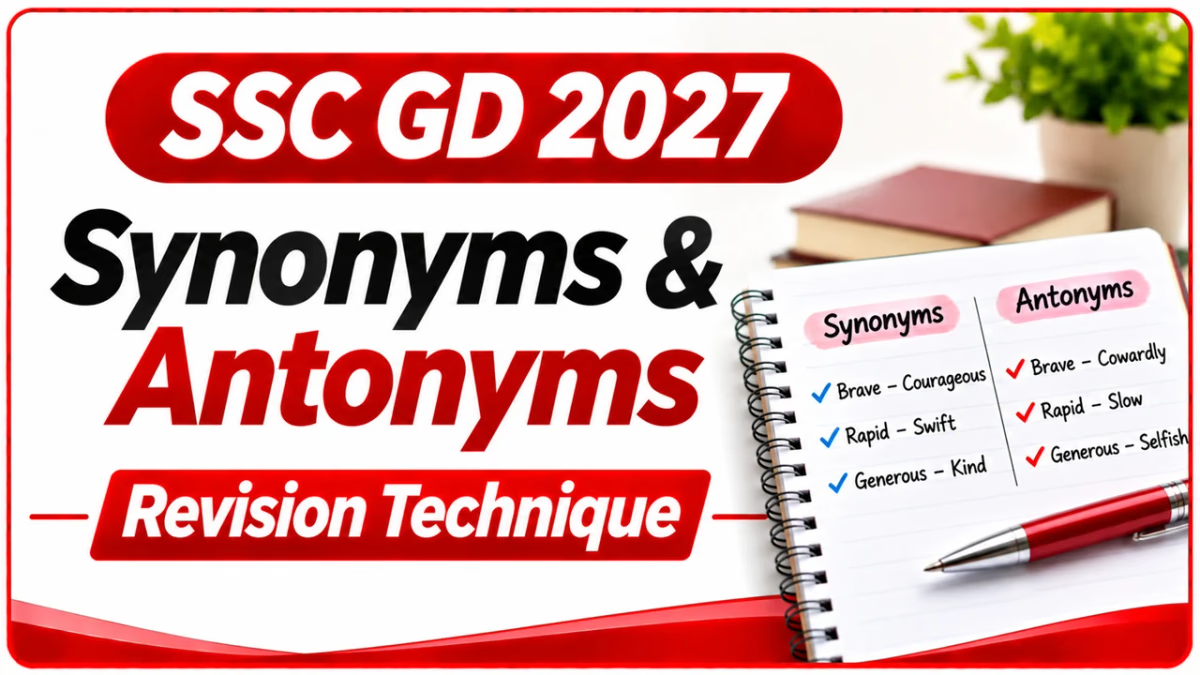
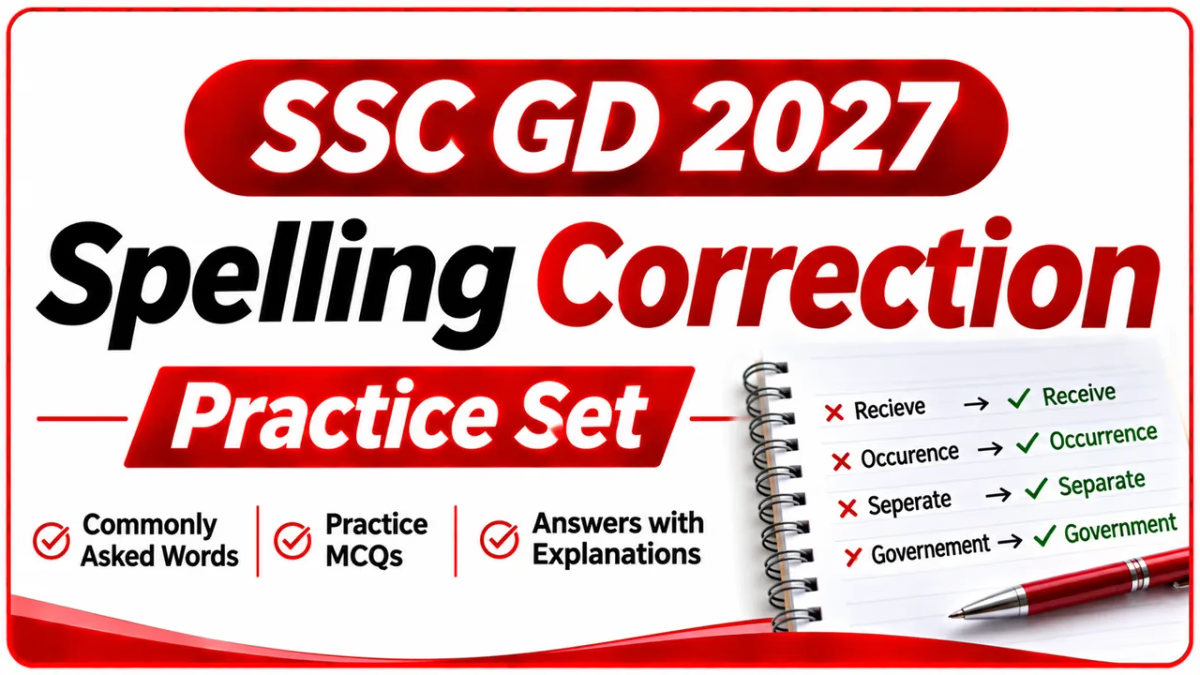


 Defence
 SSC
 Govt Job